Buying Guides
Gem Collections: How to Build One That Lasts
A working guide to building a colored gemstone collection with staying power, from balancing color and origin to why documentation compounds and unheated Ceylon material anchors the whole thing.
Published Updated 9 min read
By Naseef AR
A gem collection that lasts is built on three decisions made early and repeated with discipline: which color grades you commit to, which origins and treatment status you accept, and how rigorously you document every stone. Get those right and the collection holds its character over decades. Get them wrong and you end up with a drawer of pretty stones that share nothing and mean little. This guide is for the buyer moving past a single purchase, drawn from what Crestonne watches move through its own sourcing rather than from auction-room theater.
What makes a gem collection hold its value?
Coherence, mostly. Twenty unrelated stones bought on impulse rarely add up to more than the sum of their parts. A collection built around a defined thesis, whether that is unheated Ceylon blue sapphires across a tight color range or the full spectrum of Sri Lankan fancy sapphires, tends to do the opposite. Each stone reinforces the others, and the whole becomes legible to the next serious buyer.
Value in colored gemstones is not liquid the way listed securities are. There is no ticker. What holds is desirability, and desirability rests on qualities that do not shift with fashion: strong color, clean origin, honest treatment status, and paper that proves all of it. Crestonne selects the stones it represents against exactly those criteria, because a stone that can be verified is a stone that can be sold again.
The buyer who treats a collection as a set of individually justifiable objects, each one defensible on color, origin and documentation, is the buyer whose collection still makes sense in twenty years. For a deeper look at the money side of this, see the Crestonne piece on investing in Ceylon sapphires.
How do you start a colored gemstone collection?
Start narrow. The instinct is to spread wide across sapphire, ruby, spinel, garnet and beyond, but a first collection built on one material and one origin teaches you more than a scattered one ever will. Ceylon sapphire is the natural anchor for most collectors, and for good reason. Sri Lanka produces the broadest, most consistent range of fine sapphire on earth, which means you can build depth without ever leaving a single source.
Pick a lane and learn it cold:
-
A single hue, graded across quality. Cornflower-blue Ceylon sapphire, say, from the lightest desirable saturation to the deepest, so you develop a trained eye for where the value inflects.
-
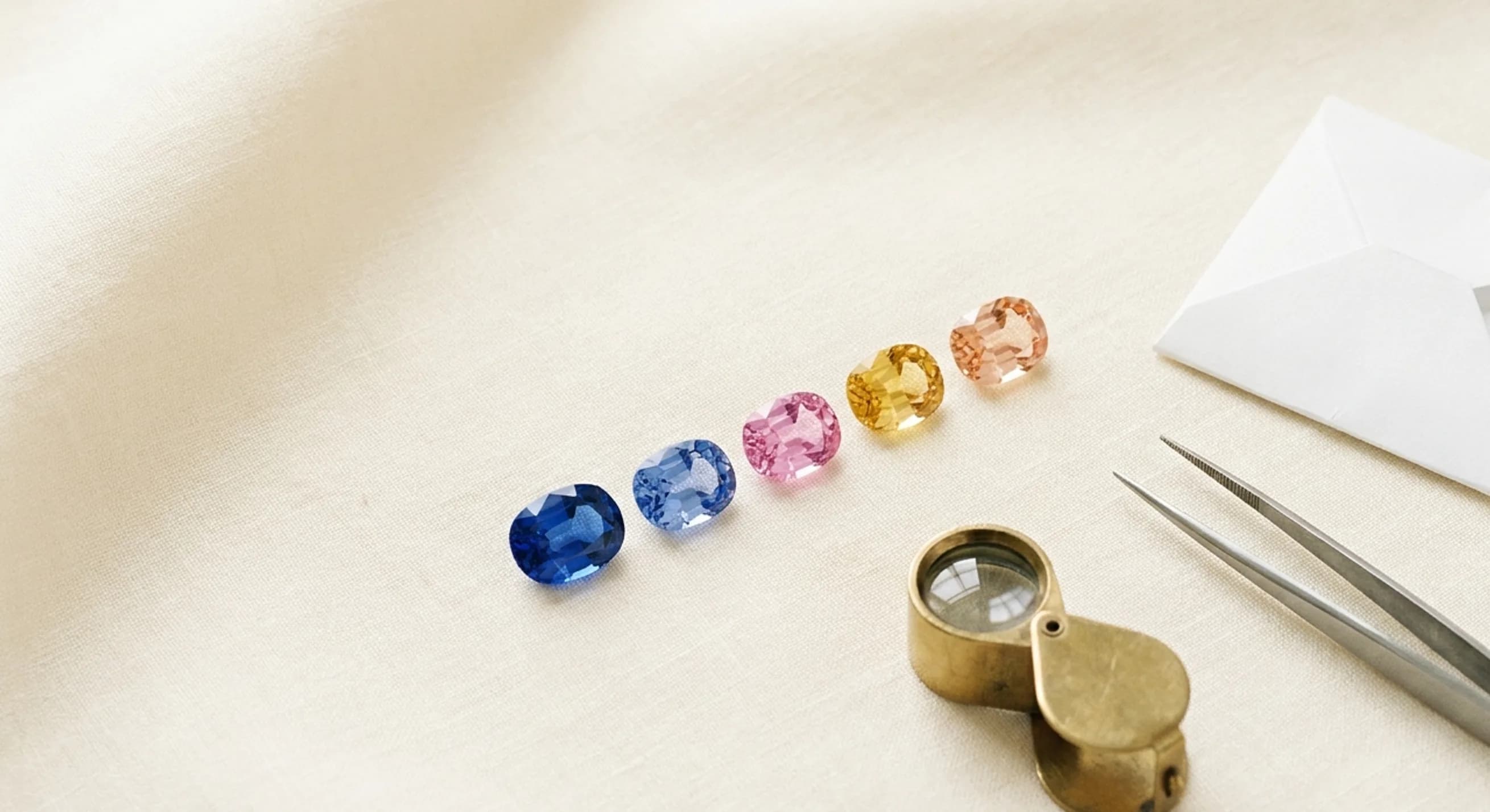
A single species, spread across color. Sapphire in blue, pink, yellow, the padparadscha range, and near-colorless, all from Sri Lanka, which showcases the island's range.
-
A treatment thesis. Unheated stones only, the harder and more rewarding discipline, or a deliberate mix that lets you own more carat weight for the same outlay.
Whichever lane you choose, buy fewer, better stones rather than many mediocre ones. Three well-documented gems of distinction will always carry a collection further than a dozen commercial-grade fillers. Most new collectors chase carat weight before they have trained their eye on quality, and carat weight without quality is the cheapest thing to acquire and the hardest to resell.
Balancing color, origin and treatment status
These three variables are the spine of every collection decision. Treat them as a system, not a checklist.
Color
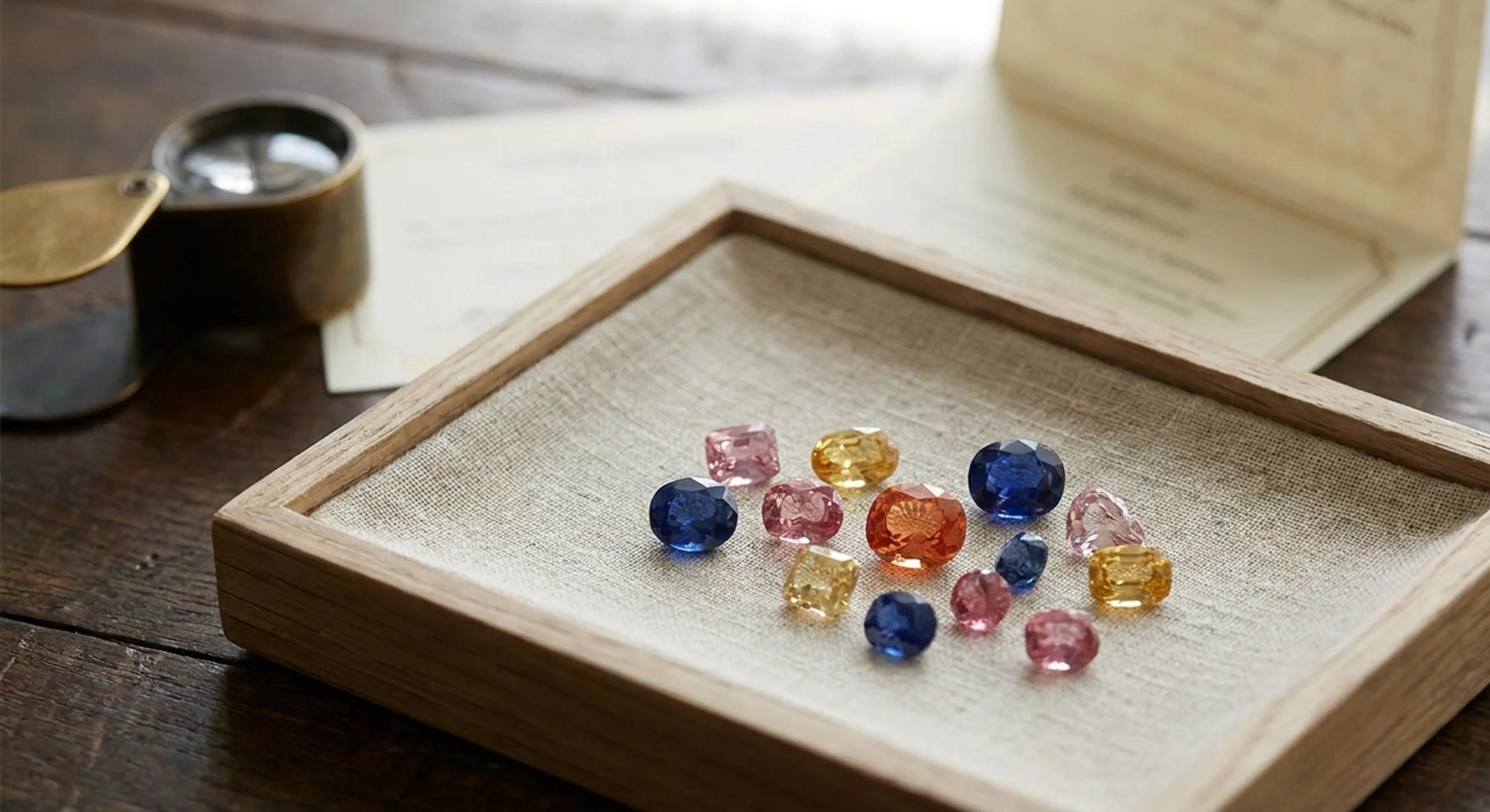
Color drives most of a colored stone's value, and within color, saturation and tone matter more than most beginners expect. A vivid, evenly saturated medium-tone sapphire outperforms a darker, over-saturated stone of the same weight and origin, often by a wide margin. Build across a color range deliberately and you are also building a reference set. Owning the grades side by side is the fastest education money can buy, because the eye learns comparatively, not in isolation.
Origin
Origin is where Ceylon earns its place at the center of a serious collection. Sri Lankan sapphire carries a reputation for bright, saturated color and clarity that the market has respected for a very long time, and origin-defined provenance holds premiums that generic material never touches. The reasons run deep into the geology and the cutting tradition, which Crestonne covers in detail in why Ceylon stones stand apart. For a collection meant to last, origin is not a nice-to-have. It is the thing a future buyer checks first.
Treatment status
Heat treatment is the legitimate norm across the colored stone trade. The overwhelming majority of sapphire on the market has been heated to improve color and clarity, it is a stable and permanent process, and heated Ceylon stones deliver genuine beauty at a far more accessible price point. A well-cut, well-colored heated sapphire is a beautiful thing in its own right, and for most collectors it is where the bulk of the collection sensibly lives.
Unheated material sits in the premium tier. A sapphire that reached fine color with no human intervention is rarer, and the market pays for that rarity, frequently a substantial multiple over a comparable heated stone. That premium reflects scarcity and untouched provenance, nothing more.
A collection that lasts usually holds both. Heated stones give you range, weight and beauty for a sensible outlay. A handful of unheated pieces anchor the collection and give it a top end that appreciates on scarcity alone. The right ratio depends on your budget and your thesis, but the principle is constant: build the body of the collection in heated material, anchor the top with unheated.
Why documentation compounds over time
A stone without paper is a stone with an asterisk. Documentation is the single most under-appreciated lever in collecting, because its value compounds. Every certified stone you add does not just prove itself, it raises the credibility of the whole collection, and a fully documented collection is dramatically easier to pass on, insure or sell than an undocumented one of equal quality.
The certificates that carry weight come from independent laboratories with a track record: GIA, SSEF and Gübelin among them. You want the same short list on every report: species and variety, origin, and treatment status stated plainly, unheated versus heat-treated. For higher-value unheated stones, a report from a top European lab such as SSEF or Gübelin is often worth the extra submission cost, because those names travel and reassure the next buyer without further argument.
Keep the paperwork organized from stone number one. Match each report to its stone, record the acquisition, and store the originals somewhere you will actually find them. The collector who treats documentation as an afterthought pays for it later, usually at the worst possible moment, when it is time to sell or settle an estate. The stones Crestonne provides ship with their lab documentation precisely because a certificate deferred is value quietly lost.
Photographs, honesty, and knowing what you actually own
Color in gemstones is notoriously hard to capture, and the trade knows it. Lighting, white balance and backdrop can push a stone bluer, brighter or cleaner than it appears in the hand. This is exactly why a lasting collection is built on stones you can trust to look the way they were shown, backed by lab-stated color and clarity rather than a flattering photograph.
Crestonne shoots stones under consistent, honest lighting and lets the certificate do the talking on origin and treatment, so what arrives matches what was represented. For a collector, that consistency is not a courtesy. It is what makes it possible to compare stones across years of buying and trust that your reference set is accurate. A collection built on stones that photographed better than they are will disappoint the day you view them together in daylight.
How many stones make a collection, and how fast should you buy?
There is no magic number. A tight set of five exceptional gems of distinction is a more serious collection than fifty commercial stones. The better question is pace, and the honest answer is: slower than you want to.
Rushing acquisition is the most common way collections lose coherence. Every stone you add should either deepen a color range you are already building or fill a defined gap in your thesis. If it does neither, it is a distraction, however tempting the price. The collectors whose sets hold together bought patiently, waited for the right unheated anchor stone to surface, and passed on plenty of merely good gems along the way.
Budget accordingly. Fine unheated Ceylon material in larger sizes can run well into several thousand per carat and higher for exceptional examples, while beautiful heated stones sit at far more accessible levels. Plan the collection so that the everyday additions come from the accessible tier and the occasional anchor purchase is one you have saved and waited for.
A working framework for building a gem collection that lasts
Here is the discipline that separates a collection from an accumulation:
-
Define a thesis. One material, one origin, or one treatment discipline. Ceylon sapphire is the standard anchor for good reason.
-
Learn color comparatively. Build a range so your eye calibrates against your own stones, not memory.
-
Buy heated for range, unheated for the anchor. Heat treatment is the norm and gives you beauty at sensible cost; unheated material is the premium tier that holds on scarcity.
-
Insist on origin. Sri Lankan provenance is what a future buyer verifies first.
-
Document everything, from stone one. GIA, SSEF or Gübelin reports stating species, origin and treatment. The paper compounds.
-
Buy slowly and coherently. Every stone deepens the thesis or fills a gap. Nothing else earns a place.
Do this and the collection becomes more than stones in a box. It becomes a legible, verifiable set that the next serious buyer can understand at a glance, which is the whole point of building something that lasts.
Ready to add an anchor stone or build a color range with matched, fully documented material? Start a custom sourcing request with Crestonne and tell the team what your collection needs next.
Common questions
Frequently Asked Questions
What is the best gemstone to start a collection with?
Ceylon sapphire is the most sensible anchor for most collectors. Sri Lanka produces the broadest, most consistent range of fine sapphire, so you can build depth across color grades without ever leaving a single, well-respected origin. It also lets you buy heated stones for range and unheated stones as premium anchor pieces.
Do heated sapphires belong in a serious collection?
Absolutely. Heat treatment is the legitimate industry norm, it is stable and permanent, and a well-cut, well-colored heated Ceylon sapphire is genuinely beautiful at a far more accessible price. Most collections sensibly hold the bulk of their weight in heated material, with a handful of unheated stones as the premium anchors.
How important is certification for a gem collection?
It is essential and it compounds. Reports from independent labs such as GIA, SSEF or Gübelin should state species, origin and treatment status plainly. A fully documented collection is far easier to insure, pass on or sell than an undocumented one of equal quality, so keep the paperwork organized from the first stone.
Why does unheated Ceylon material command a premium?
Because a sapphire that reached fine color with no human intervention is rare, and the market pays for that scarcity, often a substantial multiple over a comparable heated stone. The premium reflects rarity and untouched provenance, not any shortcoming in heated stones.
How fast should I build a gem collection?
Slower than you want to. Rushing is the most common way collections lose coherence. Every stone should deepen a color range you are already building or fill a defined gap in your thesis. Buy fewer, better stones and wait for the right anchor pieces to surface.