Buying Guides
How to Buy Ceylon Sapphire: Choosing a Natural Stone
A founder's step-by-step framework for buying a natural Ceylon sapphire in any colour: what to decide first, how to judge a stone on video, which lab reports matter and when a certificate is worth paying for.
11 min read
By Naseef AR
The short answer on how to buy Ceylon sapphire well is to settle your priorities in a fixed order. First, decide whether you need an unheated stone or are happy with a heated one. Second, lock in the colour. Third, pick the size your budget can carry at that colour and treatment level. Only after that should you judge the stone itself on video, put a handful of specific questions to the seller and match the paperwork to the price. Get the order wrong and you end up comparing a 3 ct heated blue with a 1.2 ct unheated one. That's like comparing a lease with a freehold.
Below is how to buy a Ceylon sapphire in that order, step by step.
How to buy Ceylon sapphire: the order that matters
Every natural Ceylon sapphire is priced on four levers: treatment, colour, size, and cut and clarity together. They don't move independently. Unheated status multiplies the price. Colour decides which price band you're in. Size pushes the price per carat up in jumps rather than a straight line. Cut and clarity decide where in that band a stone sits.
So the sequence is:
- Treatment: heated or unheated.
- Colour: the hue, tone and saturation you want.
- Size: the carat weight that fits once steps 1 and 2 are fixed.
- Quality checks: clarity, cut and windowing, judged on video.
- Paperwork: the lab report that suits the stone's value.
Fix the first two and your budget tells you the size. Start with size and you'll spend weeks chasing stones that don't exist at your price.
Should you buy a heated or unheated Ceylon sapphire?
Heat treatment is the industry norm, and it has been for decades. Pale Sri Lankan material, including the milky geuda rough, is heated in controlled furnaces to dissolve fine rutile silk and bring out the colour. The result is permanent and stable, and every major lab and auction house accepts it. A good heated Ceylon blue is an excellent stone. At Mohs 9 it will outlast its owner. Most of the sapphire in the world's fine jewellery is heated, and choosing one involves no compromise.
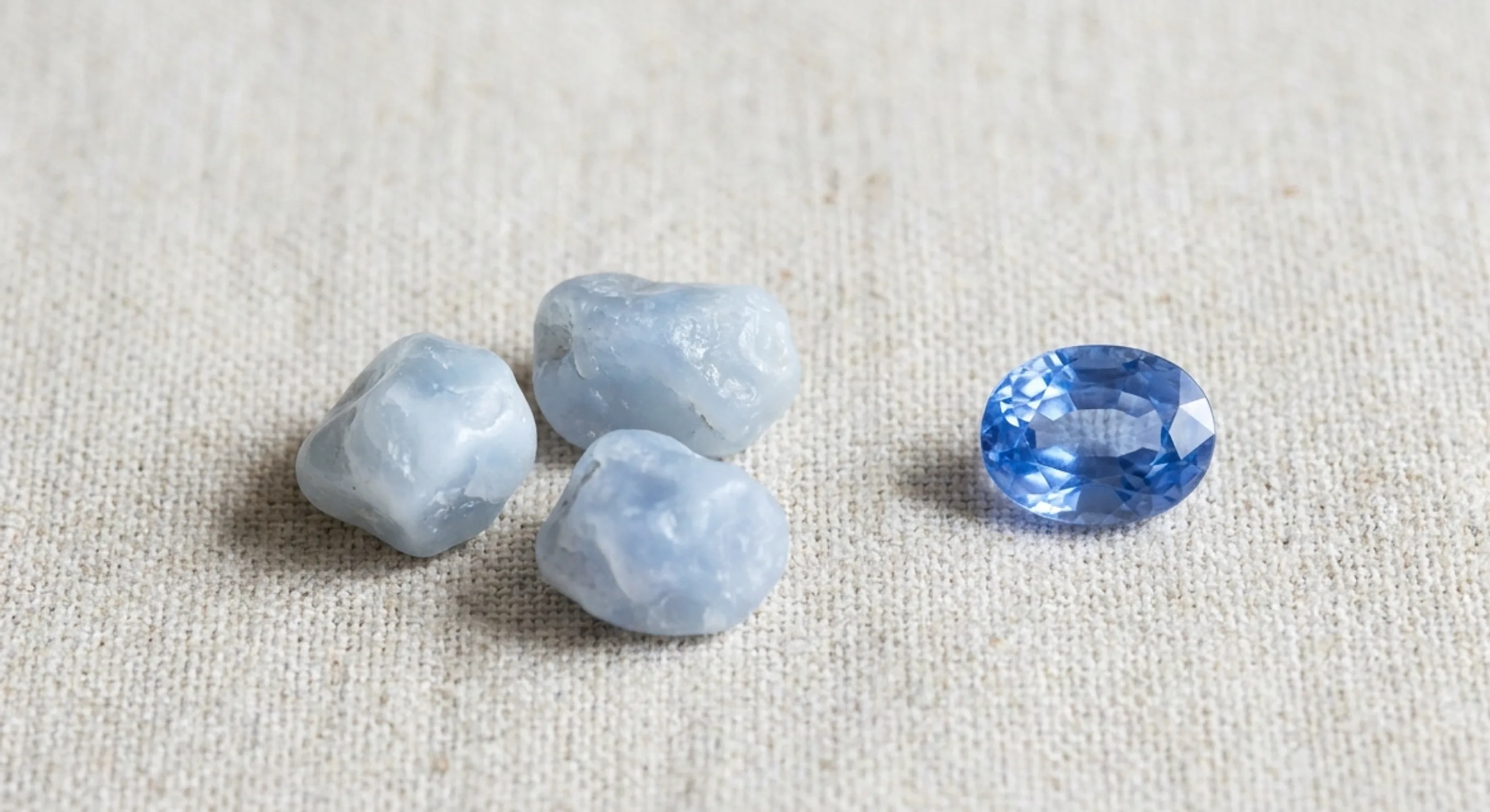
Unheated stones are the premium tier. Most sapphires on the market, often put at 90 to 95 percent, are heated, so unheated stones are scarce and the market prices that rarity accordingly. For a certified 1 ct Ceylon sapphire with good colour, heated stones generally sell for around US$500 to 2,500 per carat. Unheated equivalents sit closer to US$2,500 to 6,000 per carat. The premium for a lab-confirmed "no indications of heating" stone is quoted anywhere from 60 to 100% at the conservative end up to 2 to 5 times the heated price, and the gap widens at investment grade. At 5 ct, a fine unheated cornflower blue can reach around US$18,000 per carat, against roughly US$4,000 to 6,000 per carat for a comparable heated stone.
A simple rule: buy unheated if rarity, long-term holding or collector interest matters to you, or if the stone will be the centre of a significant piece. Buy heated if you want the most colour and size for your money. Both are honest choices. What matters is that the treatment is disclosed and, above a certain value, confirmed by a lab.
Beyond simple heat is a different category. Beryllium (lattice) diffusion, surface diffusion and fillers should always be disclosed, and they carry far lower value. A reputable seller will put "heated only" or "no indications of heating" in writing without being asked.
What colour Ceylon sapphire should you choose?
Sri Lanka produces the widest colour range of any sapphire source, so colour is a real decision, not a default.
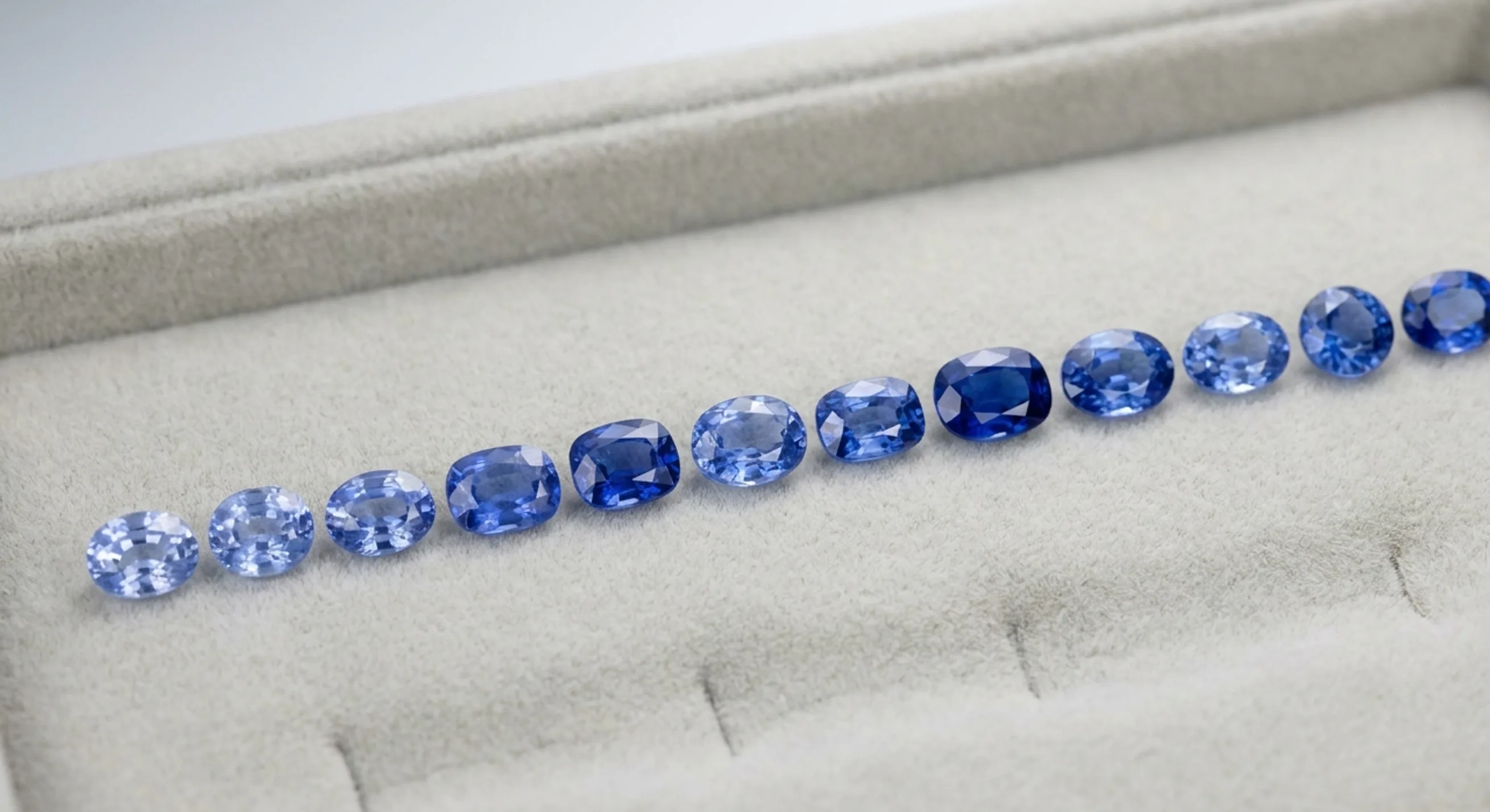
- Blue: Ceylon blues tend to be brighter and lighter-toned than the inky blues from some other sources. Cornflower is the classic Ceylon look, and a true royal blue Ceylon commands more.
- Padparadscha: the pink-orange lotus colour, the most coveted Ceylon colour after top blues. As a guide, commercial heated padparadscha under 2 ct runs around US$2,000 to 5,000 per carat. Fine unheated stones of 1 to 3 ct run around US$10,000 to 30,000 per carat, and exceptional unheated stones over 3 ct go from US$20,000 to 50,000 per carat and beyond. Our guide to padparadscha sapphire from Sri Lanka sets out every tier.
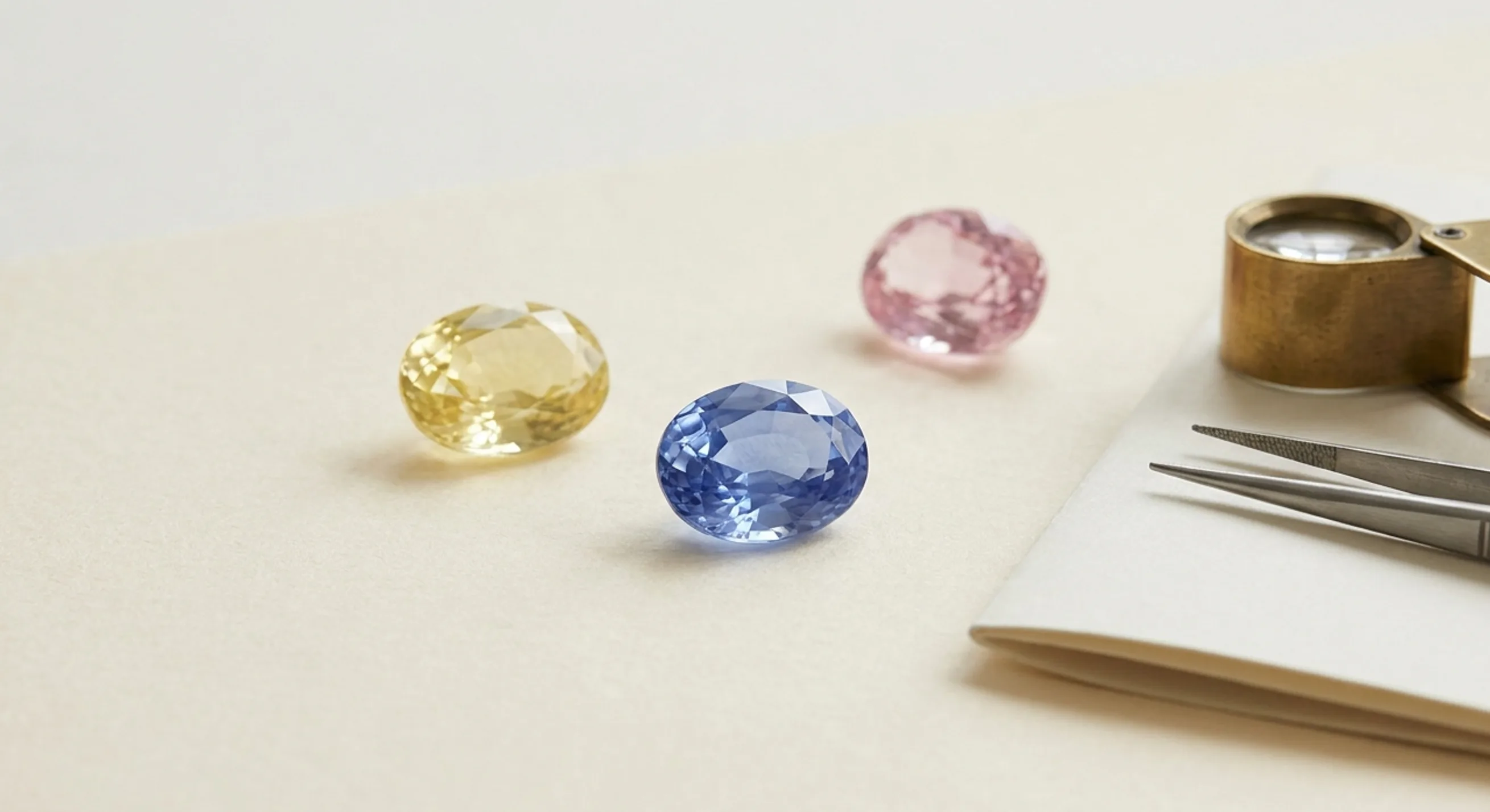
- Pink, yellow, purple and white: fancy colours often give the most visual impact per dollar. Pink and yellow stones over 2 ct often sit around US$1,500 to 4,500 per carat, rising to US$5,000 to 10,000 per carat for fine stones of 3 ct and up.
Judge colour on three axes: hue (the colour itself), tone (light to dark) and saturation (intensity). Saturation drives price hardest. On the hand, a small stone with vivid, even colour often beats a large, washed-out one. Our 0.43 carat vivid pink sapphire is a good example: it's under half a carat, but the saturation carries it.
Grey and brown undertones pull value down. Ask to see the stone in daylight and under warm indoor light. Some Ceylon blues drift slightly towards violet under incandescent light, which plenty of buyers love, but you should know before you commit.
Does size change the price per carat?
Yes, and not in a straight line. Price per carat jumps at certain weights because large, fine rough is much scarcer. For unheated cornflower blue Ceylon, indicative figures are around US$4,000 per carat at 1 ct, about US$10,000 per carat at 3 ct and around US$18,000 per carat at 5 ct. A 5 ct stone is not five times the price of a 1 ct stone. It can cost more than twenty times as much.
A practical tip: buying just under a threshold, say 2.85 ct instead of 3.05 ct, can save real money with no visible difference once the stone is set. For a fuller breakdown by colour and tier, see our guide to realistic Ceylon sapphire price per carat.
How do you judge Ceylon sapphire quality on video?
Most people now buy a Ceylon sapphire remotely, so reading a video properly matters. Still photos are easy to flatter with lighting and editing. Every stone Crestonne lists comes with its own video. Whoever you buy from, insist on an unedited video of the stone rotating, in daylight and under neutral white light.
Here's what to watch for when you assess Ceylon sapphire quality:
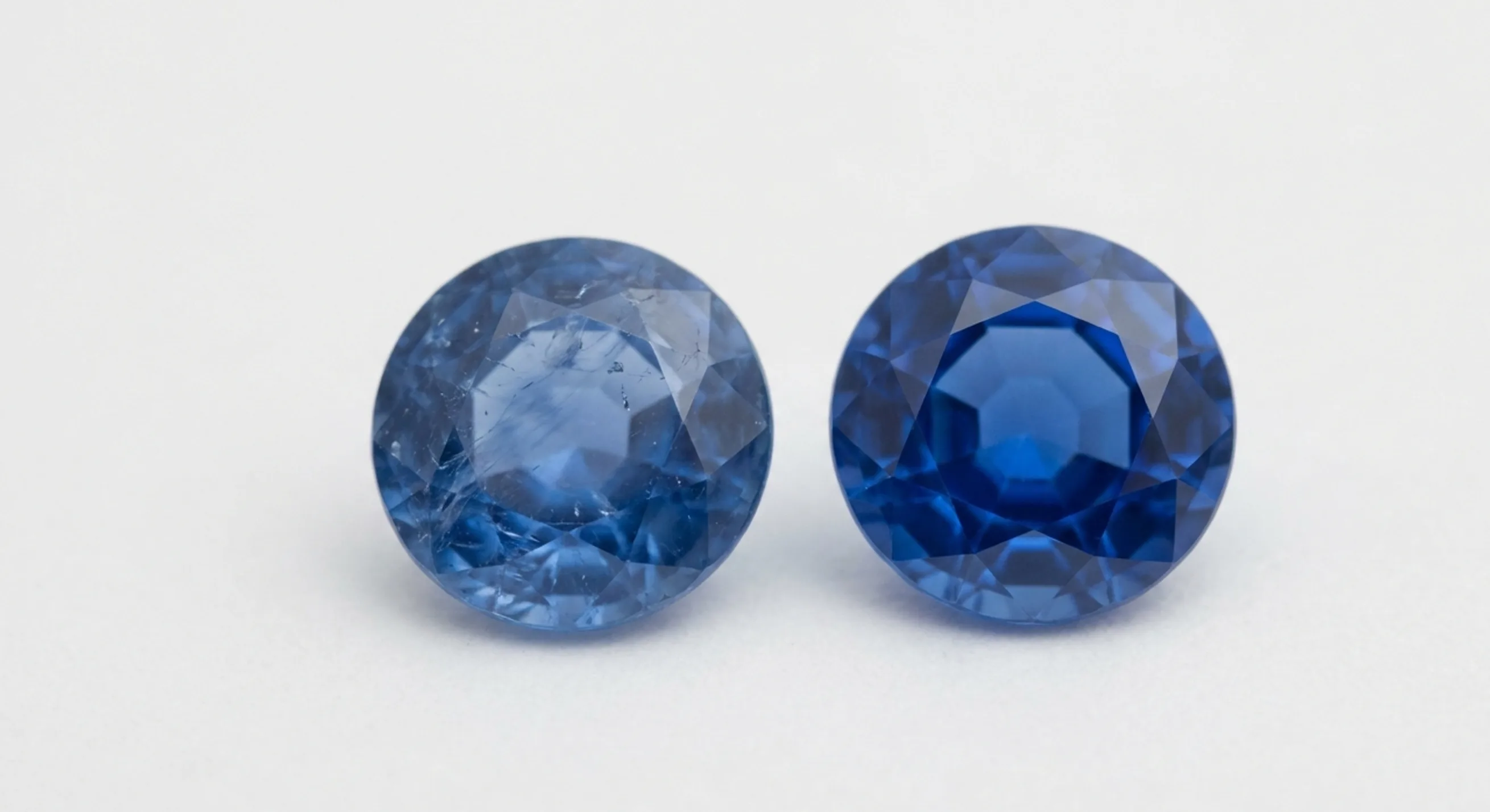
- Windowing: a washed-out, see-through patch in the centre when you look at the stone face-up. Sri Lankan cutters often cut to keep weight, and a shallow pavilion creates windows. A little is normal. A large window kills brilliance.
- Extinction: dark areas that stay dark as the stone tilts. A little is fine in blue. Heavy extinction makes a stone look dull and inky.
- Colour zoning: Ceylon sapphires often grow in bands of colour. A skilled cutter orients the stone so the zoning disappears face-up. If you can see stripes from the top, that affects value.
- Clarity: most good Ceylon blues are eye-clean. Fine rutile silk is common, and in an unheated stone it's one of the clues to natural status. Fractures that reach the surface are a durability concern.
- Cut and spread: traditional native cuts with deep, heavy bellies keep weight you pay for but can't see. Compare face-up millimetre dimensions, not just carat weight.
Under a 10x loupe, the silk can also hint at treatment. Long, sharp, intact rutile needles crossing at 60 degrees suggest a stone has not been heated. Silk broken into dotted, partly dissolved specks, or a crystal inclusion with a flat, disc-shaped stress halo around it, are classic signs of heat. The loupe narrows the field, and only the lab confirms it.
Which lab certificate is best for a Ceylon sapphire?
Sapphire certification does three jobs. It confirms the stone is natural corundum, it states the treatment (heated, or no indications of heating), and with an origin report it gives the geographic origin. For padparadscha, the colour name itself is a lab opinion, which is another reason to get a report.
The names that carry most weight are GIA, SSEF, Gübelin and GRS. GIA offers an identification report and a separate identification and origin report. SSEF and Gübelin origin reports carry the most authority at the top of the market, especially for unheated stones over a few carats. If you're working through a GIA document for the first time, our guide on how to read a GIA sapphire certificate walks through every field.
Whatever the lab, do three checks. Verify the report number on the lab's website. Check that the weight and dimensions match the stone you're being offered. Make sure the photo on the report matches the stone in the video. Remember too that labs describe stones; they don't price them. A monetary value printed on a "lab report" is a warning sign in itself.
When is a sapphire certificate worth paying for?
This is where people either overspend or skimp. Indicative costs:
- GIA: for sapphires under 6 ct, roughly US$75 to 150 depending on weight and whether you add origin.
- SSEF: CHF 375 for an identification report on a stone up to 1.99 ct, or CHF 750 with origin. Fees rise with weight.
- GRS: often around US$200 to 400 on a stone worth about US$5,000.
Match the paperwork to the stone's value:
- Under about US$500: a clear written description with treatment disclosure is reasonable.
- US$500 to 2,000: a lab report is worth considering.
- US$2,000 to 10,000: a report from a recognised lab should be standard.
- Over US$10,000: insist on a top-tier lab, including origin.
Certification typically adds about 5 to 20% to a stone's value over an uncertified equivalent, and about 10 to 20% for SSEF or Gübelin origin reports on stones over 3 ct. On a US$300 heated stone, an SSEF origin report makes no sense. On an unheated padparadscha in five figures, it's essential, and the report usually pays for itself when you insure or resell.
What questions should you ask a sapphire seller?
Before you pay, get written answers to these:
- Is it heated, unheated or treated in any other way? It should be in writing, not just said in a chat.
- Is there a lab report, from which lab, and what's the report number?
- Where was it mined, and how did it reach you? Sri Lanka's gem authority has estimated that around 90% of the country's gems leave through informal channels, so a seller who can trace a stone back to Ratnapura, Elahera or Balangoda is offering something real.
- Can I see an unedited video in daylight and indoor light?
- What are the exact face-up dimensions?
- What happens if an independent lab disagrees with your description? A confident seller has an answer to this.
What are the red flags when buying a Ceylon sapphire online?
Part of buying well is knowing when to walk away. The common warning signs:
- Price far below the market. A "Ceylon" sapphire priced 30% or more below comparable stones should be presumed to have a treatment, origin or clarity issue until proven otherwise.
- "Certified" with no lab named, or a lab whose reports you can't verify online.
- A valuation printed on the lab report.
- Only heavily styled photos, with no unedited video.
- "Natural" with no treatment statement. Natural means mined, not untreated. Treatment disclosure is a separate statement.
- "Ceylon" used as a colour description rather than a stated origin.
When you buy a Ceylon sapphire from Crestonne, it comes with its own video, a written treatment statement and a lab report.
How do these factors add up to sapphire value?
Think of sapphire value as layers. Treatment sets the multiplier. Colour puts you in a band. Size moves you along a steep curve within that band. Cut and clarity decide whether the stone sits at the top or bottom of the band. Certification then adds its own modest premium and, more importantly, makes the value provable when you insure or resell.
For context, Ceylon sapphires span from around US$300 per carat for commercial heated stones to US$20,000 per carat and more for fine unheated material, but most ethically sourced, certified stones of 1 to 3 ct fall between about US$1,500 and 6,000 per carat. If a stone is priced outside that band, the seller should be able to tell you exactly why: a rare colour, unheated status, an exceptional size, or a cut or clarity compromise.
That's how to buy Ceylon sapphire with confidence: treatment, colour, size, quality, paperwork, in that order, with honest answers at every step. If you'd like me to source a stone to your exact brief, tell me your colour, budget and treatment preference through our loose stone custom order form, and I'll look for stones that match.
Common questions
Frequently Asked Questions
Is a heated Ceylon sapphire a good buy?
Yes. Heat treatment is the accepted industry norm, it's permanent and stable, and every major lab and auction house recognises it. A heated Ceylon sapphire gives you more colour and size for your budget. Unheated stones are the rarer premium tier, typically priced from 60 to 100% above a comparable heated stone up to 2 to 5 times its price.
Do I need a lab certificate for a Ceylon sapphire?
It depends on value. Under about US$500, a written description with treatment disclosure is reasonable. From US$2,000 to 10,000, a recognised lab report such as GIA, GRS, SSEF or Gübelin should be standard. Above US$10,000, insist on a top-tier lab report that includes origin.
How can I tell if a sapphire photo is misleading?
Ask for an unedited video that shows the stone rotating in daylight and under neutral indoor light. Video reveals windowing, extinction and colour zoning that still photos can hide. Then check that the face-up dimensions and the photo on the lab report match the stone in the video.
What does 'no indications of heating' mean on a sapphire report?
It's the lab's statement that it found no evidence the stone was heat-treated, meaning it's considered unheated. It's the wording that supports the unheated premium, so confirm it on the report itself and verify the report number on the lab's website.
Why would a Ceylon sapphire be priced much lower than others?
A Ceylon sapphire priced 30% or more below comparable stones should be presumed to have an issue with treatment, origin or clarity, such as undisclosed diffusion, a non-Sri Lankan origin or durability-affecting fractures. Ask for a verifiable lab report before buying.