Buying Guides
Buying a Blue Sapphire Gemstone: What to Look For
A practical, spec-first guide to buying a natural blue sapphire: the five things that actually move the price, and how to read them before you commit.
8 min read
By Naseef AR
When buying a blue sapphire gemstone, five specs decide whether the price is fair: colour saturation, cut, clarity, treatment status, and certification. Everything else is marketing. A vivid, well-cut Ceylon stone with a clean report is worth a premium. A dark, sleepy, glass-flat sapphire with no paperwork is not, no matter how good the listing photo looks. Below is the checklist Crestonne applies to every stone it sources, in the order that matters. Read it once and you will negotiate like someone who knows what they are looking at.
What should you look for in a blue sapphire?
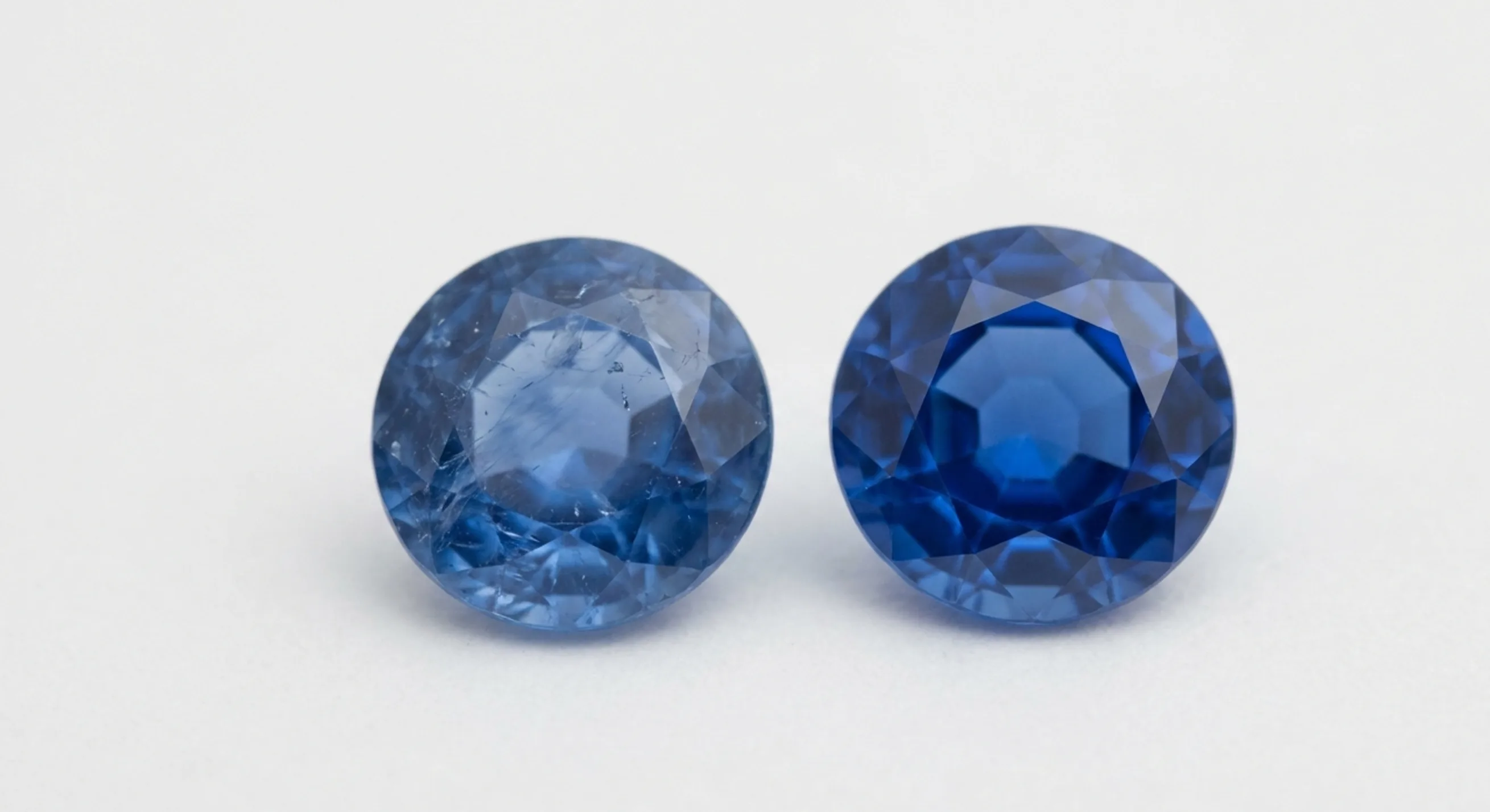
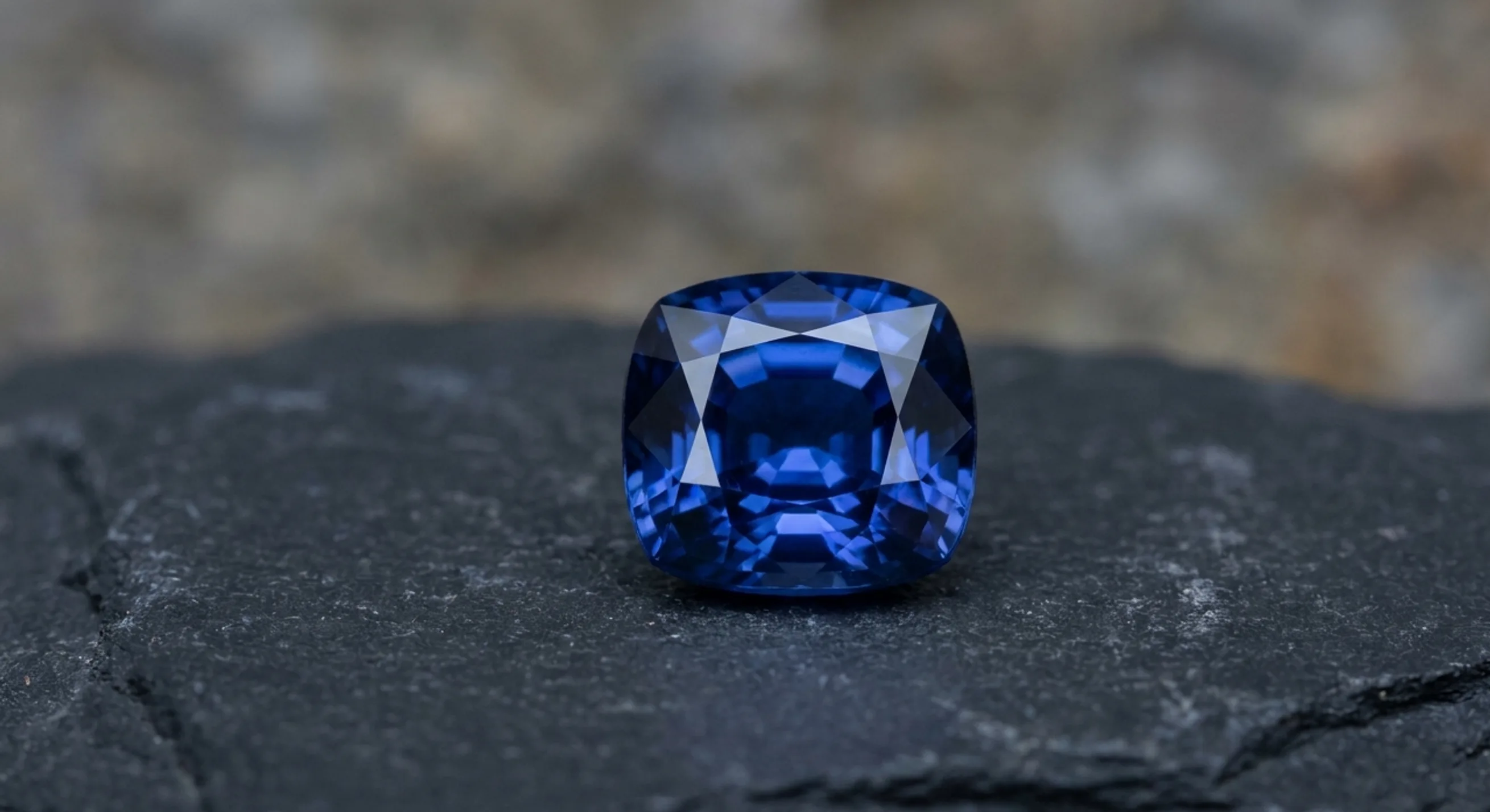
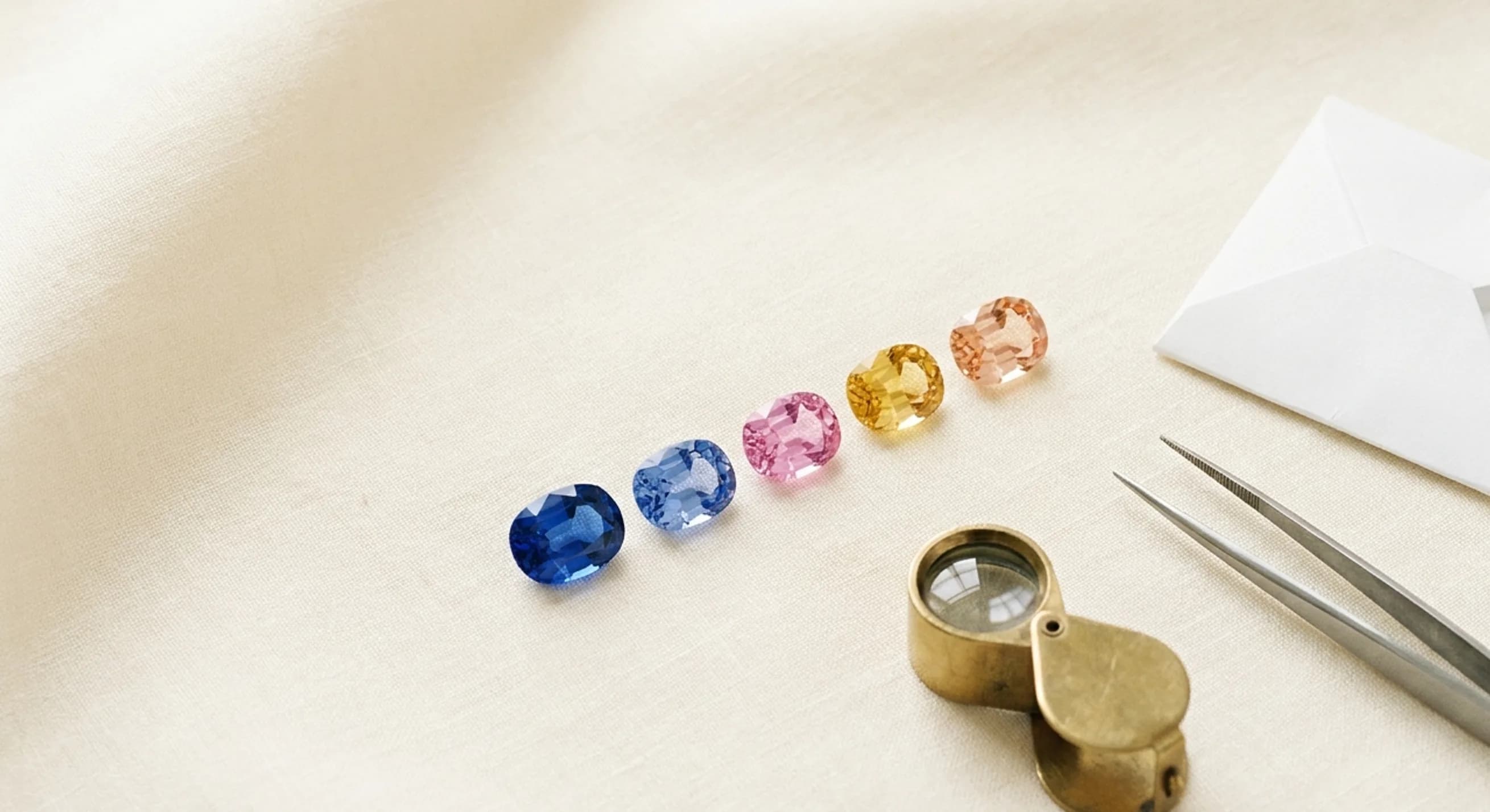
Start with colour, because it drives most of the value. The trade grades blue sapphire on hue, tone, and saturation. You want a blue that reads as blue, not a stone that drifts violet or grey or green. Tone is how light or dark the stone is; the sweet spot is medium to medium-dark, bright enough to keep life inside the stone but deep enough to feel saturated. Saturation is the intensity of the colour, and it is the single biggest lever on price. A vivid, evenly saturated blue commands far more than a washed-out or overly inky one.
The prized "royal blue" and "cornflower blue" descriptors sit inside this window. Royal blue is deep and velvety; cornflower is a softer, brighter blue with a slightly lighter tone. Both can be excellent. Neither is a grade in itself, so treat the words as a starting point and judge the actual stone. Colour zoning matters too. Hold the sapphire face-up and look for patchy bands of pale and dark blue. Even colour across the face is what you are paying for.
Colour, cut and clarity: the three that move the price
Cut is the spec most buyers underrate. Sapphire is cut for colour, not for the textbook symmetry you expect in a diamond, so proportions vary more. What you are checking for is a stone that returns light evenly across the whole face with no dead "window" in the centre. Tilt it. If you can read text through the middle, the cut is too shallow and colour will look weak in wear. A well-cut stone also uses its rough efficiently, which is why two sapphires of the same carat weight can look very different in size. A deep, lumpy cut hides weight in the pavilion where you never see it.
Clarity in sapphire is judged differently from diamond. Most sapphires contain inclusions, and a natural blue sapphire is expected to. What you want is a stone that is "eye-clean," meaning no inclusions are visible to the naked eye at normal viewing distance. Fine silk (needle-like rutile) can even be a good sign of natural origin and, in the right amount, gives a soft glow. Avoid inclusions that threaten durability, such as fractures reaching the surface, and avoid heavy clouds that make the stone look milky. Sapphire sits at Mohs 9, second only to diamond, so a clean, sound stone will take daily wear for generations.
For a deeper look at how these factors read on paper versus in the hand, the Crestonne guide to buying a loose sapphire walks through the same trade-offs with an engagement ring in mind.
Is a heated or unheated sapphire better?
Heat treatment is the legitimate norm in the sapphire trade, not a defect. The vast majority of blue sapphire on the market has been heated, a process that has been used for decades to improve colour and clarity by dissolving silk and deepening blue. A heated Ceylon sapphire with strong colour and a clean report is an honest, beautiful stone that most buyers should be perfectly happy owning. It is where the best value usually sits.
Unheated stones are the premium tier. When a sapphire reaches gem colour with no treatment at all, that is rare, and the market prices it accordingly. An unheated designation from a respected lab can add a significant premium, often several multiples of the heated price for otherwise comparable stones. The word to watch for on a report is "no indications of heating." Beyond heat, be alert to more aggressive treatments the trade takes seriously, such as beryllium diffusion or fracture filling with glass. These are disclosed on a proper certificate, and they should lower the price substantially. Crestonne states treatment plainly on every stone rather than leaving buyers to guess.
So the honest answer: neither is universally "better." Heated is the sensible standard; unheated is the collector's premium. What is never acceptable is not knowing which one you are buying.
Does a blue sapphire need certification?
For anything above a modest budget, yes. A certificate from an independent laboratory is what turns a seller's claim into a documented fact. The report should confirm that the stone is a natural blue sapphire, state its species and variety, record measurements and weight, and disclose any treatment. The most trusted names are GIA, SSEF, Gübelin, and GRS, and origin reports from the Swiss labs in particular carry weight when Ceylon origin is part of the value.
Read the document, do not just file it. Match the measurements and weight on the report to the stone in front of you. Check the treatment line. Confirm the report number is current. The Crestonne walkthrough on reading a sapphire certificate breaks down each field so nothing on the page is a mystery. A stone sold without any lab documentation is not automatically bad, but you are trusting the seller entirely, and you should pay accordingly.
How can you tell a natural blue sapphire from synthetic?
This is where certification earns its cost. A lab-grown sapphire has the same chemistry and hardness as a mined one, so you cannot reliably separate them by eye or by scratch test. The tells are internal. A blue sapphire natural in origin carries the fingerprints of the earth: irregular silk, fingerprint inclusions, colour zoning, and natural growth features. Synthetics often show curved growth lines or gas bubbles that never occur in nature. Gemologists confirm origin under magnification and, when needed, with advanced spectroscopy at the labs named above.
For a buyer, the practical rule is simple. If a "natural" sapphire is priced far below what natural material of that colour and size should cost, treat the low price as the warning it is. Genuine, well-coloured natural material has a floor. Bargains that seem too good usually are lab-grown, glass-filled, or misrepresented. Crestonne sources exclusively natural, mine-origin Ceylon material and backs it with independent reports, which is the only way to make "natural" a fact rather than a hopeful adjective.
Where the money actually goes
Price on a blue sapphire is not linear. A stone can double in per-carat value crossing a colour threshold, and larger clean stones climb faster than smaller ones because good rough is scarce. That is why a one-carat and a three-carat sapphire of identical quality are not priced three-to-one; the larger stone can cost several times more per carat. Ceylon origin, strong even saturation, eye-clean clarity, an efficient cut, and unheated status are the attributes that stack a premium. Dark tone, visible zoning, windowing, heavy inclusions, and undisclosed treatment are the ones that should pull the price down.
The trap online is the photograph. A sapphire shot under carefully chosen lighting can look one full grade brighter than it does on your hand in daylight. Crestonne's answer is to shoot stones in consistent, honest lighting and to publish the certificate and treatment status alongside every listing, so what you see on screen is what arrives. Buying a blue sapphire gemstone should be a spec-driven decision, not a leap of faith taken on a flattering render.
A quick buyer's checklist
Before you commit, run the stone through this:
- Colour: even, vivid medium to medium-dark blue with no obvious grey, green, or violet drift
- Cut: face-up brilliance edge to edge, no central window, weight not buried in the pavilion
- Clarity: eye-clean at normal distance, no surface-reaching fractures
- Treatment: disclosed in writing, heated as standard or unheated at a documented premium
- Certification: an independent report from a respected lab, matched to the physical stone
Get those five right and you have bought well, whether the stone is a heated everyday sapphire or an unheated collector's piece. Skip any of them and you are guessing. To see how these specs read across live inventory, browse the Crestonne sapphire collections with the report and treatment status published on every stone.
When you want a natural blue sapphire sourced to spec, with the report and treatment status in hand before you buy, start a loose-stone custom order with Crestonne and tell us the colour, size, and budget you are working with.
Common questions
Frequently Asked Questions
What is the most important factor when buying a blue sapphire?
Colour saturation. An even, vivid medium to medium-dark blue drives most of the value. Cut, clarity, treatment status, and certification follow, but a washed-out or overly dark stone loses value no matter how the other specs read.
Are heated blue sapphires worth buying?
Yes. Heat treatment is the legitimate industry norm and most sapphires on the market are heated. A heated Ceylon stone with strong colour and a clean report is an honest, durable gem and usually the best value. Unheated stones are the rarer premium tier.
Does a natural blue sapphire always need a certificate?
For anything above a modest budget, yes. An independent report from a lab such as GIA, SSEF, Gübelin, or GRS confirms the stone is natural, records its measurements, and discloses any treatment, turning a seller's claim into a documented fact.
How can you tell a natural sapphire from a synthetic one?
You cannot reliably tell by eye, since lab-grown sapphire shares the same chemistry and hardness. Natural stones show inclusions like irregular silk and colour zoning; synthetics often show curved growth lines or gas bubbles. A gemological lab confirms origin under magnification.
Why do larger sapphires cost so much more per carat?
Good rough is scarce, so clean, well-coloured larger stones are disproportionately rare. A three-carat sapphire can cost several times more per carat than a one-carat stone of identical quality, meaning price rises far faster than weight.