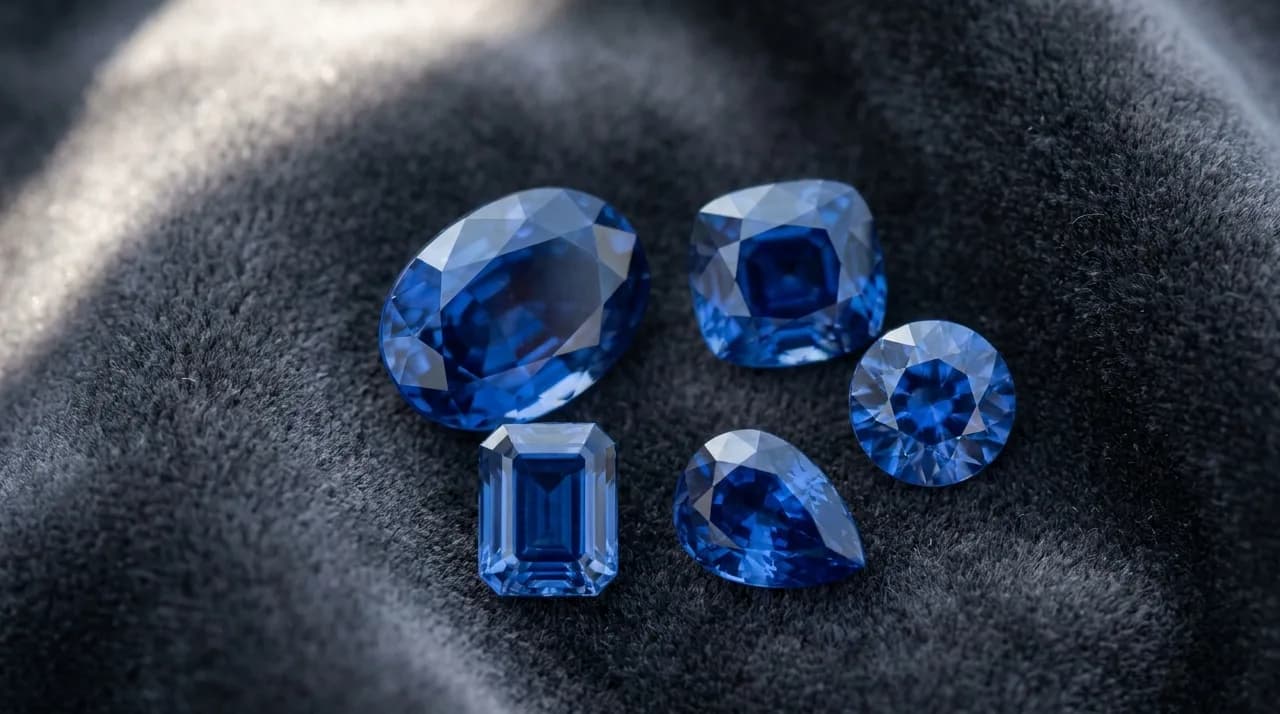
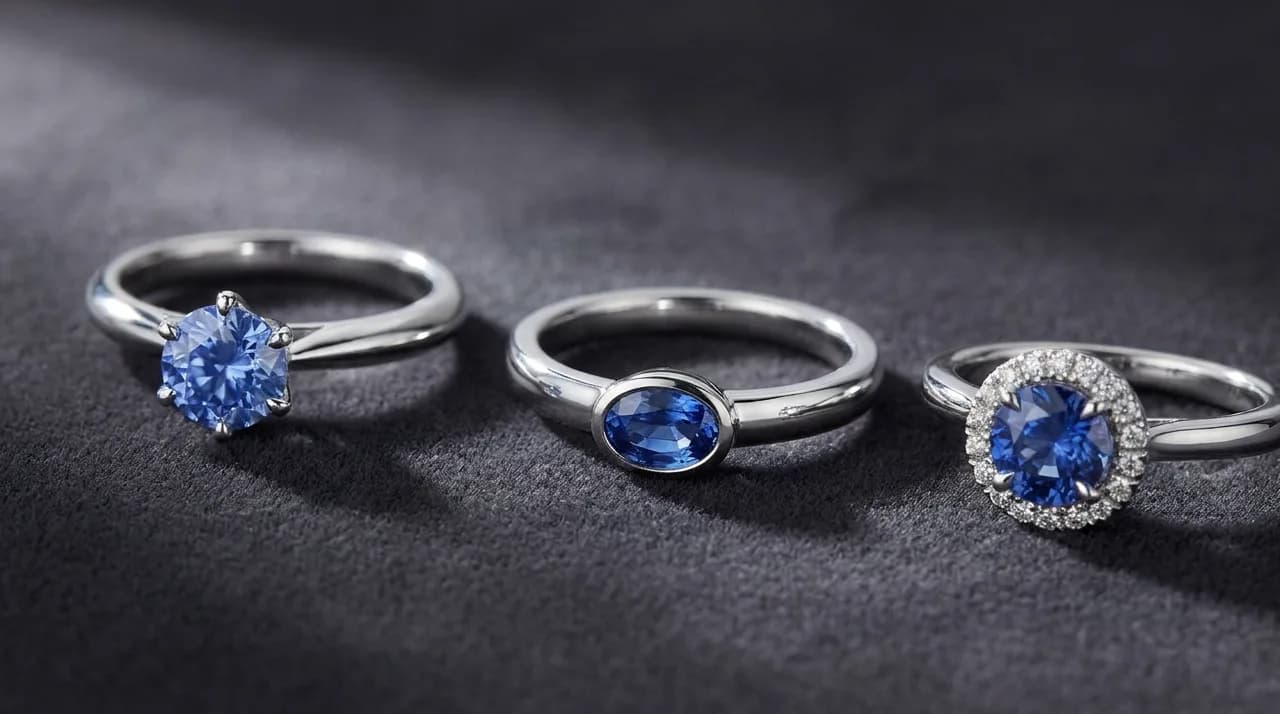
Buying a loose sapphire for an engagement ring means choosing the stone on its own merits first, then setting it into a mount built or sized around it, rather than buying a finished ring off a tray. It is the smarter route for one blunt reason: a loose stone has nowhere to hide. No prongs cover an inclusion, no halo lends it borrowed sparkle, no showroom spotlight does the colour's work for it. You judge exactly what you are paying for, then size a setting to fit. Here is why loose-first wins, how to inspect a stone before it is set, how setting services actually work, how the stone is sized to the mount, and what the whole approach saves against a retail ring.
Why Buy a Loose Sapphire Before the Ring?
The case for loose-first comes down to where the stone can hide its flaws. In the loose sapphire vs set sapphire decision, a set stone is presented to you already flattered. A four-prong head can sit neatly over an inclusion near the girdle. A halo of small accent stones throws light inward and makes a slightly sleepy centre stone read brighter than it is. Even the felt tray and the angled showroom downlight are doing quiet work, deepening the colour and hiding the window in the middle of the stone that you would see instantly in your palm by a window.
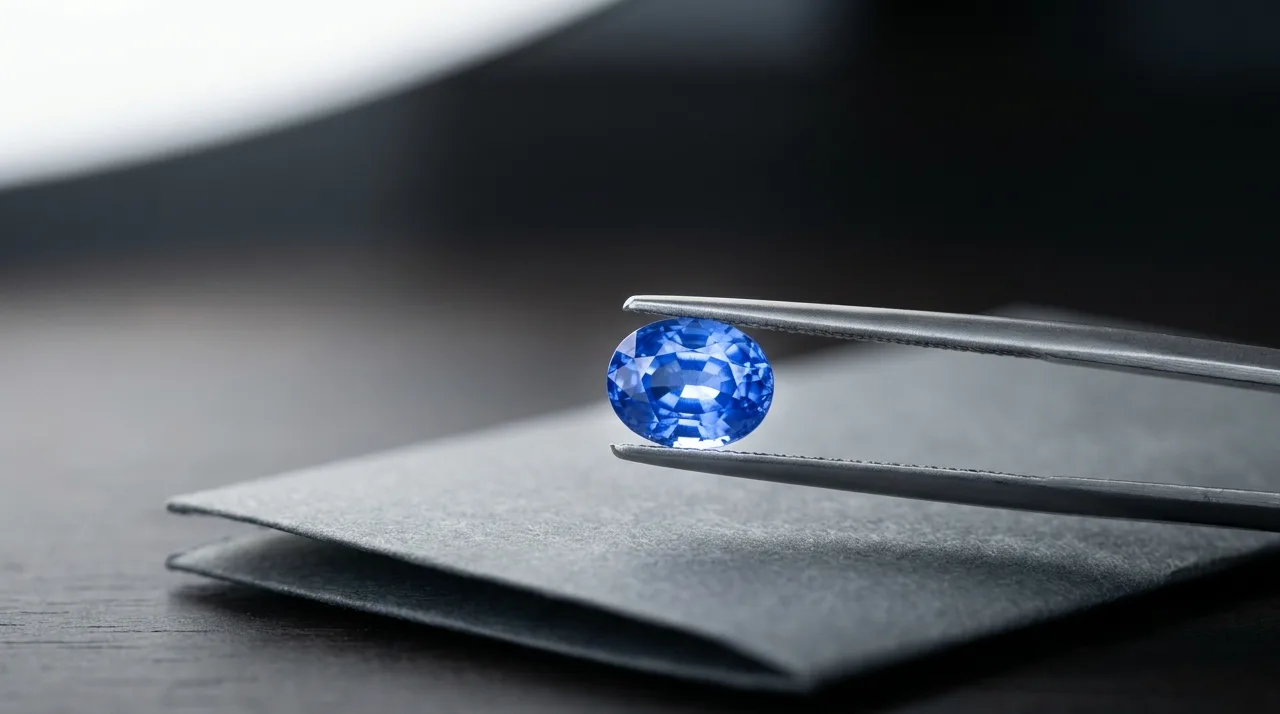
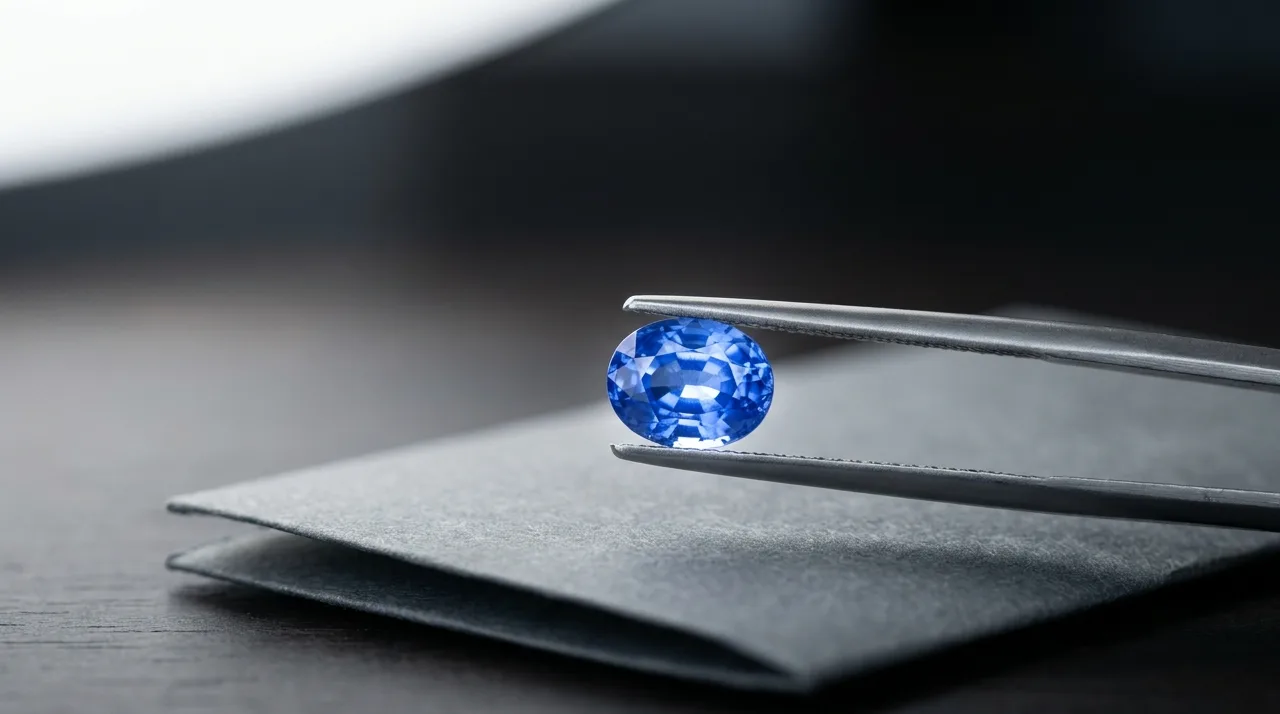
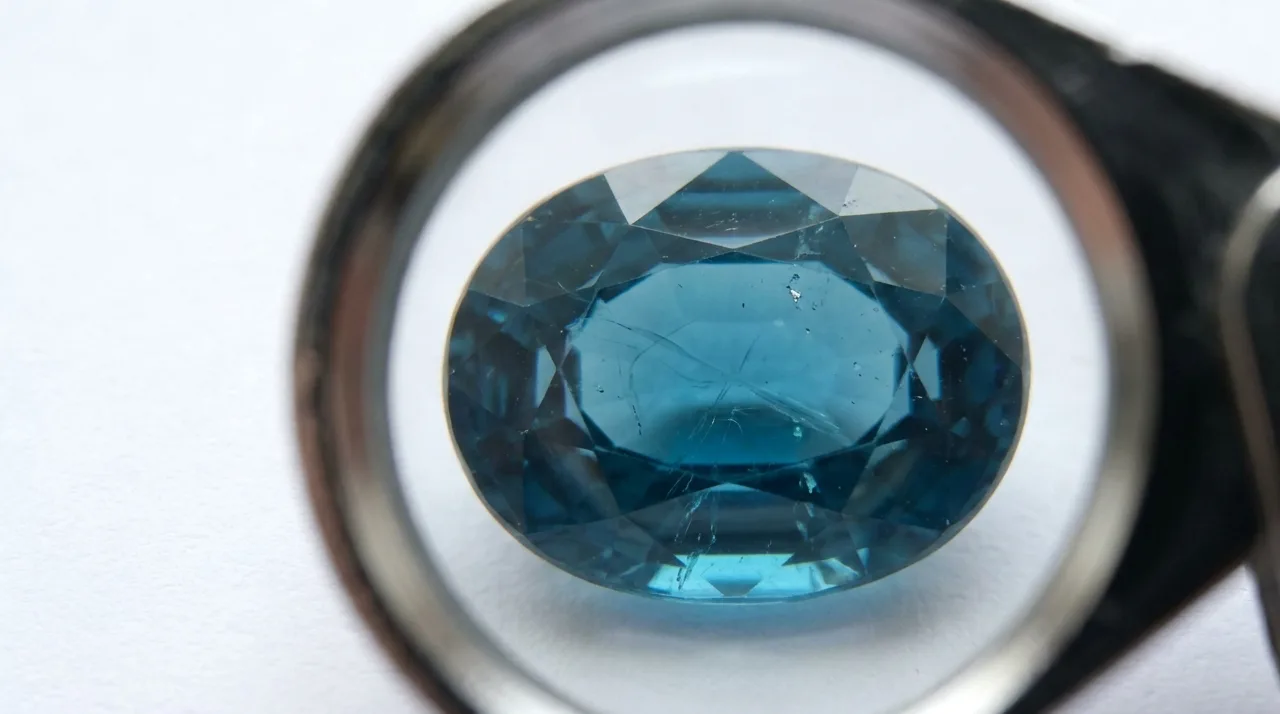
Loose, none of that is possible. You hold the sapphire between your fingers or in tweezers, turn it under honest light, and see the colour as it actually is from every angle. You see whether the cut returns light evenly or dies in the centre. You see the inclusions for what they are, and with a Ceylon sapphire that is often a good thing, because the right inclusions are a fingerprint of natural origin rather than a defect. The point is not that loose stones are flawless. The point is that you get to decide what you can live with, instead of a setting deciding for you.
This is the same stone-first logic behind the four-stage custom ring process: the stone is selected and paid for as its own transaction, and only then does the ring get designed around it. Choose the gem when it is naked and certified, and everything downstream gets easier.
How Do You Inspect a Loose Sapphire Before Setting It?
Inspecting before setting is the part a finished ring quietly denies you. Do it in this order.
Check the colour in real light. Take the stone to a window or a daylight-balanced lamp and away from the warm, flattering downlights of a showroom. Tilt it. Good Ceylon blue holds its colour and saturation as you rock it; weaker material flashes a strong colour from one angle and goes grey or washed-out from another. Note how it behaves in soft indoor light too, because that is where the ring will live most of its life.
Look face-up for a window. A window is a pale, transparent patch in the centre of the stone where you can almost read print through it, a sign the cut is too shallow and light is passing straight through rather than bouncing back to your eye. You cannot see a window once a stone is set and angled under a spotlight. You can see it in two seconds with a loose stone over a white background.
Read the inclusions, do not just fear them. Under a loupe, silk, fingerprints, and crystals are normal in natural Ceylon sapphire and help confirm it was never grown in a lab. What you are screening for is anything that threatens durability, a fracture reaching the surface, or a large inclusion under a spot where a prong will press. Our guide to telling a real Ceylon sapphire from a fake walks through what natural inclusions look like versus the tell-tale curved bands of synthetics.
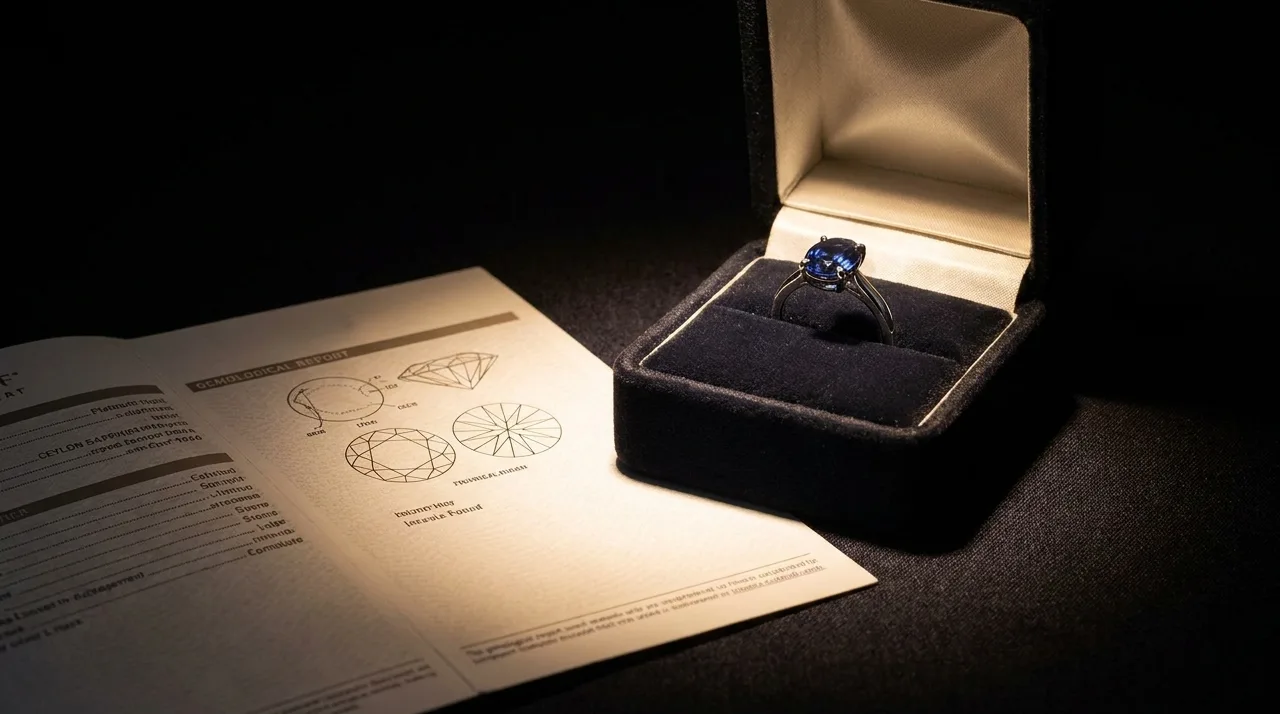
Match the stone to its laboratory report. A loose stone should come with a report from a recognised lab. Confirm the dimensions and weight on the report match the stone in front of you, and that the treatment and origin lines say what the seller claims. Reading a GIA sapphire certificate is a skill worth ten minutes before any purchase, because the difference between "no indications of heating" and a blank treatment line can move the price by several times.
This is also where buying online demands more of a seller, not less. A loose stone you cannot hold has to be sold honestly: a daylight video on a neutral background, the full lab report, and accurate measurements, not a single hero shot under studio lighting. That is the standard every stone we present is held to, because a loose sapphire only earns trust when nothing about it is hidden.
How Do Sapphire Setting Services Actually Work?
Once you own the stone, you have three routes to a ring, and knowing how to set a loose gemstone starts with picking the right one.
A fully bespoke setting. A bench jeweller designs a mount around your exact stone, builds it from raw metal, and sets the sapphire into it. This gives total control over every line of the ring and is covered end to end in the custom ring cost and timeline guide. It is the most involved route and usually the most rewarding for a centre stone you care about.
A semi-mount sapphire ring. A semi-mount is a setting that is completely finished except for the centre seat, which is left empty and sized to accept a stone within a given range. You buy the loose sapphire, the jeweller sets it into the semi-mount, and adjusts the seat to grip it precisely. Because the design already exists, a semi-mount is faster and cheaper than full bespoke while still letting you choose your own stone. It is the natural middle path, and a popular one for buyers who love a particular setting style but insist on sourcing the gem themselves.
Setting a client-supplied stone into a stock mount. The simplest route: you bring your loose sapphire to a jeweller, pick an existing setting design, and they set your stone into a version made to your finger size. Most bench jewellers who work with coloured stones will do this. Some ask you to sign a waiver for the small inherent risk of setting any stone, which is standard and nothing to be alarmed by.
Sapphire makes all three easy. At Mohs 9 it is the second-hardest natural material after diamond, far more forgiving at the setting bench than emerald, opal, or tanzanite. A skilled setter can use tighter prongs, a snug bezel, or a tension-style mount without the constant fear of chipping that softer stones demand.
How Do You Size a Loose Sapphire to a Mount?
This is the step most buyers never think about, and the one that separates a ring that looks made-for-you from one that looks adapted. A setting is not one-size-fits-all. The head, the seat, and the prong or bezel geometry all have to match the stone's actual millimetre dimensions, not just its carat weight.
Two sapphires of identical carat weight can have quite different footprints depending on cut. A deep stone hides weight below the girdle and looks smaller face-up; a shallow one spreads wider. So a setting is built or chosen around the length, width, and depth on the lab report, not the carat figure alone. With a semi-mount, the jeweller confirms your stone falls within the mount's stated size range, then tightens or opens the seat to grip it exactly. With a bespoke design, the CAD model is built directly from your stone's measurements, so the basket, the prongs, and the gallery all sit in proportion.
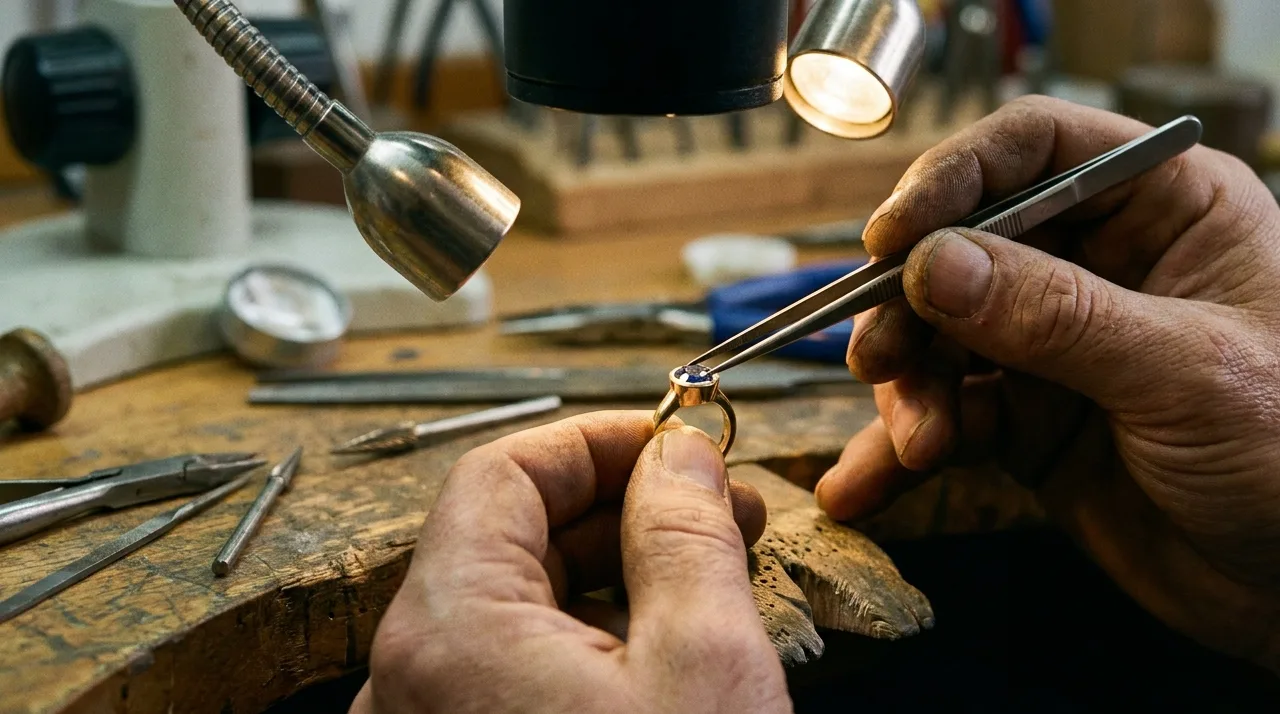
In March I watched our partner setter in Colombo seat a client's 1.6 carat Ceylon cushion into a platinum semi-mount the client had chosen online. The stone measured a fraction under the mount's nominal size. Rather than pack the gap, he took a graver and shaved a hair of metal from each seat, checked it under the microscope, shaved again, and reseated the stone four times until it sat dead level with no daylight under the girdle. "A loose stone tells you its real size," he said. "The carat number on the paper is just a starting point." That patience is invisible in the finished ring and is exactly why the stone-first route produces a setting that fits like it was poured around the gem.
If you are weighing colour, carat, and shape before you even have a stone in hand, the blue sapphire engagement ring buying guide covers how to choose dimensions that flatter a ring setting.
Is Buying a Loose Sapphire Cheaper Than a Finished Ring?
In most like-for-like comparisons, yes. A finished retail ring rolls the stone, the setting, and the showroom's markup into a single price, and the markup carries rent, staff, and the cost of inventory that sits unsold for months. The stone itself is often a smaller fraction of that ticket than buyers assume.
Buy the loose sapphire on its own and pair it with a semi-mount or a commissioned setting, and the spend redistributes toward the gem. When clients bring us a retail quote for a comparable specification, the same certified stone quality in the same metal, the loose-first equivalent typically lands 20 to 35 percent lower, or the same budget buys a noticeably finer stone. The Ceylon sapphire price per carat guide breaks down what the gem alone should cost by size and treatment tier, so you can see how much of a retail ring price is stone and how much is everything else.
The honest exception is the very bottom of the market. Below roughly $1,500 all in, a mass-produced ring with a small commercial-grade stone will undercut any loose-plus-setting build, because bench hours cost the same whether the stone is fine or ordinary. Above that, loose-first wins on both price and quality almost every time, and you end up knowing exactly what you bought.
Buying a loose sapphire for an engagement ring is not the complicated option. It is the disciplined one: you judge the stone with nothing hidden, certify it independently, choose how it gets set, and put more of your money where it belongs, in the gem itself. When you are ready, tell us the colour, carat, and budget you have in mind and we will source a certified loose Ceylon sapphire to your brief through our custom sourcing service, or browse the certified loose stones in our collection to see what a loose-first ring begins with.