Buying Guides
Custom Sapphire Engagement Ring Cost, Process & Timeline
A custom sapphire engagement ring usually costs less than its retail equivalent, not more. Here is the four-stage commission process, a realistic cost breakdown, and the timeline to plan backwards from a proposal date.
Published Updated 10 min read
By Naseef AR
A custom sapphire engagement ring typically costs $2,500 to $8,000 all in, and the stone is 50 to 70 percent of that number. A realistic build looks like this: $1,500 to $4,500 for a certified Ceylon sapphire between one and two carats, $800 to $2,000 for a handmade setting in 18k gold or platinum, with CAD design and setting labour usually folded into the workshop's price. The process runs in four stages, consultation, design approval, crafting, and delivery, and takes six to ten weeks door to door. And contrary to instinct, a commission usually costs no more than the equivalent ring in a retail case. Often it costs less. Here is where the money actually goes, what happens at each stage, and how to plan the timeline backwards from a proposal date.
Is a Custom Sapphire Ring More Expensive Than Buying Retail?
The assumption that custom means expensive comes from fashion, where bespoke is a luxury upcharge. In fine jewellery the economics run the other way. A retail ring price has to carry the boutique's rent, staff, packaging, advertising, and the financing cost of inventory that sits in a vitrine for months before someone buys it. The trade term for the standard markup is keystone: doubling. On branded pieces it is often more. Strip the ring back to its parts and the stone in a typical retail sapphire ring is a surprisingly small fraction of what you paid.
A commission redistributes that spend. The stone becomes the majority of the budget, the setting is made once, for you, in your size, and nobody is financing unsold stock on your invoice. When clients bring us a retail quote for a comparable specification, say a certified 1.5 carat Ceylon blue in a platinum solitaire, the commissioned equivalent typically lands 20 to 35 percent lower, or the same money buys a visibly better stone.
Two honest caveats. First, custom does not beat mass production at the bottom of the market: below roughly $1,500 total, a factory ring with a small commercial-grade stone will undercut any bespoke quote, because bench hours cost the same whether the stone is fine or not. Second, custom only wins when you can verify the stone you are paying for, which is why every stone we present comes with a report from a major laboratory such as GIA, SSEF, or Gübelin and a video shot in daylight, not studio lighting. The saving is real, but it lives in the like-for-like comparison.
How Does the Bespoke Sapphire Ring Process Work?
The bespoke sapphire ring process runs in four stages. Workshops differ in vocabulary, but the skeleton is the same everywhere: consultation, design approval, crafting, delivery. Here is what each stage actually involves, using our own commission flow as the example.
Stage 1: Consultation
You bring a short brief, not a blueprint: the occasion, a budget range, a metal direction, a style direction (solitaire, three-stone, halo, vintage, modern minimal), a colour direction for the stone, the ring size if you know it, and a target date if there is one. "I don't know yet" is a valid answer to most of these. The consultation's job is to turn taste into a sourceable specification, and it should cost nothing and commit you to nothing.
Stage 2: Stone Selection and Design Approval
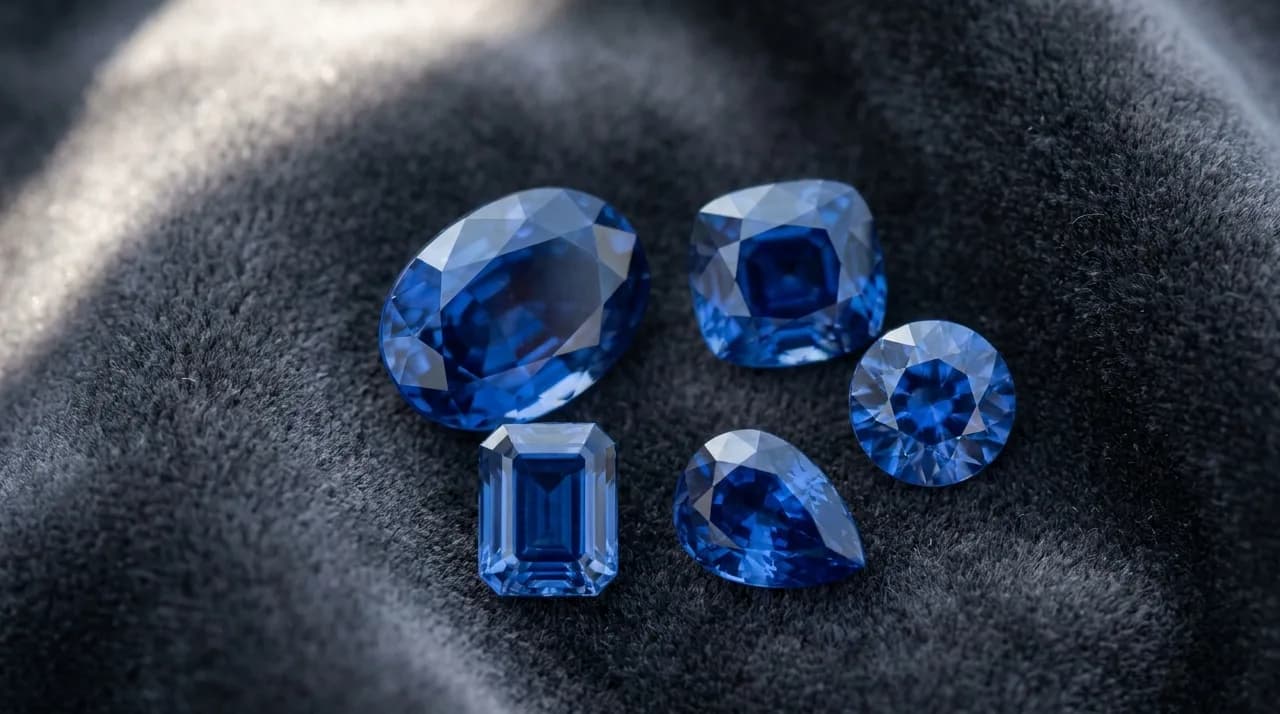
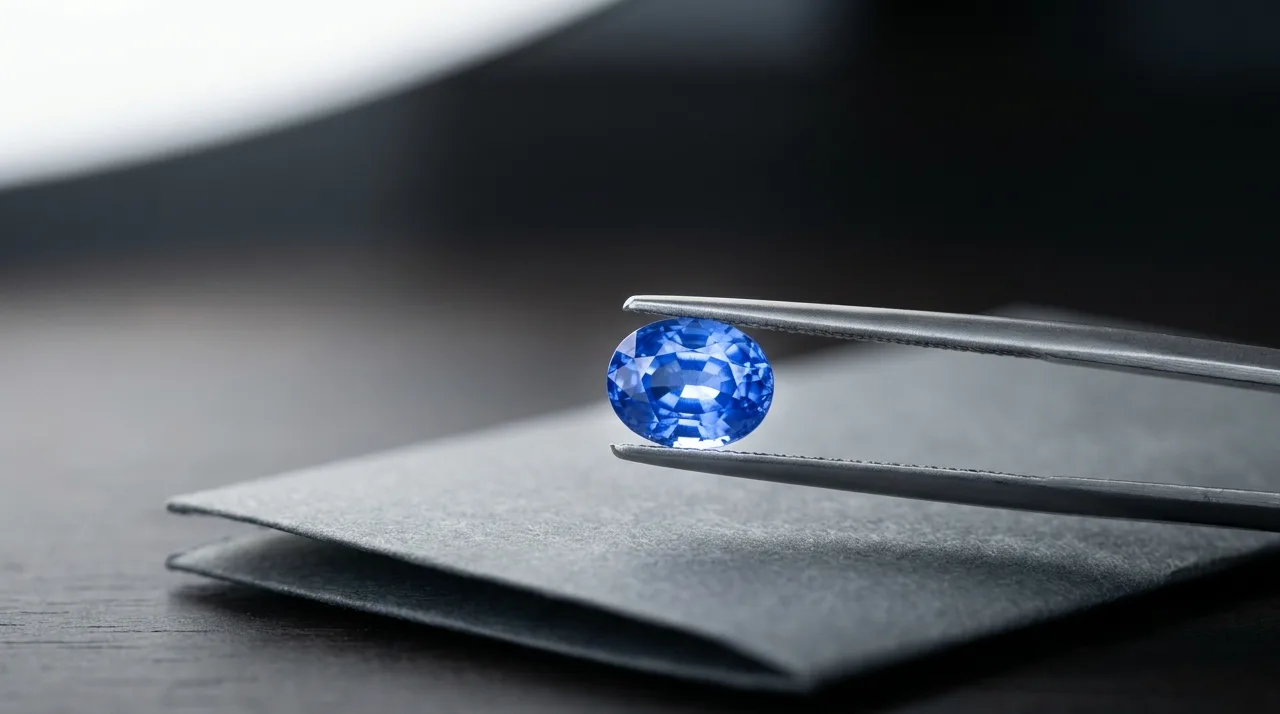
The stone comes first, because in a coloured-stone ring the stone is the ring. We present three to five loose sapphires matching the brief, each with its laboratory report and daylight video, and you choose with the stone judged on its own merits rather than flattered by a setting. This is the core argument for buying a loose sapphire first: you evaluate colour, cut, and clarity before metal ever surrounds the girdle.
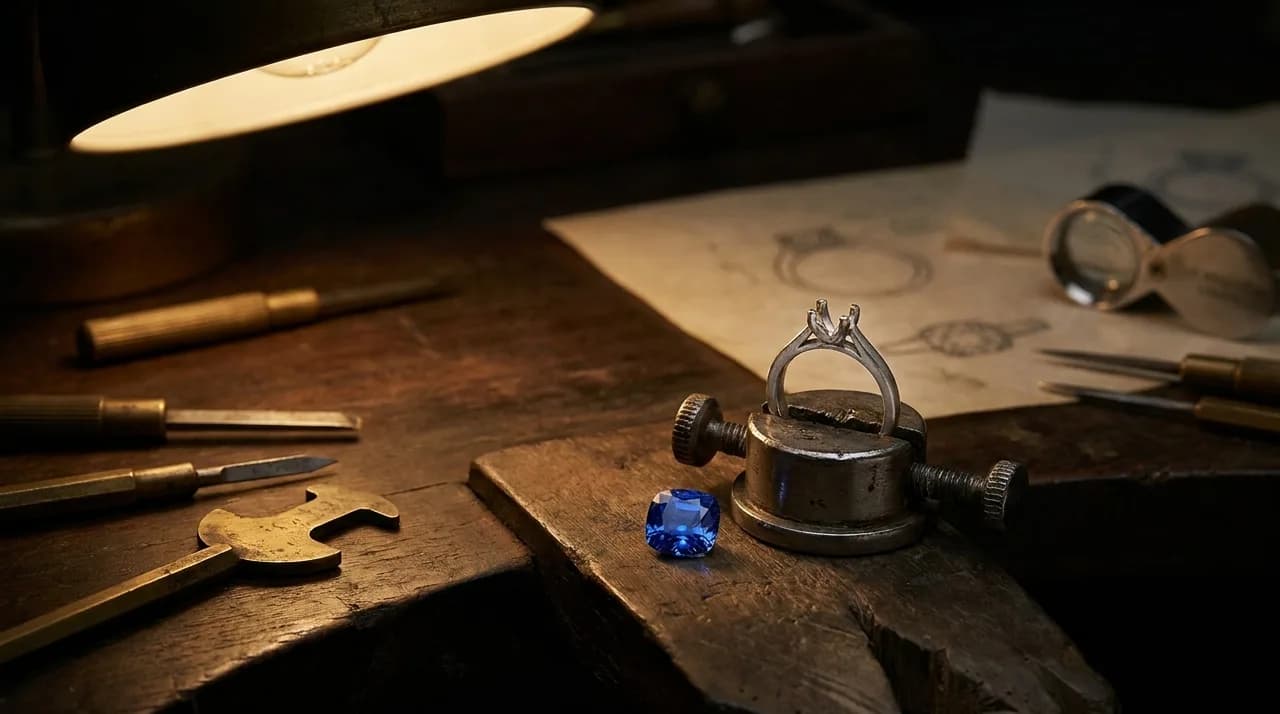
Only then does design begin. The workshop builds CAD renders around your chosen stone's exact millimetre measurements, not a generic mount. You review, request changes, and review again; two or three revision rounds are normal and should not cost extra. Nothing is cast until you approve a final render, and on more sculptural designs, a printed wax model you can hold.
Stage 3: Crafting
The approved design is cast in your metal or fabricated by hand, the mount is finished, the sapphire is set, and the ring is polished and hallmarked. Sapphire's Mohs 9 hardness makes it one of the more forgiving stones at the setting bench, but a flush bezel wall or four perfectly tensioned prongs are still hours of skilled work.
In March I spent an afternoon at our partner workshop in Colombo while their senior setter worked a client's 1.8 carat teal sapphire into a platinum bezel. The room smelled of pitch and polishing rouge. He seated the stone, held it under the microscope, shaved an almost invisible curl of metal from the inside of the bezel wall with a graver, and reseated it. Then he did it again. And a third time. When I asked how long one bezel takes he said, without looking up, "as long as the stone needs." That sentence is most of what you are paying for in the labour line.
Stage 4: Delivery
The finished ring is checked under magnification against the approved render, photographed, and shipped insured and tracked, with the stone's laboratory report and an insurance appraisal in the box. A reputable workshop includes a sizing window after delivery, because fingers measured in a warm room in June are not fingers in January. File the certificate with your insurance policy, not in a drawer.
How Much Does a Custom Sapphire Engagement Ring Cost? The Breakdown
Three lines make up the total: stone, setting, labour.
The stone: 50 to 70 percent of the total. A certified heated Ceylon sapphire of good colour runs $500 to $2,500 per carat at the one-carat mark, and unheated stones with major laboratory reports run $2,500 to $6,000 per carat, with per-carat prices stepping up sharply at the two and three carat thresholds. Our Ceylon sapphire price per carat guide breaks the ranges down by size and treatment tier. Worth knowing: teal and parti material often costs meaningfully less than classic blue of equivalent quality, which is one reason a teal sapphire engagement ring is the value play of the moment.
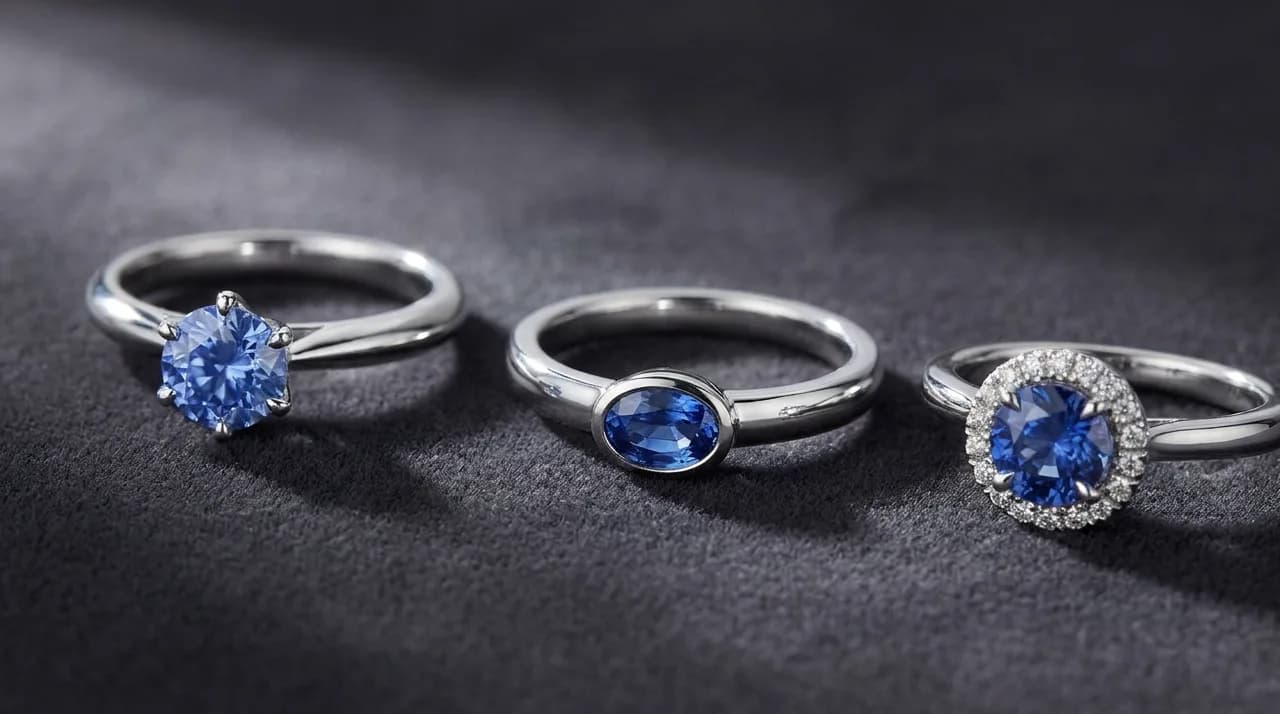
The setting: $800 to $2,000 for most builds. A handmade 18k gold solitaire starts around $800. Platinum adds 15 to 30 percent, partly metal price, partly density: the same ring needs more grams of platinum than of gold. Halos, three-stone designs, and full bezels push toward $1,500 to $2,500 because they carry more bench hours and, in a halo's case, a row of accent stones.
Design and labour: often invisible, always present. Itemised, CAD design runs $150 to $400 and setting labour another $150 to $400. Most workshops fold both into the setting price. Ask for the split anyway; a workshop that will not itemise its quote is telling you something.
| Build | Stone | Setting | Realistic total |
|---|---|---|---|
| Entry | 1 to 1.2 ct heated Ceylon blue or teal | 18k gold solitaire | $2,500 to $3,500 |
| Mid-range | 1.5 to 2 ct heated fine colour, or ~1 ct unheated | Platinum, bezel, or three-stone | $4,500 to $7,500 |
| Heirloom | 2 ct+ unheated, certified | Platinum halo or fully hand-fabricated | $10,000+ |
How Long Does a Custom Ring Take?
A realistic custom ring timeline is six to ten weeks from first conversation to ring in hand.
- Consultation and brief: a few days of back and forth.
- Stone sourcing and selection: one to three weeks. If a matching stone is in our stock or with our Ratnapura and Beruwala dealer network, days. Sourced to brief, especially for unheated stones in specific colours, allow the full three weeks.
- Design and approval: one to two weeks, including two or three CAD revision rounds.
- Crafting: three to four weeks at the bench.
- Delivery: three to seven days, insured and tracked, almost anywhere.
A four-week rush is possible when the stone is in stock and the design is a clean solitaire, but rushing is where mistakes happen, and the weeks before Christmas and Valentine's Day are when every workshop on earth is jammed. If there is a proposal date, start the conversation three months out and let the timeline breathe.
How Do Milestone Payments Work?
You should not be asked for 100 percent upfront, and you should be suspicious of any workshop that demands it. The standard structure ties each payment to something you have approved:
- The stone, first and separately. You select it against its lab report and pay for it as its own transaction. You own that sapphire outright from that moment, whatever happens with the setting project. This is another quiet advantage of the stone-first route.
- A setting deposit at design approval. Typically 50 percent of the setting price, paid only after you sign off on the final render, before any metal is cast.
- The balance before delivery, after you have seen photographs or video of the finished ring on the bench.
Alongside the milestones, insist on a written, itemised quote up front and a rule that any change is priced before it is made. None of this is adversarial; it is simply how disciplined workshops already operate.
What Should You Prepare Before a Consultation?
You can design your own sapphire ring without any design background. What moves the process fast is arriving with these seven things:
- A budget range, not a number. A band like $3,000 to $7,500 changes which dealer parcels get pulled; a false-precise figure just gets negotiated against.
- The ring size, or a borrowed ring. Trace the inner circle of a ring that fits the correct finger if you cannot measure directly. Sizing after delivery is routine, but starting close is better.
- A metal direction. Yellow, white, or rose gold, or platinum. Metal and stone interact: yellow gold warms a teal stone, white metals sharpen a classic blue.
- Three saved reference images. Rings whose lines you like, from anywhere. Three is enough to triangulate a taste; thirty is noise.
- A colour direction. Classic blue, teal, peachy pink, yellow, or white. If classic blue is the instinct, our blue sapphire engagement ring buying guide will sharpen it before you brief anyone.
- A target date, even a soft one, so the timeline runs backwards from reality.
- Your priority order. Size versus colour versus treatment status: decide which one leads, because at any fixed budget you are trading between them.
A custom sapphire engagement ring is not the indulgent option. Done stone-first, with certification and milestone payments, it is the disciplined one: more of your money in the stone, a setting made for your hand, and a paper trail for all of it. When you are ready, the consultation is the no-commitment part. Start with our custom ring commission form and tell us the occasion, the budget band, and the colour you keep coming back to, or browse the certified Ceylon sapphires in our collection to see the kind of stones a commission begins with.
Common questions
Frequently Asked Questions
How much does a custom sapphire engagement ring cost?
Most custom sapphire engagement rings come in between $2,500 and $8,000 all in, with the stone accounting for 50 to 70 percent of the total. A typical entry build pairs a one-carat certified heated Ceylon sapphire with an 18k gold solitaire for around $2,500 to $3,500. A mid-range build with a larger or finer stone and a platinum or more detailed setting runs $4,500 to $7,500. Unheated certified stones above two carats push a commission past $10,000, which is collector territory rather than the norm.
Is a custom sapphire ring cheaper than buying retail?
On a like-for-like comparison, usually yes. A retail ring price carries the boutique's markup, rent, staff, and the financing cost of inventory that sits unsold for months. A commission redistributes that spend toward the stone itself. Clients who bring us retail quotes for a comparable specification, the same certified stone quality in the same metal, typically land 20 to 35 percent lower going custom. The honest exception is the bottom of the market: below roughly $1,500 total, a mass-produced ring with a small commercial-grade stone will beat any bespoke quote.
How long does it take to make a custom sapphire engagement ring?
A realistic custom ring timeline is six to ten weeks from first consultation to delivery. Stone sourcing takes one to three weeks depending on whether a matching stone is in stock or sourced to brief, design and approval take one to two weeks including revisions, crafting takes three to four weeks, and insured delivery takes up to a week. A four-week rush is possible when the stone is in stock and the design is simple, but if there is a proposal date, start the conversation three months out.
Do I pay for a custom ring all upfront?
No, and you should be wary of any workshop that demands 100 percent before work begins. The standard structure is milestone payments tied to things you have approved: the stone is purchased first as its own transaction so you own it outright, a setting deposit of around 50 percent is paid at design approval before any metal is cast, and the balance is paid before delivery, after you have seen photos or video of the finished ring. Each payment maps to something concrete you signed off on.
Can I design my own sapphire ring without any design experience?
Yes. Designing your own sapphire ring starts from a short brief, not a blank page: a budget range, a colour direction, a metal preference, and a few reference images of rings whose lines you like. The workshop translates that brief into CAD renders built around your chosen stone's exact measurements, and you approve or revise the design before anything is cast. Nobody expects you to draw. Your job is to react to renders, which anyone can do.