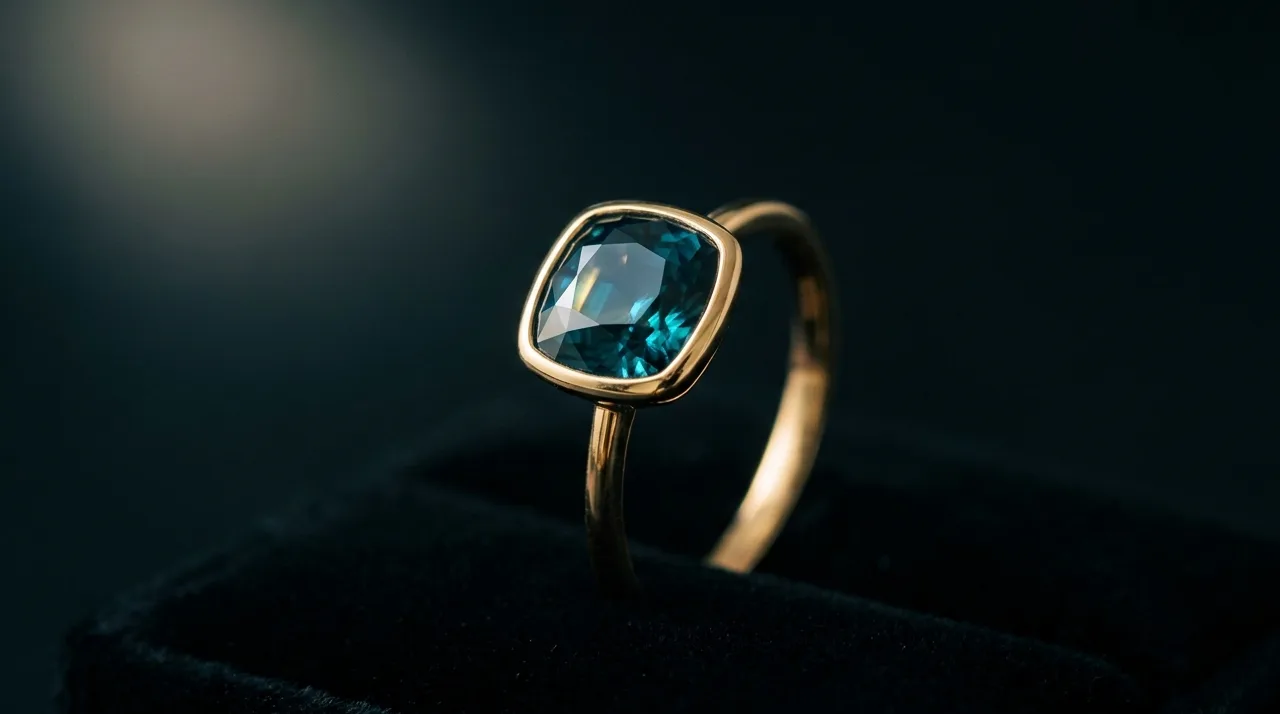
A teal sapphire engagement ring centres on a sapphire that sits between blue and green, the colour of deep water. Teal is a trade term, not a laboratory grade. On a lab report the same stone reads as "greenish blue" or "bluish green." The colour comes from iron, which is why most fine teal sapphires are sold unheated, a real advantage if you care about owning an untreated stone. Five decisions drive the choice: the blue-to-green ratio, the origin (Sri Lanka, Montana, or Australia), the tone and saturation, the setting and metal, and laboratory certification. Expect roughly $800 to $4,500 per carat for a good unheated teal in the common one to two carat range. This guide covers each decision in order.
What Is a Teal Sapphire?
A teal sapphire is corundum, the same mineral species as every other sapphire, coloured by iron rather than by the iron-and-titanium pairing that produces classic blue. That single difference in chemistry is the whole story. Iron pushes the colour toward green; titanium pulls it toward blue; a teal sits where the two are roughly balanced.
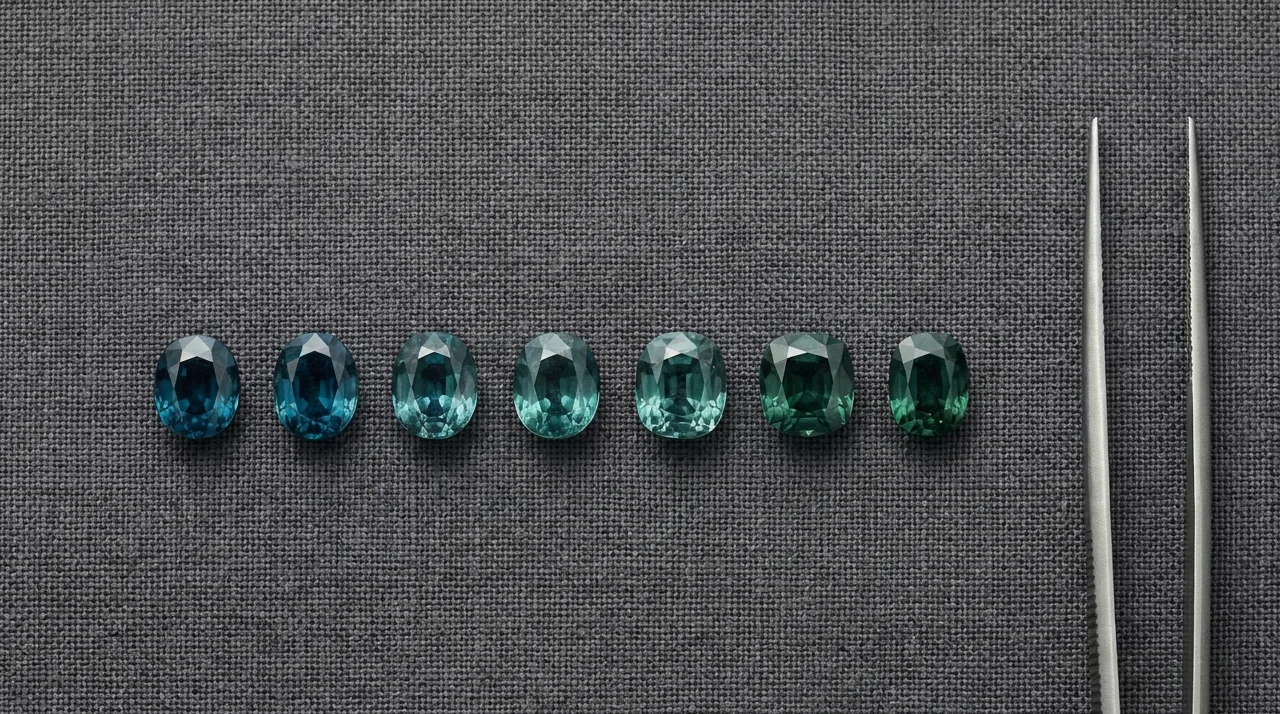
What the trade calls teal, a laboratory records as a blue green sapphire, using hue terms such as "greenish blue," "green-blue," or "bluish green." No major lab prints the word "teal" on a report, so the language on the certificate is your first checkpoint. The closer the stone sits to a true 50/50 split between blue and green, the more it reads as that deep peacock colour buyers picture when they say teal.
Two characteristics separate teal from a flat blue sapphire:
The blue-to-green ratio. Trade describes teals by their split, written as numbers like 70/30 or 60/40 blue to green. A 70/30 reads as a blue stone with a green soul; a 50/50 is the most distinctly teal; anything past 40/60 starts to read as a green sapphire with a blue cast. None is objectively better. It is a matter of taste, and the ratio is the single biggest driver of how the stone looks on a hand.
Colour shift and zoning. Iron-coloured sapphires often shift under different light, leaning bluer in daylight and greener under warm indoor light, or the reverse. Many also show visible colour zoning, where bands of blue and green sit side by side in the same stone. In a teal this is usually a feature rather than a flaw, provided the zones are even and the overall face-up colour stays balanced. When the green concentrates into a sharply separated patch, the stone crosses into parti sapphire territory, a related two-colour look that has become 2026's standout trend.
What Does a Teal Sapphire Mean?
If you are looking for the teal sapphire meaning, it sits at the intersection of two colour traditions. Blue has stood for trust, calm, fidelity, and sincerity for centuries, which is exactly why sapphire became an engagement stone long before the diamond. Green carries associations of renewal, growth, and balance. A teal blends the two: steadiness and freshness in one stone.
There is no ancient lore attached specifically to teal, because teal as a named category is recent. That is part of the point. A teal sapphire engagement ring tends to appeal to couples who want the heritage and durability of sapphire without the expected blue, something that reads as personal and a little unconventional rather than borrowed from a royal collection. Sapphire's older symbolism still applies: wisdom, loyalty, and a stone hard enough to last several lifetimes.
Where Do Teal Sapphires Come From?
Three origins supply almost all of the teal sapphires in the trade, and they are genuinely different stones.
Montana, United States. The name that built the teal trend. Montana produces soft, pastel, often greyish-teal stones, usually under two carats and frequently under one. Mined under tight US oversight and easy to trace, Montana material carries a strong ethical-provenance premium, so you pay more per carat for a smaller stone. It is the right pick for a buyer who values a fully traceable domestic origin and loves the gentle, muted pastel look.
Queensland, Australia. The original teal source and still the deepest. Australian basalt-hosted sapphires run dark and richly saturated, with strong teals and partis. For decades the trade dismissed them as too inky; the teal wave turned that on its head. Australian teals offer the best saturation per dollar, with the caveat that the darkest stones need a skilled cut to keep them from reading black.
Sri Lanka (Ceylon). A Sri Lanka teal sapphire tends to be brighter, cleaner, and available in larger sizes than Montana or Australian material, because Ceylon's metamorphic geology produces high-clarity crystals across a wide colour range. If you want a teal centre stone above two carats with the clarity to carry a larger setting, Ceylon is usually the most practical origin, and it is where most of our own teal sourcing happens.
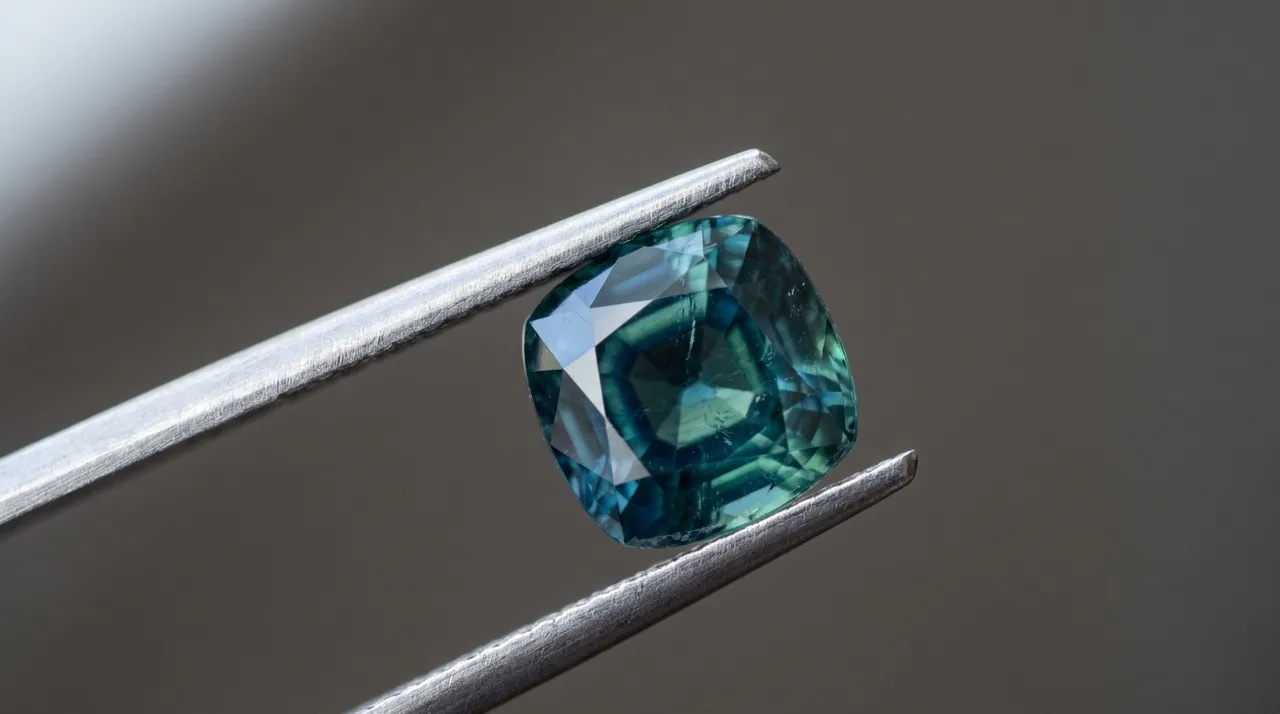
In early 2025, a couple from Seattle came to our custom desk with a Pinterest board full of Montana teals and one problem: every stone they loved was under 1.2 carats, and they wanted closer to two. Montana rarely cuts clean teal much above that size, so we went to Sri Lanka instead. Over three weeks, our dealer in Ratnapura sent parcels of greenish-blue rough and cut stones, and we reviewed nine. The one they chose was a 2.04-carat cushion, roughly a 65/35 blue-to-green that shifted slightly greener under warm restaurant light, eye-clean, with an AGL report reading "green-blue" and "no indications of heating." It cost $3,200 per carat, well under a comparable fine blue Ceylon, and a Colombo jeweller set it in a yellow gold bezel. The warm metal did exactly what warm metal does to teal: it pushed the blue-green forward and made the whole stone glow. They got the size Montana could not give them, the unheated status they wanted, and a colour almost no one else at the table will have. For a fuller head-to-head on the two origins, our Ceylon vs Montana sapphire comparison breaks down colour, size, and mining models side by side.
How Teal Sapphires Are Graded
There is no standardised teal grade, so judging one means reading the same three colour axes a lab uses, plus a fourth that matters more in teals than in any blue stone.
Hue (the blue-to-green ratio). Decide where on the blue-to-green line you want to sit, then judge consistency. The best teals hold a clean, recognisable blue-green from edge to edge rather than drifting toward grey or muddy olive.
Tone. This is lightness to darkness. Aim for medium to medium-dark. Too light and the colour washes out to a pale aqua; too dark and it reads black in anything but direct light, the classic failing of poorly cut Australian material.
Saturation. The intensity of the colour and the biggest separator of price. The enemy is grey. A grey mask drains a teal of life and is the most common reason an inexpensive teal looks dull in person. Vivid, clean saturation is what you are paying for.
Zoning and colour shift. Look at how the blue and green are distributed. Even, integrated zoning that produces a balanced face-up colour is desirable. A stone where the green collapses into one isolated corner is less valuable as a teal, though it may still be a striking parti. Ask to see the stone, ideally on video, in daylight, under warm indoor light, and in shade, so you know how it will actually look across a normal day.
How Much Does a Teal Sapphire Engagement Ring Cost?
Teal generally costs less per carat than top cornflower or royal blue Ceylon of equal quality, which makes it one of the better values in the sapphire world. Provenance is the wildcard: a traceable Montana origin commands a premium that has little to do with the stone's raw colour. Approximate 2026 price-per-carat ranges for stones in the one to two carat band:
| Quality tier | Typical price per carat (1 to 2 ct) |
|---|
| Commercial-grade teal, greyish or included | $250 to $700 |
| Good unheated teal, balanced hue, eye-clean | $800 to $2,000 |
| Fine vivid unheated teal (Ceylon or Australia) | $2,000 to $4,500 |
| Montana teal with origin report (provenance premium) | $2,500 to $6,000 |
| Exceptional 2 ct and above, unheated, vivid | $5,000 to $9,000+ |
Stone-only figures for loose teal sapphires. A setting adds roughly $800 to $1,500 for a simple solitaire or bezel in 14k to 18k gold, and $2,000 to $3,500 or more for a diamond halo or platinum. Most complete one to two carat teal engagement rings land between $3,000 and $12,000.
The single biggest way to overpay is to buy the setting before the stone. Because teal value swings so hard on saturation and origin, the stone is where your budget does its real work. For the logic behind picking the loose gem first, see our guide on buying a loose sapphire for an engagement ring, and for how sapphire pricing behaves across sizes and treatment tiers, our Ceylon sapphire price per carat guide covers the mechanics in full.
A teal sapphire is corundum, so it rates 9 on the Mohs hardness scale, exactly as durable as any blue sapphire and second only to diamond. It handles daily wear with ease. The design questions are about colour and protection, not toughness.
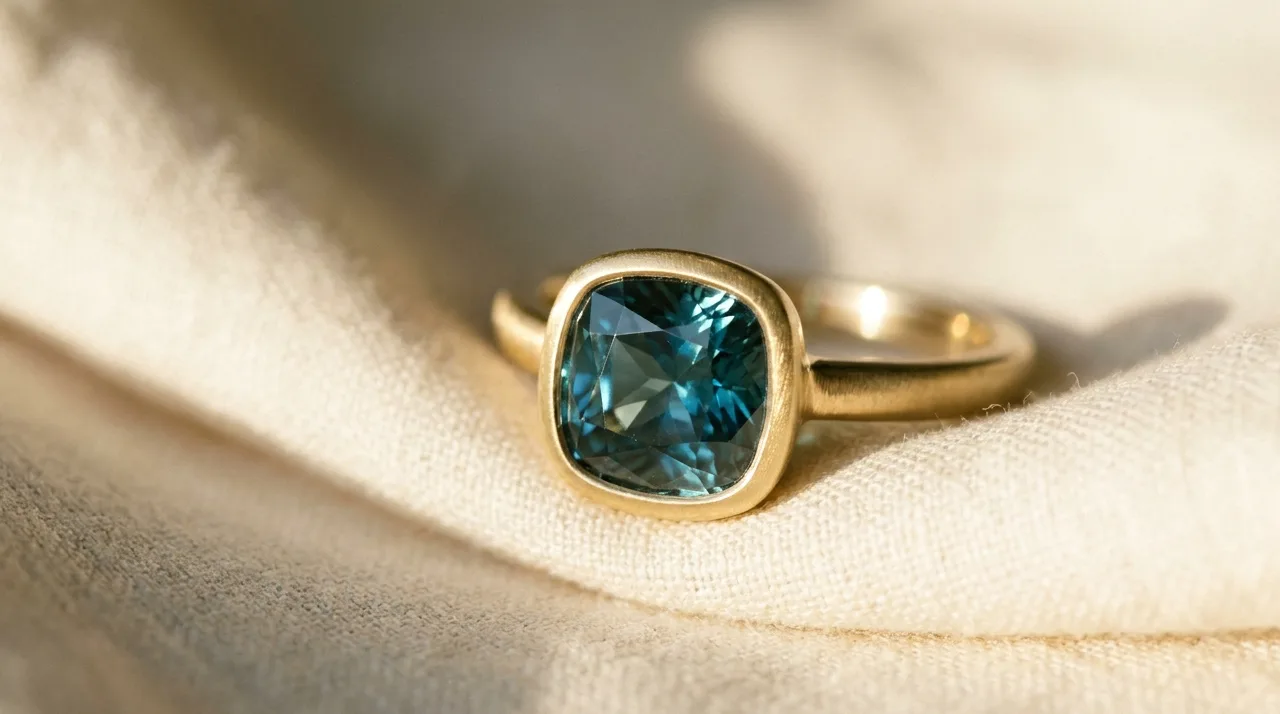
Metal first. Yellow gold is the standout pairing for teal. The warm metal sits opposite blue-green on the colour wheel and makes the stone read brighter and more saturated, which is why most of the teal rings we set go into yellow gold. Rose gold gives a softer, vintage feel and flatters greener stones. White gold and platinum produce a cooler, more contemporary look, but they can make a lightly saturated or greyish teal look duller, so reserve them for vivid, clean stones.
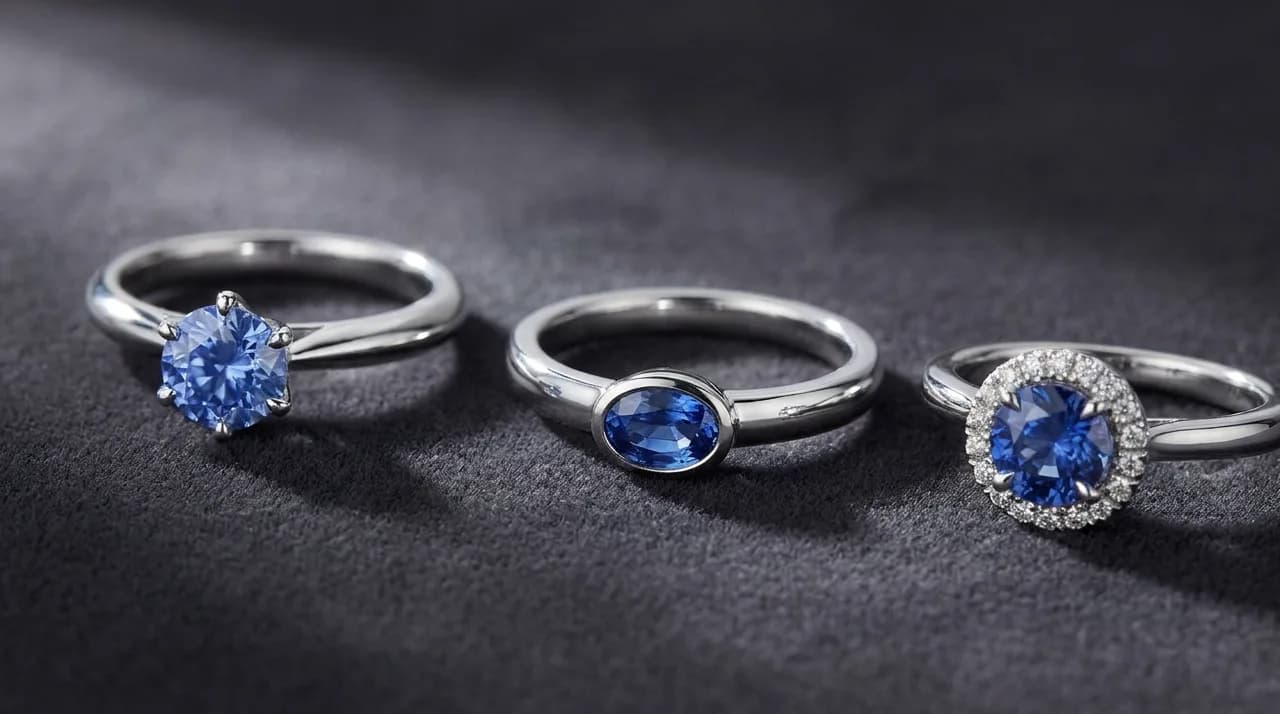
Settings that suit teal. The bezel, a full metal rim around the stone, is both the most protective setting and the defining modern look for teal, and it happens to be a named 2026 trend. A low-profile prong solitaire shows more of the stone and works well for vivid material. Halos, whether diamond or the salt-and-pepper diamonds popular with the alternative-bridal crowd, enlarge the centre and echo teal's individualist character. Three-stone designs with pale accents frame the colour nicely. The full logic of protective settings, prong counts, and metals is covered in our blue sapphire engagement ring buying guide, and it applies to teal stones without change.
Certification: What to Confirm Before You Buy
Because teal stones sell largely on being natural and unheated, the laboratory report is doing real financial work and is not optional. For a teal sapphire, ask for a report that confirms three things.
Species and natural origin. The report should state natural sapphire, ruling out synthetic corundum and glass-filled composites, both of which can imitate a teal colour cheaply.
Treatment status. Look for "no indications of heating" if you are paying the unheated premium that most fine teals carry. This is the single most important line on the certificate for this colour, because heating a teal usually destroys the green. Our explainer on unheated versus heat-treated sapphires covers why the distinction moves price by several times.
Colour and, where it matters, origin. The report will describe the colour in lab language ("green-blue," "bluish green"), never as teal, so match that wording to what your eyes see. If you are paying a Montana provenance premium, the origin call needs to be on a report from a lab equipped to make it, such as AGL or GIA. For a walkthrough of every field on a report and how to verify it is genuine, see our guide on how to read a GIA sapphire certificate.
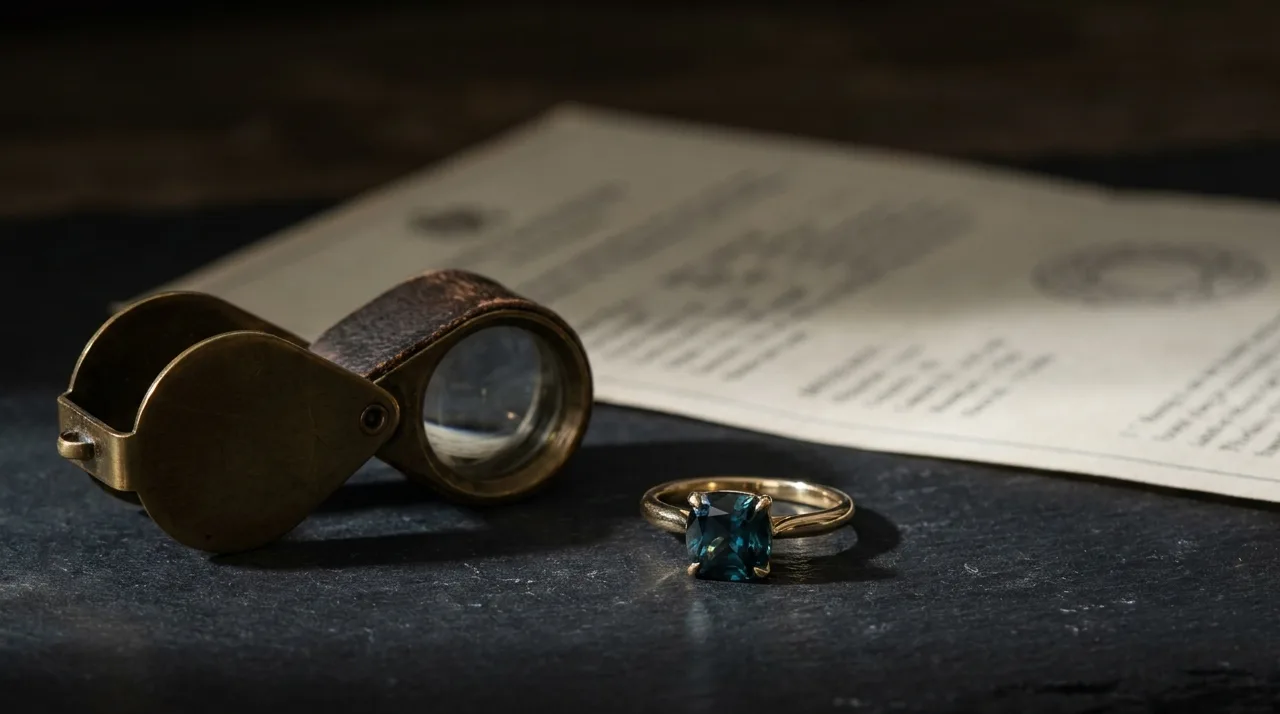
One honest note about buying any teal online: the colour is genuinely hard to photograph, and a teal can look bluer or greener from one screen to the next. That is a real industry problem, not a reason to distrust every listing. The way we handle it is to shoot each stone in daylight, warm light, and shade, send video rather than a single hero image, and put the lab's exact colour wording next to our own description so you are matching the stone to the certificate, not to a flattering photo.
Browse the Crestonne collection for certified Ceylon teal and blue-green sapphires available as loose stones for setting, or submit your exact specifications (blue-to-green ratio, carat, treatment preference, budget) through our custom sourcing service. We work directly with the Ratnapura dealer network, send video in three lighting conditions, and every stone arrives with a major laboratory report stating colour, treatment, and origin, so the teal you fall for is the teal you receive.