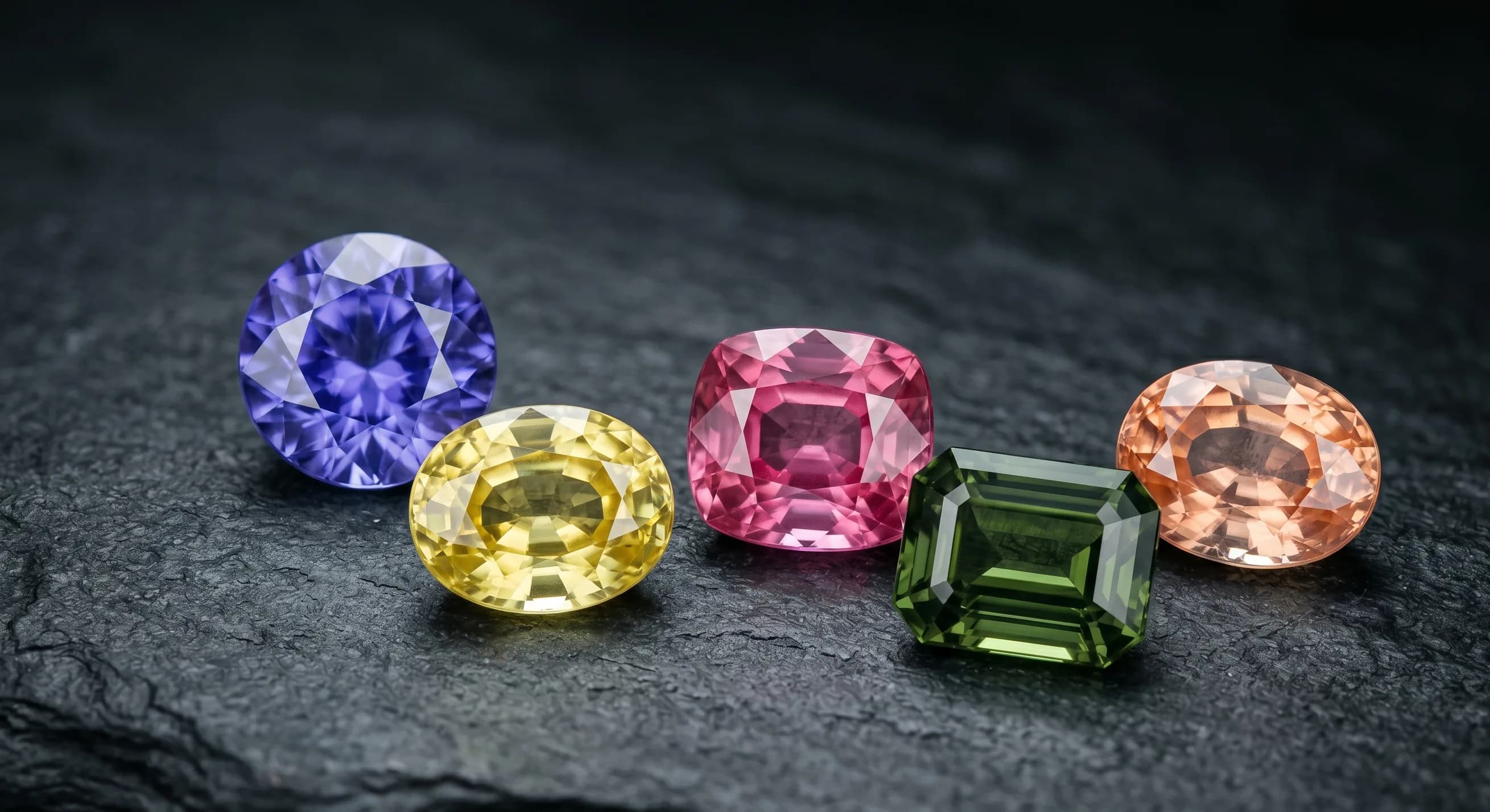
A parti sapphire is a single sapphire crystal that shows two or more distinct colours in separate zones, most often blue and yellow, blue and green, or yellow and green, divided by a boundary you can see through the top of the stone. Unlike a teal sapphire, where blue and green blend into one colour, a parti keeps its colours apart and side by side. The zoning is a geological record of how the crystal grew, it cannot be faked, and no two stones are alike. That individuality, together with the fact that nearly all parti sapphires are unheated, is why they became 2026's favourite alternative engagement stone. Here is how they form, how Ceylon and Australian material differ, and how to judge one.
What Is a Parti Sapphire?
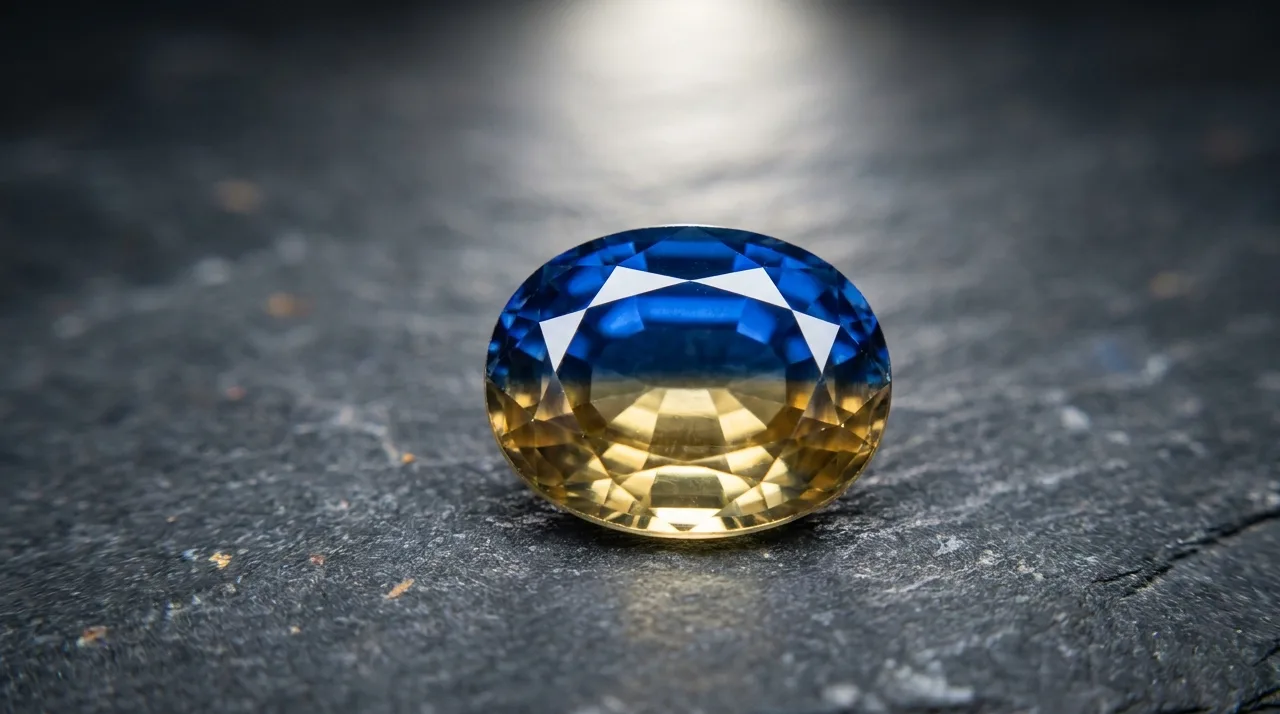
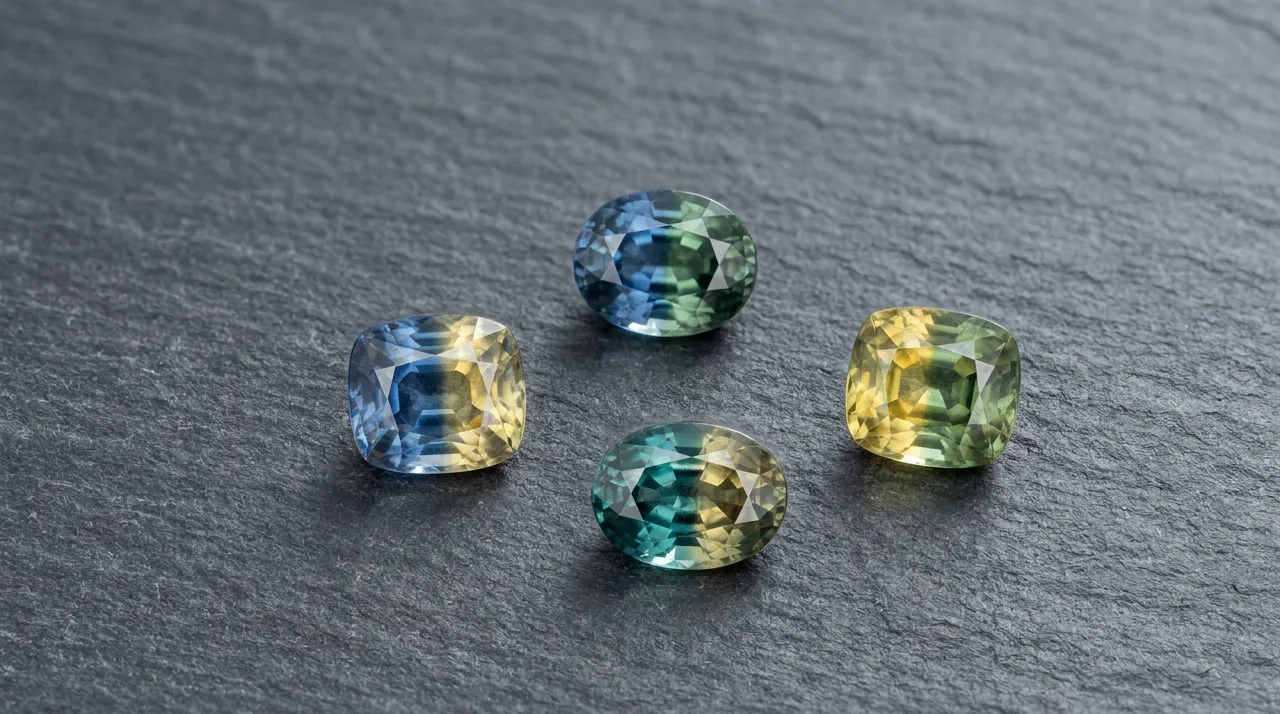
A parti sapphire, sometimes spelled "party" sapphire, is corundum that displays more than one colour within a single stone. The colours sit in defined zones rather than blending, and the line where they meet is the whole point of the stone. When exactly two colours are present, the trade often calls it a bi color sapphire; three or more distinct colours in one crystal is the rarer, more prized form.
The term "parti" is a trade word, not a laboratory grade. No major lab prints "parti" on a report. Instead, a GIA, AGL, or SSEF report describes the colours present, for example "blue and yellow," and may note colour zoning in the comments. So the certificate confirms the colours and the natural origin, while the word parti is how the market describes the look. Sri Lankan cutters have an old word for this mixed-colour rough, samudra, after the colour of the sea.
What makes parti different from every other fancy sapphire is that the value lives in the relationship between the colours, not in a single hue. A buyer is choosing a combination and a boundary, which is a fundamentally different decision from picking the best blue.
The colours in a sapphire come from trace elements trapped in the crystal as it grew. Iron paired with titanium produces blue. Iron on its own pushes toward yellow and green. Over the very long timescales of crystal growth, the chemistry of the fluid feeding the crystal changes, and each new layer of corundum locks in whatever elements were present at the time. A parti sapphire is simply a crystal that grew through more than one chemical environment, recording each as a band of colour.
This is why the zoning is impossible to fake convincingly and why it is unique to each stone. The pattern is a fingerprint of one crystal's specific history. A skilled cutter reads the rough and orients it so the colour boundary runs through the centre of the table and reads cleanly face-up, rather than hiding in the pavilion or sitting off to one side. That orientation decision is where a good parti is made or lost, and it is the same lapidary judgement covered in our guide to Sri Lankan gem cutters. The rough is identical in the ground; the cutter decides whether you see one colour or two.
Parti vs Teal Sapphire: What's the Difference?
The parti vs teal sapphire question comes up constantly, because both are iron-coloured, both are usually unheated, and both rode the same 2026 wave. The difference is simple once you see it.
A teal sapphire is one colour. Blue and green are so thoroughly mixed inside the crystal that your eye reads a single peacock blue-green. There is no boundary, just a blended hue. Our complete teal sapphire guide covers how that blend is graded by its blue-to-green ratio.
A parti sapphire is two or more colours. The hues stay separate, with a visible line between them, so you might see a clearly blue half and a clearly yellow half in the same stone.
Some stones blur the line, a blue-green body with a separate yellow zone, which is part teal and part parti. But the working distinction holds: if the colours blend into one, it is a teal; if you can point to where one colour stops and the next begins, it is a parti. Teal is a mixture, parti is a mosaic.
Ceylon vs Australian Parti Sapphires
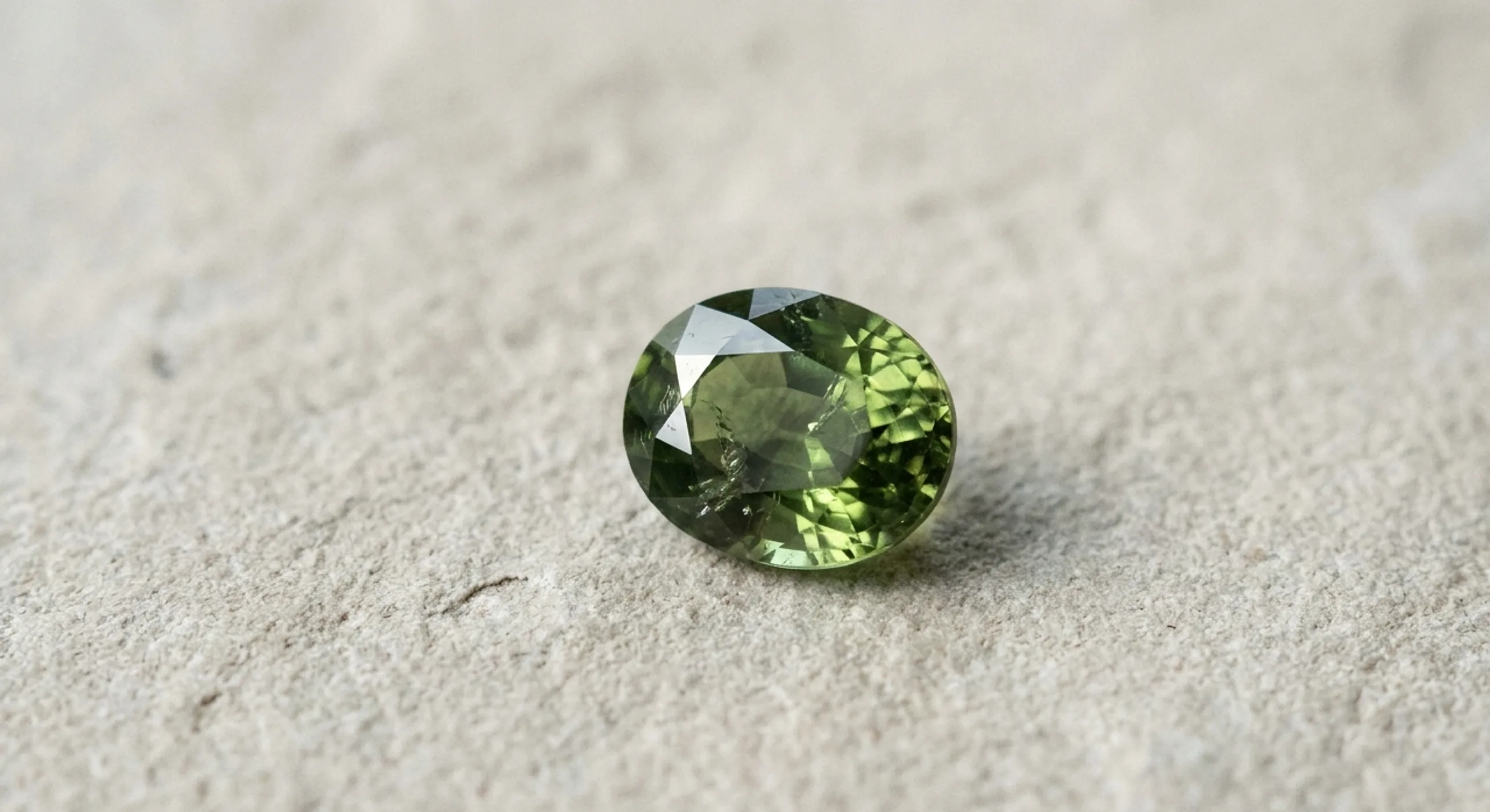
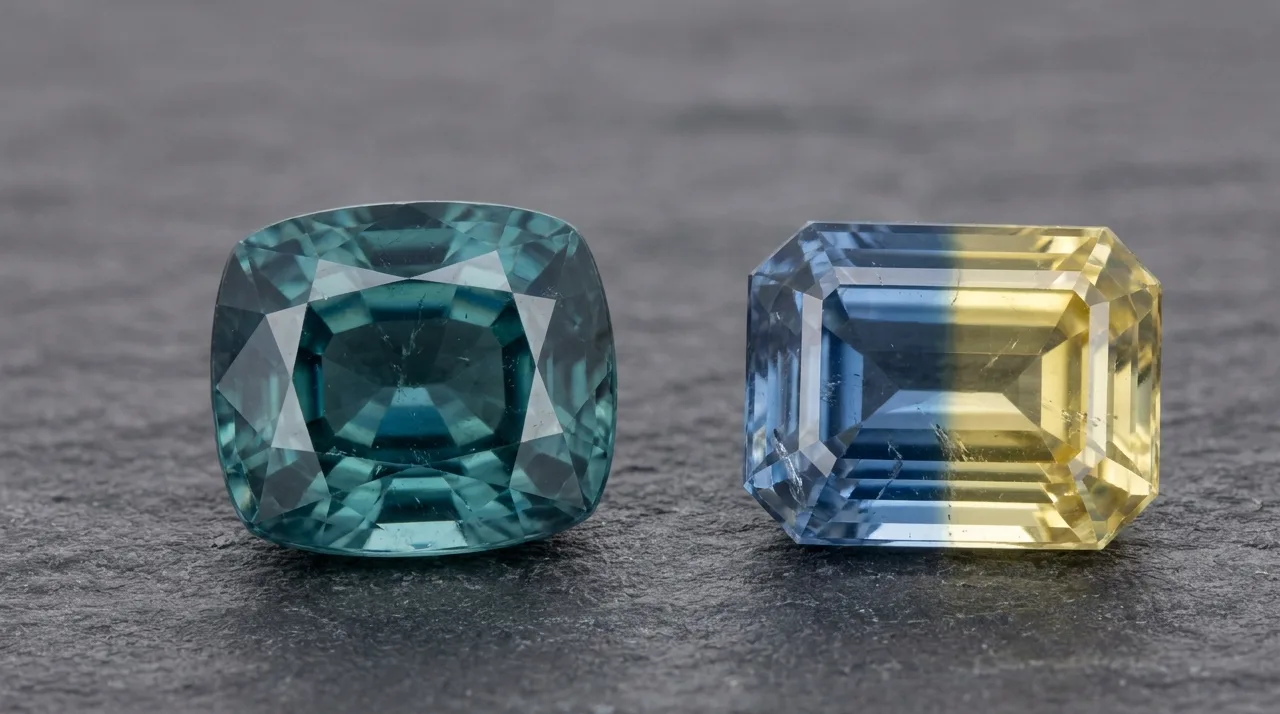
Most parti sapphire on the market is Australian, from the basalt-hosted deposits of Queensland. Australian parti is typically deeply saturated, running to strong teal-and-gold combinations, and it is available in commercial volume. The trade-off is tone: the same iron that gives the rich colour can make Australian stones read dark, so the blue zone in a poorly cut Australian parti can look almost black in low light.
Madagascar produces parti material in quantity as well, often lighter than Australian.
Sri Lanka produces parti sapphire in genuinely small parcels, usually as a by-product of cutting blue or yellow rough rather than as a deliberate target. Ceylon's metamorphic geology yields high-clarity crystals, so Ceylon parti tends to be brighter and cleaner than Australian, frequently a blue-and-lemon-yellow combination that stays lively under indoor light. It is rarer, and for a stone meant to be worn and seen across a normal day, that brightness is often worth more than raw saturation.
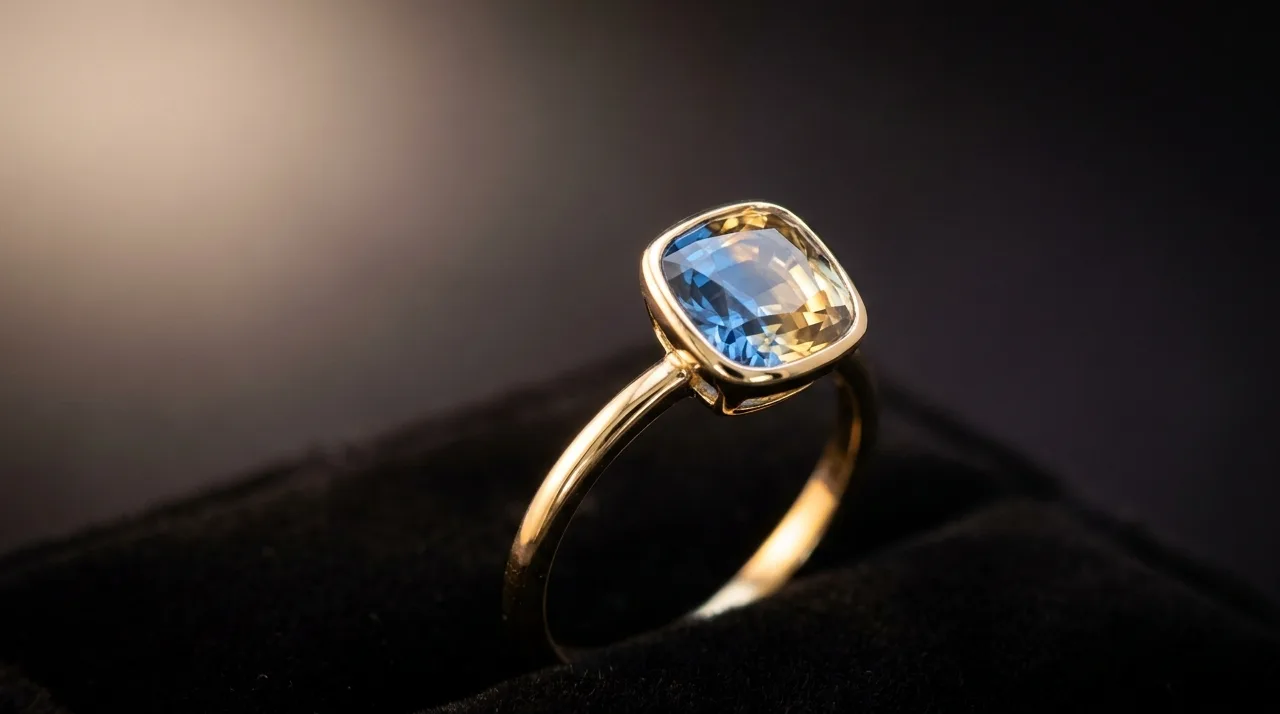
The most common question I get about parti is whether Australian or Ceylon material is "better," and the honest answer is that they are different tools. Early this year I sourced two candidates for a London designer building a bezel engagement ring: a 1.8 carat Queensland stone, a gorgeous deep teal-and-gold but slightly dark in the blue, and a 2.1 carat Ceylon blue-and-lemon with a boundary that ran dead centre through the table. Under the showroom lamp the Australian stone was the more dramatic of the two. Under daylight by the window, and then again under a dim restaurant light we tested it in, the Ceylon stone held its colour while the Australian blue went sleepy. The designer took the Ceylon, AGL report reading "blue and yellow, no indications of heating," and it went into yellow gold. For a ring that lives indoors as much as out, the brighter Ceylon parti was the right call. For a collector who wanted maximum saturation in a display piece, I would have pointed the other way.
How to Judge a Parti Sapphire's Quality
There is no standardised parti grade, so judging one means looking at the things that make the combination work:
Boundary sharpness. The cleaner and more defined the line between colours, the more valuable the stone. A crisp, clear boundary is prized; a muddy, gradual transition that fades through a grey middle is the most common flaw.
Centring and symmetry. A boundary that runs through the centre of the table, splitting the stone in a balanced way, is worth more than one shoved to one edge. This is a cutting decision, and it is the single biggest lever on how a parti looks.
Saturation on both sides. Each colour zone should be vivid in its own right. A bright blue paired with a washed-out, greyish yellow is a half-finished stone. The strongest partis have real saturation on every side of the line.
Face-up balance. The colours should read clearly when the stone is viewed from the top, in the position it will sit in a ring, not only when tilted under a lamp.
Why no two match. Because the zoning records one crystal's unique growth, every parti is genuinely one of a kind. This is the stone's great selling point and also why you should buy the individual stone in front of you rather than a "type." There is no replacing it with an identical one later.
Parti Sapphires for Engagement Rings
A parti sapphire engagement ring is corundum at its core, so it rates 9 on the Mohs hardness scale, exactly as durable as any blue sapphire and second only to diamond. It handles daily wear without issue. The design choices are about showing the colours well and protecting the stone.
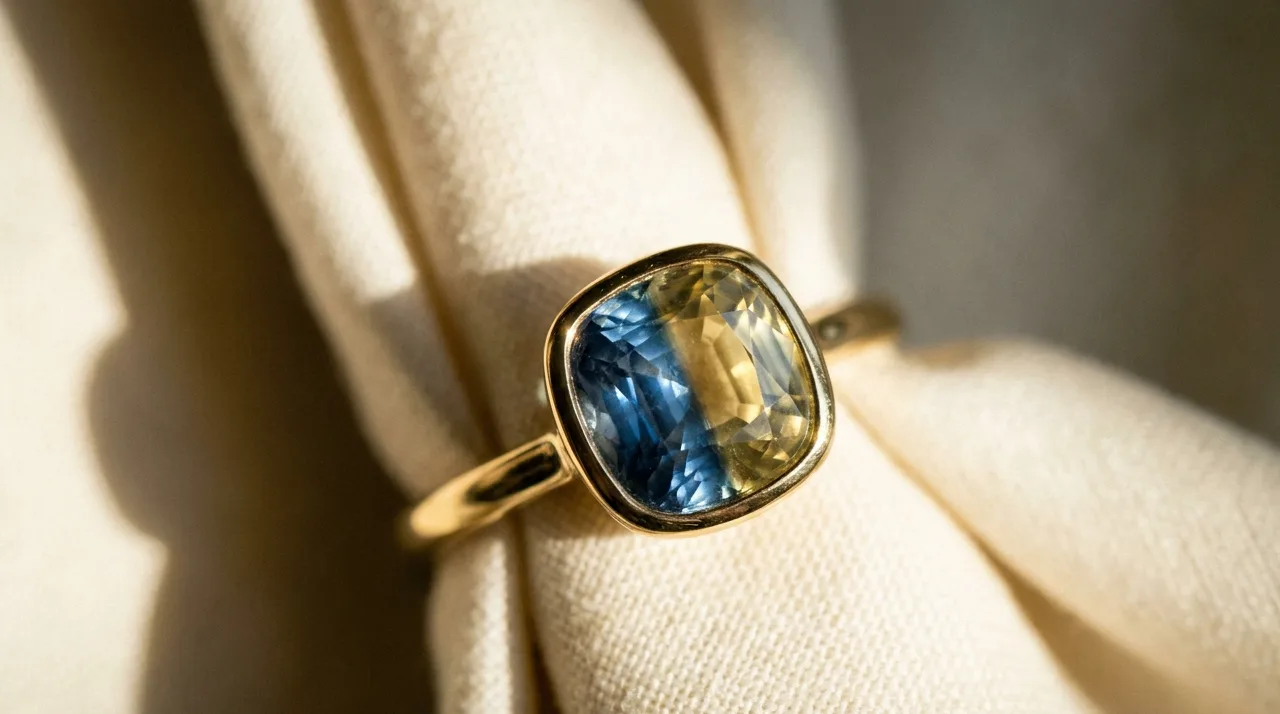
Metal. Yellow gold is the natural partner for most parti stones, especially blue-and-yellow combinations, because the warm metal echoes the yellow zone and makes the whole stone glow. Rose gold flatters greener partis. White gold and platinum give a cooler, more modern frame and suit stones where the blue dominates.
Setting. The bezel, a metal rim fully around the stone, was a defining 2026 trend and is also the most protective setting, which makes it the popular choice for parti rings. A low-profile prong solitaire shows the most of the stone. Halos and salt-and-pepper diamond surrounds suit the individualist, alternative-bridal character that draws people to parti in the first place.
Buying tips. Insist on a daylight image or video alongside the studio shot, because a parti can be lit to exaggerate its boundary. View it the way it will be worn. Confirm the colours and treatment on a laboratory report, and remember that most parti is genuinely unheated, so a clean report is the expectation, not a bonus. For why that untreated status matters and how it shows up on a report, see our guide to unheated versus heat-treated sapphires. And if you are weighing a parti against other non-blue options, our roundup of September birthstone alternatives puts the fancy sapphire colours side by side.
One honest note about buying any parti online: the boundary and the colour balance are genuinely hard to capture in a single photo, and the same stone can look sharper or softer from one image to the next. That is a real problem, not a reason to distrust every listing. The way we handle it is to photograph each parti in daylight, lamp light, and shade, send video rather than one hero frame, and put the lab's exact colour wording next to our own, so the stone you choose is the stone that arrives.
Browse the Crestonne collection for certified Ceylon parti and fancy sapphires available as loose stones for setting, or submit your exact specifications (colour combination, carat, boundary preference, budget) through our custom sourcing service. We work directly with the Ratnapura and Beruwala network, send video in three lighting conditions, and every stone arrives with a major laboratory report stating its colours, treatment, and origin, so the parti you fall for is the parti you receive.