Specialty Stones
September Birthstone Alternatives Beyond Blue Sapphire
September's birthstone is sapphire, but sapphire is not only blue. Fancy sapphires in yellow, pink, violet, and green, parti-coloured sapphires that split between two hues, and rare non-corundum Sri Lankan stones all qualify. Here is how to pick the right one.
Published Updated 10 min read
By Naseef AR
The September birthstone is sapphire, and sapphire is not only blue. Sapphire is the gem-quality form of corundum in every colour other than red (red corundum is ruby, the July birthstone), which means a yellow, pink, violet, green, white, parti-coloured, or padparadscha sapphire is every bit as much a September birthstone as the traditional blue stone. Beyond corundum, Sri Lanka produces non-sapphire options that pair naturally with a September birthday: spinel, garnet, and certain phenomenal stones such as star sapphire and moonstone. This guide covers the realistic September birthstone alternatives, how the various sapphire colors compare, and what to choose if a blue stone is not what you want.
This is a 2026 buying guide focused on Sri Lankan material. The structure: what counts as a September birthstone, the fancy sapphire colour range, parti sapphire as the multi-toned option, padparadscha as the rare collector choice, and the non-corundum alternatives worth considering.
Are There September Birthstones Besides Blue Sapphire?
Yes, and this is one of the most common misconceptions in the trade. The American Gem Trade Association and the Gemological Institute of America both define the September birthstone as "sapphire," with no colour qualifier. The association with blue is a 20th-century marketing convention reinforced by Tiffany advertising and royal-jewellery iconography (the Princess Diana sapphire engagement ring being the modern reference point). Mineralogically, every gem-quality corundum that is not red is a sapphire, and every sapphire colour is a valid September stone.
This matters practically because fancy sapphire colours often suit a buyer better than blue. A warm-toned skin reads beautifully with yellow or padparadscha. A buyer who wants a sapphire but does not want anything that resembles a blue engagement-ring cliché can choose pink, violet, or green. A buyer who wants something distinctly modern can choose parti sapphire. The "September must be blue" assumption closes off most of the species before the conversation starts.
Fancy Sapphire: Every Sapphire Colour Is Still a September Stone
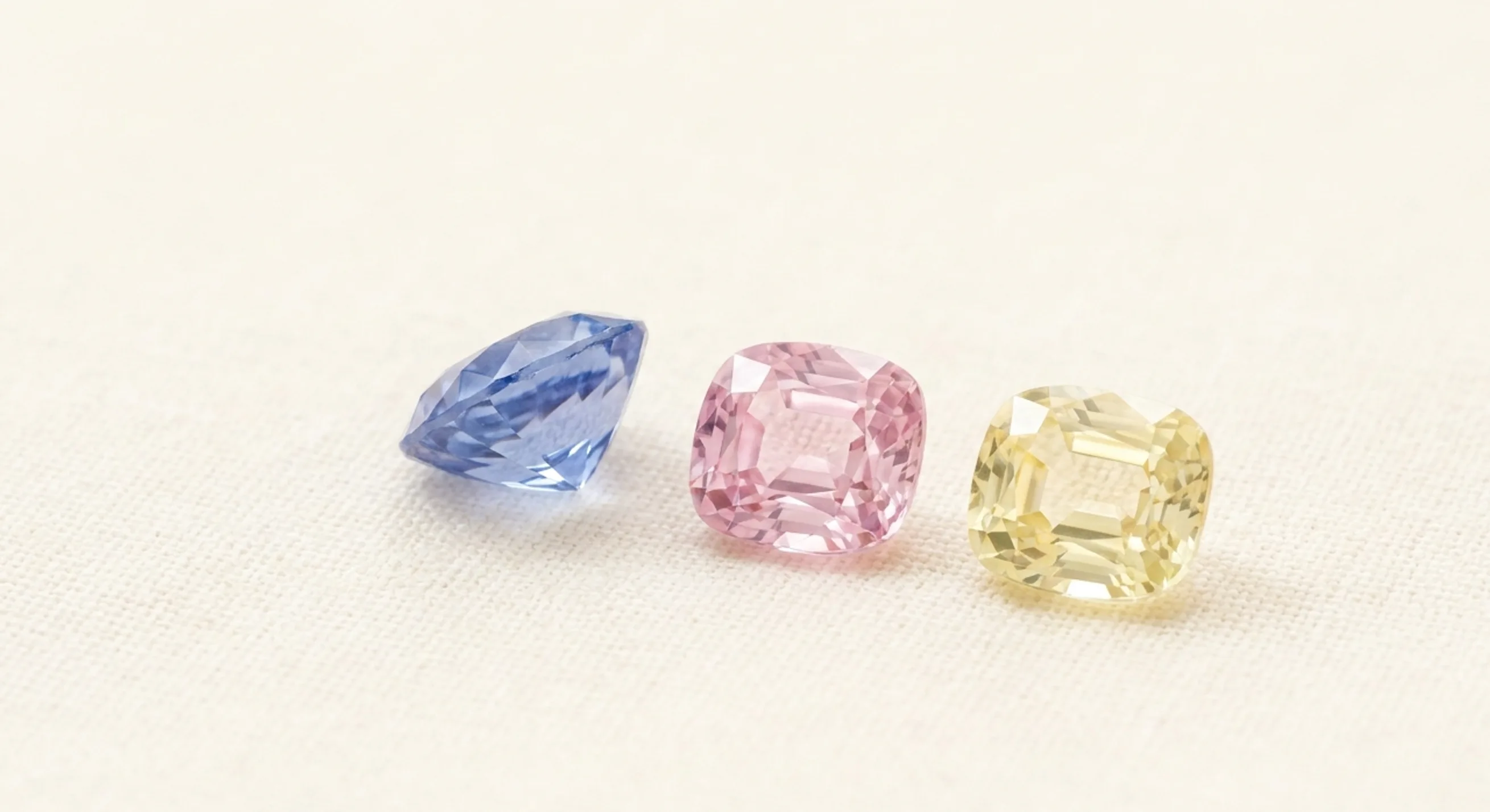
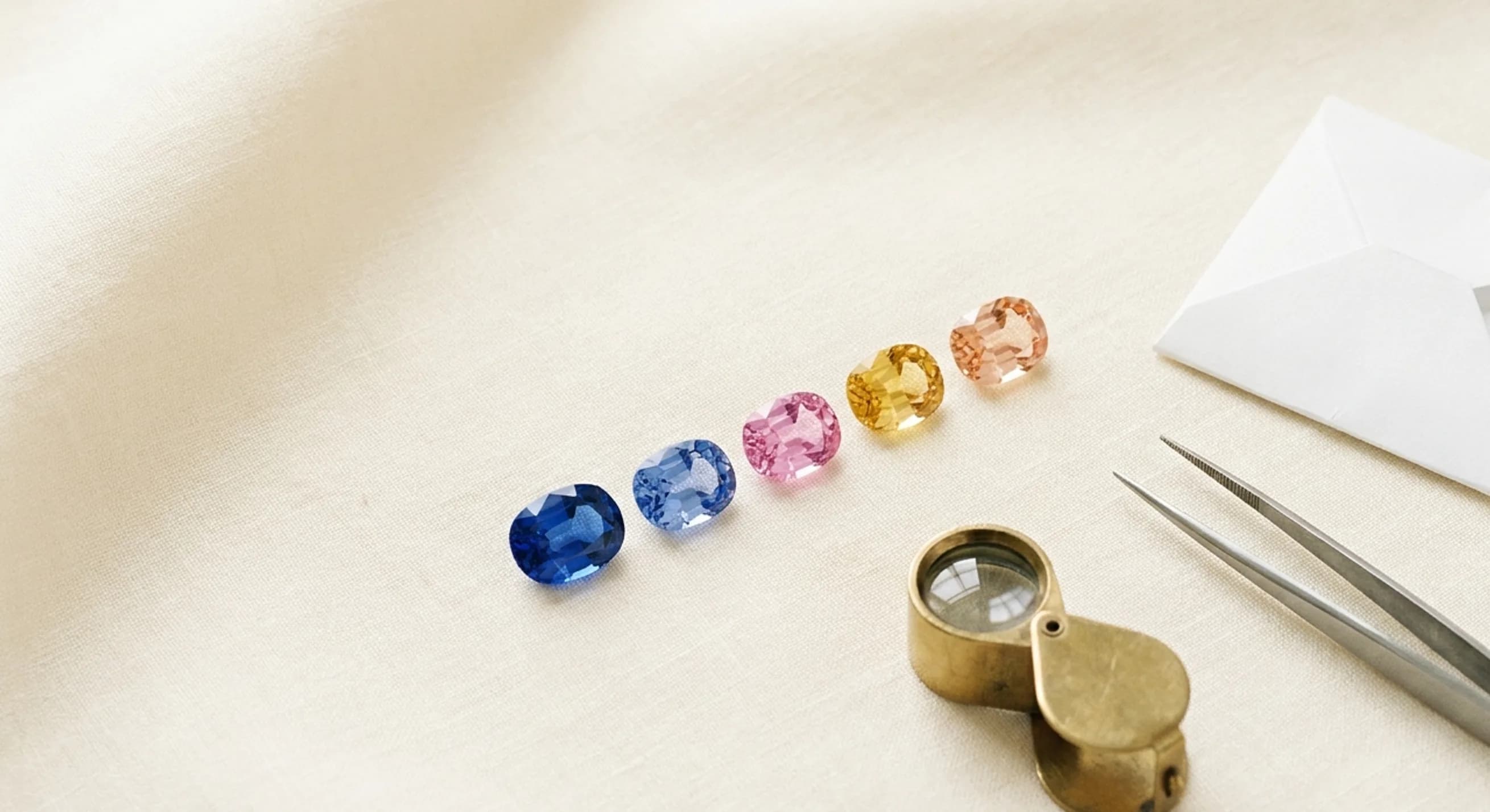
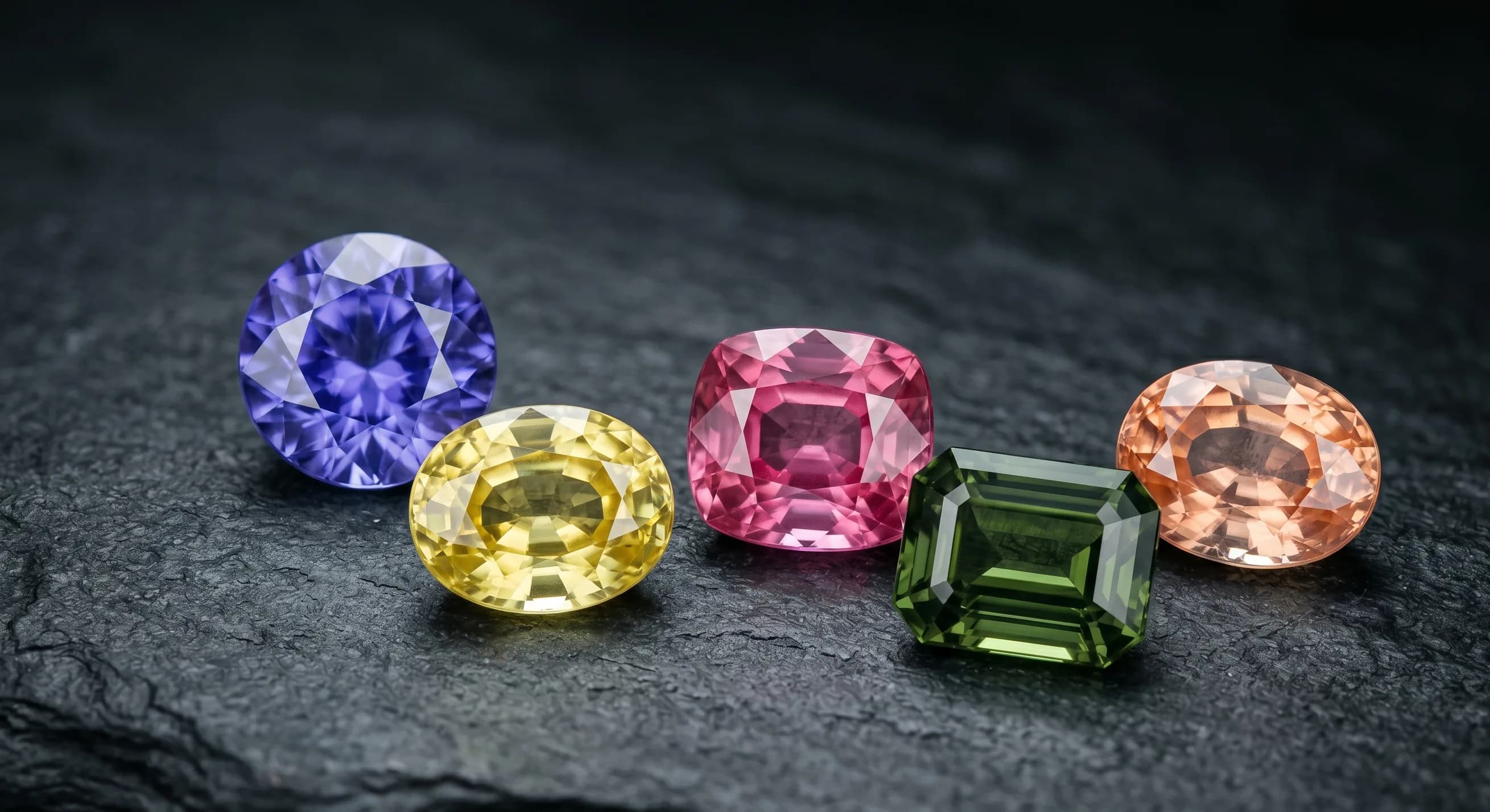
Fancy sapphire is the trade term for any sapphire colour other than blue. The Sri Lankan production includes the full fancy range:
Yellow sapphire is the most accessible fancy colour. Sri Lankan yellow sapphire (pukhraj in the Indian astrology trade, the gemstone for Jupiter in jyotish) runs from soft canary through deep golden honey. Untreated stones with a clean lemon-yellow body are commercially abundant in the 1 to 3 carat range and trade at USD 200 to 800 per carat, well below comparable blue sapphire pricing. The yellow Ceylon sapphire guide covers the colour ranges, the Vedic astrology demand, and the buying checklist in detail.
Pink sapphire sits between blue and ruby. Fine Sri Lankan pink sapphires show a clean rose to raspberry body without the over-purple cast that some Madagascan material carries. Untreated stones above 2 carats with strong saturation are genuinely rare and trade at USD 1,500 to 5,000 per carat. The line between "pink sapphire" and "ruby" is decided by the lab on a case-by-case basis; the cutoff is conventional rather than mineralogical.
Violet and purple sapphire are an underrated category. Sri Lankan violet sapphire reads as a clean purple-blue or purple-pink depending on the lighting environment, and the trade routinely undervalues the colour because it does not have an established marketing identity. A fine violet sapphire from the Ratnapura district at 2 carats can cost less than a comparable blue stone with no compromise on Ceylon provenance or untreated status.
Green sapphire is the rarest of the saturated fancy colours. Sri Lankan green sapphire typically reads as an olive or forest green rather than the bright emerald-green tone most buyers picture. Untreated green sapphires above 1 carat trade at USD 300 to 1,200 per carat, and the category is one of the few corners of the Ceylon market that is still genuinely underpriced.
White sapphire is colourless corundum, often used as a diamond alternative for setting work. Mohs 9 hardness and the same durability profile as blue sapphire, but without the fire and dispersion that make zircon or diamond visually distinctive. Sri Lankan white sapphires are a budget-friendly choice for buyers who want a hard, durable colourless stone for daily wear.
Parti Sapphire: The Multi-Coloured September Alternative
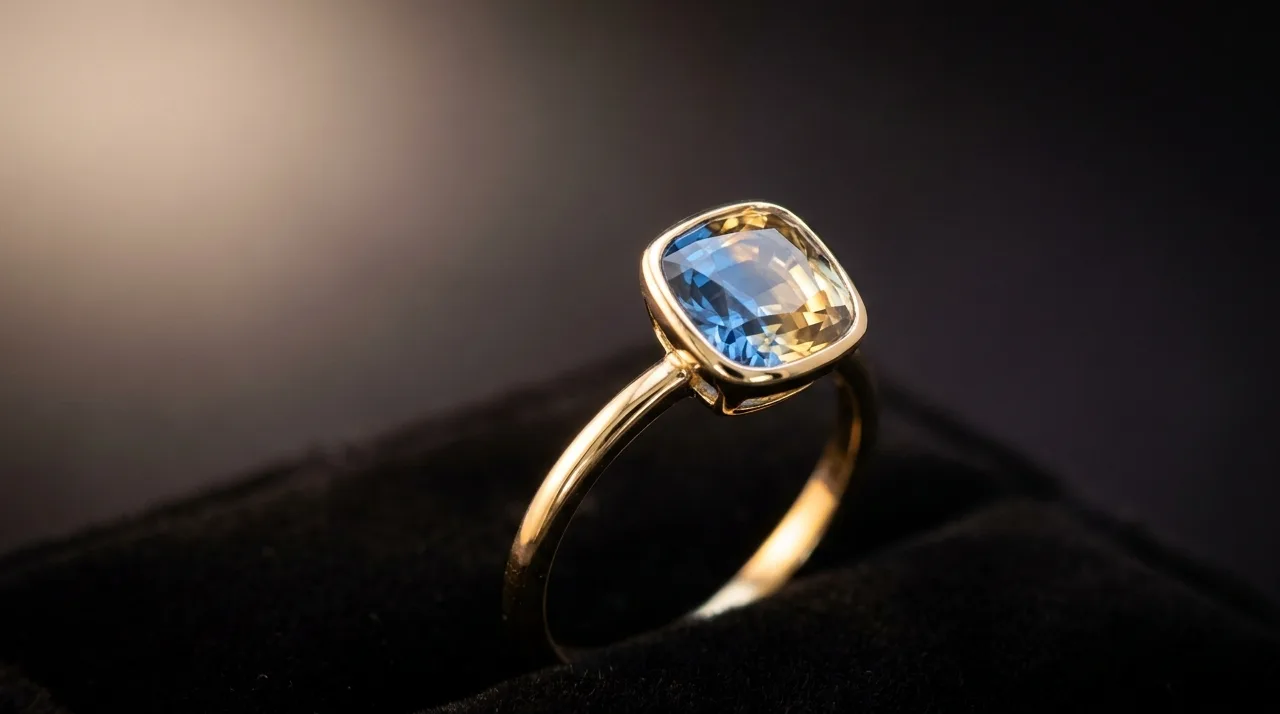
Parti sapphire is a single sapphire crystal that contains two or more distinct colour zones within the stone, most commonly blue and yellow, blue and green, or yellow and green. The colour zoning is a record of how the crystal grew: as the trace-element chemistry of the surrounding fluid changed over geological time, successive layers of the crystal picked up different colour-causing impurities. A skilled cutter orients the rough so the boundary between zones is centred and visible through the table of the finished stone, which is the whole visual point of a parti sapphire.
Most commercial parti sapphire today is Australian, from the Queensland deposits. Madagascar produces parti material in smaller volume, and Sri Lanka produces it in genuinely small parcels, usually as a by-product of cutting blue or yellow sapphire rough rather than as a deliberate yield. Pricing sits at USD 200 to 1,500 per carat depending on size, saturation, and how cleanly the colour boundary reads through the table. A particularly well-balanced parti sapphire with a distinct boundary and strong saturation on both sides can exceed USD 2,000 per carat at the collector tier.
For a September birthday, parti sapphire is an interesting middle ground. The stone is technically a sapphire (so it satisfies the birthstone tradition cleanly), but it does not read as the standard blue-sapphire cliché, and the colour combination is unique to that individual crystal. No two parti sapphires are identical, which makes the stone feel personal in a way a single-colour sapphire cannot.
Padparadscha: The Rarest September Sapphire
Padparadscha is the rarest commercially recognised sapphire colour and the most expensive non-blue sapphire variety on the market. The name comes from padma raga, the Sanskrit term for the colour of a lotus blossom, and the colour requirement is a pink-orange to orange-pink hue with neither colour dominating decisively. Fine padparadscha from Sri Lanka trades at USD 8,000 to 30,000 per carat at retail, which is comparable to or above the highest-quality blue Ceylon sapphire grade for grade.
Sri Lanka is the historical reference source for padparadscha and remains the principal producer of fine material. Madagascan padparadscha exists but typically reads either too pink or too orange, and the Sri Lankan lab grading conventions specifically require the pinkish-orange ratio that Ceylon material reliably produces. For a September birthday at the collector end of the market, padparadscha is the standout choice. The full background, colour requirements, and buying considerations are in the padparadscha sapphire guide.
Non-Corundum Sri Lankan Stones for September
If a sapphire is not what you want at all, three Sri Lankan non-corundum options sit comfortably within September tradition:
Spinel is the closest visual neighbour to sapphire and ruby. Sri Lankan red spinel, pink spinel, and the soft greyish-blue cobalt spinel reads similarly to corundum but with a softer, less aggressive saturation, and trades at roughly half the price of comparable Ceylon sapphire. Spinel was historically confused with ruby (the "Black Prince's Ruby" in the British Crown Jewels is a spinel), and the species is reliably untreated. The spinel vs sapphire guide covers the differences and the buying considerations.
Star sapphire is a phenomenal sapphire that shows a six-rayed star floating across the surface under a single light source, caused by needle-like rutile inclusions oriented along the crystal's three optical axes. Star sapphire is technically a sapphire and qualifies cleanly as a September birthstone. Sri Lankan grey, blue, and black star sapphires are the historical reference for the variety, and the price tier sits well below faceted sapphire. The star sapphire guide covers asterism and how to pick a clean star.
Garnet is a budget-friendly alternative that is not formally a September birthstone (January is its month), but Sri Lankan rhodolite and hessonite are reliably untreated and pair naturally with the warm-toned fancy sapphire palette. For a buyer who wants a Sri Lankan stone with September provenance and budget under USD 500 per carat, garnet is the realistic answer.
A Note from the Parcel Table
A few months ago I was at a cutting house in Beruwala sorting a parcel of fancy sapphire rough, around eighty stones in the 1 to 4 carat range, all from a single small-scale operation outside Elahera. The dealer had separated the rough into three trays before I arrived: clean yellow, clean pink, and what he called "samudra" stones, a Sinhalese trade term for material that shows mixed colours within a single crystal.
The samudra tray was the most interesting one. Roughly twenty stones, most of them showing a clear boundary between a yellow zone and a blue or green zone, a few with three distinct colours visible to the eye in the rough. The cutter was planning to face most of them as standard parti sapphires with the colour boundary running through the centre of the table, but two of the larger stones (around 5 carats each) he set aside to cut as deliberate "bicolour" stones with one colour in the crown and a different colour in the pavilion, so the table shows one hue and the back of the stone shows another.
The point of the story is that parti sapphire is not a marketing invention. The colour zoning is a real geological signature of how that individual crystal grew, and a skilled Ratnapura or Beruwala cutter treats it as a feature rather than a defect to be cut around. For a September birthday looking for something other than a standard blue sapphire, a well-cut Ceylon parti stone is one of the most genuinely individual choices on the market. For more context on how Ratnapura-trained cutters work this kind of rough, the Sri Lankan gem cutters guide covers the lapidary tradition behind it.
How to Pick the Right September Stone
A short decision framework for September birthstone alternatives:
- Want a sapphire but not blue: start with yellow sapphire (most accessible) or pink sapphire (closer to traditional sapphire pricing).
- Want something distinctly modern: parti sapphire. No two stones are alike and the multi-colour effect reads as contemporary.
- Want a collector-tier stone: padparadscha. Highest price band, smallest market, the most distinctive September sapphire.
- Want a non-corundum stone with similar character: Sri Lankan spinel. Soft saturation, reliably untreated, half the price of comparable sapphire.
- Want phenomenal optics rather than transparent colour: star sapphire. Cabochon-cut, Sri Lankan reference source, well below faceted sapphire pricing.
- Budget under USD 500 per carat: garnet. Not strictly a September birthstone but a credible Sri Lankan choice in the warm-toned palette.
For every option above, the same buying rules apply that govern Ceylon sapphire generally: named country of origin, treatment status stated in writing, a laboratory report for any stone above 2 carats or USD 500 in value, and a daylight photograph alongside the studio shot. The how to tell if a Ceylon sapphire is real guide covers the full authentication checklist for fancy sapphires as well as blue.
Where to Buy a September Birthstone Alternative
If you want a fancy sapphire, parti stone, or non-corundum Sri Lankan option sourced direct from a named Ratnapura dealer with origin and treatment documented, tell us your specifications (colour preference, carat range, budget, intended setting) and we will source it for you. You can also see what is currently in the Crestonne collection before deciding whether to commit to a custom search.
Common questions
Frequently Asked Questions
Is a yellow sapphire still a September birthstone?
Yes. The September birthstone is sapphire, not blue sapphire specifically. Sapphire is the gem-quality form of corundum in any colour other than red (red corundum is ruby, the July birthstone). Yellow, pink, violet, green, white, and padparadscha sapphires are all sapphire, and all qualify as September birthstones. The historical association with blue is a marketing convention, not a mineralogical or birthstone rule. Most major gem authorities including the American Gem Trade Association and the Gemological Institute of America treat every fancy sapphire colour as equally valid for September.
What is a parti sapphire?
A parti sapphire is a single sapphire crystal that shows two or more distinct colours in zones within the stone, most commonly blue and yellow, blue and green, or yellow and green. The colour zoning comes from variations in trace-element chemistry as the crystal grew, and a skilled cutter orients the rough so the boundary between zones is centred and visible through the table of the finished stone. Parti sapphires are produced in Australia (Queensland) and Madagascar in volume, with smaller production from Sri Lanka. They are increasingly popular for engagement rings as a more individual alternative to a single-colour sapphire, and trade at USD 200 to 1,500 per carat depending on size, saturation, and the cleanness of the colour boundary.
Can I wear a moonstone as a September birthstone?
Moonstone is the traditional birthstone for June, not September, so strictly it is the wrong month under the standard modern birthstone list. That said, the birthstone tradition is not a regulation. Plenty of jewellers and buyers use a 'mystical' or alternative birthstone list, and Sri Lankan blue-sheen moonstone is sometimes worn for September birthdays specifically because it pairs naturally with the blue-sapphire association. If you want a Sri Lankan stone for a September birthday but specifically do not want corundum, a fancy sapphire colour, spinel, or garnet sits more comfortably within September tradition than moonstone.
What is the rarest September sapphire colour?
Padparadscha is the rarest commercially recognised sapphire colour, a pink-orange to orange-pink hue named after the lotus blossom (padma raga in Sanskrit). Fine padparadscha from Sri Lanka, particularly stones above 2 carats with the correct pinkish-orange ratio and no over-brown saturation, trades at USD 8,000 to 30,000 per carat at retail. After padparadscha, fine pink sapphires above 3 carats and certain saturated violet sapphires from Sri Lanka are the next-rarest categories. Yellow sapphire is the most common fancy colour and the most accessible entry point to a non-blue September stone.
Is a fancy sapphire cheaper than a blue sapphire?
It depends on the colour. Yellow sapphire is generally the most affordable fancy colour and runs roughly 30 to 60 percent below comparable Ceylon blue sapphire at the same size and clarity. Pink and violet sapphires sit closer to blue sapphire pricing, occasionally above blue at the top quality tier. Padparadscha is more expensive than almost any commercial blue sapphire grade for grade. Parti sapphires trade at a discount to single-colour material at the lower commercial tiers but command a premium at the top end when the colour zoning is particularly distinct and well-centred.