Understanding
Diamond Alternatives: The Honest Sapphire Case
A clear-eyed look at the diamond alternatives buyers actually consider, and why a natural Ceylon white sapphire earns its place over disposable simulants.
8 min read
By Naseef AR
Diamond alternatives split into two camps: durable natural stones you can wear every day for decades, and cheap simulants that look convincing for a year or two before the wear shows. The serious contenders are moissanite, white sapphire, and lab-grown diamond. Cubic zirconia is the disposable option most people mean when they ask what the fake diamond is called. Here is the honest breakdown, sorted by how each one behaves on a hand that actually gets used.
What is the best diamond alternative?
There is no single answer. The best diamond alternative depends on what you are optimising for. Want the same carbon crystal at a lower price? Lab-grown diamond is the closest match. Want maximum brilliance and fire for the money? Moissanite outperforms diamond on both counts. Want a natural, mined stone with real geological history and quiet durability? A white sapphire makes the strongest case.
What all three share is that they wear hard. That is the line Crestonne draws when advising buyers. A diamond substitute worth your money should survive daily wear, keep its polish, and still read as a white stone in ten years. Anything that clouds, scratches, or dulls quickly is a filler, not a substitute.
What stone looks most like a diamond?
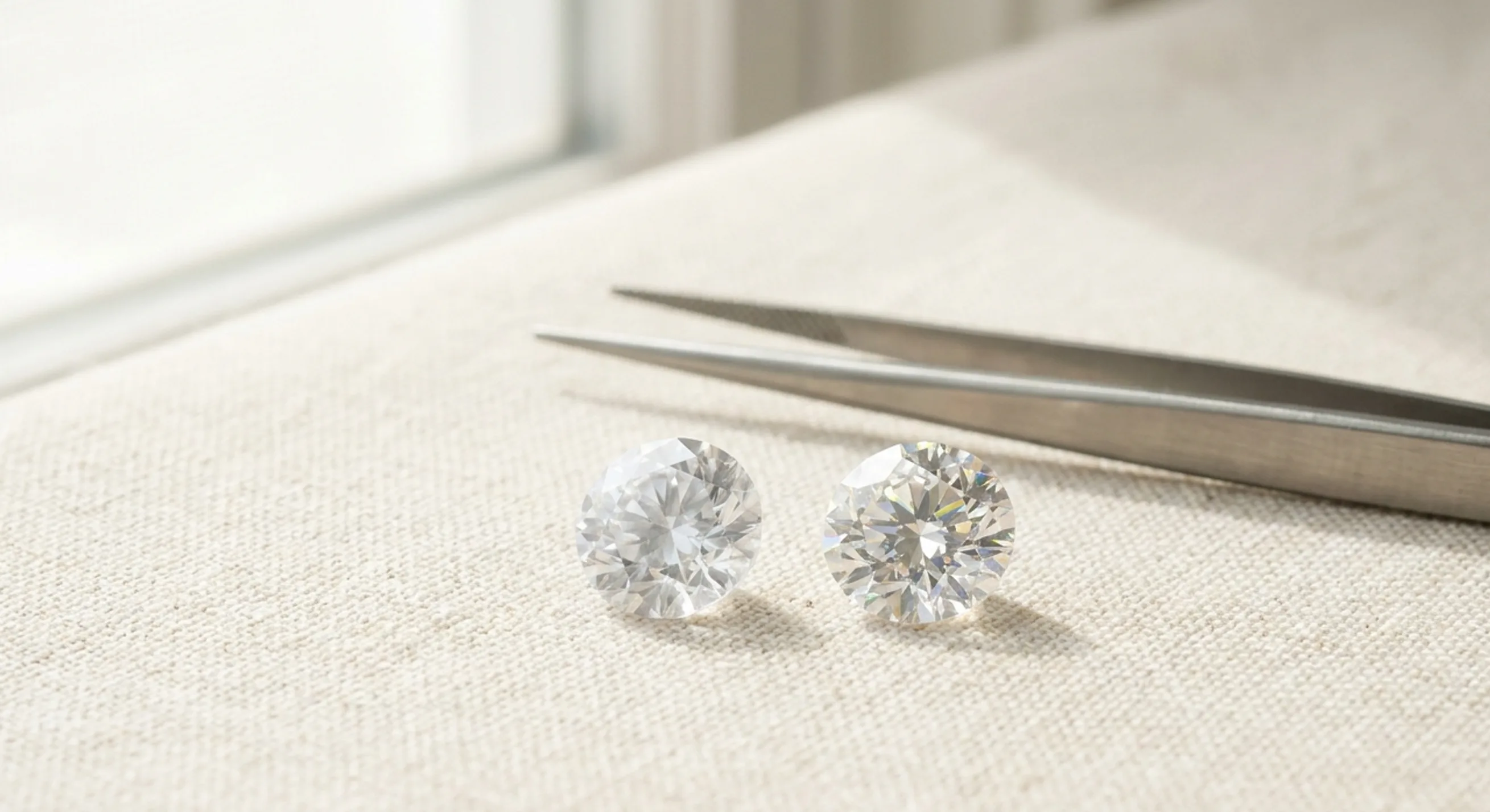
For pure optical mimicry, moissanite is the stone that looks like diamond most convincingly to an untrained eye, and cubic zirconia comes close on day one. Moissanite is silicon carbide, sits at roughly 9.25 on the Mohs scale, and throws more fire than diamond thanks to its higher dispersion. That extra rainbow flash is the giveaway to a trained eye. Some buyers love it; others find it too showy.
Cubic zirconia matches a diamond's colourlessness right out of the box. The problem is what happens next. CZ is softer, around Mohs 8, and it abrades at the facet edges with normal wear. Within a year or two it takes on a cloudy, oily look that no amount of cleaning fixes. That is why it is the classic fake diamond name people reach for when they want the look without the commitment.
White sapphire reads differently. It does not chase a diamond's fire. It offers a clean, bright white with a softer sparkle, and set well it passes at conversational distance and rewards a closer look on its own terms rather than pretending to be something it is not.
What is the fake diamond called?
Ask what the fake diamond is called and the answer is almost always cubic zirconia. It is the most common diamond simulant on the market, mass-produced, and cheap enough to be treated as costume jewellery. Older simulants like glass paste and strontium titanate turn up now and then, but CZ dominates.
Precision matters here, because the word "fake" gets thrown around loosely. Moissanite and white sapphire are not fakes. Moissanite is its own mineral. White sapphire is corundum, the same species as ruby and blue sapphire, just without the trace elements that add colour. Neither is trying to defraud anyone. They are legitimate diamond replacements with their own identities. Cubic zirconia is the one genuinely made to imitate and then discarded.
Moissanite versus white sapphire versus lab-grown
Here is how the three durable options stack up for everyday use.
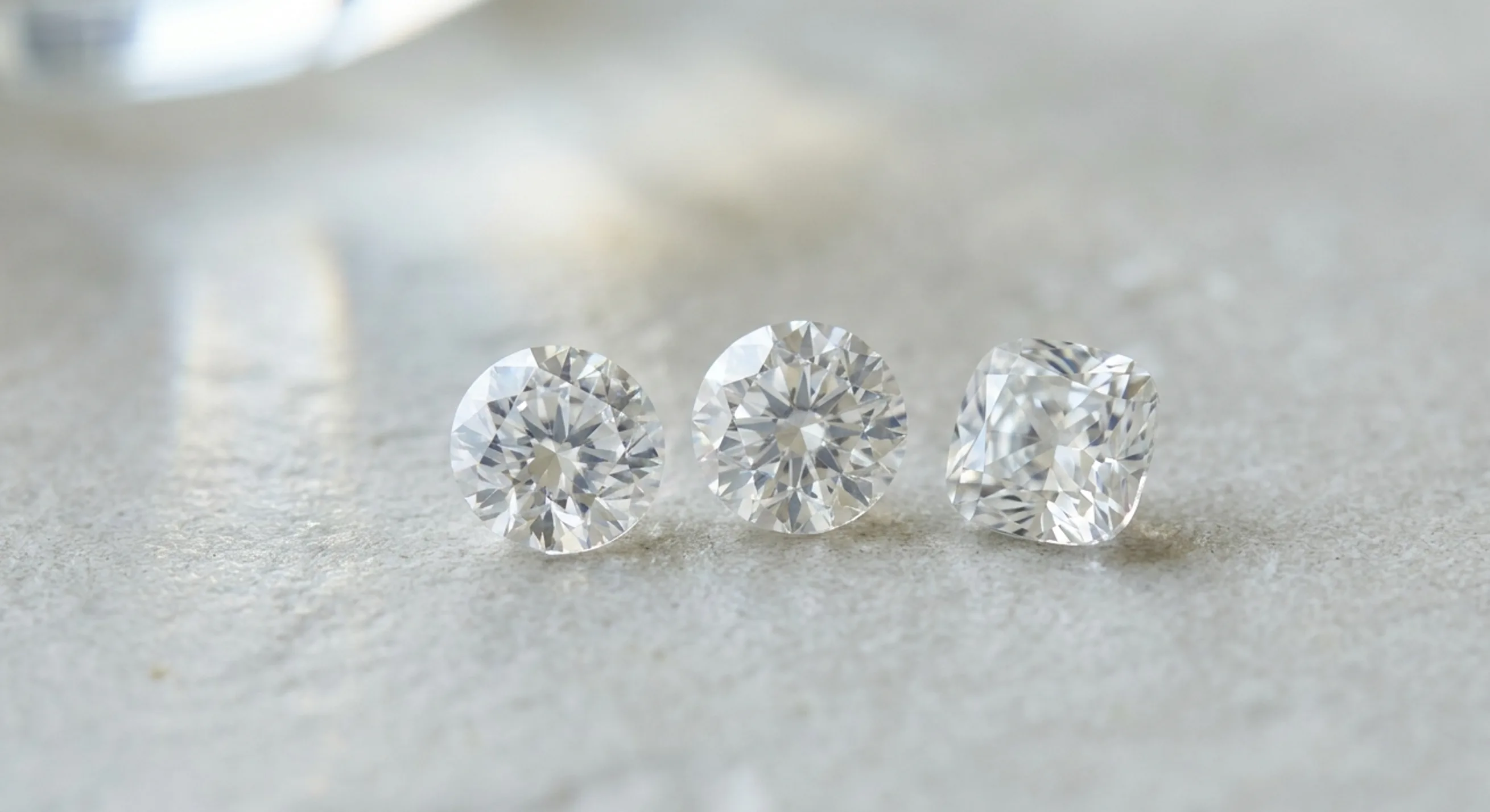
Moissanite is the brilliance champion. Hardness around 9.25 means it resists scratching almost as well as diamond, and it holds its polish for life. The higher dispersion gives it more fire, which is either a feature or a tell depending on your taste. It is a synthetic stone, so it carries no natural-origin story, but it is durable and affordable.
Lab-grown diamond is chemically and optically identical to a mined diamond because it is diamond, grown in a reactor rather than the earth. Hardness is Mohs 10. It has become the mainstream diamond substitute of choice for buyers who want the exact material at a lower price point. The trade-off is that it shares diamond's economics: as production scales, resale values remain uncertain. We cover the natural-versus-grown question in depth in our guide to lab-grown vs natural sapphire, and the same logic applies to diamond.
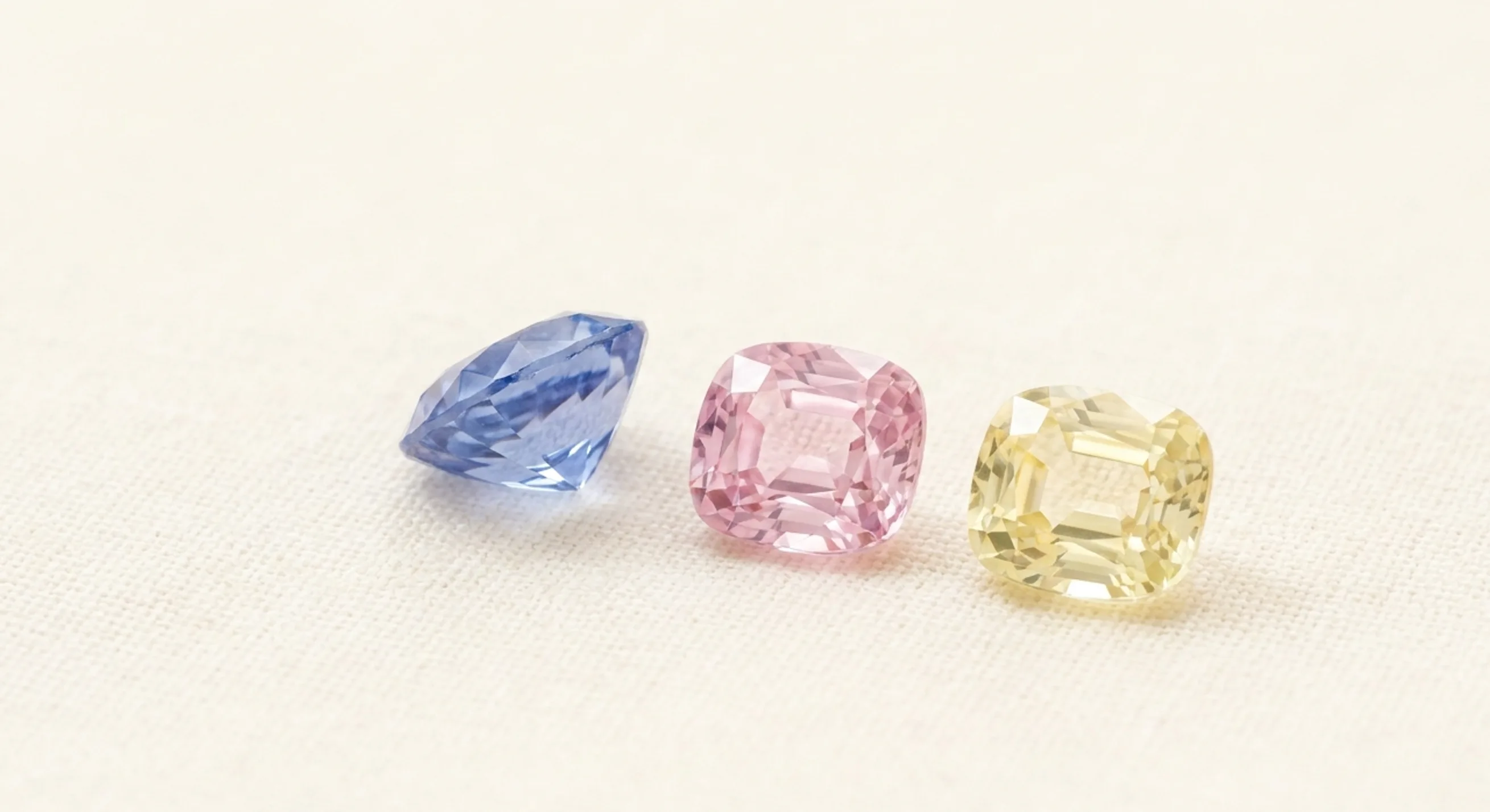
White sapphire is the natural stone in the group. At Mohs 9 it is second only to diamond and moissanite in hardness, which means it stands up to rings, bracelets, and daily knocks. A natural Ceylon white sapphire is mined, cut, and finished as a single unrepeatable stone. It does not have the fire of moissanite or the mirror-white of a top diamond, but it has something neither offers: it is a real gem with a real origin, and it earns its place on durability rather than imitation.
Why a natural Ceylon white sapphire earns its place
Sri Lanka has produced corundum for over two thousand years, and the white sapphires that come out of the Ratnapura and Elahera fields are prized for their clarity and even body colour. The stones Crestonne represents are sourced directly from those gem fields, which is why origin and treatment can be stated plainly rather than guessed at.
Most white sapphire on the market is heat treated. Heat treatment is the legitimate, well-understood industry norm for corundum. It improves clarity and whiteness using controlled temperature alone, it is stable and permanent, and it has been standard practice for generations. A well-heated stone is a beautiful, honest stone in its own right. Unheated white sapphire is the premium tier, valued for its rarity and its untouched natural state, and it commands a higher price accordingly. Both are honest, natural stones. The distinction is simply one of scarcity, and Crestonne discloses which is which on every stone.
That disclosure matters most where the market is weakest. Online, white stones are notoriously easy to over-flatter with backlighting and heavy retouching, so a stone can look brighter on a screen than it ever will on a hand. Crestonne's response is to photograph stones in consistent, neutral light and to state treatment, origin, and dimensions up front, so what arrives matches what was promised. If you want the full picture on grading and selection, our guide to white Ceylon sapphire as a diamond alternative walks through it.
How much do diamond alternatives cost?
Pricing spans a wide range, so treat these as relative rather than absolute. Cubic zirconia is the cheapest by a large margin, often a few dollars per stone, which fits its disposable status. Moissanite sits well below natural stones and gives you a lot of visible sparkle for the money. Lab-grown diamond costs a fraction of an equivalent mined diamond, though it still tracks diamond pricing rather than sapphire pricing.
Natural white sapphire sits in the middle of the field. Heat treated stones are accessible for their size and durability, while unheated Ceylon material commands a premium that rises with size and clarity. Rather than quote precise figures that shift with the market, hold on to this: you are paying for permanence and origin, not just first-day appearance. A natural sapphire that still looks sharp in a decade is a very different value proposition from a simulant you expect to replace.
Which diamond alternative should you actually choose?
Match the stone to the wearer. For a daily-wear engagement ring where you want the exact diamond material, lab-grown is the logical pick. For maximum sparkle at the lowest durable price, moissanite is hard to beat, provided you like its extra fire. For a natural, mined stone with genuine provenance and quiet, hard-wearing brilliance, a Ceylon white sapphire is the honest choice, and it is the one Crestonne knows best. If you want an alternative for diamond that reads as a real gem rather than a stand-in, that is where it comes into its own.
Do not build anything you intend to keep around a cubic zirconia. It looks the part at first, but it is the diamond substitute that ages worst, and it is the reason "fake diamond" carries a slightly cheap connotation. There is nothing wrong with using it for costume pieces or travel jewellery. Just do not confuse it with a stone that lasts.
If you know you want a natural white sapphire and you have a setting or a size in mind, Crestonne can source a specific stone to your specification. Start a custom loose stone request and the team will work from the Sri Lankan gem fields to find the match.
Common questions
Frequently Asked Questions
What is the fake diamond called?
The stone most people mean is cubic zirconia, the most common diamond simulant. It is inexpensive and matches a diamond's colourlessness at first, but it is softer at roughly Mohs 8 and tends to cloud and scratch with everyday wear.
What is the best diamond alternative for an engagement ring?
It depends on priorities. Lab-grown diamond offers the exact diamond material at a lower price, moissanite gives the most sparkle per dollar, and a natural Ceylon white sapphire offers real origin and Mohs 9 durability. All three hold up to daily wear far better than cubic zirconia.
Is white sapphire a good diamond substitute?
Yes. White sapphire is natural corundum at Mohs 9, hard enough for daily wear and set to read as a clean white stone. It offers softer sparkle than a diamond rather than mimicking its fire, and a Ceylon-origin stone carries genuine provenance.
Are heated white sapphires lower quality than unheated ones?
No. Heat treatment is the standard, permanent, and legitimate process for corundum and produces beautiful, durable stones. Unheated sapphires are the premium tier because they are rarer, not because heated stones are inferior. The difference is scarcity, and reputable dealers disclose which is which.