Specialty Stones
White Sapphire: The Colorless Ceylon Alternative
Natural white sapphire is a colorless Ceylon stone that reads as a durable, honest alternative to diamond and moissanite. This guide covers how it compares, what treatment means, and what to expect from rough to cut.
Published Updated 7 min read
By Naseef AR
White sapphire is naturally colorless corundum, the same mineral species as blue and pink sapphire, minus the trace elements that give those stones their color. It sits at Mohs 9 for hardness, second only to diamond, which makes it a genuine everyday stone rather than a novelty. As a colorless Ceylon alternative to diamond and moissanite, it offers real mineral value: a natural stone pulled from the ground in Sri Lanka, not grown in a factory. That last point is where most of the market gets murky, and where Crestonne draws a hard line.
Most "white sapphire" sold cheaply online is synthetic. Lab-grown colorless corundum has existed for over a century and costs almost nothing to produce. It is chemically identical to natural material, which is exactly why so many sellers lean on it without saying so. The stones Crestonne represents are natural Ceylon corundum, sourced from the gem fields around Ratnapura and Elahera, and that distinction sits at the center of everything below.
What is a white sapphire?
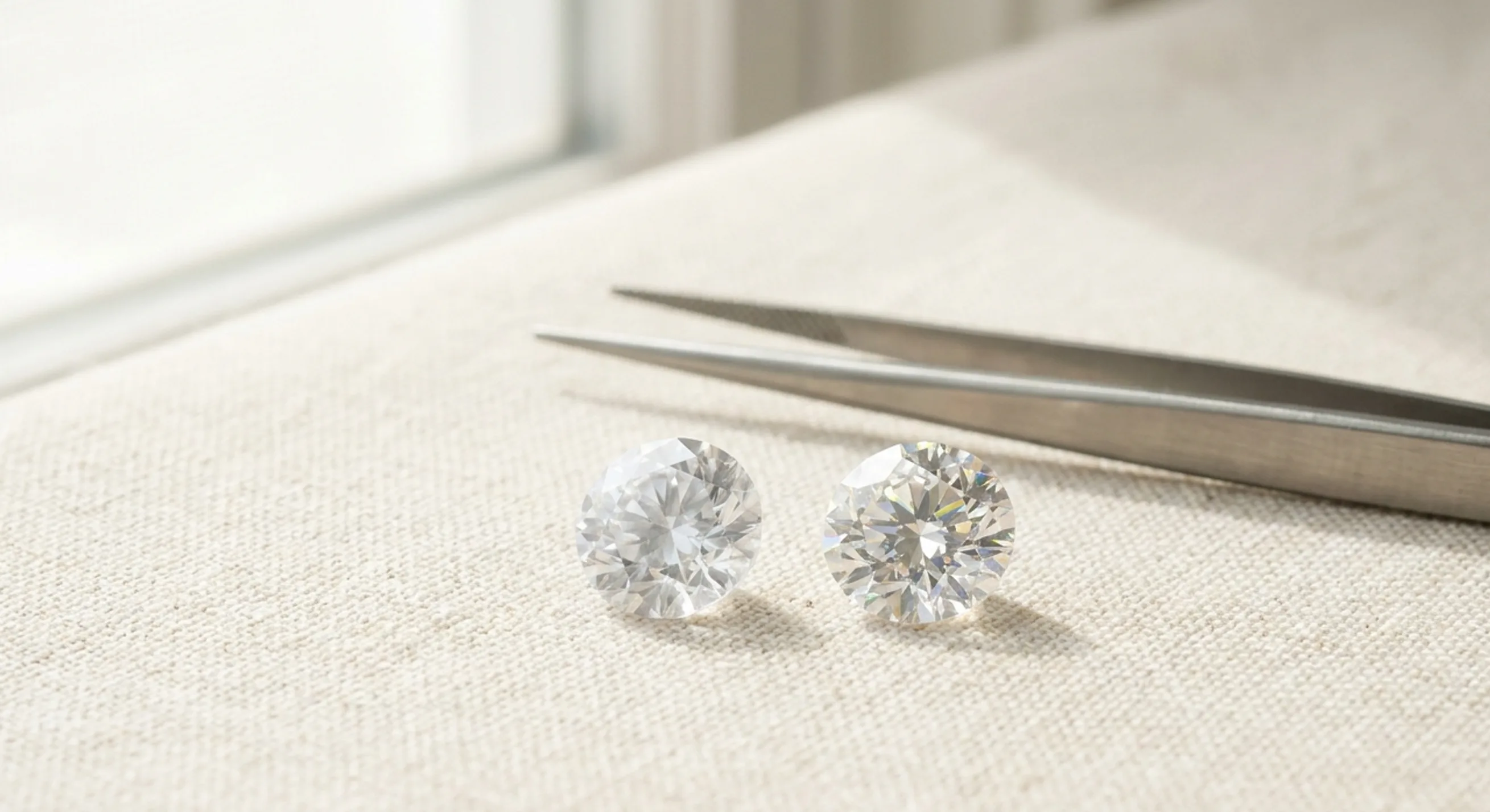
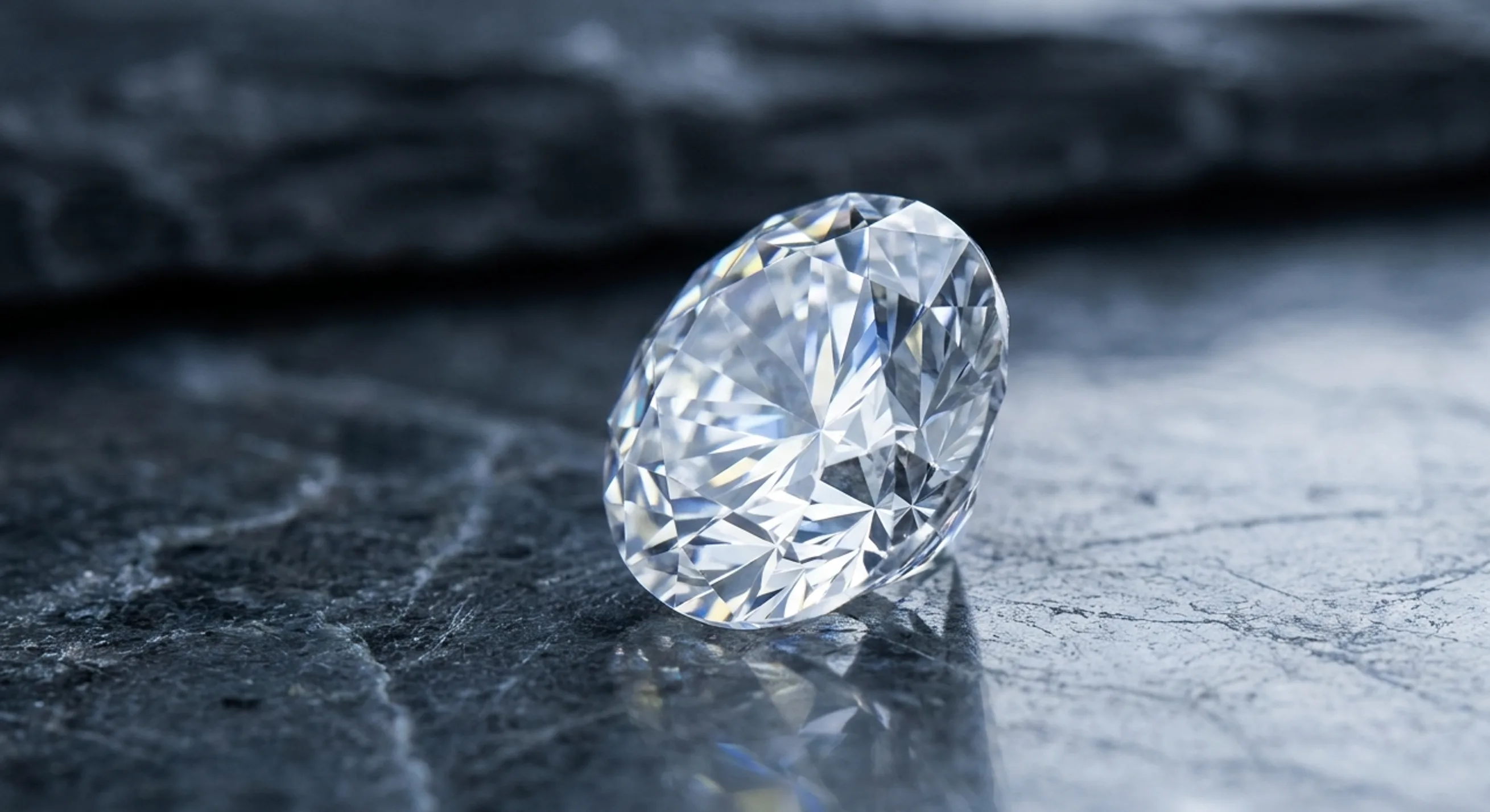
A white sapphire is a colorless variety of corundum. Corundum is naturally clear; blue sapphires get their color from iron and titanium, rubies from chromium. When those trace elements are absent or minimal, the crystal grows colorless. That is a natural white sapphire, and the good ones come out of Sri Lanka with real transparency and a bright, glassy return of light.
Terminology gets loose in the trade. You will see the same rough material called a white sapphire raw crystal, a raw white sapphire, or a white sapphire gemstone once it is cut. They all describe the same species. What matters is not the label but whether the stone is natural or lab-grown, and whether a seller tells you which.
Is white sapphire the same as diamond?
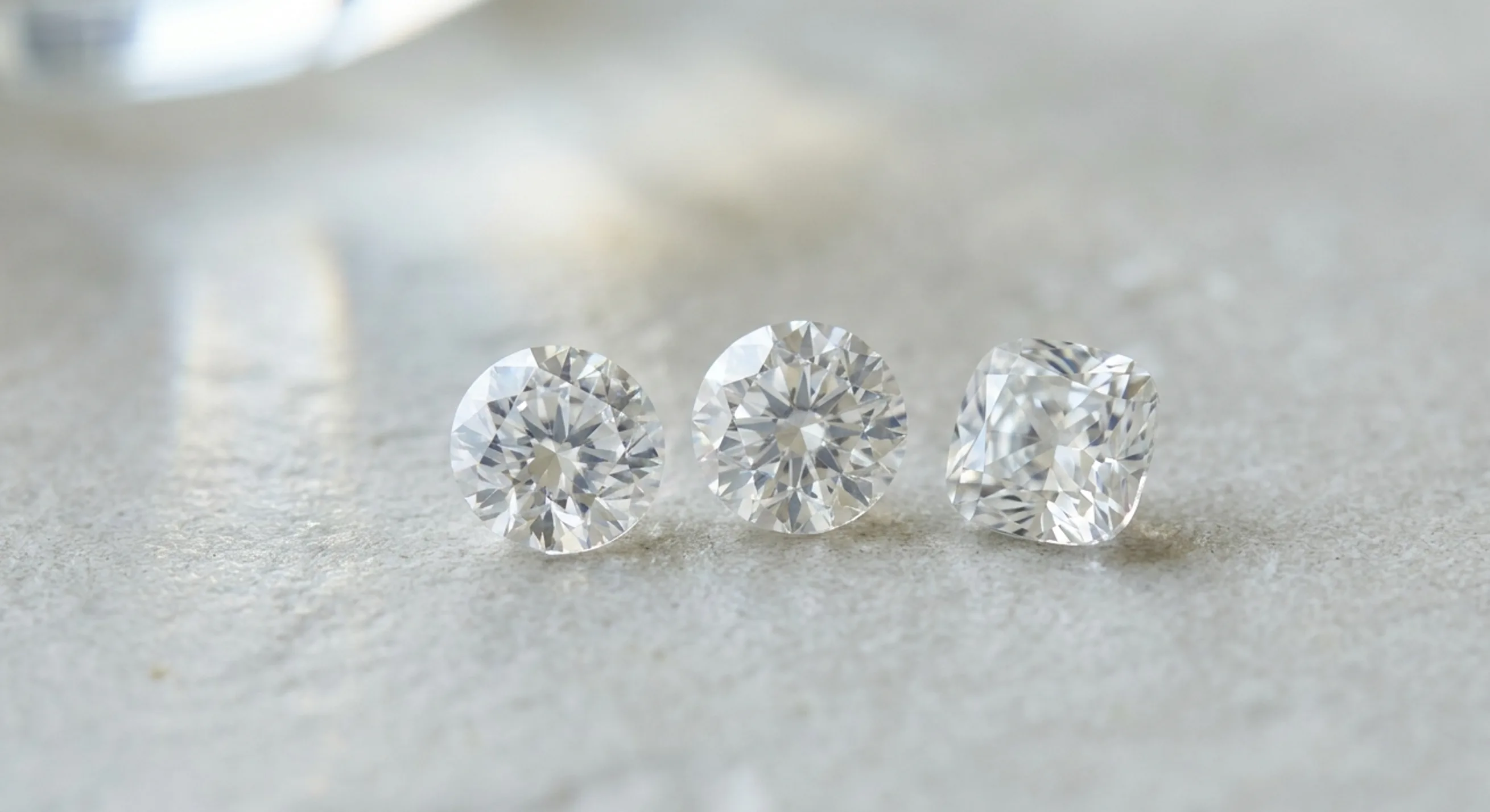
No, and the differences are worth understanding before you buy. A diamond scores 10 on the Mohs scale and has a refractive index and dispersion that white sapphire does not match. Dispersion is the splitting of light into spectral colors, the "fire" you see in a diamond. White sapphire has far less of it. In practical terms, a white sapphire reads as clean and bright rather than fiery, with a softer, more watery brilliance.
That is not a flaw. It is a different look, and for many buyers it is the preferred one. A white sapphire gemstone in a setting looks like a clear, elegant stone rather than a spotlight. It also comes without the pricing structure and supply-chain concerns tied to diamonds. At Mohs 9, it holds up to daily wear well, though it is worth understanding sapphire hardness for everyday wear before choosing a setting and wear pattern.
White sapphire vs moissanite
Moissanite is the other common diamond alternative, and it is almost always lab-created. Naturally occurring moissanite is vanishingly rare, so effectively every moissanite on the market is synthetic. It scores about 9.25 on Mohs and has more dispersion than a diamond, which is why it throws so much rainbow fire. Some buyers love that. Others find it reads as obviously not-diamond precisely because of that intensity.
White sapphire takes the opposite approach. It is a natural mineral with a quieter, cleaner presence. The choice comes down to what you value. If the priority is maximum sparkle at the lowest cost, moissanite wins on those terms. If the priority is a natural stone with real provenance and understated brilliance, white sapphire is the stronger pick. It is the only one of the three diamond alternatives that is routinely available as a natural, mined gem.
Is white sapphire treated or heated?
Many white sapphires are heat treated, and this is the legitimate industry norm rather than a shortcut. Heat treatment on colorless corundum is used to improve clarity and remove faint tints or cloudiness, and it has been standard practice in Sri Lanka for generations. A heated white sapphire is a natural stone that has undergone a widely accepted process, and it makes excellent, durable jewelry.
Unheated white sapphire is the premium tier. Stones that emerge from the ground already colorless and clean, with no thermal enhancement, are scarcer and command higher prices. When Crestonne offers unheated material, it is documented as such. The point is transparency: a buyer should always know whether a stone is heated or unheated, and whether it is natural or synthetic. The same honesty applies across the catalogue, and the principles behind distinguishing natural sapphire from imitations are as relevant to colorless stones as they are to blue ones.
From rough to cut: what to expect
A white sapphire rough stone looks nothing like the finished gem. Raw Ceylon corundum comes out of the gravel as waterworn pebbles or hexagonal crystal fragments, often frosted, sometimes with visible internal features. Evaluating a white sapphire raw crystal means reading through that surface to judge the clarity and size of the clean material inside. This is skilled work, and it is where a lot of value is won or lost.
Colorless corundum carries a particular challenge: because there is no color to hide behind, inclusions and clarity issues show more plainly than they do in a saturated blue or pink stone. A well-cut white sapphire needs good rough to begin with. That is why the raw white sapphire selected for cutting matters so much. The stones Crestonne works with are chosen at the rough stage for the transparency that a colorless gem demands.
Cutting is the other half. Because white sapphire has modest dispersion, the cut has to work hard to maximize brilliance and light return. Precision faceting, correct angles, and good proportions make the difference between a lively stone and a lifeless one. A poorly cut white sapphire looks glassy and flat. A well-cut one has genuine presence.
How much does a natural white sapphire cost?
Natural white sapphire is one of the more accessible sapphire varieties, since colorless material does not carry the premium of fine blue or padparadscha. Pricing depends on size, clarity, cut quality, and whether the stone is heated or unheated. Clean, well-cut natural stones in smaller sizes are reasonably affordable, while larger unheated pieces with excellent clarity run higher.
Synthetic white sapphire, by contrast, costs almost nothing, and that gap is exactly why the market is flooded with lab-grown stones sold ambiguously. A price that seems too good for a natural gem usually is. Crestonne's position is straightforward: natural stones are priced as natural stones, synthetics are not passed off as mined material, and every stone's treatment status is disclosed.
Choosing white sapphire jewelry
White sapphire jewelry works across engagement rings, pendants, and earrings, and the Mohs 9 hardness makes it a practical choice for pieces worn daily. For rings especially, a protective setting extends the life of the stone and preserves its polish over years of wear. Bezel and half-bezel settings guard the edges; prong settings show more of the stone but expose the girdle to knocks.
Because white sapphire reads clean rather than fiery, it pairs well with both white and yellow metals. In platinum or white gold it emphasizes the stone's clarity. In yellow gold it can pick up a faint warmth that some buyers find appealing. The right choice depends on the look you want, and a custom build lets that decision be deliberate rather than accidental.
For anyone weighing a natural, ethically sourced colorless stone against a synthetic, white sapphire deserves a serious look. It is durable, honest about what it is, and rooted in Sri Lankan ground that has produced fine corundum for centuries. To build a piece around a natural Ceylon white sapphire, start a custom loose stone order with Crestonne.
Common questions
Frequently Asked Questions
Is white sapphire a real gemstone?
Yes. White sapphire is natural colorless corundum, the same mineral species as blue sapphire and ruby. It is a genuine mined gem at Mohs 9 hardness. Be aware that much of the white sapphire sold cheaply online is lab-grown synthetic, so confirm whether a stone is natural or synthetic before buying.
Does white sapphire look like a diamond?
It reads as clean and bright rather than fiery. White sapphire has far less dispersion than a diamond, so it lacks the rainbow flashes but offers a clear, watery brilliance. Many buyers prefer that understated look, and it comes as a natural stone without diamond pricing or supply-chain concerns.
Is white sapphire usually heated?
Often, yes. Heat treatment to improve clarity and remove faint tints is the standard, legitimate industry practice for colorless corundum. Heated white sapphire makes excellent, durable jewelry. Unheated stones are scarcer and sit at the premium tier. A reputable seller will always disclose which you are getting.
Is white sapphire durable enough for an engagement ring?
Yes. At Mohs 9 it is second only to diamond in hardness and holds up well to daily wear. A protective setting such as a bezel helps guard the edges and maintain polish over time, which is worth considering for a ring worn every day.