Buying Guides
Ceylon Sapphire Prices Explained: What Determines the Value?
Why does one Ceylon sapphire cost three times as much per carat as another of the same colour? Here is how colour, treatment, carat weight, clarity, cut and lab reports stack up to set the price, with a checklist for testing any quote.
11 min read
By Naseef AR
Six things set a Ceylon sapphire price, and they matter in roughly this order: colour (hue and saturation), treatment status, carat weight, clarity, cut quality and lab certification. Origin sits underneath all six. In 2026 they produce a span from around US$300 per carat for commercial heated material to US$20,000+ per carat for fine unheated stones. Most certified 1 to 3 ct stones land between US$1,500 and US$6,000 per carat. I have set out the numbers in my guide to realistic Ceylon sapphire price-per-carat ranges. This piece explains why a particular stone sits where it does inside those ranges, for every Ceylon colour, not only blue.
Where a sapphire's price actually starts
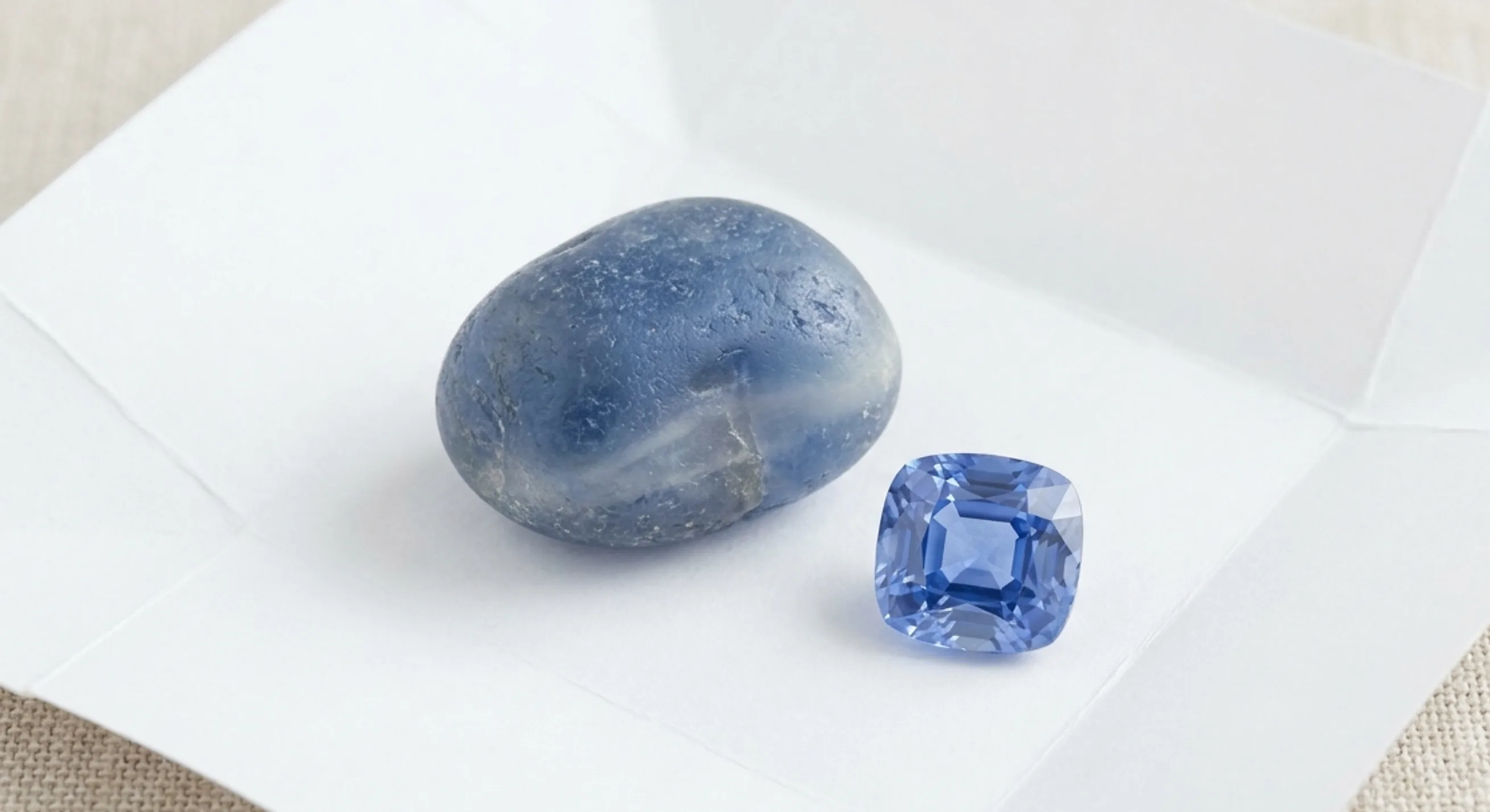
Every finished sapphire carries a chain of costs before anyone quotes a price: the rough, the weight lost in cutting, the cutter's time, the lab fee, and the risk that the report comes back differently than hoped. A cutter can keep more weight by cutting shallow, but a shallow stone leaks light through the middle and loses colour, so a good cut usually means a smaller stone. In Ceylon rough, intact silk is a good sign the stone has never been heated. Too much of it, though, and the finished gem looks sleepy.
The value factors below are how the market rewards each link of that chain.
What determines the Ceylon sapphire price?
Here is how I rank the sapphire value factors, from the biggest swing to the smallest:
- Colour: hue, tone and especially saturation.
- Treatment status: heated (the industry norm) or unheated (the premium tier).
- Carat weight, and specifically which size threshold the stone crosses.
- Clarity: eye-clean or not, and what kind of inclusions it has.
- Cut quality: how well the stone returns light and colour face-up.
- Lab certification: which lab, and what it confirms.
Origin frames the whole picture. At equivalent quality a Burmese sapphire typically sells for about 1.5 to 2.5 times the Ceylon price, which is one reason Ceylon is where I think the value sits for most buyers.
Does colour affect a sapphire's value the most?
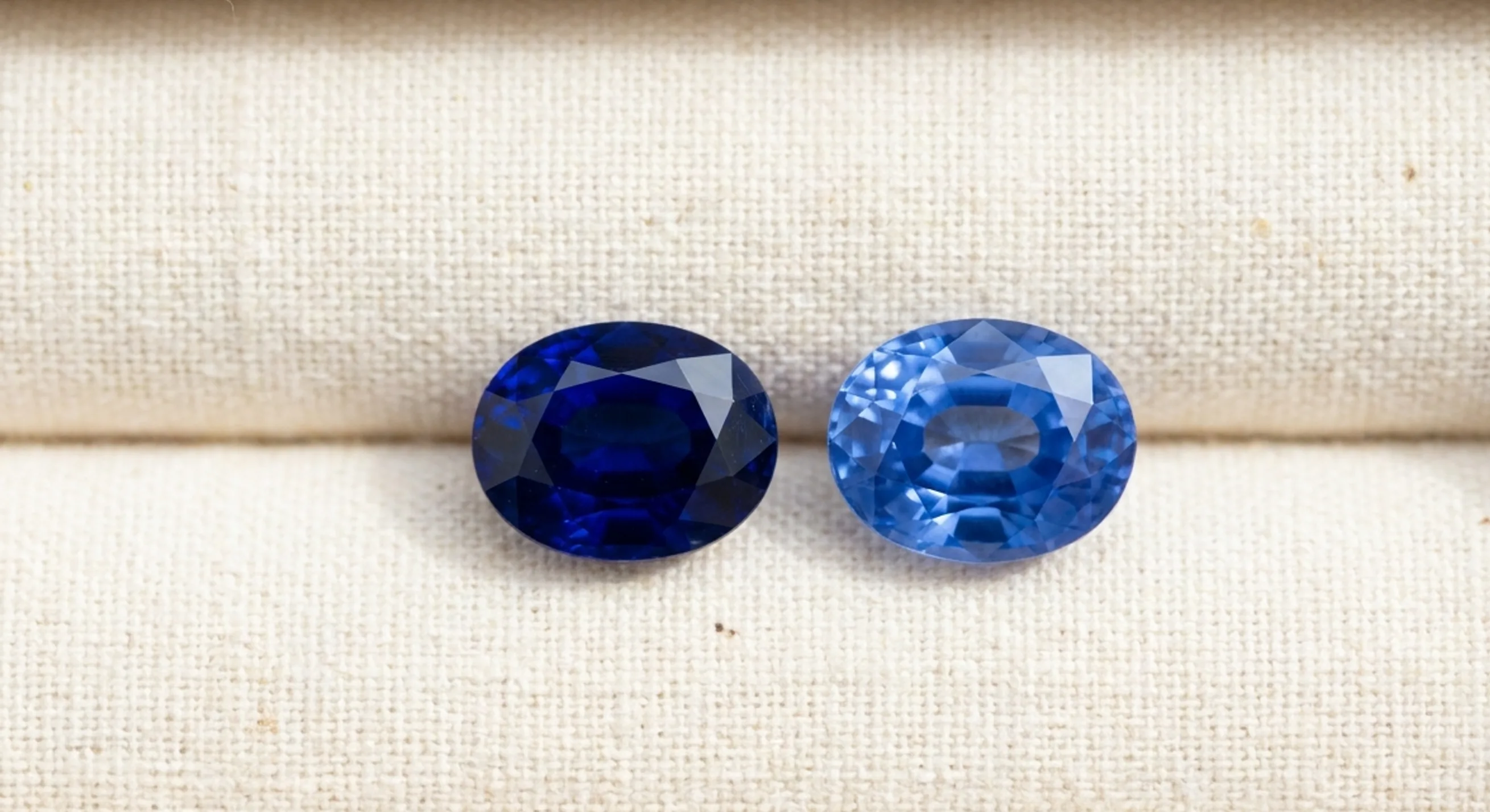
Yes. Colour accounts for more of the price than anything else, and saturation matters more than the exact shade. A vivid stone in a slightly "wrong" hue usually beats a perfectly hued stone that looks greyish or washed out.
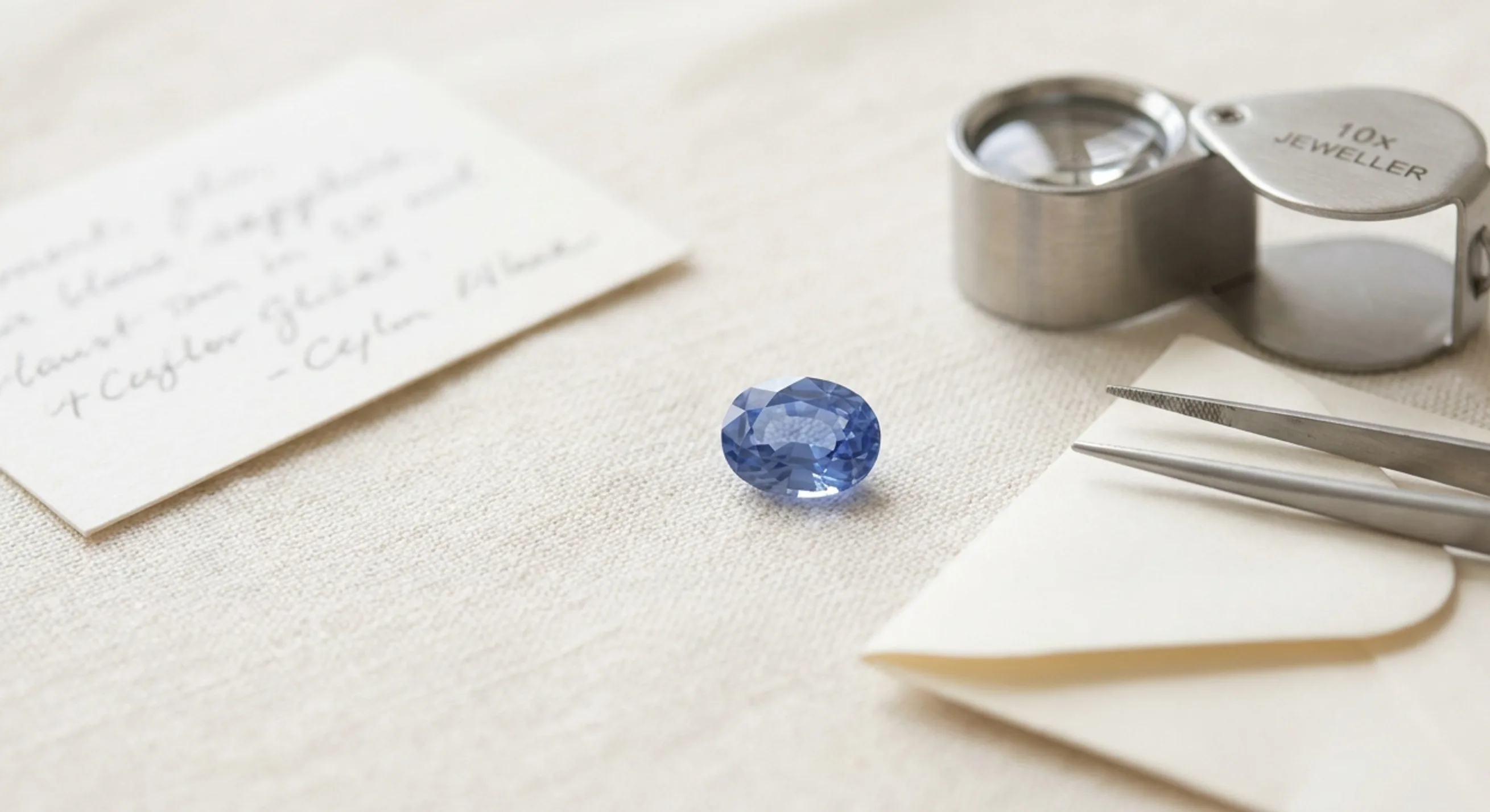
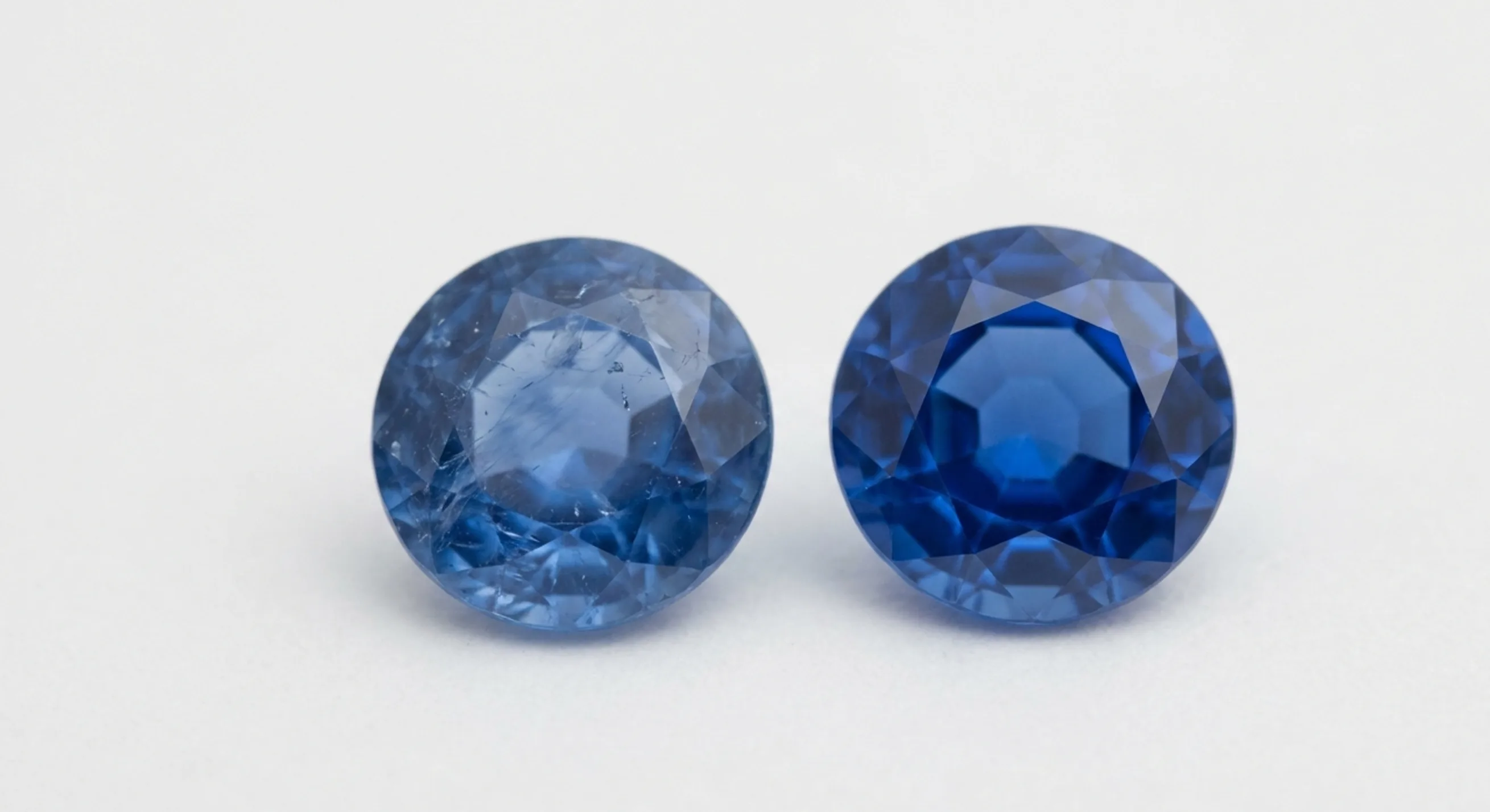
Among blues, royal blue (deep, saturated, velvety) runs roughly US$4,500 to 15,500 per carat, while cornflower (brighter, a touch lighter) sits around US$2,320 to 6,000+ per carat. Plenty of buyers prefer cornflower in daylight, but the market pays more for depth.
Across the full Ceylon palette, the relative order at comparable size and clarity runs roughly like this:
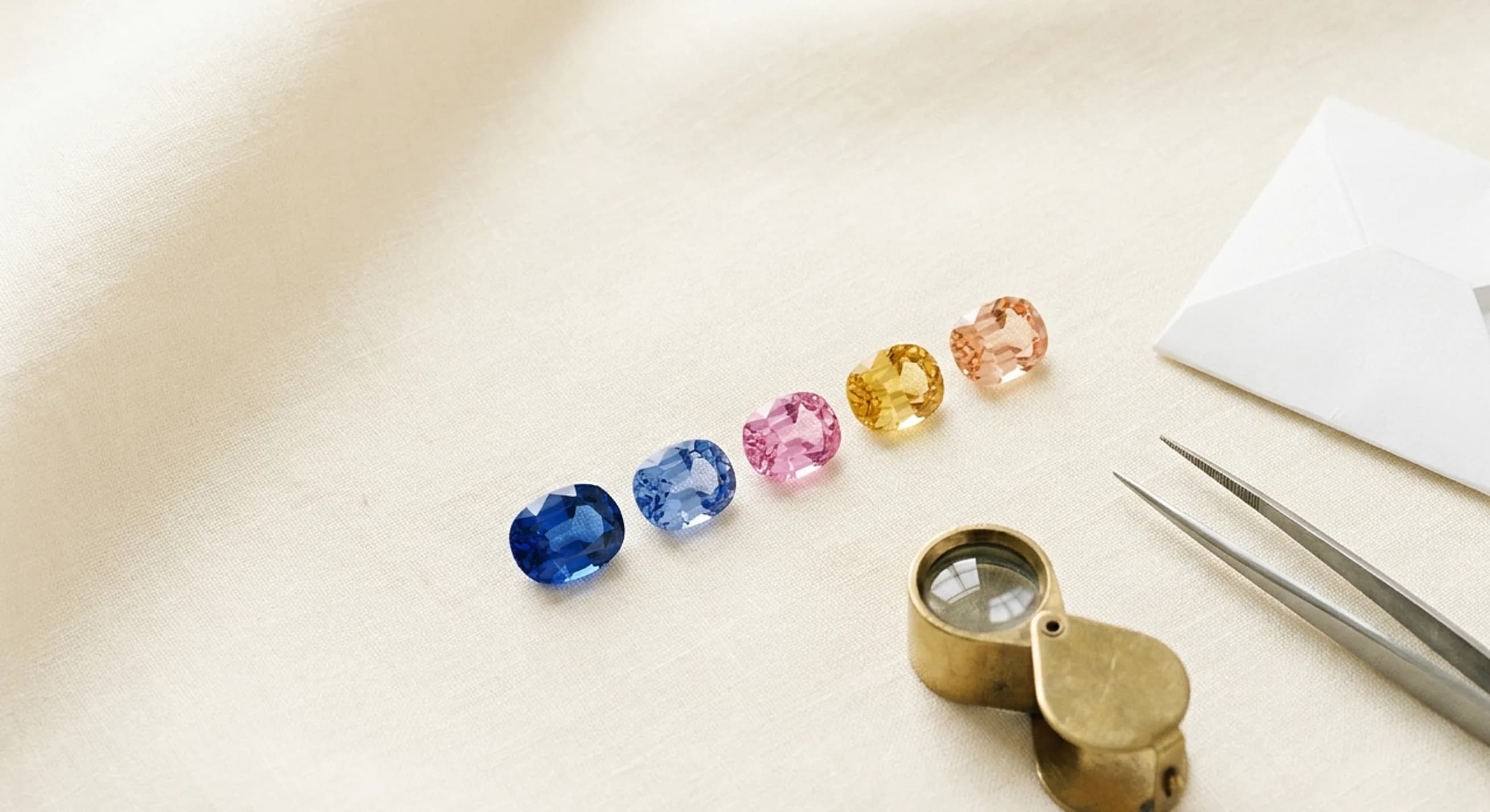
- Top tier: padparadscha, royal blue, cornflower blue
- Strong: intense pink, colour-change, teal
- Mid: medium blue, medium pink, golden yellow, peach
- Accessible: purple, medium yellow, white, pale yellow
Padparadscha is in a category of its own. Fine stones of 1 to 2 ct run about US$5,000 to 10,000+ per carat, and above 3 ct the price climbs to US$15,000 to 20,000+ per carat. The name itself depends on paperwork. At 1 ct, a near-padparadscha without GIA documentation might trade at US$800 to 2,500 per carat, while a GIA-confirmed stone with good colour sits around US$3,000 to 6,000 per carat.
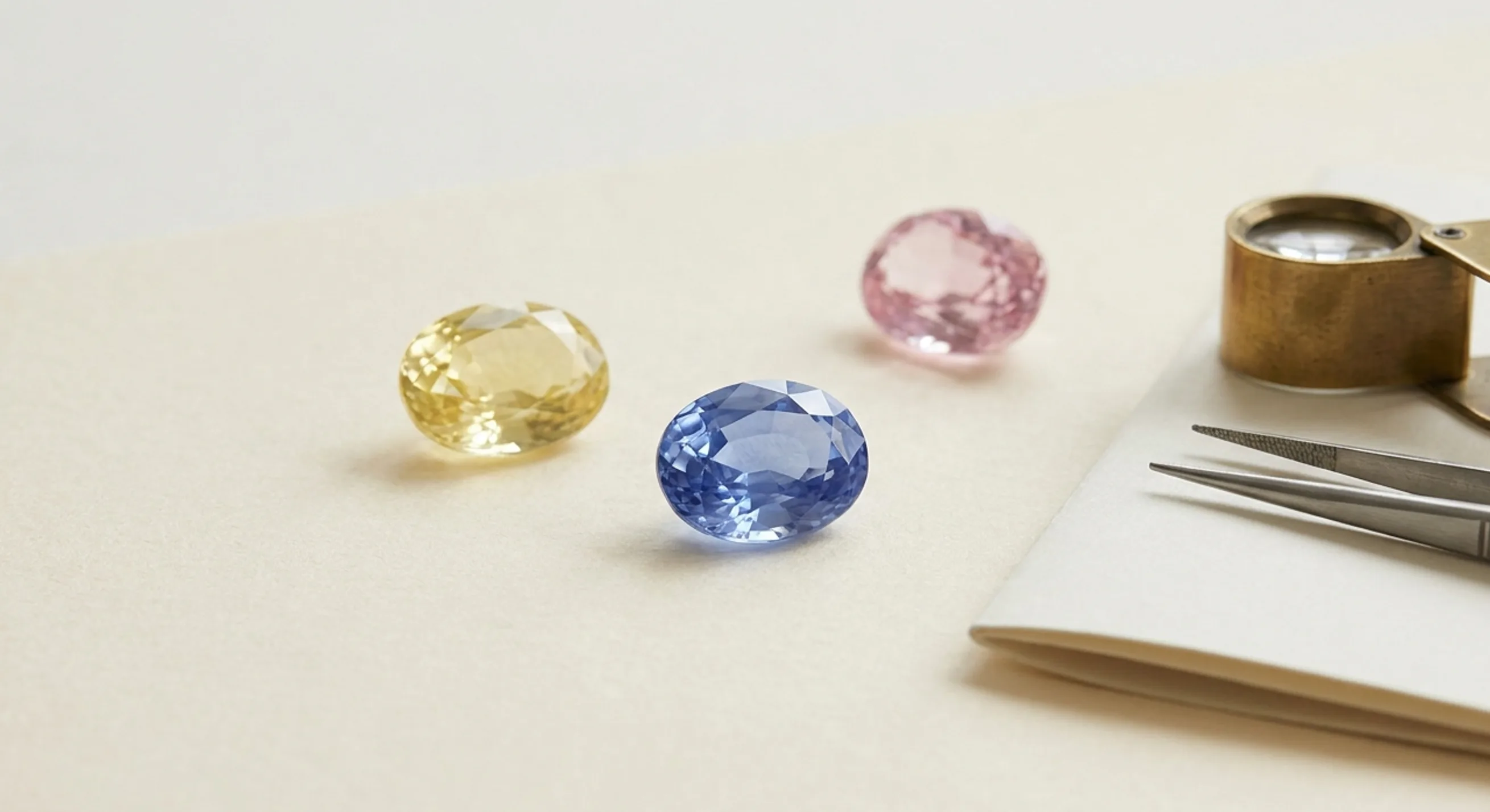
Pink is the other fancy colour that commands serious money, roughly US$1,500 to 8,000 per carat for good stones. Yellow and orange are the accessible end, around US$400 to 2,000 per carat for good material. Even here saturation decides the price. Unheated golden stones of 4.5 to 8.5 ct can ask US$3,560 to 4,775 per carat, while a paler 17.30 ct yellow sat at about US$1,885 per carat despite being twice the size.
Are unheated sapphires worth more than heated ones?
They are, and treatment status is the second-largest driver of value. Context matters here. Around 90 to 95 percent of sapphires on the market have been heated. Heating is a permanent, stable process that every major lab recognises, and it is the reason so much beautiful Ceylon material reaches the market at all. A heated sapphire with fine colour is a fine sapphire, full stop.
Unheated stones are the premium tier because they are scarce. The premium grows with quality and size: about 2x at 1 ct, about 3x at 3 ct, and 3 to 5x at 5 ct and above for fine stones. At commercial grades the gap narrows sharply. With padparadscha, lower-quality heated and untreated stones sell for about the same, and the premium only opens up in finer qualities.
So if your budget points you towards a heated stone, you are buying what the trade itself buys most. I have written a fuller explanation of how heat treatment changes a sapphire's value if you want to weigh the two side by side.
Why does sapphire price per carat jump at certain sizes?
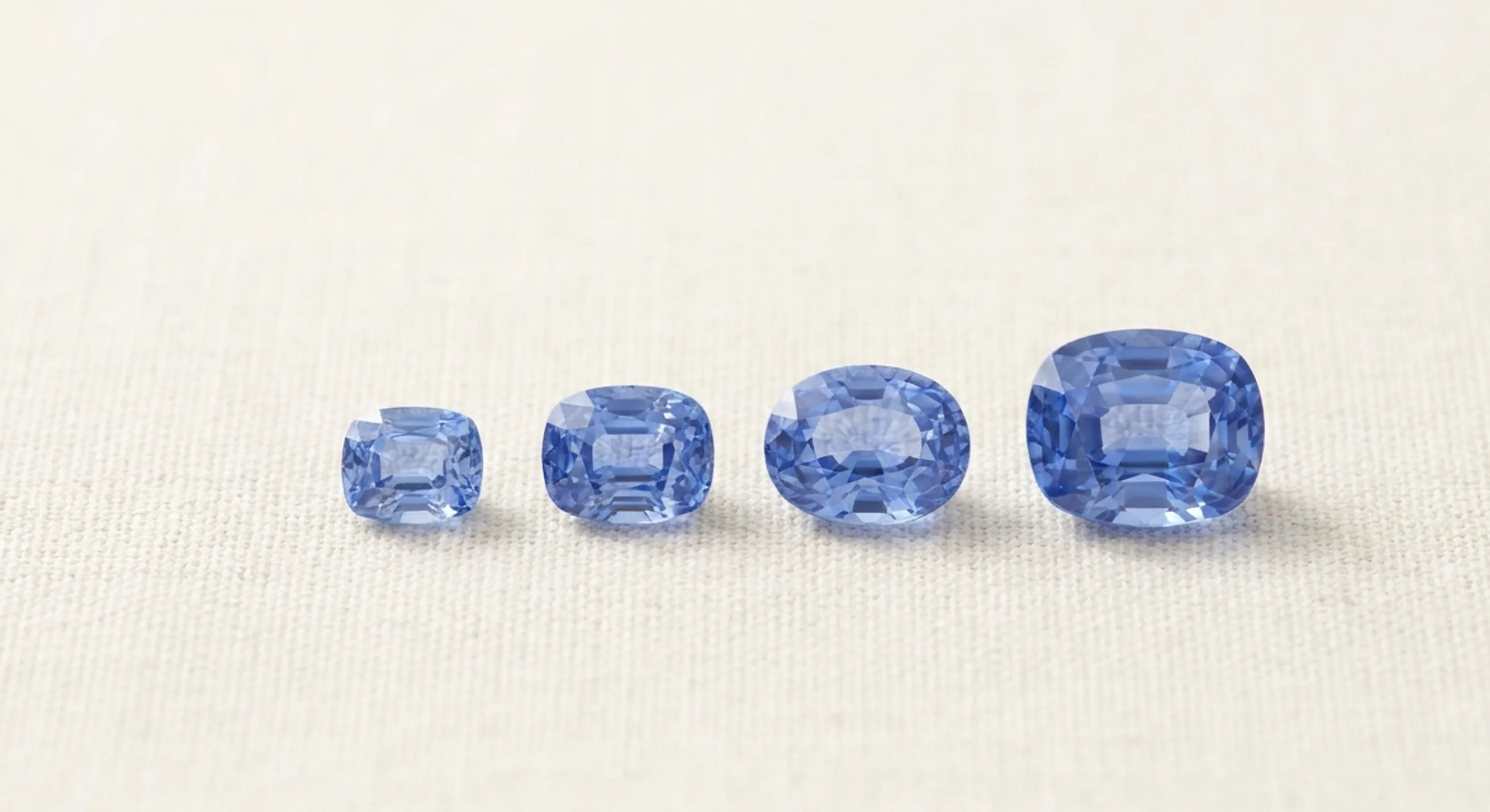
Because large clean crystals with good colour are rare, and the rarity is not linear. Sapphire price per carat climbs as weight crosses market thresholds, chiefly 1, 2, 3 and 5 ct. The total price therefore rises faster than the weight does.
Unheated cornflower blue Ceylon shows the steps clearly. A 1 ct stone might sit around US$4,000 per carat, a 3 ct around US$10,000 per carat, and a GRS-certified 5 ct around US$18,000 per carat. A heated 5 ct of the same colour costs US$4,000 to 6,000 per carat. At the far end, unheated Ceylon stones over 10 ct can exceed US$50,000 per carat.
There is a practical lesson in this. A 0.95 ct stone and a 1.02 ct stone look the same on the hand, but the second one crosses a psychological line and is priced like it. If you are flexible, buying just under a threshold is one of the few genuine bargains in this trade.
Colour can still override size. Two unheated Sri Lankan padparadschas on the market recently made the point: a 4.58 ct stone was asking about US$16,515 per carat, while a larger 8.25 ct stone was asking about US$11,000 per carat. The smaller stone had the better colour, and colour won.
Do inclusions lower a sapphire's value?
Some do, some barely matter, and one kind can actually support the price. Coloured stones are not graded on the diamond scale. The working standard for a fine sapphire is "eye-clean": nothing visible face-up at normal viewing distance.
Fine silk, the needle-like rutile inclusions, is often evidence that a stone has not been heated, and labs use it as part of that call. A light veil of silk can even soften the light attractively. Heavy silk that greys the colour, on the other hand, pulls the price down.
What hurts value most are inclusions that affect durability or sit right under the table: feathers and fractures reaching the surface, or large dark crystals. Sapphire is Mohs 9 and very tough, but a surface-reaching fracture is still a weak point a setter will worry about.
How does the cut affect a sapphire's price?
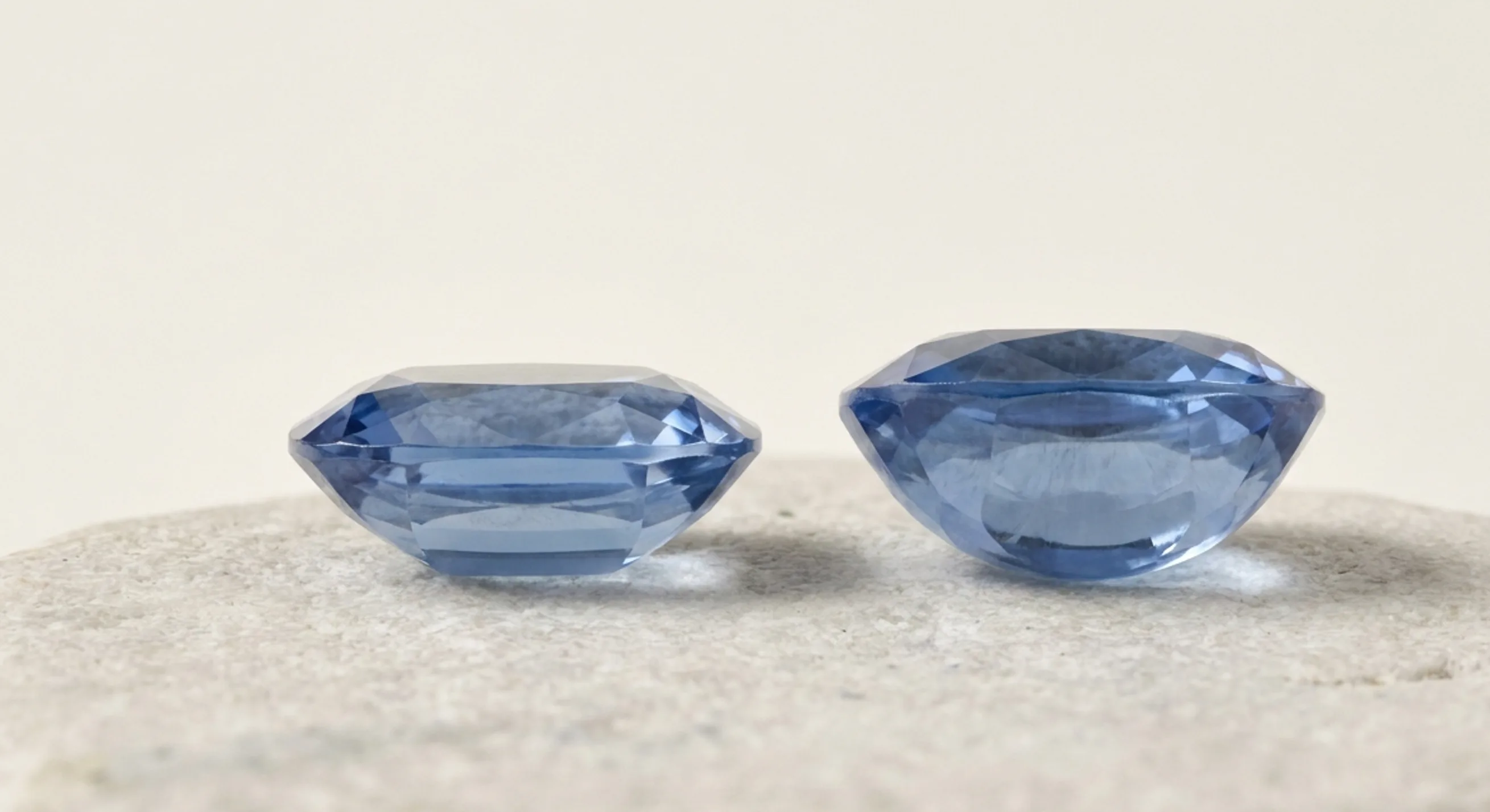
Cut is where Ceylon sapphires behave differently from almost every other gem. Sri Lanka restricts the export of uncut rough sapphire (geuda excepted), so roughly 99 percent of Ceylon sapphires are cut and polished in the country. Sri Lankan cutters traditionally cut "free-size", following the crystal to keep as much weight as possible rather than forcing a standard shape.
There is sound logic behind it. For light-to-medium blue sapphire, GIA research found that losing 5 to 10 percent of colour damages value more than losing 5 to 10 percent of weight. A good cutter protects colour first and weight second. Typical yields from sapphire rough run about 20 to 45 percent, and well-shaped Sri Lankan rough can come in near the top of that range. Two documented parcels of unheated Ceylon rough recovered 36.05 and 27.80 percent when cut for clarity and durability.
When you judge a cut, look for three things: no window (a see-through patch in the centre), limited extinction (dark areas when you tilt the stone), and a face-up size that suits the weight. A deep "native cut" belly can carry hidden weight you are paying for but cannot see. Recutting it abroad typically costs 25 percent or more of the carat weight, which is why it is better to buy a well-cut stone than to plan on fixing one.
Is a lab report worth paying for?
For any stone where treatment status or colour name drives the price, yes. GIA, SSEF, GRS and Gübelin all confirm origin and treatment through inclusion study and trace-element analysis. GRS uses the phrase "no indication of heating" for unheated stones, and other labs use equivalent wording.
The report has the largest effect on the price at the top end, where it underwrites the premium. Some 2026 examples:
- A 2.5 ct unheated royal blue Ceylon with an SSEF origin report: about US$15,000 to 30,000 total.
- A 4 ct heated royal blue with a GIA report: about US$25,000 to 40,000 total.
- A 4 ct unheated equivalent with an SSEF or Gübelin report: about US$50,000 to 100,000 total.
Without the report, that unheated premium has no proof behind it. For padparadscha, documentation is effectively required for the name.
How do the value factors combine?
They multiply rather than add, and that is how two stones of the same colour can end up far apart in price.
Take a heated 1 ct Ceylon blue and an unheated 2 ct Ceylon blue of matching colour and clarity. In current dealer pricing, the heated 1 ct sits around US$600 to 3,000 per carat. The unheated 2 ct sits around US$2,000 to 8,000 per carat. Compare matching points in those ranges and the 2 ct unheated stone costs roughly 2.7 to 3.3 times more per carat. Since it also weighs twice as much, the total runs roughly five to seven times higher: about US$4,000 to 16,000 against US$600 to 3,000.
Two of the six factors drove that whole gap: treatment and the step to 2 ct. Add a stronger colour grade or a top-tier lab report and the multiplier widens again. Remove one factor, say by choosing a heated 2 ct, and it shrinks considerably. When you understand which factor is doing the work in a quote, you can decide which one you are happy to trade away.
How do you know if a Ceylon sapphire price is fair?
Run any quote through this checklist before you commit:
- Colour name vs. reality. Does "royal blue" or "padparadscha" appear on the lab report, or only in the listing? The name alone can move the price by multiples.
- Treatment in writing. Is the stone stated as heated or unheated, and does an independent lab confirm it?
- Which lab, and what it covers. Origin and treatment from GIA, SSEF, GRS or Gübelin carries more weight than a basic identification slip.
- Weight against thresholds. Is the stone just over 1, 2, 3 or 5 ct? You are paying for that line, so make sure the rest of the stone earns it.
- Eye-clean in real light. Ask for unedited daylight video. Heavily processed photos are the trade's weak spot. Every stone Crestonne lists comes with its own video.
- Cut performance. Look for windows, extinction and an over-deep belly hiding weight.
- Against the ranges. Check the quote against published per-carat ranges for that colour, treatment and size. An "unheated" stone priced like a heated one deserves a hard question.
If a quote passes all seven checks, the Ceylon sapphire price you are looking at is probably honest, whatever the number.
If you would like me to source a stone to a specific colour, treatment status and budget, tell me what you have in mind through a custom loose stone order and I will walk you through what each option costs and why. If you would rather browse finished, certified stones first, start with the Crestonne collections.
Common questions
Frequently Asked Questions
What is the average Ceylon sapphire price per carat in 2026?
No single average holds, because the range is so wide: about US$300 per carat for commercial heated stones up to US$20,000+ per carat for fine unheated ones. Most ethically sourced, certified 1 to 3 ct Ceylon sapphires fall between US$1,500 and US$6,000 per carat.
How much more does an unheated Ceylon sapphire cost?
The premium grows with quality and size. For fine stones it is about 2x at 1 ct, about 3x at 3 ct, and 3 to 5x at 5 ct and above. At commercial grades the difference is much smaller. Heating is the industry norm, and around 90 to 95 percent of sapphires on the market are heated.
Which Ceylon sapphire colour is the most expensive?
Padparadscha usually commands the highest prices, with fine 1 to 2 ct stones at about US$5,000 to 10,000+ per carat. Royal blue and cornflower blue follow, then intense pink, colour-change and teal. Yellow and white are the most accessible.
Are Ceylon sapphires cheaper than Burmese sapphires?
At equivalent quality, a Burmese sapphire typically costs about 1.5 to 2.5 times as much as a Ceylon stone. That makes Ceylon one of the strongest value origins for fine blue and fancy-colour sapphires.
Do I need a lab certificate when buying a Ceylon sapphire?
For any stone sold as unheated, or carrying a premium colour name such as royal blue or padparadscha, yes. Reports from GIA, SSEF, GRS or Gübelin confirm origin and treatment, and they are what support the price premium.