Understanding
Lab-Grown vs Natural Ceylon Sapphire: An Honest Comparison
Lab-grown and natural Ceylon sapphires share the same chemistry, hardness, and sparkle, but not the same inclusions, price, or resale value. Here is how synthetic corundum is grown, how to tell it from a natural stone, and which one is the right buy for you.
Published Updated 10 min read
By Naseef AR
A lab-grown sapphire and a natural sapphire are the same mineral, corundum, with the same hardness, the same chemistry, and the same sparkle. The difference is not what they are but where they came from and what they are worth. A lab-grown stone is created in a factory in a matter of weeks. A natural Ceylon sapphire formed in the earth over millions of years. You tell them apart under magnification by their inclusions, and on paper by a laboratory report. The lab grown vs natural sapphire decision comes down to three things: price, resale value, and whether the stone's origin matters to you. Here is the honest comparison, with no thumb on the scale.
Is a Lab-Grown Sapphire a Real Sapphire?
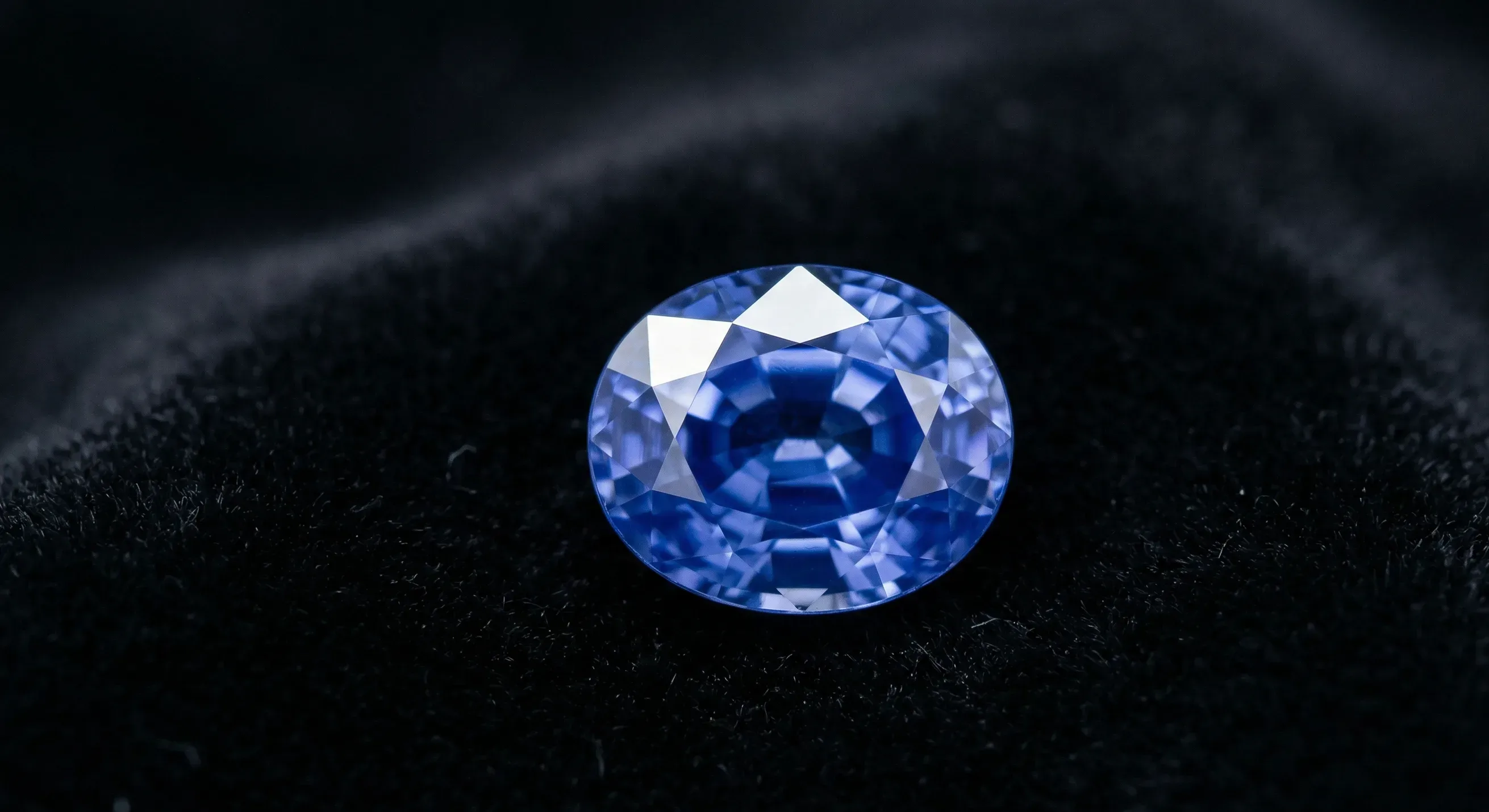
Yes, and this is where most of the confusion starts. A lab-grown sapphire, also sold as a lab created sapphire, synthetic sapphire, or created sapphire, is genuine corundum. It has the identical chemical formula to a natural sapphire (aluminium oxide, Al₂O₃), the identical crystal structure, the identical Mohs 9 hardness, and the identical refractive index. Put a fine flame-fusion synthetic next to a natural Ceylon stone of the same colour and no one can tell them apart by eye. Both are, mineralogically, sapphire.
So the synthetic sapphire vs real sapphire debate is not really about chemistry. It is about origin and value. A natural sapphire is a record of a specific geological event: a crystal that grew in metamorphic rock in Sri Lanka or a basalt field in Australia over geological time, then was mined, cut, and certified. A synthetic is a manufactured product, reproducible without limit. The word "real" muddies this. A lab sapphire is a real sapphire and a fake natural sapphire at the same time. The honest framing is natural versus synthetic, and the only thing that makes the distinction meaningful is disclosure.
That last word is the whole game. A lab-grown stone sold as lab-grown is a legitimate product. A lab-grown stone sold as natural is fraud. Everything that follows is about telling the two apart and knowing what each is worth.
How Are Lab-Grown Sapphires Made?
There are four ways to grow corundum in a lab, and they are not equally easy to detect.
Flame fusion (the Verneuil process). Invented by Auguste Verneuil in 1902 and still the cheapest and most common method. Powdered alumina is dropped through an oxyhydrogen flame, melts, and solidifies on a rotating pedestal into a carrot-shaped crystal called a boule. The vast majority of cheap synthetic sapphire, the kind in costume jewellery and watch dials, is flame fusion. It is also the easiest to identify, because the rapid growth leaves curved growth lines and trapped gas bubbles.
Czochralski (crystal pulling). A seed crystal is dipped into molten alumina and slowly pulled upward, drawing a single clean crystal behind it. Used for optics and watch crystals as well as gem material. Cleaner than flame fusion and harder to spot.
Flux growth. Alumina is dissolved in a molten chemical flux and allowed to crystallise slowly over months. Brands such as Chatham produce gem synthetics this way. Flux stones are the most convincing, because the slow growth produces wispy, fingerprint-like inclusions that can resemble natural ones. The tell is often a platinum platelet shed from the crucible, a flat metallic hexagon that nature never makes.
Hydrothermal growth. A seed crystal grows in a heated, pressurised autoclave that imitates the conditions of natural crystal formation. Rare for sapphire and the hardest of all to detect, because the method is closest to how nature actually does it.
How to Tell a Lab-Grown Sapphire from a Natural One
Knowing how to tell lab grown sapphire from natural material starts with inclusions. The inside of a sapphire is its biography, and natural and synthetic stones have different stories written in them.
What gives away a synthetic:
- Curved striae. Flame-fusion stones show curved colour banding, like grooves in a vinyl record. Nature grows corundum in straight, angular, hexagonal zones, never curves.
- Gas bubbles. Round or teardrop bubbles, often in trails. Natural stones contain solid crystals, not spherical gas.
- Platinum platelets. Flat metallic hexagons in flux-grown stones, shed from the crucible.
What proves a stone is natural:
- Rutile silk. Fine needle-like inclusions crossing at 60 and 120 degrees, a classic Ceylon signature.
- Zircon crystals with tension halos. Tiny crystals surrounded by a stress fracture, unique to natural growth.
- Fingerprints and negative crystals. Healed fractures and angular voids that record the stone's geological life.
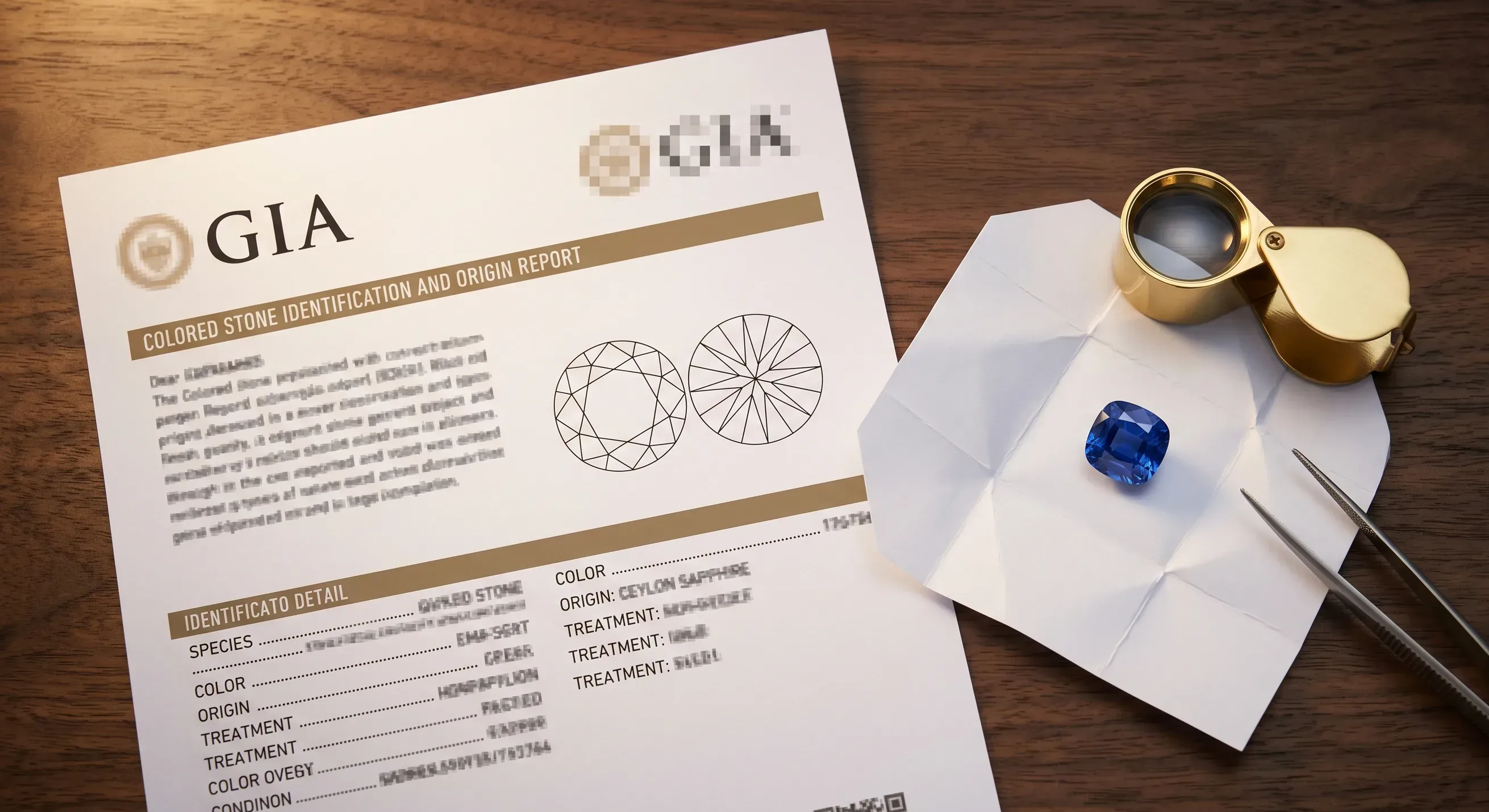
The catch is that a clean, well-made flux synthetic can mimic natural fingerprints closely enough to fool the eye, even a trained one, under a loupe. That is why, for any stone of value, the inclusions point you in a direction but the laboratory report is the proof. A report from GIA, SSEF, AGL, or Gübelin states in plain language whether the stone is natural or synthetic, and it is non-negotiable above a few hundred dollars. Our walkthrough of how to read a GIA sapphire certificate covers exactly where that determination appears on the document, and our broader guide on how to tell if a Ceylon sapphire is real runs through the visual checks in detail.
A few months ago a buyer emailed us about a 3-carat "unheated Ceylon sapphire" he had bought online for 400 dollars, asking why a stone that good was so cheap. The price was the tell before the stone ever arrived. He sent it in, and under the microscope it was almost theatrical: a set of gently curved colour bands sweeping across the stone like the grooves on a record, and a faint trail of round gas bubbles near the girdle. Flame-fusion synthetic, and not a subtle one. A lab confirmed "synthetic corundum" the following week. The stone itself was perfectly nice. The problem was the four words on the listing, "natural unheated Ceylon sapphire," none of which were true. A thirty-second look through a microscope, or a ten-dollar lab check, would have caught it. This is the real industry problem with sapphire online: not that listings are untrustworthy as a rule, but that a synthetic dressed up in natural language is invisible without documentation. It is the entire reason we put a major laboratory report behind every stone we sell and read the inclusions ourselves before it ships.
Lab-Grown vs Natural Sapphire: Price and Resale Reality
This is where the two stones stop being twins. The chemistry is identical; the economics could not be more different.
| Lab-grown sapphire | Natural Ceylon sapphire | |
|---|---|---|
| Chemistry | Corundum (Al₂O₃) | Corundum (Al₂O₃) |
| Hardness | Mohs 9 | Mohs 9 |
| Typical price per carat | USD 10 to 500 | USD 300 to 10,000+ |
| Formation time | Weeks | Millions of years |
| Inclusions | Curved striae, gas bubbles | Silk, zircon halos, fingerprints |
| Supply | Unlimited | Finite, mine-dependent |
| Resale value | Negligible | Holds or appreciates |
A flame-fusion lab-created sapphire finishes at roughly USD 10 to 50 per carat. Premium flux-grown synthetics from named producers run USD 100 to 500 per carat. A natural Ceylon sapphire of good colour starts in the low hundreds per carat and climbs into the thousands, with fine unheated stones going much higher, as our Ceylon sapphire price per carat guide lays out by size and treatment tier.
The resale gap is even starker than the retail gap. Because synthetic corundum can be produced without limit, there is essentially no secondary market for it. You cannot meaningfully resell a lab sapphire. A natural certified Ceylon stone, by contrast, retains value and has historically appreciated, especially in larger unheated sizes. If a stone is ever going to be sold, passed down, or insured at a real number, that is an argument for natural that has nothing to do with how it looks.
Are Lab-Grown Sapphires More Ethical?
This is the claim that sells most lab-grown stones, and it deserves an honest answer rather than a marketing one. A synthetic sapphire involves no mining at all, which removes every question about mining conditions in one stroke. That is a genuine and fair point in its favour.
But "lab-grown equals eco-friendly" is a slogan, not a fact. Growing corundum is energy-intensive: flame fusion runs at roughly 2,000°C, and flux growth holds a furnace hot for months. The real environmental footprint depends entirely on where that electricity comes from, and most synthetic gem rough is grown in regions powered by coal. A factory is not automatically greener than a shovel.
On the other side, Sri Lankan sapphire mining is among the lowest-impact extraction on earth. It is overwhelmingly artisanal: hand-dug pits, minimal heavy machinery, little chemical use, and the pits are typically backfilled. It is also a livelihood for tens of thousands of families in Ratnapura and Elahera and is regulated by the National Gem and Jewellery Authority. The honest ethical question for a natural stone is not "mined or grown" but "is this stone traceable and responsibly sourced," which is exactly what our guide to what ethically sourced really means digs into. Lab-grown removes a risk; a well-sourced natural stone manages it, and supports a community in the process.
So, Lab Grown vs Natural Sapphire: Who Should Buy Which?
Both are real sapphires. Both are Mohs 9 and will survive daily wear for generations. The honest decision is not about quality on the hand. It is about what you want the stone to be.
Buy a lab-grown sapphire if: you want the largest, cleanest, most saturated stone your money can buy and origin is irrelevant to you; the piece is fashion or costume jewellery; you want a specific exotic colour cheaply; or you simply do not want to spend natural-stone money. There is no shame in it. A disclosed synthetic is an honest, durable, beautiful product.
Buy a natural sapphire if: you want the real geological article and its story; the stone is an engagement ring or an heirloom meant to carry meaning; provenance matters to you, as it does to most of our clients who specifically want a stone traceable to Sri Lanka; or you care about resale and value retention. A natural Ceylon sapphire is rarer every year, and that scarcity is precisely what a synthetic can never replicate.
What should decide it is never a seller pretending the two are interchangeable. They are interchangeable in chemistry and nothing else.
If you want a natural Ceylon sapphire with the documentation to prove it, browse the Crestonne collection for certified stones with their species, treatment, and origin stated in writing, or submit your specifications (colour, carat, treatment preference, budget) through our custom sourcing service. Every stone we handle is read under magnification by us and backed by a major laboratory report, because the only thing that separates a natural sapphire from a synthetic on paper is the document that says so, and the only thing that separates them in the hand is whether someone bothered to look.
Common questions
Frequently Asked Questions
Is a lab-grown sapphire a real sapphire?
Yes, in the material sense. A lab-grown sapphire is real corundum with the same chemical formula (aluminium oxide), the same crystal structure, the same Mohs 9 hardness, and the same optical properties as a natural sapphire. Gemologically it is a genuine sapphire, just one grown in a factory rather than in the earth. What it is not is a natural sapphire. Reputable labs and retailers must disclose it as synthetic, lab-grown, or lab-created. The distinction matters for price, resale, and provenance, not for whether the stone is 'really' a sapphire.
How can you tell a lab-grown sapphire from a natural one?
Under magnification, the inclusions give it away. Flame-fusion synthetics show curved growth lines (curved striae) and round gas bubbles, neither of which occurs in nature. Natural sapphires show angular colour zoning and solid mineral inclusions such as rutile silk, zircon crystals with tension halos, and healed fractures called fingerprints. Flux-grown synthetics are harder, sometimes showing platinum platelets from the crucible. For any stone of real value, the definitive answer is a report from a gemological laboratory such as GIA, SSEF, or Gübelin, which states plainly whether the stone is natural or synthetic.
Are lab-grown sapphires cheaper than natural sapphires?
Dramatically. A flame-fusion lab-created sapphire often sells for USD 10 to 50 per carat as a finished stone, and premium flux-grown synthetics run roughly USD 100 to 500 per carat. A natural Ceylon sapphire of good colour and clarity ranges from a few hundred to several thousand US dollars per carat, and fine unheated stones go far higher. You are paying for natural origin, rarity, and the documentation that proves both, not for the chemistry, which is identical.
Do lab-grown sapphires have resale value?
Very little. Because synthetic corundum can be produced in unlimited quantity at low cost, there is almost no secondary market for lab-grown sapphires. You would struggle to resell one for a meaningful fraction of what you paid. Natural sapphires, particularly certified unheated Ceylon stones above two carats, hold their value and have historically appreciated. If resale or value retention matters to you at all, that is the single clearest reason to choose natural over lab-grown.
Should I buy a lab-grown or a natural sapphire?
Buy lab-grown if your priority is maximum size and colour for the lowest price, the stone is for fashion or costume use, and origin and resale do not matter to you. Buy natural if you want the real geological article, if provenance and story matter, if the stone is an engagement ring or an heirloom, or if you care about resale value. Both are real sapphires and both are durable at Mohs 9. The honest deciding factor is what you want the stone to mean and to be worth, not how it performs on your hand.