Buying Guides
How to Tell if a Ceylon Sapphire Is High Quality
A dealer's five-factor checklist for judging any Ceylon sapphire: colour, clarity, cut, origin and treatment. Each factor comes with a Sri Lankan benchmark and the red flags to check on any listing or certificate.
12 min read
By Naseef AR
There is no official sapphire grading scale, so judging a Ceylon sapphire comes down to five factors, listed here roughly in order of importance: colour, clarity, cut, origin and treatment. Colour carries by far the most weight, more than any other factor, so look at it first and look at it longest. Clarity tells you whether the stone is durable and lively. Cut decides whether that colour actually reaches your eye. Origin and treatment are paper questions. A lab report settles them, not a loupe.
Below is the checklist I use to judge a stone before I buy it. It works for blue, pink, yellow, padparadscha, teal or any other colour. You can run it against any listing or certificate before you ask anyone, me included, for a loose stone.
How does sapphire grading work?
Coloured stones have no universal grading scale. Diamonds have D-to-Z, but there is no line on a sapphire report that says "this one is a 9 out of 10." That makes sapphire grading a judgement built from five factors, and the factors affect each other. A stone with exceptional colour can carry more inclusions and still be fine. A stone with flawless clarity and a greyish, washed-out colour never will be.
This is how I score a stone in my head:
- Colour (hue, tone, saturation, evenness). Is it a pure, saturated colour at a pleasant depth, spread evenly across the face?
- Clarity. Are the inclusions typical for Ceylon material, and does any of them threaten durability?
- Cut. Does the stone return light across the whole face, or is there a window or a dark patch?
- Origin. Has a lab confirmed Sri Lankan origin, or has someone just claimed it?
- Treatment. Is it unheated, routinely heated, or treated with something that deserves a harder look?
A stone that scores well on the first three is a good stone. Origin and treatment then decide where it sits on the price ladder. Here they are one at a time.
What is the best colour for a Ceylon sapphire?
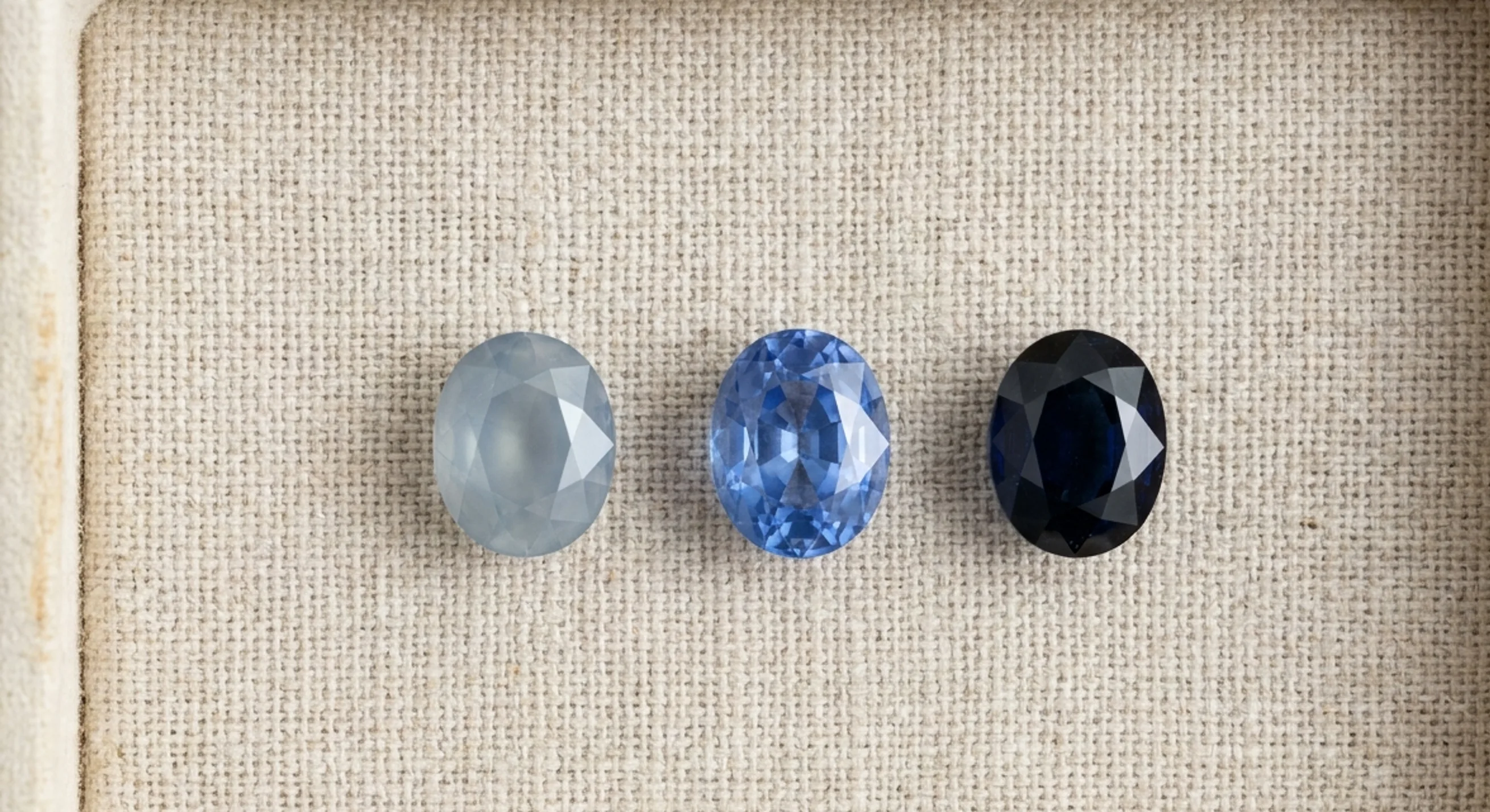
Colour has four parts, and most guides to sapphire grading stop after the first one.
Hue is the colour itself: blue, violetish blue, pink, orangy pink. GIA's view of blue is also the trade's view. The most valued stones run from velvety blue to violetish blue. A single pure hue is worth more than a mixed one. A blue with a green or grey undertone loses points, even if you only notice it next to a cleaner stone.
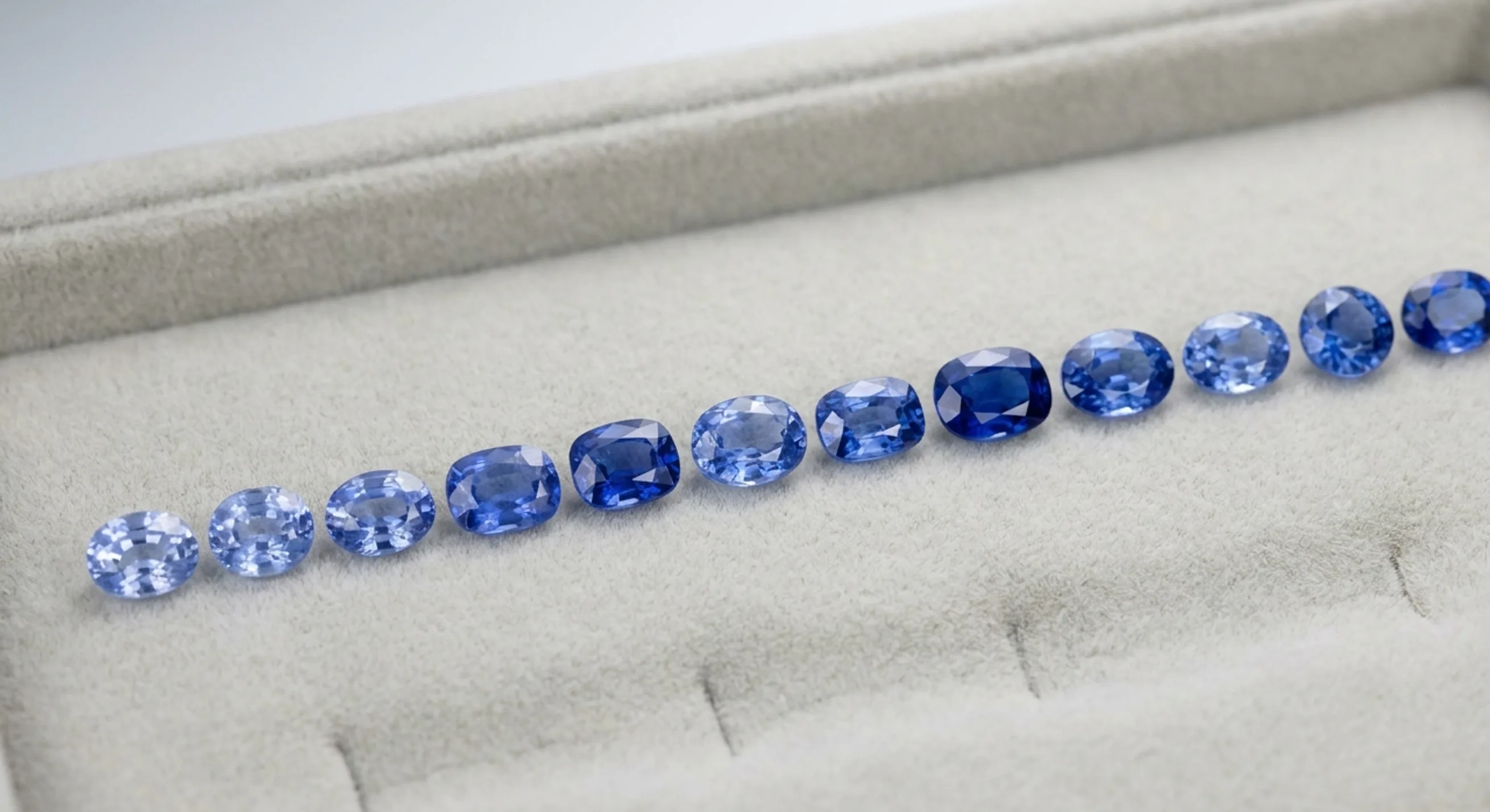
Tone is how light or dark the colour is, and the sweet spot is medium to medium-dark. Too light and the stone looks pastel. Too dark and it turns inky in anything but direct light. Ceylon's reputation rests on stones at the lighter, brighter end of that band. The classic cornflower blue is medium in tone and lively. A Ceylon royal blue goes deeper without closing up.
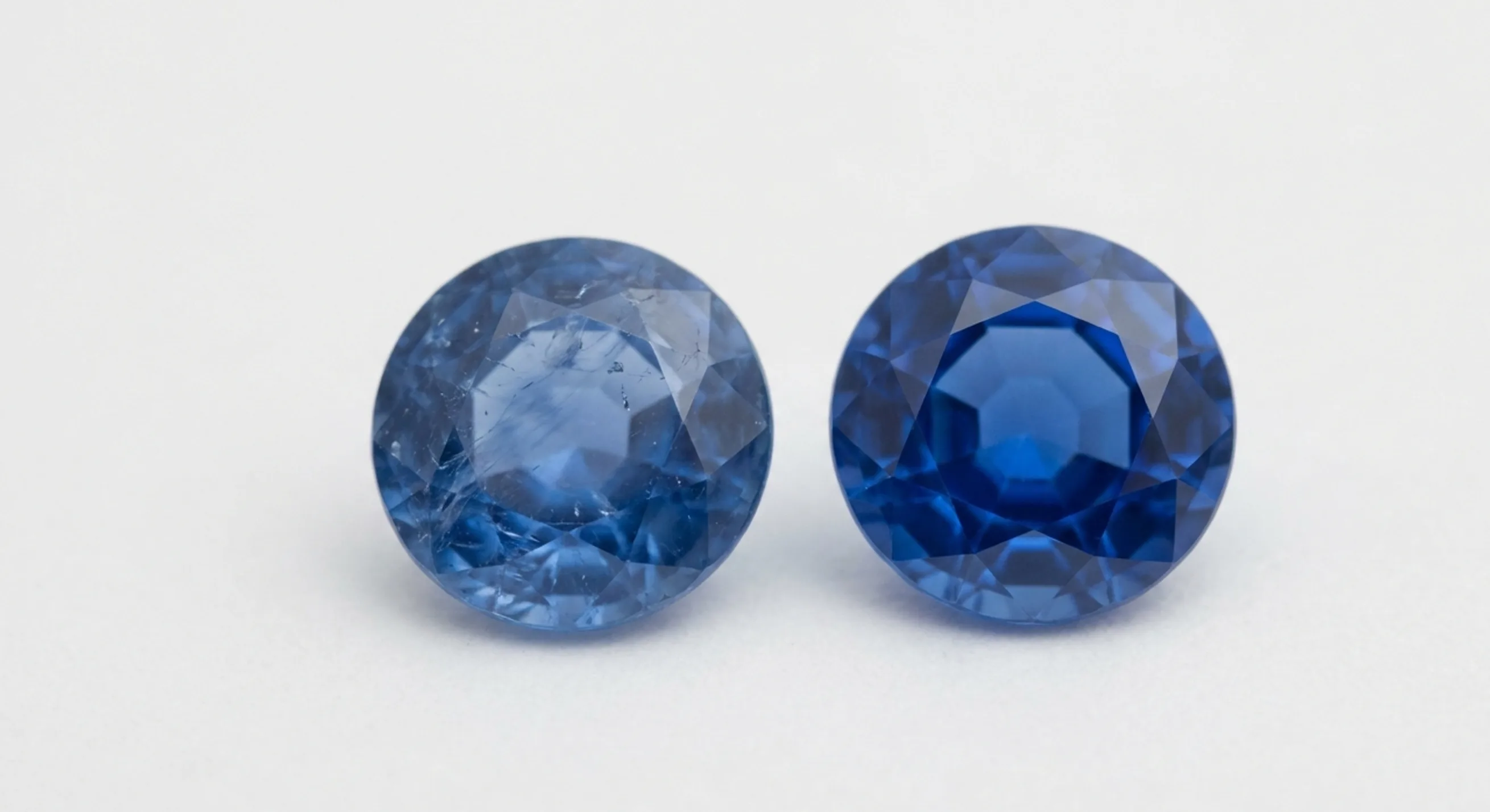
Saturation is intensity, and you want strong to vivid. Low-saturation stones look greyish or brownish, and GIA is clear that greyish, too-light or too-dark stones are worth less. Most commercial-grade Ceylon material falls down on saturation.
Evenness is the part buyers forget. Sri Lankan sapphire often grows with its colour in zones. GIA's research describes the typical Ceylon pattern as straight, alternating blue and colourless bands with sharp boundaries. Colour in the rough is often concentrated near the surface of the crystal. A good cutter places the culet in that coloured zone so the whole face looks blue. A careless one leaves you with a pale stripe or a clear patch near the table.
The Ceylon benchmark: some zoning is normal and perfectly acceptable if you can't see it face-up. Zoning you can see face-up at arm's length costs points. GIA's trick works for checking it: put the stone in a little water on a white background and look through it. Bands that hide in air show up clearly in water.
Other colours use the same four parts with different targets. Padparadscha lives or dies on the balance of pink and orange. Too much of either and it becomes a pink or an orange sapphire, which are lovely but priced differently. Pinks need saturation without purple taking over. Yellows need a clean golden hue, not a brownish one. Teal is a mixed hue by nature, so you judge it on saturation and evenness rather than purity.
How much silk and inclusion is normal in a Ceylon sapphire?
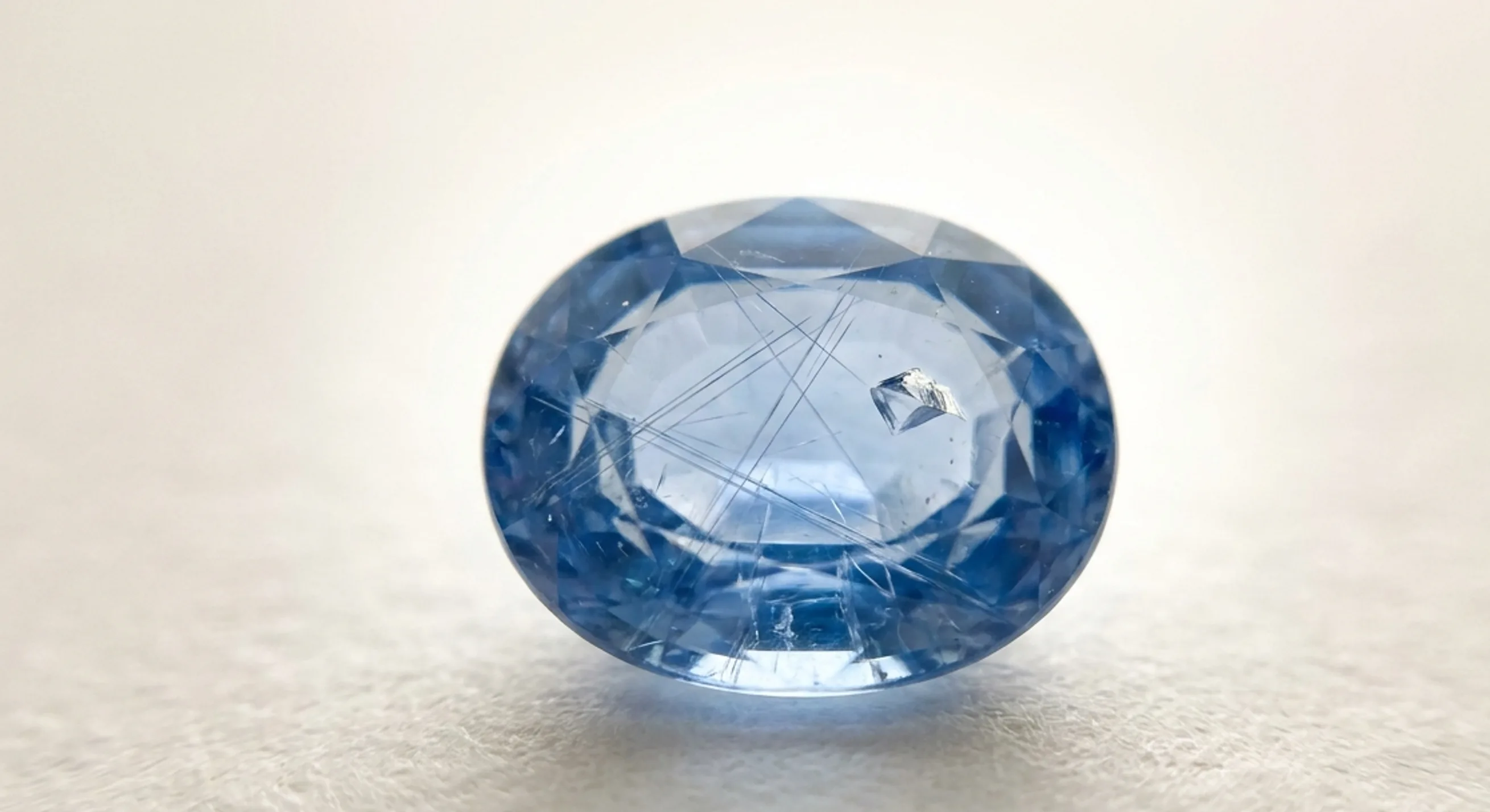
Every natural sapphire has inclusions. Sapphire clarity is about which ones, how many and where they sit.
The signature Ceylon inclusion is silk: fine rutile needles, often in intersecting groups. A little fine silk is not a flaw. It scatters light softly and gives the best Ceylon blues their velvety glow. Heavy silk is a different story. Once it clouds the stone and turns it milky, the colour flattens and the stone loses life. That milky material is called geuda, and it is exactly what Sri Lankan burners heat to dissolve the silk. More on that under treatment below.
GIA also lists crystals and fingerprints (partially healed breaks that look like lacy veils) as normal clarity features, along with the colour zoning and banding covered above. In moderation, none of them is a problem.
The Ceylon benchmark: a fine Ceylon sapphire should look clean face-up at a normal viewing distance. Under a 10x loupe, expect to find something: a whisper of silk, a small crystal, a tiny fingerprint. That should reassure you, not worry you. Unaltered silk is also one of the features labs check when they decide whether a stone has been heated.
The red flag is anything that threatens durability. Sapphire is Mohs 9 and tough, but an open fracture that reaches the surface, or a large fingerprint near a corner or the girdle, can give way when the stone is set or knocked. Prices drop sharply for inclusions like that, and they should.
How do you know if a Ceylon sapphire is well cut?
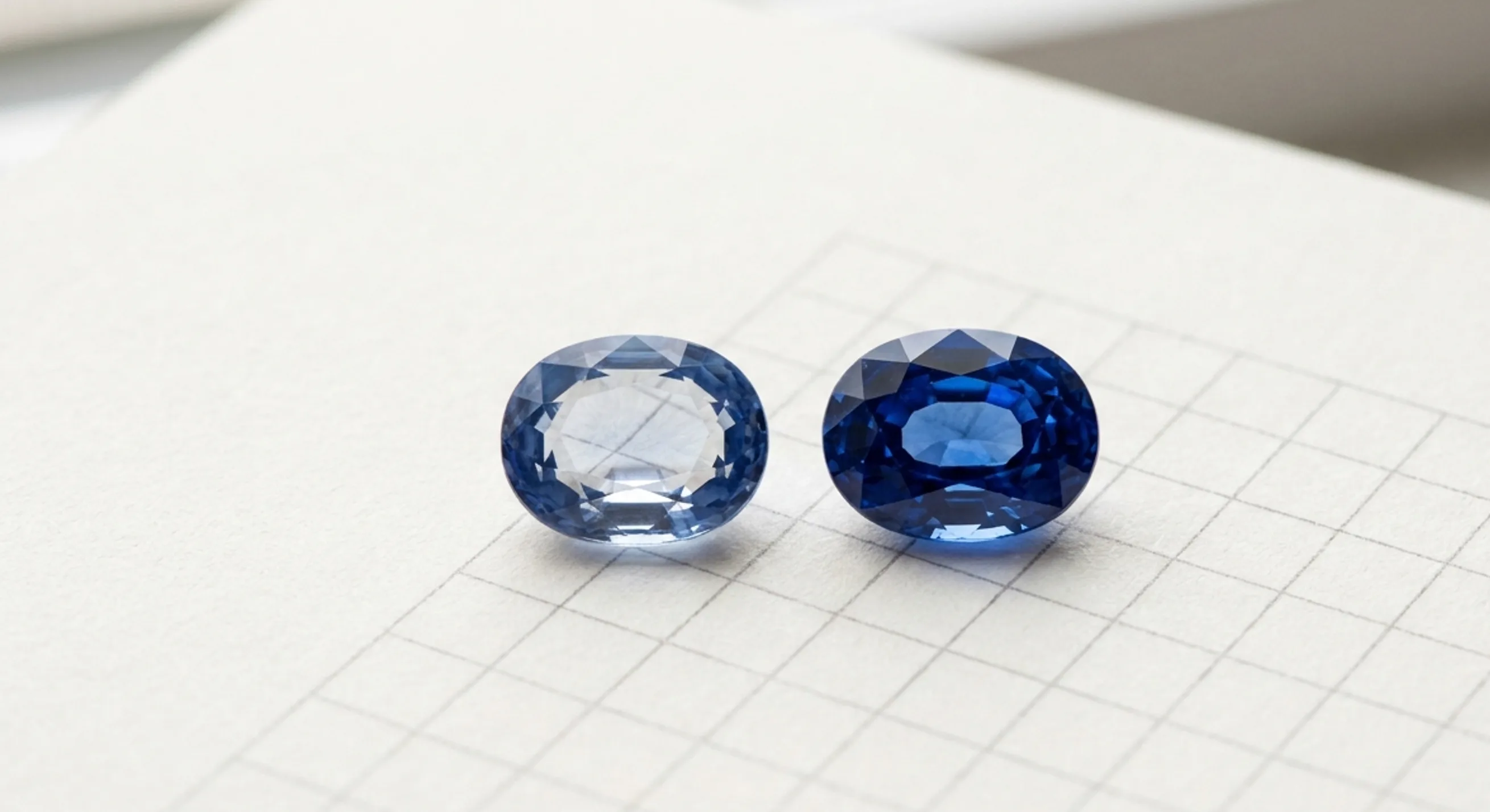
Quality is lost most often at the cut, and that is also where the best value often hides.
Sri Lankan lapidaries have traditionally been paid by finished weight, so the native cut developed to keep as many carats as possible. Trade estimates put a typical native cut at roughly 20 to 40% heavier than a well-proportioned cut of the same rough. The extra weight sits in uneven, bulging pavilions, off-centre culets and thick girdles. The cost is light leakage. Parts of the pavilion end up too shallow, and light passes straight through instead of coming back to your eye. That is a window: a washed-out, see-through patch in the middle of the stone.
To avoid a window, a sapphire's pavilion main angles generally need to be around 39 to 42 degrees. You can't measure that from a photo, but you can see the result. Tilt the stone slowly over printed text or a patterned surface. If you can read through the centre, it has a window.
A window also changes how you should price a stone. Recutting a native-cut sapphire to remove a window and improve how the colour shows usually costs 15 to 25% of the weight. A 3-carat stone with a window across part of its table may finish at about 2.3 to 2.5 carats. It will weigh less and be a far better stone, so price it on what it will weigh after the recut, not on what it weighs now.
The Ceylon benchmark: a native cut is not automatically a bad cut. Many native cutters are excellent at orienting colour, and sometimes the extra depth is what keeps a lighter stone looking saturated. Judge it face-up. Does the colour fill the face, and does the whole stone come alive when you move it? If so, the cut is doing its job, whatever the profile looks like.
The red flags: a visible window, a large dark patch, a girdle so thick the stone looks smaller face-up than its weight suggests, or a pale zone right under the table.
Does origin affect sapphire quality?
Origin does not make a stone beautiful. It does change the price and the character, which is why it belongs on the checklist.
Sri Lankan sapphires are known for lighter, brighter tones that stay lively in daylight and indoors, and for an unusually wide range of colours. Ceylon also offers the best value at the top end. At the same quality and size, Burmese blue sapphires usually cost noticeably more, and Kashmir stones carry a large premium on top of that. If you want a top-tier blue without a Kashmir budget, Ceylon is the sensible choice.
Origin is also the one part of sapphire grading you cannot do by eye. What matters is proof. Labs determine origin mainly through trace-element chemistry, and they use inclusions and colour zoning only as supporting evidence. A dealer saying "Ceylon" is giving an opinion. A report from GIA, SSEF, Gübelin, GRS or Lotus that states Sri Lanka is a finding. For any significant purchase, and certainly for any unheated stone, you want the finding.
Which sapphire treatments are acceptable?
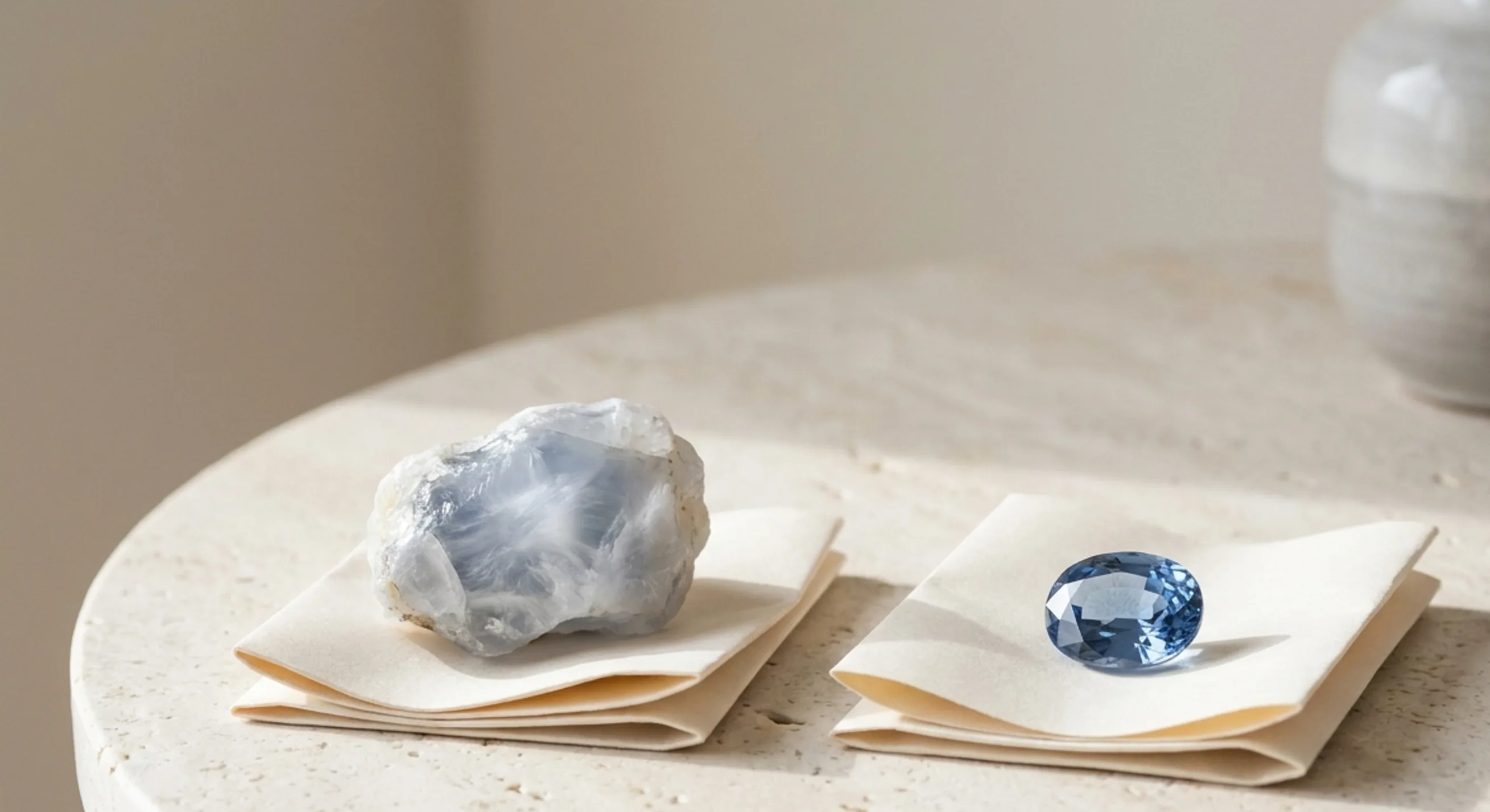
Buyers worry about this more than they need to, so I'll be plain.
Roughly 90 to 95% of the sapphires on the market are heat treated. Heat is the industry norm, and in Sri Lanka it has a long and respectable history. Since the 1970s, Sri Lankan burners have heated milky geuda corundum to about 1,500 to 1,600°C. The rutile silk dissolves, the blue develops, nothing foreign is added, and the result is permanent. It only needs the standard "H" disclosure. A well-heated Ceylon sapphire is a natural sapphire, beautiful and stable, and with good reason it is the backbone of fine jewellery.
Unheated stones are the premium tier. They are rarer and the market pays for that, though the premium varies a lot. At commercial grade it may be only 30 to 50% over a comparable heated stone. For fine blues it is commonly 2 to 4 times, for padparadscha 3 to 5 times, and it grows as stones get larger and finer. Colour-change sapphires are a special case because virtually all of them are unheated. If you're weighing the two, I've written a full comparison of unheated vs heat-treated sapphire.
Treatment only becomes a warning sign when something is added to the stone:
- Beryllium diffusion. Beryllium is a colouring element driven into the stone from outside during heating. It needs its own disclosure, separate from "heated." The colour can sit close to the surface, so recutting a beryllium-diffused stone can remove it.
- Glass or fracture filling. Glass is forced into fractures to hide them. These stones are worth very little, often under US$100 per carat, and are not suitable for fine jewellery.
- A price that looks too low for the material. This is the trade's oldest warning. If a vivid orange-pink "padparadscha" is priced like commercial grade, ask about beryllium before anything else.
On a lab report, read the exact treatment wording. A report will say whether the lab found indications of heating, and it will name any other treatment separately. The phrasing differs a little from lab to lab. GIA, Gübelin, SSEF and Lotus all routinely report on heated sapphires, so a heated stone with a proper report is fully documented.
How much does a high-quality Ceylon sapphire cost?
Price follows the five factors above, with colour and treatment moving it most, and size multiplies everything. As a rough guide for stones of one to three carats, commercial heated material runs about US$500 to 2,500 per carat, fine heated stones US$3,000 to 8,000, and fine unheated stones US$7,000 to 18,000. Per-carat prices jump at the one, two, three and five carat marks, so if you're near one of those sizes, compare stones just above and just below. The full ranges, by size and treatment, are in my Ceylon sapphire price per carat guide.
Colour moves the price too. Royal blue, cornflower and padparadscha sit at the top, while purple and white sit lower. This is where the checklist pays off: a fine teal or golden yellow, scored honestly, can be a better stone than a mediocre blue at the same budget.
A sapphire quality chart for any listing
Bring this table to any listing or certificate:
| Factor | What to check | Ceylon benchmark | Red flag |
|---|---|---|---|
| Colour | Hue, tone, saturation, evenness | Pure hue, medium to medium-dark, strong to vivid | Grey or brown cast, zoning visible face-up |
| Clarity | Inclusion type and position | Clean to the eye, fine silk under a loupe | Fractures reaching the surface, heavy milky silk |
| Cut | Face-up light return | Colour fills the face, no see-through centre | Window, large dark patch, oversized girdle |
| Origin | Lab report | Sri Lanka stated by a recognised lab | Origin claimed with no report |
| Treatment | Report wording | Unheated or standard heat (H) | Beryllium, glass filling, suspiciously low price |
With a listing, the honest limitation is the photography. Studio lighting and editing can push saturation and hide windows, and that problem runs across the whole industry. That's why, when you ask me about a stone, I'll send the report with a daylight video, or show you the stone on a live video call, tilted so you can see how the face behaves. Run the checklist against the video, not the hero shot.
A certificate settles origin and treatment for you, and its measurements and weight hint at the cut. If any of the terms are new to you, my guide on how to read a GIA sapphire certificate goes through it line by line.
Then score the stone. A sapphire that does well on colour, clarity and cut is a good stone, heated or not. Origin and treatment tell you what it should cost.
Find a stone that passes the checklist
If you have a colour, size or budget in mind, tell me and I'll source loose stones that meet the benchmarks above, with the report and a daylight video to back them up. Start a custom loose stone request, or browse what's ready now in our collections.
Common questions
Frequently Asked Questions
What matters most in sapphire grading?
Colour. It carries more of a sapphire's value than any other factor. Look for a pure hue, a medium to medium-dark tone, strong to vivid saturation, and colour that looks even when you view the stone face-up. Clarity and cut come next. Origin and treatment mainly decide where the stone sits on the price ladder.
Is a heat-treated Ceylon sapphire still a good stone?
Yes. Roughly 90 to 95% of sapphires on the market are heated, and the traditional Sri Lankan heating of geuda material is permanent, adds nothing foreign and only needs a standard 'H' disclosure. Unheated stones are a rarer premium tier. A well-heated Ceylon sapphire with good colour, clarity and cut is a fine stone.
How can I tell if a sapphire has a window?
Tilt the stone slowly over printed text or a patterned surface. If you can see or read through the centre, the pavilion is cut too shallow and light is passing straight through. This often happens with native-cut Ceylon stones. Recutting can fix it, but it usually costs 15 to 25% of the weight.
Which sapphire treatments should I be wary of?
Beryllium diffusion and glass (fracture) filling. Beryllium is a colouring element added from outside and needs its own disclosure. Glass-filled stones are low value and not suitable for fine jewellery. A price that seems too low for the colour is also a warning sign. Always check the treatment wording on a lab report from GIA, SSEF, Gübelin, GRS or Lotus.
Do I need a lab report to confirm a sapphire is from Sri Lanka?
For any significant purchase, yes. Labs determine origin mainly through trace-element chemistry and use inclusions and zoning only as supporting evidence. A seller's origin claim without a report is an opinion, not a finding.