Specialty Stones
Padparadscha Sapphire: The Rarest Sri Lankan Gem
The padparadscha is the rarest sapphire variety on earth, defined by a specific blend of pink and orange found almost exclusively in Sri Lanka. Here is what qualifies, what it costs, and what to watch for.
Published Updated 8 min read
By Naseef AR
A padparadscha sapphire is a rare variety of corundum that displays a specific blend of pink and orange, named after the Sinhalese word for the lotus blossom. Sri Lanka is the original and most important source. Genuine padparadschas are among the most valuable colored gemstones in the world, routinely selling for $5,000 to $30,000 per carat for fine stones and exceeding $50,000 per carat for exceptional examples at auction. The padparadscha price reflects extreme rarity: for every thousand blue sapphires that come out of Sri Lanka's Ratnapura district, perhaps one or two qualify as true padparadscha. The color cannot be reliably produced through heat treatment, which means supply is almost entirely dependent on what the earth provides.
Here is what defines a padparadscha, why the category is so contested, and how to buy one without overpaying for a stone that does not qualify.
What Is a Padparadscha Sapphire?
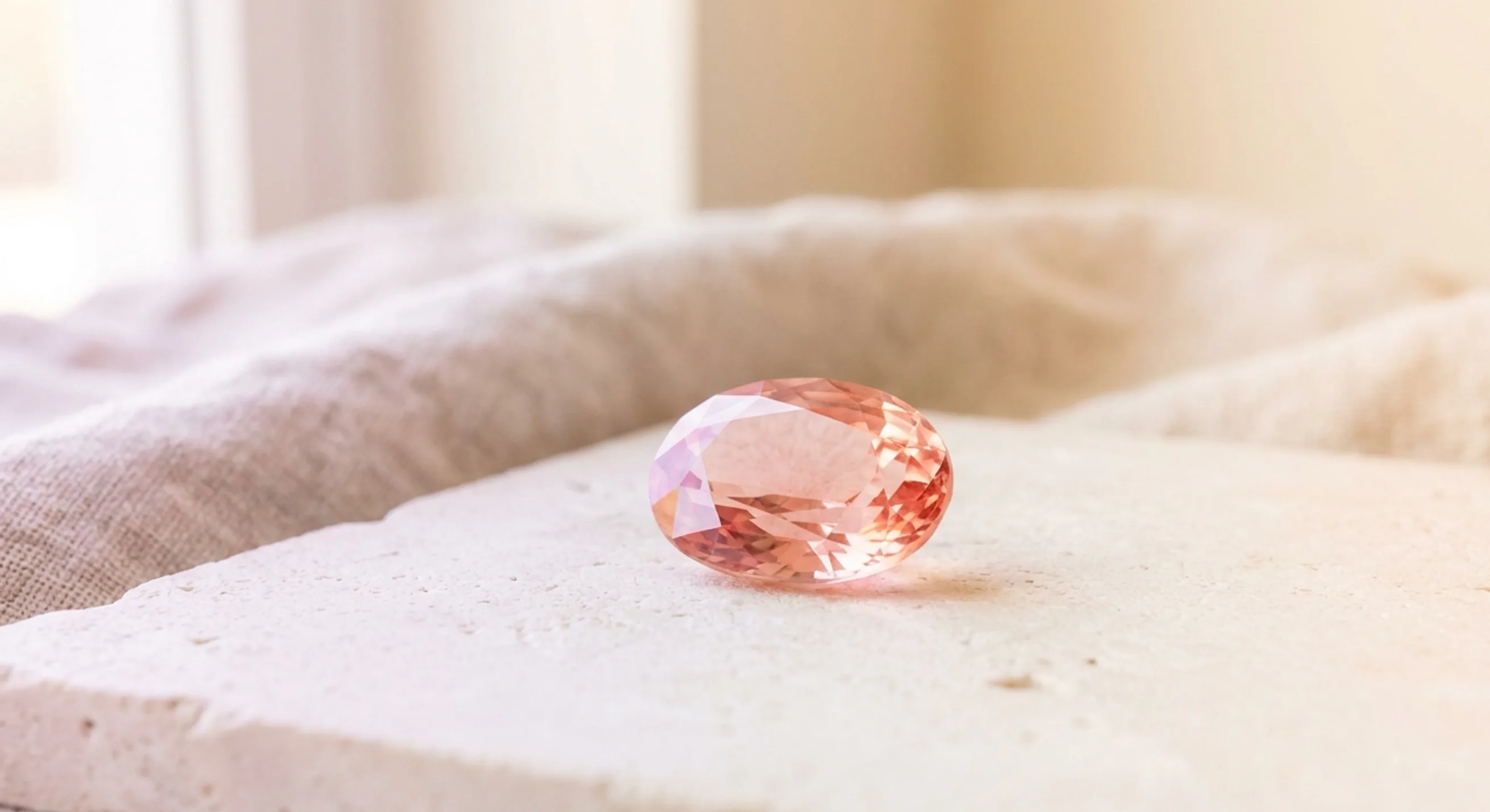
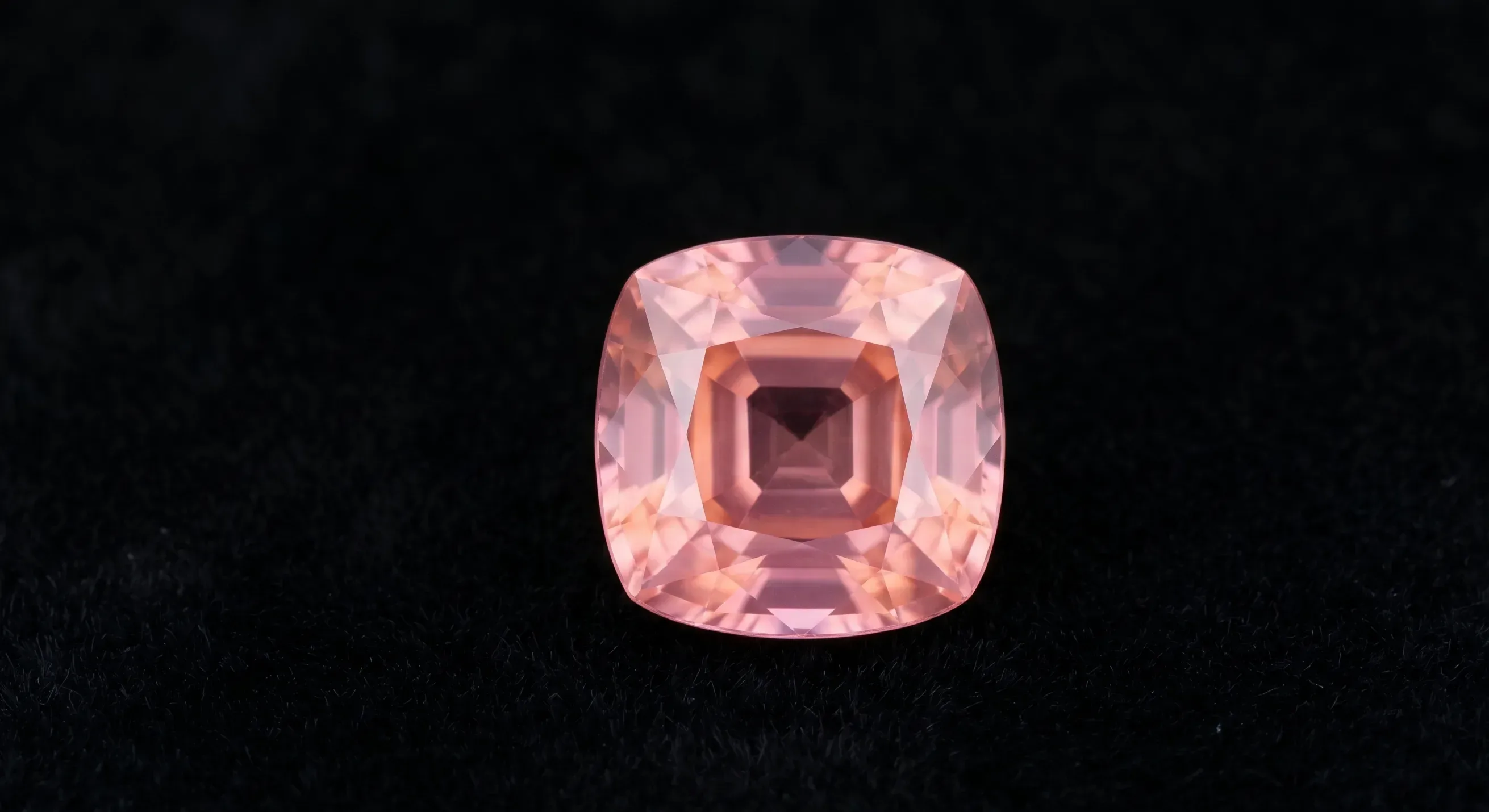
A padparadscha is a sapphire (aluminum oxide, Al₂O₃) whose color falls within a narrow band between pink and orange. It is not a pink sapphire. It is not an orange sapphire. It is both simultaneously: a delicate, warm hue that shifts between the two depending on the light and the viewing angle. The best stones evoke a sunset reflected in tropical water, or the interior petal of a lotus flower at the moment it opens.
The padparadscha meaning comes from the Sinhalese word "padmaraga," which translates roughly to "lotus color." The lotus sapphire connection is literal: the stone's ideal color is meant to evoke the specific pink-orange of a lotus blossom (Nelumbo nucifera) native to Sri Lanka's lowland ponds and waterways. This is not poetic embellishment. It is the historical color reference that gemologists still use when deciding whether a stone qualifies.
Chemically, the color comes from a combination of chromium (which produces pink) and iron with color centers (which produce orange-yellow). The precise ratio and distribution of these trace elements within the crystal determines whether the stone reads as pink sapphire, orange sapphire, or the coveted overlap that earns the padparadscha designation.
What Color Qualifies as Padparadscha?
This is the most contested question in colored gemstone grading. There is no universally agreed definition.
GIA describes padparadscha as a "light to medium pinkish orange to orange-pink" sapphire. SSEF and Gübelin use similar but not identical criteria. Lotus Gemology has its own standards. The trade itself has informal consensus that shifts over time and varies by market. Japanese buyers historically prefer a more pink-leaning stone. European and American collectors tend to accept a slightly more orange hue.
What everyone agrees on:
- The stone must show both pink and orange simultaneously. Pure pink is a pink sapphire. Pure orange is an orange sapphire. Neither qualifies.
- The tone must be light to medium. A dark pinkish-orange stone is typically classified as a fancy sapphire, not a padparadscha.
- The saturation should be moderate to vivid. A washed-out pastel does not qualify, even if the hue is correct.
- Brown is disqualifying. Any brownish modifier pushes the stone out of padparadscha territory.
The practical effect of this ambiguity is that two equally qualified gemologists can disagree on whether a specific stone qualifies. This is why laboratory certification is essential. A stone sold as padparadscha without a report from GIA, SSEF, Gübelin, or Lotus Gemology confirming that designation is a risk. The premium you pay is for the name as much as the color, and the name only means something when a major lab has endorsed it.
For a deeper understanding of what these reports contain and how to interpret treatment and origin fields, see our guide on how to read a GIA sapphire certificate.
Why Are Padparadscha Sapphires So Rare?
Three factors converge to make padparadschas the rarest mainstream sapphire variety.
First, the chemistry is specific. The chromium-to-iron ratio that produces the pink-orange blend is a narrow window. Most corundum crystals that form with both chromium and iron end up as pink sapphires (too much chromium) or yellow-orange sapphires (too much iron). The padparadscha sweet spot is a geological accident that occurs infrequently.
Second, the source is limited. Sri Lanka is the classical and most important origin. Madagascar and Tanzania produce some material, but the finest stones with the most saturated, balanced color overwhelmingly come from Sri Lanka's gem gravels. The Ratnapura and Elahera districts produce the majority of padparadscha rough, and even there, a mining crew might go months or years without finding one.
Third, heat treatment cannot reliably create the color. Unlike blue sapphires, where heating can dramatically improve color from a pale or milky starting point, the padparadscha hue is difficult to produce artificially. Some geuda (milky corundum) can develop pinkish-orange tones under specific heating conditions, and these heated padparadschas do exist on the market. But the results are inconsistent, and the finest examples with the most balanced, natural color are unheated stones that came out of the ground already exhibiting the lotus hue.
The combination of narrow chemistry, limited geography, and resistance to artificial enhancement means genuine padparadschas are rare in a way that blue sapphires simply are not. A dealer in Ratnapura who handles hundreds of sapphires a month might see one or two genuine padparadschas a year.
How Much Does a Padparadscha Sapphire Cost?
The padparadscha price range is wide, because the category spans everything from lightly colored heated stones to museum-quality unheated examples.
| Quality tier | Size | Price per carat | Notes |
|---|---|---|---|
| Commercial heated | Under 2 ct | $2,000 to $5,000 | Lab-confirmed padparadscha, heated, good color |
| Fine heated | 2 to 5 ct | $5,000 to $15,000 | Strong pink-orange balance, GIA or SSEF report |
| Fine unheated | 1 to 3 ct | $10,000 to $30,000 | Unheated with lab confirmation, excellent color |
| Exceptional unheated | 3 ct+ | $20,000 to $50,000+ | Top color, clean, SSEF or Gübelin certified |
| Auction/museum | 5 ct+ | $50,000 to $100,000+ | Record prices exceed this range |
For context: in 2023, a 10.39-carat unheated padparadscha from Sri Lanka sold at Christie's for over $800,000. That is an outlier, but it illustrates where the ceiling sits for exceptional material.
The unheated premium is significant. A heated padparadscha of good color might sell for $5,000 per carat. An equivalent unheated stone, with a report confirming no indications of heating, can command $15,000 to $25,000 per carat. The difference reflects the rarity described above: the earth produced that color without help.
We had a client approach us looking for a padparadscha for an engagement ring. Budget was $15,000 total. We spent three weeks searching through our network in Sri Lanka before finding a 1.8-carat heated padparadscha with a GIA report confirming the designation and Sri Lanka origin. The color was a balanced pink-orange with good saturation, and it fit the budget at just under $7,000 per carat. An unheated stone of equivalent color and size would have been $25,000 to $35,000 total, well outside the client's range. The heated stone was the right call: genuine padparadscha color, full documentation, and a price that reflected what was actually being offered.
How to Buy a Padparadscha Sapphire
If you are in the market for a padparadscha, these are the non-negotiable steps.
1. Insist on a laboratory report that uses the word "padparadscha."
Not "pinkish-orange sapphire." Not "fancy sapphire." The report must explicitly identify the stone as padparadscha. GIA, SSEF, Gübelin, and Lotus Gemology are the labs whose padparadscha determinations carry weight in the trade. If a seller shows you a stone they call padparadscha but the lab report does not use that word, the stone may be beautiful, but you should not be paying the padparadscha premium. For more on verifying a Ceylon sapphire's authenticity and understanding lab determinations, our authentication guide covers the essentials.
2. Know the treatment status and its effect on price.
Heated padparadschas are genuine padparadschas. The treatment does not disqualify the stone from the designation. But it affects price by a factor of two to four. Make sure the report states the treatment status clearly, and make sure the price reflects it.
3. See the stone in multiple lighting conditions.
Padparadschas shift color depending on the light source. In warm incandescent light, the stone may appear more orange. Under cool daylight, the pink component becomes more prominent. A good padparadscha looks balanced in both. A mediocre one looks like a pink sapphire in one light and an orange sapphire in another. Ask for images or video in both daylight and incandescent conditions.
4. Understand that origin matters.
Sri Lankan padparadschas are the benchmark. Madagascar and Tanzania produce stones that laboratories will certify as padparadscha, but Sri Lankan material commands a premium because of the historical association and, in most dealers' experience, a warmth of color that other origins do not consistently match.
5. Buy from a specialist.
A padparadscha is not a stone you should buy from a generic jewelry retailer. The category is too nuanced, the pricing too complex, and the potential for overpaying too high. Buy from someone who handles colored gemstones regularly and can speak to the specific stone's color, treatment, certification, and how it compares to other padparadschas they have seen.
Explore the Crestonne collection for available certified stones, or submit your specifications through our custom sourcing service and we will search our Sri Lankan network for padparadscha material that matches your requirements.
Common questions
Frequently Asked Questions
Can padparadscha sapphires be heat treated?
Yes. Some padparadschas are heated to improve color, and the treatment does not disqualify them from the designation. Heated padparadschas are genuine padparadschas. However, unheated padparadschas command a significant premium, typically two to four times the price of heated equivalents, because the natural occurrence of the pink-orange color without treatment is exceptionally rare.
Are padparadscha sapphires only from Sri Lanka?
No. Madagascar and Tanzania also produce stones that laboratories certify as padparadscha. However, Sri Lanka is the original and most important source. Sri Lankan padparadschas command higher prices because of the historical association with the island and, in most dealers' assessment, a subtlety and warmth of color that other origins do not consistently match.
What is the difference between a padparadscha and a pink sapphire?
A padparadscha must show both pink and orange simultaneously. A pink sapphire shows only pink, without an orange modifier. The distinction can be subtle, and borderline stones are where gemologists disagree most frequently. This is why laboratory certification using the word 'padparadscha' is essential. Without it, you may be paying a padparadscha premium for a pink sapphire.
Do padparadscha sapphires hold their value?
Fine padparadschas, particularly unheated stones with major lab certification, have historically appreciated in value. They are one of the few colored gemstone categories where auction prices have trended consistently upward over the past two decades. This reflects genuine scarcity: supply cannot increase because the geological conditions that produce the color are fixed.