Buying Guides
Investing in Ceylon Sapphires: A Beginner's Guide
Sapphires can be an asset class, but only a narrow slice of the market actually appreciates. Here is what holds value over time, what does not, and how to approach a sapphire investment without getting burned by the trade's worst habits.
Published Updated 10 min read
By Naseef AR
Investing in Ceylon sapphires works, but only inside a narrow slice of the market. Unheated, certified stones above three carats in classic cornflower blue, royal blue, or padparadscha colors have historically appreciated at five to eight percent per year over the past decade. Everything else, the commercial heated material, the small stones, the off-color stones, is bought for wear, not for appreciation. This sapphire investment guide explains why the gap is so wide, what to actually buy if you want gemstone as asset exposure, how the resale market really works, and what to ignore from the louder corners of the trade.
Are Ceylon Sapphires a Good Investment?
For the right stones, held for the right amount of time, yes. For everything else, no. This is the single most important distinction in the category, and most "is sapphire a good investment" articles online get it wrong by averaging the two.
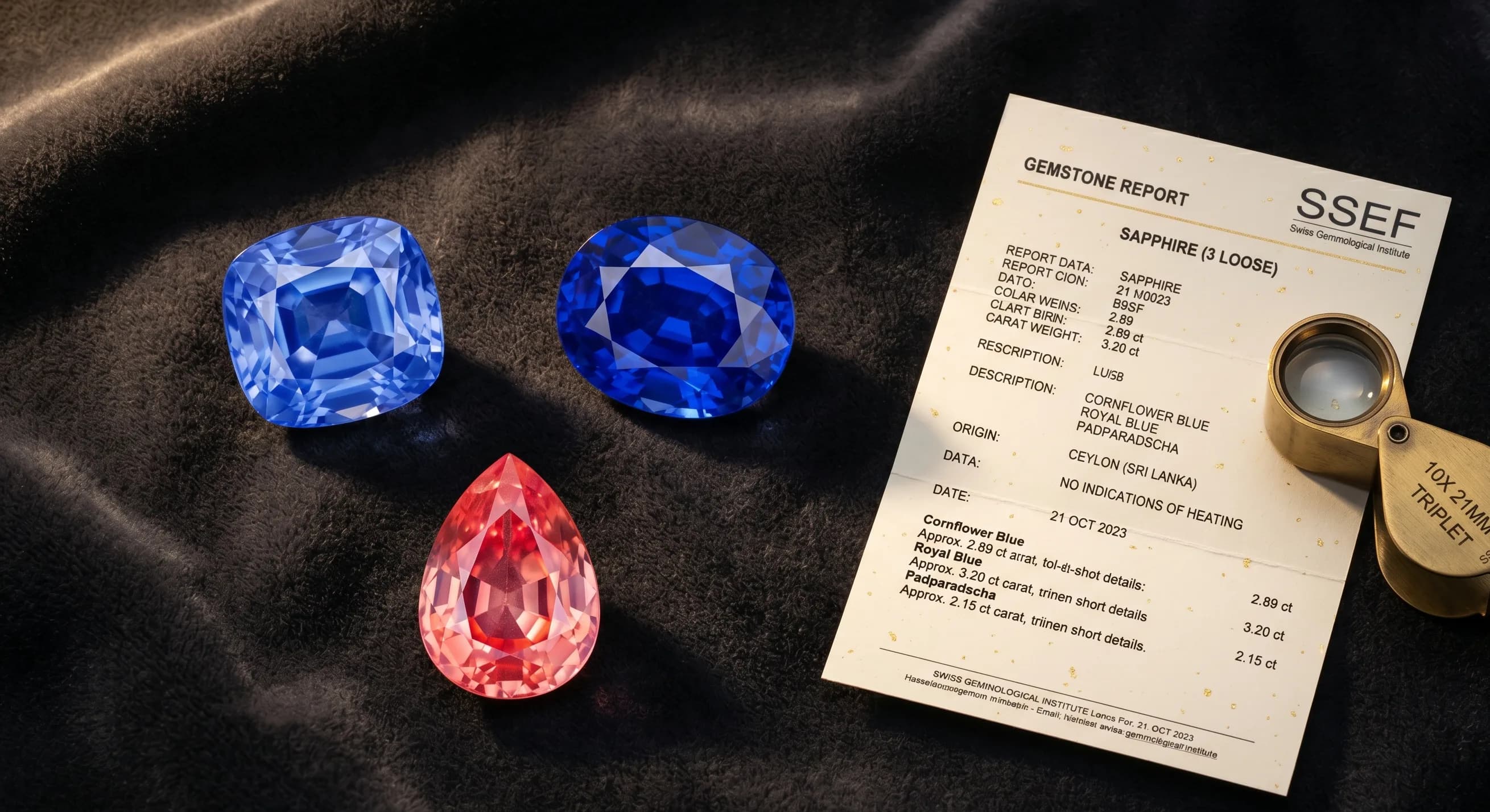
The investment-grade slice of the Ceylon market is small. It is unheated stones, three carats and up, in cornflower blue, royal blue, padparadscha, or a few specific fancy colors, certified by GIA, SSEF, Gübelin, AGL, or Lotus Gemology with origin confirmed as Sri Lanka. This material has appreciated steadily because three forces compound: supply from Sri Lanka's small-scale artisanal mines is structurally limited and dropping, Asian collector demand has grown roughly twenty percent over the past five years, and the price spread between heated and unheated equivalents keeps widening as buyers learn to ask for treatment disclosure.
The rest of the market, commercial heated stones under two carats, stones with grey or inky color, uncertified material, sits in a different reality. Supply is functionally unlimited. Buyer demand is sensitive to fashion cycles. Resale liquidity is poor. A two-carat heated commercial Ceylon sapphire you bought retail for three thousand dollars in 2020 is worth roughly the same three thousand dollars at retail today, and you would receive fifteen hundred to two thousand for it from a dealer. That is not investment. That is a stone you wear.
When the gem trade quotes long-term sapphire returns, it almost always references the auction-grade tier, where annualized returns of five to eight percent are realistic and occasional standout pieces (top Kashmir, fine padparadscha) have done much better. When a beginner asks whether sapphires are an investment, they are usually picturing the entry-level tier. The answer to two different questions cannot be the same answer.
What Drives Sapphire Value Over Time?
Sapphire value over time is driven by the same four factors that drive immediate price, but the weighting shifts. For short-term resale, color and treatment dominate. For long-term appreciation, the order is:
Rarity of the exact combination. A three-carat unheated Ceylon sapphire in fine cornflower blue with an SSEF Ceylon-origin report is rare. A three-carat heated Ceylon sapphire of similar color with a GIA identification report is not. As supply of the rare combination drops and demand grows, the price moves. As supply of the common combination remains abundant, the price holds at best.
Certification quality. Stones with SSEF or Gübelin origin reports appreciate noticeably faster than stones with GIA identification-only reports. Origin labs apply trace-element analysis and inclusion microscopy to confirm geographic provenance, which is what allows a stone to trade as "Ceylon" rather than "blue sapphire of unspecified origin" at the next sale. We walk through how to interpret these reports in our piece on reading a GIA sapphire certificate.
Provenance documentation. A photograph of the rough, a video of the cutting, a paper trail from mine to lab, all of this adds resale value over time. Auction catalogs increasingly include provenance statements, and stones with documented sourcing from Ratnapura, Elahera, or Balangoda often command an additional five to fifteen percent premium over identical stones with no story attached. Crestonne builds this trail for every stone we list for exactly this reason.
Macroeconomic backdrop. Colored gemstones are a small market and behave like a long-duration alternative asset. They have done well during inflationary periods (2021 through 2024 was particularly strong for unheated material) and tend to lag during liquidity-driven equity rallies when capital is chasing higher-velocity returns. None of this is predictable. It just sets the boundary conditions.
Sapphire as an asset rewards specific decisions: buy at wholesale, buy unheated, buy certified, buy in a size band where supply is structurally thin, and hold for at least five years. Every shortcut on that list costs you more than it saves.
Which Sapphires Should You Actually Buy?
If you are starting from zero and you want a single position in Ceylon sapphire as an asset, the most defensible buy in 2026 looks like this:
- Three to five carats. This is the band where supply scarcity meets buyer demand most cleanly. Smaller stones are too liquid (too much competing supply); larger stones (above ten carats) are illiquid and harder to exit.
- Unheated. The price gap between heated and unheated has widened consistently for fifteen years. There is no fundamental reason for the trend to reverse.
- Cornflower blue or royal blue. The deepest buyer pool. Padparadscha is a strong second choice if you understand it (see our padparadscha sapphire guide) but the market is thinner.
- SSEF or Gübelin origin report. Failing that, GIA with a "no indications of heating" clause and origin attribution. The lab matters at this tier.
- Bought wholesale or near-wholesale. Retail buyers absorb a thirty to fifty percent markup that has to be earned back through appreciation before any real return appears. Buying through a direct-source dealer rather than a chain retailer is half the investment thesis.
We cover the realistic price bands for each of these tiers in our Ceylon sapphire price per carat guide for 2026, which is worth reading before committing capital. The price guide and the investment guide are two halves of the same conversation.
What to avoid, regardless of how the seller frames it:
- Commercial heated stones marketed as "investment grade" because the seller uses the phrase loosely.
- Stones without major lab reports, no matter how convincing the dealer's narrative.
- "Color-change" or "exotic" sapphires from sellers without a strong reputation. The market for these is shallow.
- Small stones (under one carat) sold as investments. Mathematically these almost never appreciate enough to clear the resale spread.
- Anything sold at "below market" prices. Real investment-grade material does not trade at a discount, because there is always a dealer willing to pay closer to fair value. A bargain in this category usually means a problem.
How Resale Actually Works
The hardest part of treating gemstone as asset is the exit. Equities exit at a click and a one-cent spread. Sapphire exit takes weeks to months and a fifteen to thirty percent spread on top of the auction or dealer cut. Plan for this from the day you buy.
There are three realistic exit paths.
Major auction houses (Christie's, Sotheby's, Bonhams, Phillips). Best for stones above thirty thousand dollars total, ideally above fifty thousand. Combined buyer's premium and seller's commission run roughly twenty-five percent, sometimes a little more. The advantage is access to the strongest buyer pool in the world for fine sapphire, and a public price discovery that helps the next stone you sell. Lead time from consignment to auction is typically four to six months.
Specialist colored stone dealers. Faster, quieter, and the right path for stones between ten and fifty thousand dollars. Expect a fifteen to thirty percent discount to retail. The dealer is essentially buying your stone to resell, so they need a margin. The advantage is speed: a serious dealer can close in two to four weeks once the lab report is verified.
Private sale through a broker or specialist. The highest-net path. The broker takes ten to fifteen percent rather than twenty-five, and the buyer pays closer to retail because the stone has been pre-qualified. The trade-off is time, often six to eighteen months to find the right matched buyer, and a smaller pool of brokers willing to do this work. Below twenty-five thousand dollars per stone, most brokers will not take the listing because the absolute commission is too small.
The thing nobody tells you about sapphire investment is that the entry market and the exit market are not the same market. You buy from one set of dealers and sell to a different set. Building relationships in both, before you need them, is what separates a hobbyist from someone who treats this as an asset class. Crestonne's curated collection of Ceylon sapphires is the entry side of that equation. We do not currently broker resale, but we point clients to the specific auction and dealer relationships we trust.
How Long Should You Hold a Sapphire?
The honest answer is at least seven years, preferably ten or more. The annualized return numbers that make sapphire interesting as an asset only emerge over those timeframes. Inside three years, the bid-ask spread and the auction or dealer cut will swallow most or all of your gain. Inside five, you are usually back to roughly breakeven on a fairly bought stone, possibly slightly ahead. The strong returns appear in years seven through fifteen.
This is not a unique sapphire feature. It is true of most low-velocity alternative assets: fine art, vintage watches, classical wine. The pattern is the same. Wide spread on entry, wide spread on exit, slow appreciation in the middle, and the math only works if the middle is long enough to dilute the two spreads.
If you cannot commit to a seven-to-ten-year hold, sapphire as an asset is the wrong category. Buy a sapphire you love and wear it, or do not buy one at all. The middle path, buying for investment but with an eye on flipping inside three years, almost always ends in disappointment.
Where Crestonne Fits
We source unheated, certified Ceylon sapphires directly from the dealer network in Ratnapura and submit every stone to GIA, SSEF, or Lotus Gemology before listing. The provenance documentation, rough photography, cutting record, and lab report all travel with the stone. This is what allows a Crestonne sapphire to be resold ten years later without the next buyer having to re-establish trust from zero.
If you are thinking about a sapphire as a long-term position rather than a wearable purchase, our custom sourcing service is the right starting point. Tell us the target size, color, and budget. We come back with two or three options that match the investment profile and walk through the certificate, the comparables, and the realistic resale picture before any commitment. No high-pressure pitch, no exotic claims. The math has to work or it does not.
Sapphire investment, done correctly, is a quiet asset class. It rewards patience, certification discipline, and a clear-eyed view of what holds value over time and what does not. The best stones do not announce themselves. They simply sit in the safe, gain quietly, and outperform a surprising number of other things over a long enough timeline.
Common questions
Frequently Asked Questions
Are Ceylon sapphires a good investment in 2026?
Fine unheated Ceylon sapphires above three carats with reports from GIA, SSEF, or Gübelin have appreciated at roughly five to eight percent per year over the past decade, with larger stones outperforming smaller ones. Commercial-grade heated stones are not a reliable investment because supply is abundant. If you treat sapphire as a long-hold alternative asset (ten years or more) and buy at the top of the market, the math works. If you expect to flip in three years, it usually does not.
How much should I spend to make sapphire investment worthwhile?
Below roughly fifteen thousand dollars, transaction costs and the dealer-retail spread eat most of your potential upside. A meaningful entry point for sapphire as an asset class starts at a single certified unheated stone of three carats or more in fine cornflower or royal blue, which typically lands between twenty and sixty thousand dollars in 2026. Smaller budgets are better spent on stones bought for use rather than for appreciation.
Which color of Ceylon sapphire holds value best over time?
Classic cornflower blue and royal blue Ceylon sapphires have the deepest and most stable buyer pool, which translates to the best resale liquidity. Padparadscha (pinkish-orange) has appreciated faster on a percentage basis since 2015 but is a thinner market with wider bid-ask spreads. Yellow, pink, and green Ceylon sapphires hold their value but rarely appreciate aggressively. Avoid stones with grey, brown, or inky modifiers regardless of color, as they have weak resale demand.
Do I need a lab certificate for a sapphire to be investment grade?
Yes. Without a major laboratory report from GIA, SSEF, Gübelin, AGL, or Lotus Gemology confirming origin and treatment status, an investment-tier Ceylon sapphire is unsellable at investment prices. The certificate is what allows the next buyer to trust the stone without re-doing the work. SSEF and Gübelin origin reports carry the strongest premium in the auction trade. GIA reports are accepted everywhere and are the practical minimum.
How do I actually sell a sapphire when I want to exit?
Three main exit paths exist. Auction houses (Christie's, Sotheby's, Bonhams) take roughly twenty-five percent in combined buyer and seller premium but reach the strongest buyer pool for stones above thirty thousand dollars. Specialist dealers offer faster, quieter liquidity at a discount of fifteen to thirty percent to retail. Private sale through a broker is the highest-net path but takes the longest. Smaller stones (under one carat or under five thousand dollars) are difficult to exit at all without taking a significant haircut.