Specialty Stones
Green Sapphire: Ceylon's Underrated Color Grade
Natural green Ceylon sapphire runs from forest to mint, colored by iron rather than the usual chromium and titanium. Here is how to read the tone and spot a stone that stays alive under any light.
7 min read
By Naseef AR
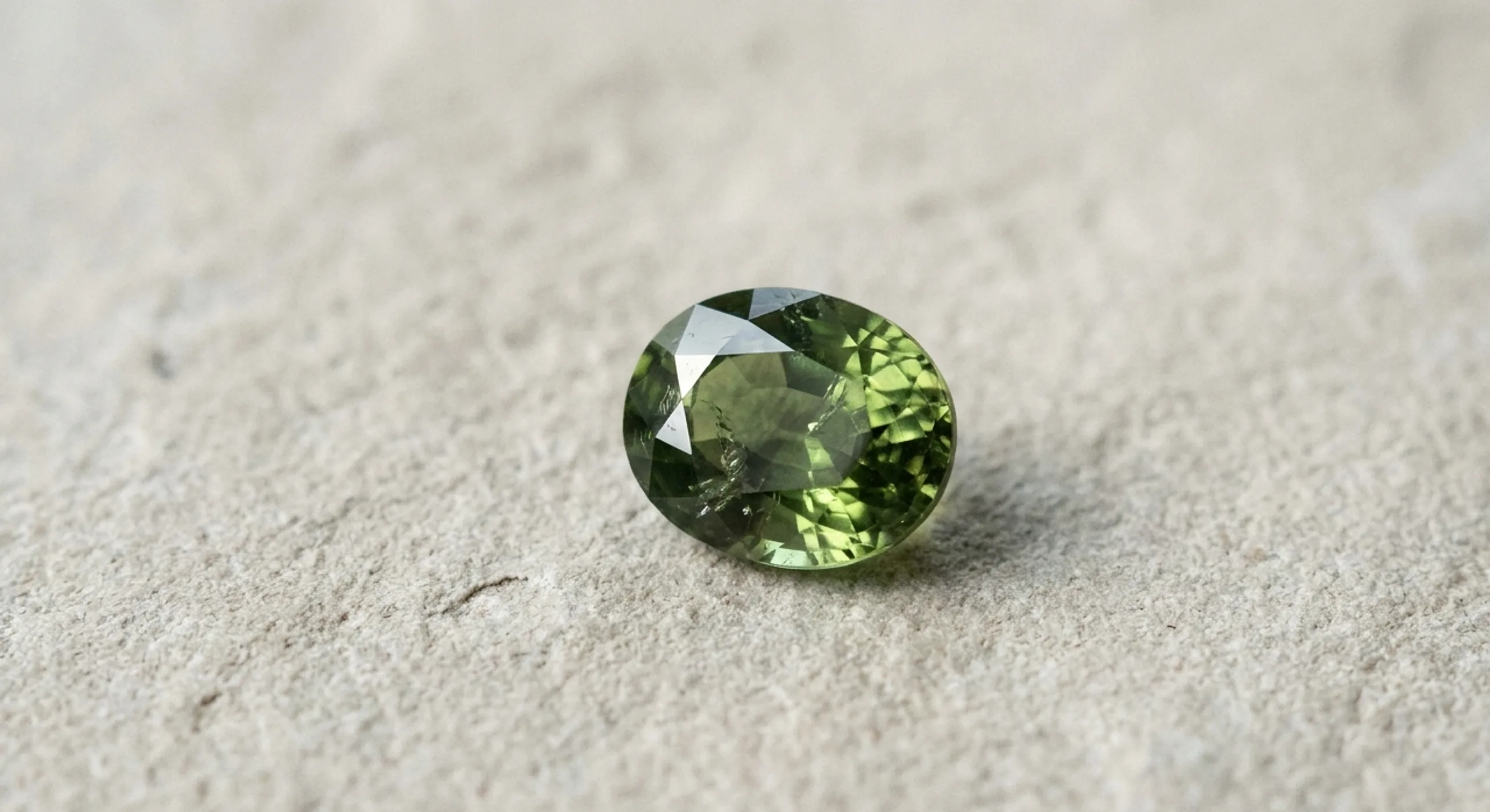
Green sapphire is the color grade most sellers skip. The market chases teal and parti, and meanwhile natural green Ceylon sapphire sits quietly underpriced. That gap is where the value lives. A good green runs from deep forest through olive to a cool, almost minty pastel. Its color comes from iron, not the chromium and titanium behind blue and pink, which is why the hue behaves differently in daylight than it does under a lamp. The trap is tone. Too dark and the stone reads black and lifeless. Too washed out and it looks grey. The window in between is narrow, and a green that stays genuinely lively is a rare sapphire worth holding.
What is a green sapphire?
Green sapphire is corundum, the same mineral species as ruby and every other sapphire, sitting at Mohs 9 on the hardness scale. Only ruby's red earns a different name. Everything else in the corundum family that isn't red is a sapphire, and green is one of its natural expressions. Not dyed, not painted, not a lesser cousin of the blue. Same crystal, different trace elements doing the coloring.
Ceylon (Sri Lankan) green sapphire tends to show a cleaner, more transparent body than green corundum from Australia or Thailand, which often runs very dark and inky. That clarity is part of why the stones Crestonne represents from Ratnapura and the Elahera belt can hold a green that stays open and readable rather than closing down into black. Green also sits right next to teal sapphire on the spectrum, and the two shade into each other. Where teal balances blue and green, a true green sapphire lets green lead.
What causes the green color in sapphire?
Iron is the engine. In blue sapphire, iron pairs with titanium to produce that classic cornflower. Strip out the titanium and let iron work more on its own, and the stone shifts toward yellow and green. Many green sapphires are, at the crystal level, a fine mix of blue and yellow zones that the eye blends into green, much the way it works in paint.
That mixing explains the tonal range you see in the field:
- Forest and deep olive. Higher iron saturation, a darker tone, sometimes a warm brown undertone. These read rich but need enough transparency to avoid going flat.
- Mid green. The balanced center, lively and grassy, the most versatile for jewelry.
- Mint and pastel green. Lower saturation, cooler, often more open and bright. These have quietly become their own collector category.
Because iron-driven color answers to the light source, a green sapphire can lean more yellow-green under warm incandescent light and cooler under daylight. That is normal behavior for the chemistry, not a fault. For the wider context on how trace elements map across the whole family, the full Ceylon sapphire spectrum lays out where green sits among blue, pink, yellow, and padparadscha.
Are green sapphires treated?
Most sapphires on the market, green included, are heat treated. This is the legitimate, disclosed industry norm and has been for decades. Controlled heat lets a cutter improve clarity and stabilize color, and a properly heated green Ceylon stone is a genuine, natural sapphire that will last generations. There is nothing second-rate about it. It is simply how the overwhelming majority of fine sapphire reaches the market.
Unheated green sapphire sits at the premium tier. When a stone shows its color straight from the ground with no thermal help, and a lab confirms no evidence of heat, it commands a higher price for one simple reason: it is genuinely scarcer. That is the same logic that governs unheated blue and pink. For green specifically, unheated material with lively tone is uncommon enough that it edges into rare sapphire territory.
The distinction that matters is disclosure and treatment type, not heat itself. What you want to avoid is diffusion or other surface treatments that add color from the outside in. Crestonne discloses treatment on every stone and submits the material that warrants it to independent labs such as GIA, SSEF, and Gubelin, so the heated-versus-unheated question is answered on paper rather than left to a photograph.
How much is a green sapphire worth?
Green sapphire is one of the better values in fine corundum, largely because demand has trailed blue, pink, and now teal. Commercial-grade heated green stones sit at the accessible end of the sapphire market. Prices climb with size, clarity, and above all the quality of the color. A clean, lively mid-green in a good size will run well above a dark, over-saturated stone of the same weight. Unheated material with strong color and a clean lab report can reach several thousand per carat, though the exact figure depends heavily on the individual stone.
Reliable published pricing for green specifically is thin, so treat any single number with caution. The honest framing is a range: green is generally more affordable than equivalent blue, and the premium you pay buys tone that stays open and confirmed unheated status. Precise per-carat figures depend on the stone in hand.
What separates a good green sapphire from a bad one?
This is where first-hand sourcing earns its keep. On the tables in Ratnapura and among Colombo dealers, plenty of green corundum looks the part in a parcel and dies the moment you move it into open shade. The team looks for a few things:
- Tone in the sweet spot. The color should read as green at arm's length, not black-green or grey-green. Over-dark stones lose life, over-light ones lose identity. The middle range is the goal.
- Transparency over depth. A slightly lighter stone with real transparency almost always beats a darker one that reads muddy. Light needs to move through the stone.
- Even color, controlled zoning. Green sapphire is prone to visible yellow and blue zoning. A little is expected and can add character. Sharp, blotchy banding that the eye can't blend is a problem.
- A cut that respects the color. Windowing, where light passes straight through the center without bouncing back, washes green out fast. A well-proportioned cut keeps the tone saturated across the face.
The most common failure is the over-dark stone dressed up in a bright product photo. That is an industry-wide issue, not a seller-specific one, and it is exactly why Crestonne shoots stones in consistent, neutral light and describes tone honestly rather than flattering it. A green sapphire should look at home on your hand, not just under a ring light.
Is green sapphire a good choice for a ring?
Yes, and it is arguably underrated for exactly that. At Mohs 9, green sapphire is second only to diamond in everyday hardness, so it holds up to daily wear far better than softer green stones like emerald or peridot. The color pairs naturally with both yellow and white metals, and it reads as distinctive without shouting. For anyone who liked the earthy, unexpected direction that teal opened up but wants to go a step further, green is the logical next stop, and it is still priced like a secret.
Crestonne sources green Ceylon sapphire loose so it can be set into whatever design suits it, from a solitaire that lets the color carry the piece to a three-stone that plays green against neutral accents. If you have a specific tone in mind, start a custom order for a loose stone and the team will hunt the parcels for a green that stays alive in every light.
Common questions
Frequently Asked Questions
Is a green sapphire a real sapphire?
Yes. Green sapphire is natural corundum, the same mineral species as blue sapphire and ruby, sitting at Mohs 9 hardness. Any corundum that isn't red is called sapphire, and green is one of its natural colors, produced mainly by iron in the crystal.
Why are green sapphires cheaper than blue?
Demand has historically favored blue, pink, and more recently teal, leaving green underpriced rather than lower quality. That makes green one of the better values in fine corundum. The premium within green is paid for lively, well-balanced tone and, above all, confirmed unheated status.
Are green sapphires heat treated?
Most are, and heat treatment is the standard, disclosed industry practice that produces genuine, durable sapphires. Unheated green stones with strong color sit at the premium tier because they are scarcer. Crestonne discloses treatment on every stone and uses labs like GIA, SSEF, and Gubelin to confirm heated versus unheated status.
What is the best color for a green sapphire?
A lively mid-green that reads clearly as green at arm's length, with good transparency and even color. Very dark stones can look black or muddy, and very light ones can read grey. The balanced middle range, with light moving through the stone, is the most desirable.
Is green sapphire durable enough for daily wear?
Very. At Mohs 9 it is second only to diamond in hardness among gemstones, well ahead of softer green stones like emerald and peridot. That makes it a strong, low-maintenance choice for engagement rings and everyday jewelry.