Buying Guides
Where to Buy Sri Lanka Sapphires (Honestly)
A practical guide to sourcing genuine Sri Lanka sapphires: where to buy, what paperwork to demand, and why buying loose from an origin brand beats layers of resale markup.
7 min read
By Naseef AR
Buy Sri Lanka sapphires from a seller who can show you where the stone came from, hand you an independent lab report, and sell it loose so you see exactly what you are paying for. That means an origin-facing dealer with a foot in Ratnapura, Elahera or Balangoda. Not a fourth link in a resale chain marking up a stone that has already passed through three sets of hands. Everything below is about buying with confidence: what to demand, what to ignore, and how to tell direct sourcing from a reseller repeating what a supplier told them.
Where should you buy Sri Lanka sapphires?
Four practical routes, and they are not equal.
High-street jewellers rarely hold loose Ceylon stones and almost never source them directly. The sapphire is usually already set, bought through a wholesaler, and priced with several intermediary margins baked in. You pay for the shopfront and the supply chain, not the stone.
Auction houses and estate sales can surface exceptional material, but you are bidding blind against dealers who know more than you do, and premiums stack on top of the hammer price.
Open online marketplaces put thousands of listings in front of you at once. The format is not the problem. The problem is the absence of accountability: a listing photo tells you nothing about who cut the stone, whether it was heated, or who stands behind the sale.
Founder-led origin brands sit closest to the mine. When someone selects rough or cut stones at the source and sells them directly, the chain collapses from four or five links to one. That is the model Crestonne works from, and it is why the stones Crestonne represents are sold loose with documentation attached rather than set and vague.
If you want to understand why Sri Lankan sapphire is prized before you commit, read that first. This guide assumes you already know you want Ceylon and now need to buy well.
What documentation should come with a genuine Ceylon sapphire?
Two documents matter, and above a certain value one of them is non-negotiable.
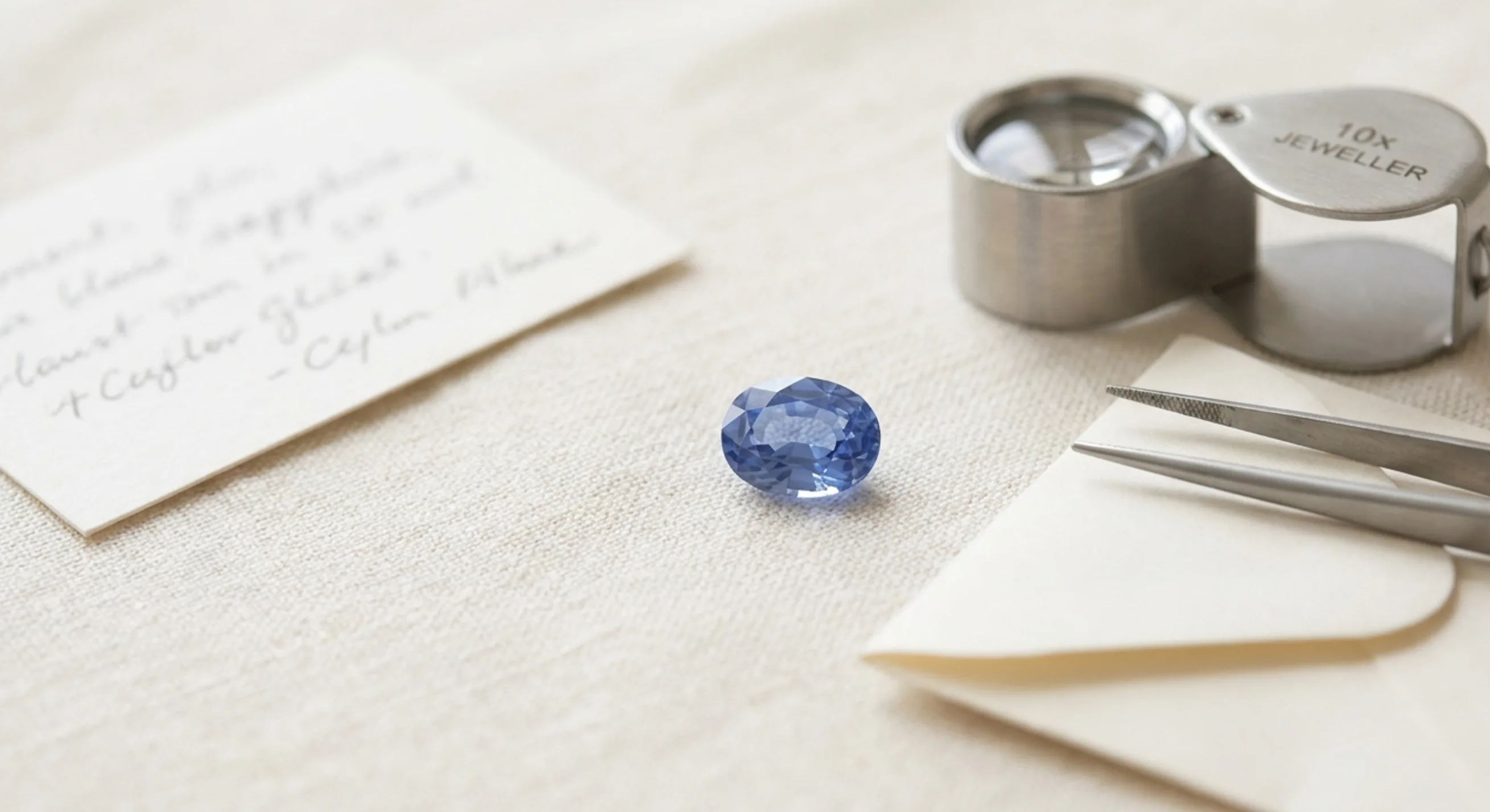
The first is a gemmological lab report. For a serious purchase, that means an independent laboratory: GIA, SSEF, Gubelin, or a recognised regional lab for smaller stones. The report confirms the species (natural corundum), the colour, the dimensions and weight, and critically the treatment status. It will state whether the stone is heated or unheated, and often whether any residue or additional treatment is present.
The second is a statement of origin. A reputable report will identify the geographic origin as Sri Lanka where the inclusions and trace-element profile support it. Origin is a judgement the lab makes, not a marketing line the seller adds, and that distinction is the whole point.
Be clear on treatment before you buy. Heat treatment is the industry norm. The overwhelming majority of sapphires on the market have been heated to develop colour and clarity. It is a stable, permanent, long-accepted practice, and a heated Ceylon sapphire is a genuine sapphire. Unheated stones are the premium tier precisely because they are rarer, and they command higher prices, often several multiples of a comparable heated stone. Neither is a trick. What matters is that the seller discloses it plainly and the lab report backs the claim.
When you buy Sri Lanka sapphires, insist that the report matches the stone in front of you. Weight and measurements on the certificate should line up with the physical stone. A mismatch is a red flag worth walking away over.
How do you verify a seller is sourcing directly?
Resellers and direct sourcers describe stones differently, and once you know the tells it is hard to unsee them.
A direct sourcer can answer specifics without hedging. Which region did it come from? Was it cut locally or abroad? Who submitted it to the lab? A reseller tends to answer in supplier language, repeating a description they were handed rather than something they observed. Ask where a stone was inspected and how. The answer either has texture or it does not.
Look at how stones are photographed and described. Some sellers lean on heavy editing that flatters colour beyond what the stone shows in daylight. This is a real problem in the trade, and the fix is plain honesty: Crestonne shows stones in consistent, representative lighting and states treatment status up front, so what you see is what arrives. That is a deliberate difference, not a courtesy.
Direct sourcing shows up in the price structure too. Every intermediary between the mine and you adds a margin. Fewer links means the value sits in the stone rather than in the markup. A founder-led brand buying at the source in Ratnapura and Colombo is structurally able to price closer to origin than a chain that acquired the same stone third-hand.
Why buy loose rather than set?
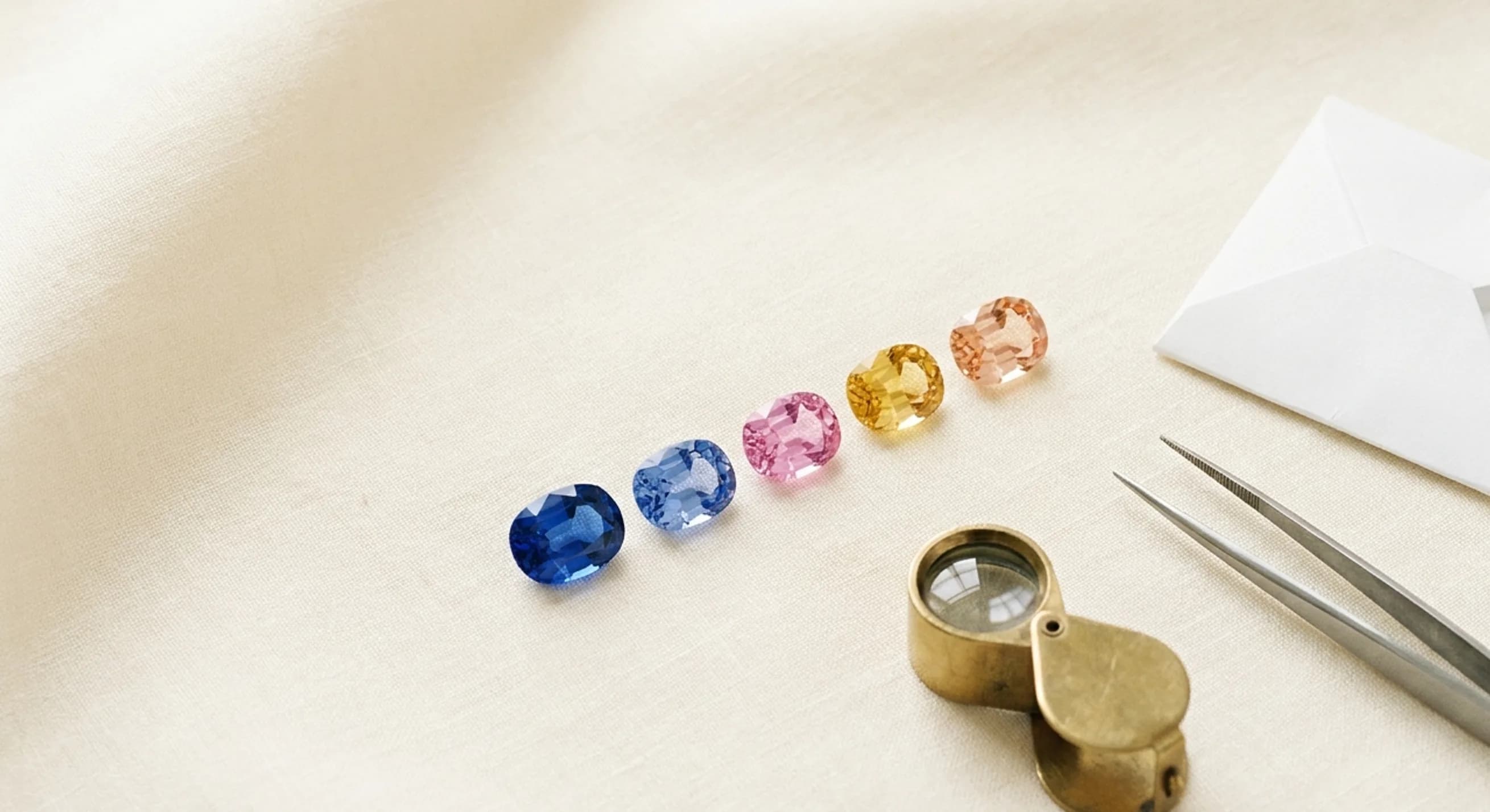
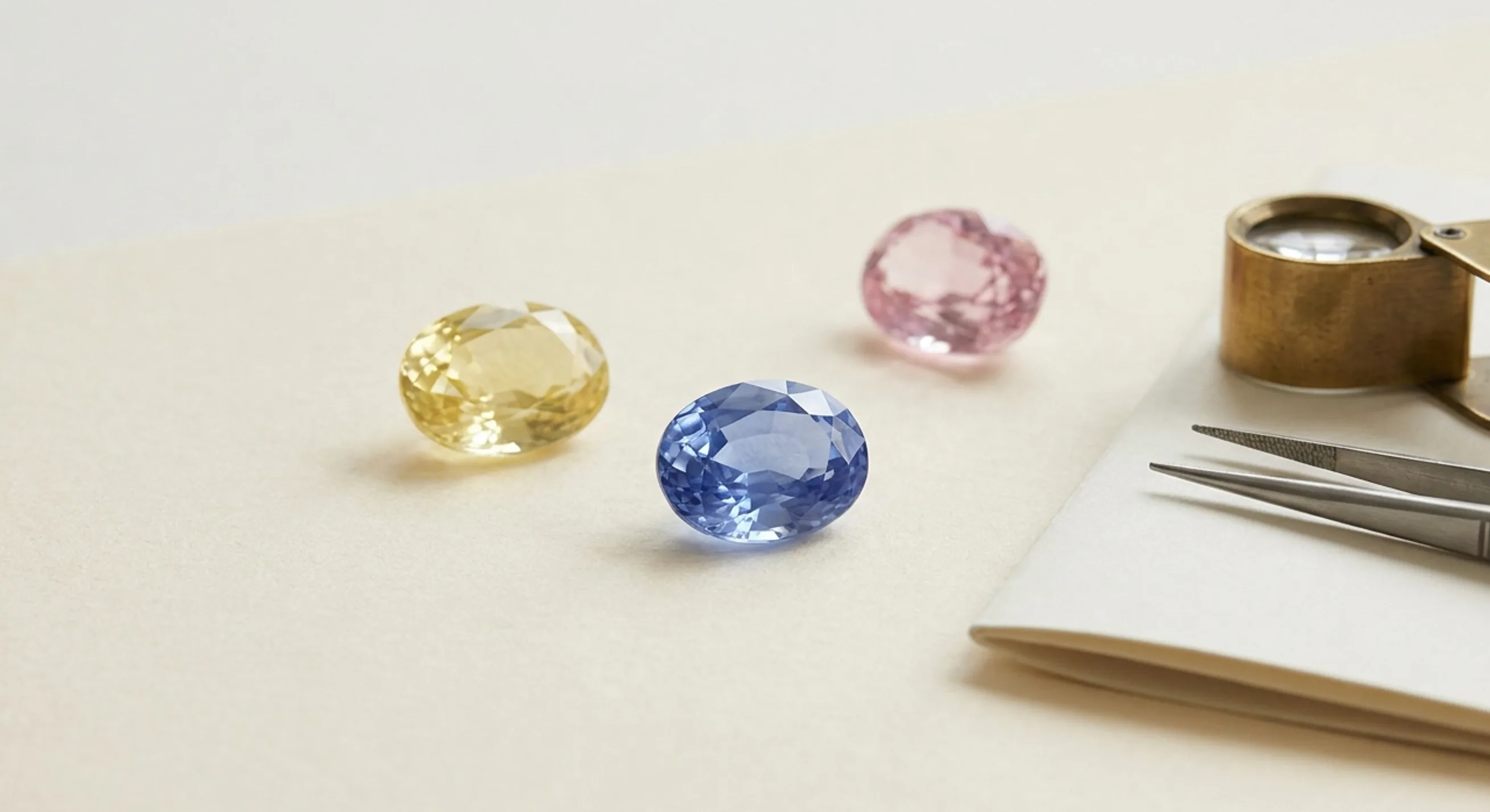
Buying a loose stone is the single best decision most first-time buyers make. Setting hides the stone. A well-chosen mount can mask a window, a poor cut, or an inclusion sitting exactly where a prong conveniently covers it. Loose, the sapphire has nowhere to hide.
Buying loose also separates two purchases that should be separate: the stone and the setting. You judge the sapphire on its own merits, confirm it against its lab report, then design a setting around it. That is why the stones offered as sri lankan sapphires for sale through an origin brand are presented loose by default. You are buying the gem, not a finished product you cannot inspect.
Before you shortlist anything, work through the spec checklist for buying. Colour, cut, clarity and carat interact, and a stone that scores well on paper can still underwhelm in the hand if the cut is lifeless. Corundum sits at Mohs 9, second only to diamond, so durability is not your concern here. Colour and cut are where the money lives.
What should you expect to pay?
Honest answer: it depends heavily on colour saturation, size, clarity and treatment status, and anyone quoting you a flat per-carat figure without seeing the stone is guessing.
As a rough framework, heated Ceylon sapphires in commercial grades are the accessible entry point. As colour improves toward a vivid, evenly saturated blue and clarity climbs, price rises steeply, and it rises again per carat as size increases because larger clean stones are disproportionately rare. Unheated stones with strong colour and a clean origin report sit at the top, frequently several thousand per carat and higher for exceptional material.
The practical takeaway is not a number. It is that price should track the stone's documented qualities, not the number of middlemen it passed through. Understand what you are paying for and a fair price is easy to recognise, an inflated one easy to refuse.
How to buy with confidence
Reduce it to a short routine. Confirm the seller sources at or near origin. Get an independent lab report and check that it matches the physical stone. Confirm treatment status in writing and decide whether you want a heated stone or the unheated premium tier. Buy loose so nothing is hidden. Judge colour and cut in honest light.
Do that, and buying a Sri Lanka sapphire stops being a gamble and becomes a decision you can defend.
Ready to buy from origin? Browse loose Ceylon stones in the Crestonne collections, or if you have a specific colour, size and budget in mind, start a custom sourcing request and let the sourcing come to you.
Common questions
Frequently Asked Questions
Where is the best place to buy Sri Lanka sapphires?
From a seller closest to origin who sells loose stones with independent lab reports. Founder-led origin brands sourcing directly in Ratnapura, Elahera and Colombo cut out resale margins, so more of what you pay sits in the stone rather than in intermediary markups.
What documentation should a genuine Ceylon sapphire come with?
An independent gemmological lab report (from GIA, SSEF, Gubelin or a recognised regional lab) confirming natural corundum, dimensions, weight and treatment status, plus a statement of Sri Lankan origin. The weight and measurements on the report should match the physical stone exactly.
Are heated Sri Lankan sapphires worth buying?
Yes. Heat treatment is the long-established industry norm and produces stable, permanent results. A heated Ceylon sapphire is a genuine sapphire. Unheated stones are the rarer premium tier and cost more, but the right choice depends on your budget and priorities. What matters is honest disclosure backed by a lab report.
Should I buy a loose sapphire or one already set?
Loose, in almost every case. A setting can hide a window, a weak cut or an inclusion behind a prong. Buying loose lets you inspect the stone on its own merits, verify it against the lab report, then design a setting afterwards.