Understanding
Sapphire Meaning & Significance: Symbolism Explained
Sapphire has stood for truth, protection, and divine wisdom across three millennia. Here is what the stone means across traditions, and why fine Ceylon material carries that weight better than most.
6 min read
By Naseef AR
Sapphire significance comes down to three ideas that keep recurring across cultures: divine favour, truth, and constancy. Ancient Persians believed the earth rested on a giant sapphire whose reflection coloured the sky. Medieval clergy wore it as a stone of heaven and chastity. Kings treated it as protection against envy and harm. Underneath the myth is a simple fact of geology and geography. The finest blue sapphires have come from Sri Lanka for over two thousand years, which is why the symbolism and the source are hard to separate.
What does a sapphire symbolise?
Across most traditions, sapphire stands for wisdom, loyalty, and protection. The Greeks associated it with Apollo and consulted oracles while wearing it. In Judeo-Christian texts, sapphire appears among the stones of the high priest's breastplate and in descriptions of the throne of heaven, which is partly why bishops historically wore sapphire rings. Hindu astrology treats blue sapphire (neelam) as the gem of Saturn, capable of shifting fortune quickly, which is also why it is worn with caution.
The through-line is authority. Sapphire was never a casual stone. It signalled that the wearer had standing, whether spiritual, royal, or judicial. That association is the core of the meaning of sapphire gem lore that survives today, from engagement rings to signet rings.
Why is sapphire linked to royalty and loyalty?
The royal connection is older than any single monarchy, but modern buyers usually trace it to one ring: the Ceylon sapphire that Prince Charles gave Diana in 1981, now worn by the Princess of Wales. It reinforced a symbolism that already existed. Blue is the colour of steadfastness in heraldry, and sapphire was the durable, incorruptible expression of it.
Loyalty and fidelity are why sapphire became a favoured engagement stone long before diamonds dominated. A stone that resists scratching and holds its colour for generations makes an obvious metaphor for a promise meant to last. The durability is not sentimental invention. Sapphire is corundum, Mohs 9, second only to diamond among natural gems in hardness.
Facts about sapphire most people get wrong
A few facts about sapphire cut against common assumptions:
- Sapphire and ruby are the same mineral. Both are corundum. The sapphire ruby distinction is purely one of colour: red corundum is ruby, and every other colour is sapphire. Chromium turns it red; iron and titanium turn it blue. So a "pink sapphire" and a ruby sit on the same spectrum, separated only by a threshold of saturation.
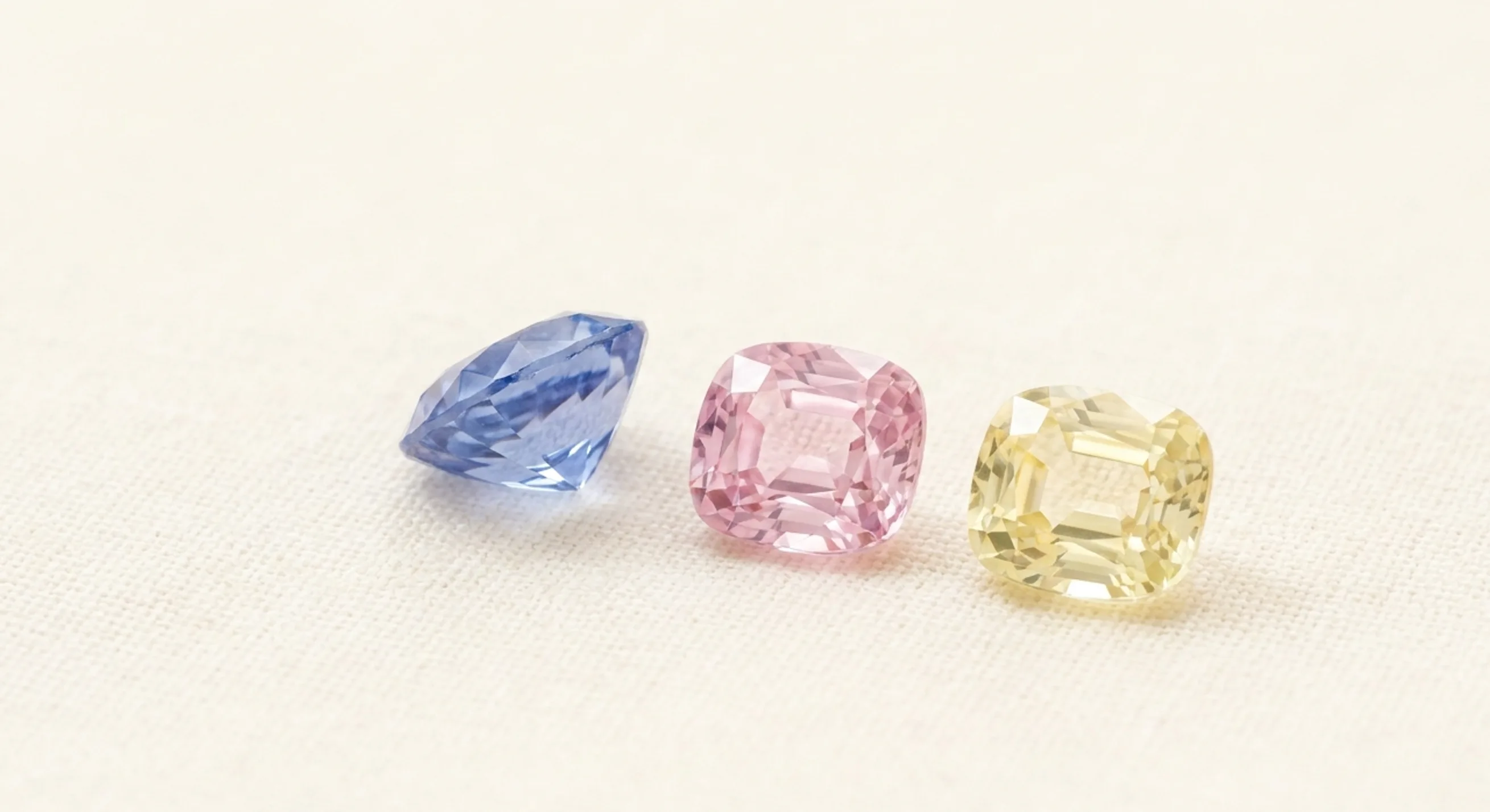
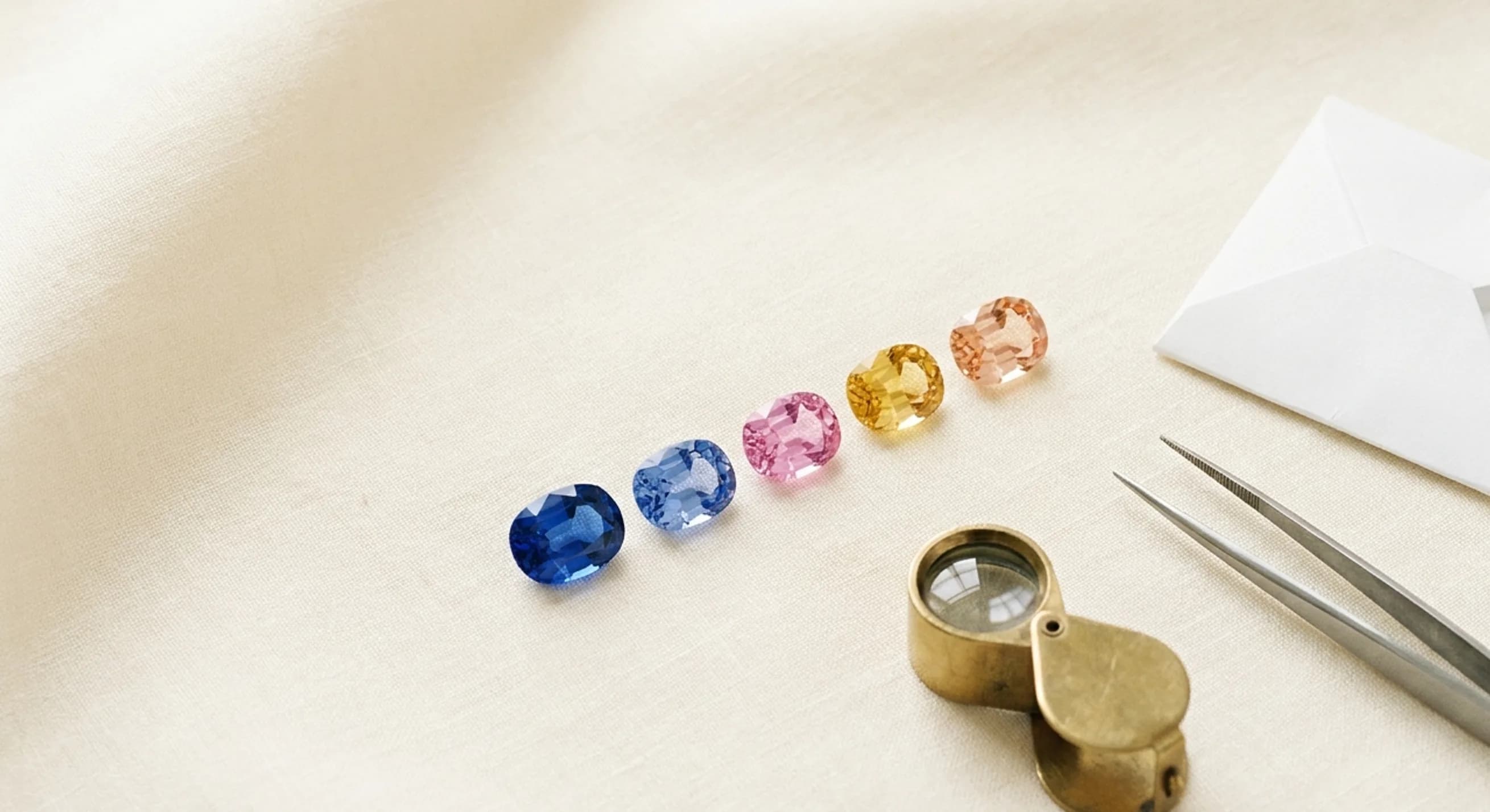
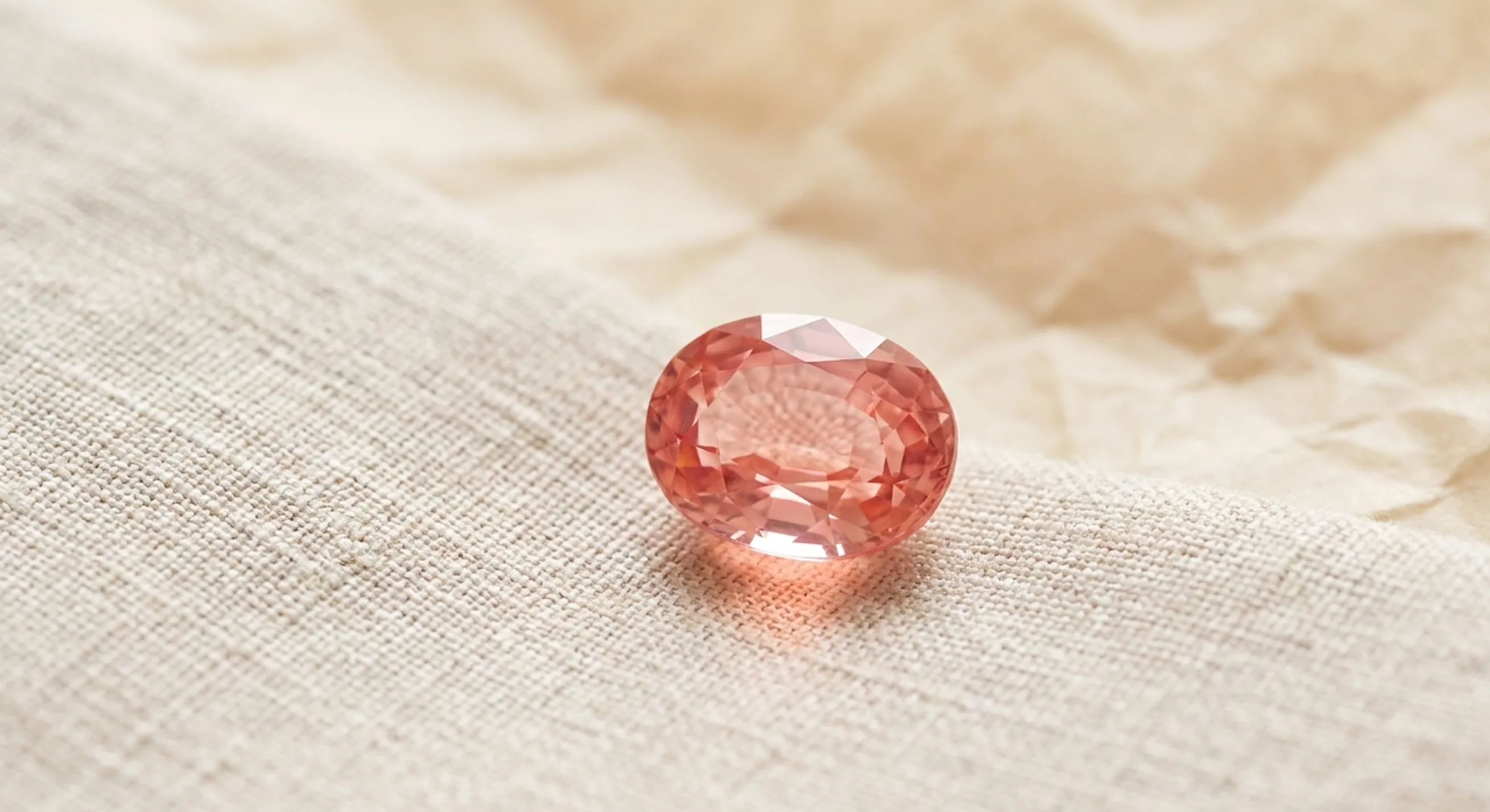
- Sapphire is not only blue. It occurs in yellow, pink, green, violet, and the celebrated pinkish-orange padparadscha. For readers weighing colour options, our guide to September birthstone alternatives covers the range in detail.
- Most sapphire on the market is heat-treated. Heating is a legitimate, centuries-old practice that clarifies colour and is the accepted industry norm. It is disclosed as standard. Unheated stones with fine natural colour are the premium tier precisely because they are scarce.
- Star sapphires get their star from within. Fine needle inclusions of rutile create the six-rayed asterism, an effect that once made star stones talismans against the evil eye.
The meaning of sapphire gem across cultures
The meaning of sapphire gem shifts by tradition but rarely loses its serious tone.
In Buddhist Sri Lanka, sapphire has been mined and traded from the gravels of Ratnapura, the "city of gems," for millennia. Stones from the island moved along trade routes to Rome, Persia, and China long before European royalty adopted them.
In medieval Europe, sapphire was thought to cool the passions, cure eye disease, and reveal fraud, a stone of clear judgement. In Persian and Islamic tradition, its sky-blue was read as a fragment of the heavens. In Vedic astrology, its speed of effect made it both prized and treated with respect.
What unites these is that sapphire was almost always positioned as a stone of the mind and the spirit rather than mere ornament. That is a useful frame for anyone choosing one today.
Why Ceylon is at the centre of sapphire's story
You cannot separate sapphire significance from Sri Lanka. The island has been a documented source since antiquity, and the term "Ceylon sapphire" still functions as a benchmark for a particular quality of blue: bright, slightly lighter than Kashmir or Burma material, with an internal glow prized by collectors and labs alike.
The stones Crestonne represents are drawn from this tradition, and the best examples still carry independent reports from laboratories such as GIA, SSEF, and Gübelin confirming origin and treatment. Origin matters to meaning because the lore attached to sapphire was built on Ceylon stones in the first place. When symbolism talks about the sapphires of ancient kings and cathedral rings, it is very often talking about corundum from these gravels.
For the full picture on colour, clarity, and what separates good from exceptional, see the complete Ceylon blue sapphire guide.
What makes a rare sapphire genuinely rare?
Not every sapphire is rare, and honest sellers should say so. A rare sapphire earns the label through a combination of factors, not a single one:
- No heat treatment, with lab confirmation. Untreated stones of fine colour are the scarcest tier.
- Vivid, evenly distributed colour without being too dark or too pale.
- High clarity with inclusions that do not interrupt the stone's brilliance.
- Larger sizes, since fine material above a few carats grows sharply harder to find.
- Notable origin, with Ceylon holding particular standing.
Fine unheated Ceylon stones can reach several thousand dollars per carat and, at the top of the market, considerably more, while attractive heat-treated stones remain far more accessible without sacrificing beauty or durability. Rarity drives price, but the everyday symbolism of sapphire is available at every level.
One thing worth flagging: online listings sometimes flatter colour through lighting and editing, which makes it hard to judge a stone honestly. Crestonne's approach is to photograph and film stones in consistent, neutral conditions and to disclose treatment plainly, so what you see is what arrives.
How to choose a sapphire that matches the meaning you want
If you are drawn to sapphire for its symbolism, let the meaning guide the choice rather than only the price:
- For loyalty and commitment, a classic Ceylon blue in a durable setting reads the way the tradition intends.
- For protection or spiritual significance, some buyers prefer an unheated stone, valuing the untouched natural state.
- For individuality, the fancy colours (yellow, pink, padparadscha) carry the same corundum durability with a different mood.
Whatever the direction, insist on clear disclosure of treatment and, for higher-value stones, an independent report. That is the practical side of a stone that has always stood for truth.
Ready to find a stone with the story you want behind it? Start a bespoke sourcing request and the Crestonne team will help match a Ceylon sapphire to your meaning, budget, and setting.
Common questions
Frequently Asked Questions
What is the spiritual meaning of a sapphire?
Across traditions, sapphire symbolises wisdom, truth, and divine protection. It appears in Judeo-Christian texts among sacred stones, was worn by bishops as a stone of heaven, and features in Vedic astrology as the gem of Saturn. The common thread is authority of the mind and spirit rather than mere decoration.
Is a sapphire and a ruby the same stone?
Yes, both are the mineral corundum. The only difference is colour: red corundum is called ruby, and every other colour, including blue, yellow, and pink, is called sapphire. Chromium produces red, while iron and titanium produce blue.
Why are Ceylon sapphires so significant?
Sri Lanka has been a documented sapphire source for over two thousand years, and its stones travelled to Rome, Persia, and China in antiquity. Much of sapphire's historical lore was built on Ceylon material, and the term 'Ceylon sapphire' still marks a benchmark blue prized by collectors and labs like GIA and SSEF.
Does heat treatment reduce a sapphire's meaning or value?
No. Heat treatment is a legitimate, centuries-old industry norm that clarifies colour and is disclosed as standard. Heated stones remain beautiful, durable, and meaningful. Unheated stones are simply the premium, scarcer tier, which is reflected in their price.
What makes a sapphire rare?
Rarity comes from a combination: no heat treatment with lab confirmation, vivid even colour, high clarity, larger carat weight, and a notable origin such as Ceylon. Fine unheated Ceylon stones can reach several thousand dollars per carat, while attractive heated stones stay far more accessible.