Understanding
What Is the Padparadscha Glow? Understanding Its Color
Padparadscha is a narrow band of pinkish orange to orangey pink, light to medium in tone and soft in saturation, judged in daylight. Here is where that glow starts and stops, why labs disagree on it, and the fading and diffusion tests that show whether it is real and permanent.
9 min read
By Naseef AR
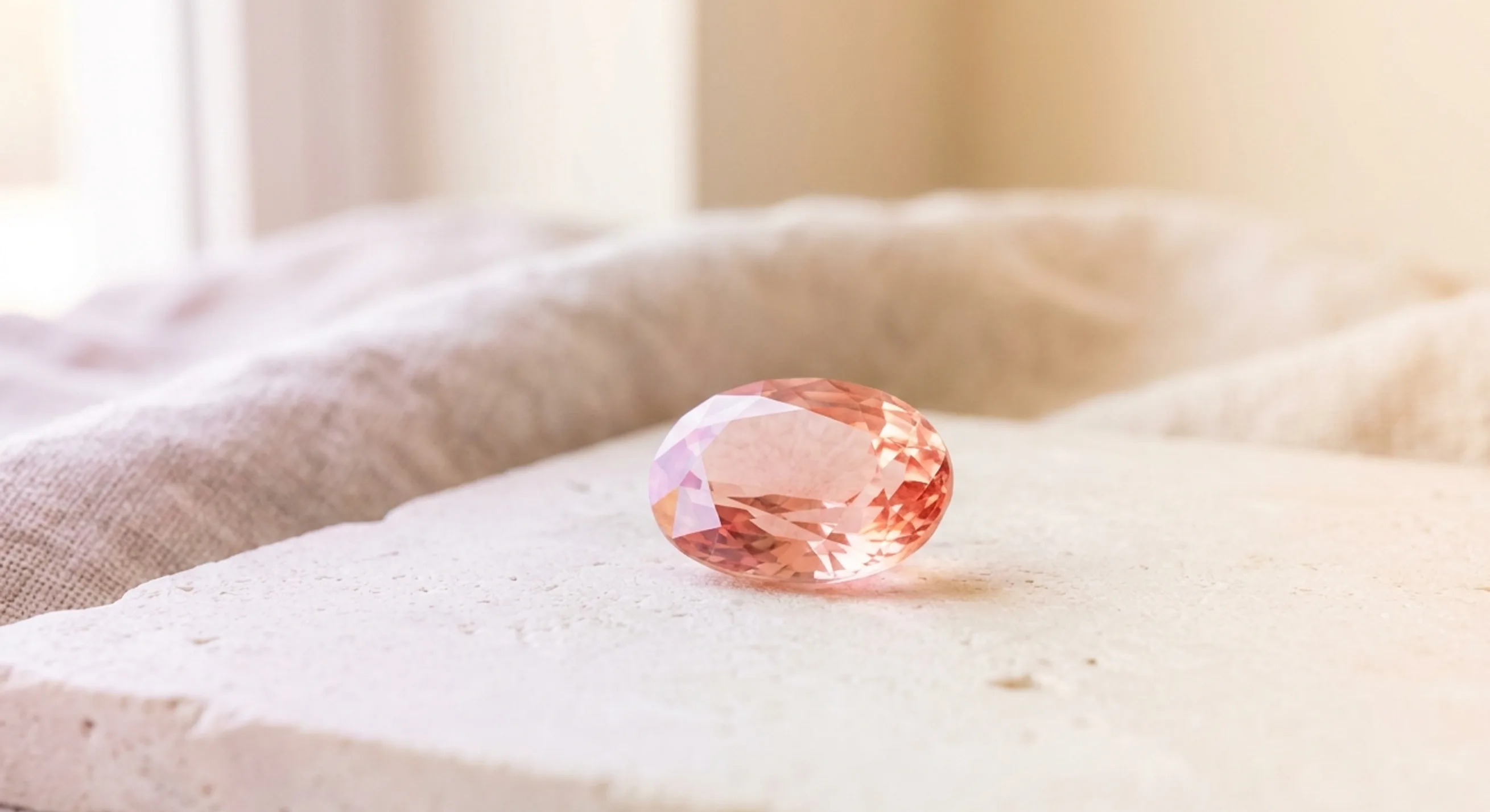
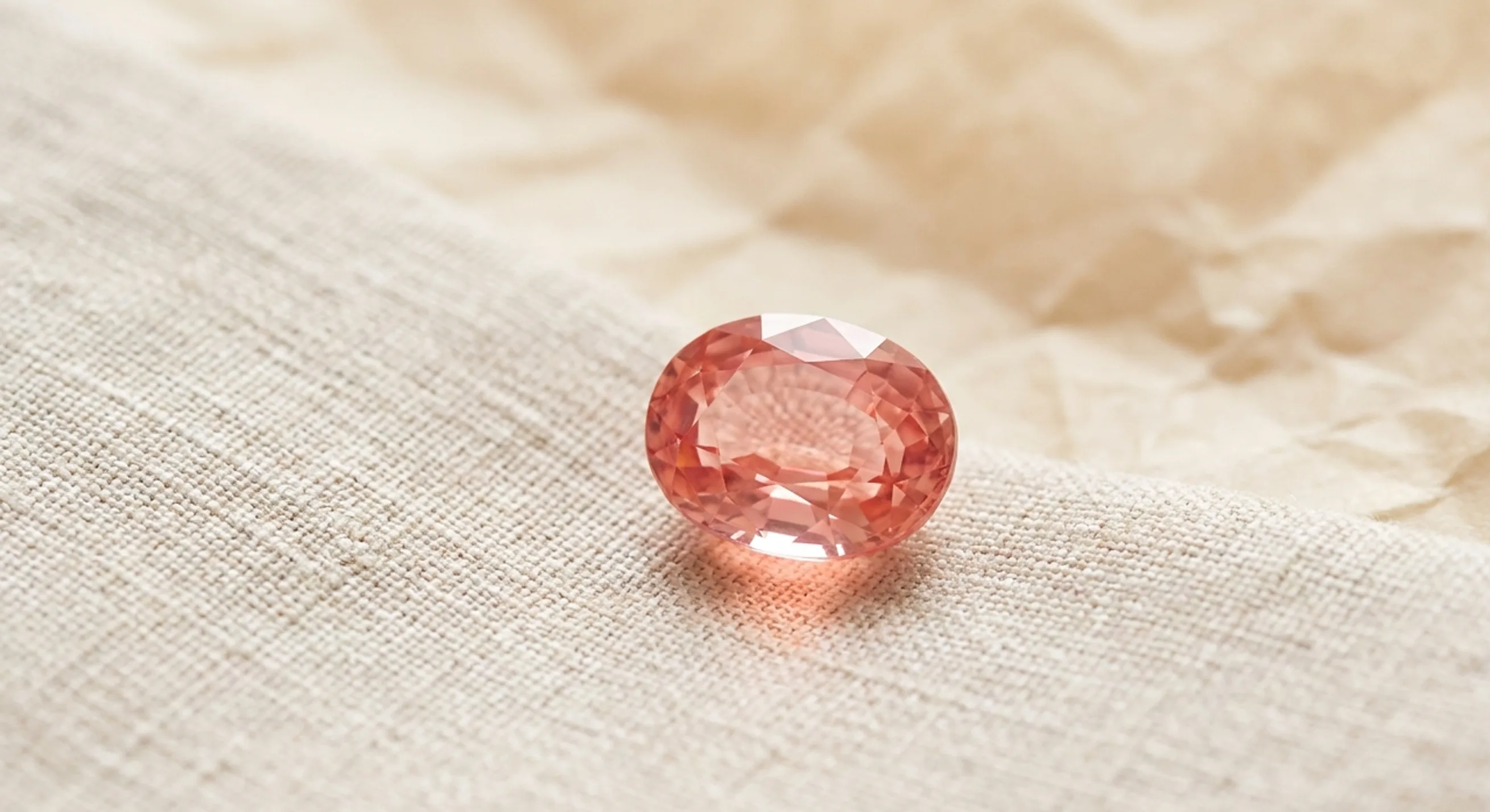
Padparadscha sapphire color is a balanced mix of pink and orange. It stays light to medium in tone, soft in saturation, and labs judge it in daylight. Push it too pink and you have a pink sapphire. Push it too orange, or too dark, and it becomes an orange sapphire. The narrow band in between is what the trade calls the lotus or sunset glow. The name comes from the Sinhalese and Sanskrit padma raga, meaning lotus color, and GIA describes the hue as "salmon or sunset."
This piece covers the color: where its edges are, why labs disagree about it, and the tests that show whether a glow is real and permanent. I've written about rarity and origin separately in padparadscha sapphire from Sri Lanka, and a step-by-step grading map is in the padparadscha color guide.
What is padparadscha sapphire color, exactly?
Think of it as two colors pulling against each other, with neither one winning. Stones that qualify look warm and cool at once. The pink stops the orange from looking like a tangerine. The orange stops the pink from looking like candy.
The formal version comes from the Laboratory Manual Harmonisation Committee (LMHC). In 2018, seven labs (GIA, SSEF, Gübelin, CGL, CISGEM, DSEF and GIT) agreed on a shared definition. In plain terms:
- Hue: a subtle pinkish orange to orangey pink
- Tone: light to medium. Pastel, not deep
- Saturation: low to medium
- Viewing light: standard daylight between D50 (5000 K) and D65 (6500 K), ideally with a color rendering index of 95 or higher
- Origin: any. A padparadscha does not have to come from Sri Lanka
That last point surprises people. The name is Sri Lankan and the reference stones are Ceylon stones, but the definition is about color, not geography. A sapphire from Madagascar or Tanzania can qualify if it falls inside the range.
Notice the low saturation, too. Padparadscha is not a vivid color. A strongly saturated pink-orange sapphire can be gorgeous, but it is moving away from the pastel glow the labs describe.
How do GIA and SSEF or Gübelin define padparadscha differently?
On paper they all signed the same definition. In practice, each lab draws the line in a slightly different place.
GIA reads the range narrowly. Its stated position is that padparadscha should be limited to light-to-medium tones of pinkish orange to orange-pink, which are the colors historically typical of Sri Lanka. The trade sees GIA as the strictest US lab on hue because it wants a genuinely even split between pink and orange. Labs such as GRS use the term more broadly. One well-known case from around 2019 shows the gap: AGL called a 4 ct unheated Ceylon stone padparadscha, and GIA called the same stone pink sapphire. One stone, two names, and a very large difference in value.
SSEF and Gübelin follow the shared wording on hue. SSEF adds a check that most labs skip, which is color stability. I cover it below, because it's where a lot of borderline stones fail.
The practical point: which lab wrote the report matters as much as the word on it, because each lab judges against its own reading of the shared definition.
When does a pink-orange sapphire stop being padparadscha?
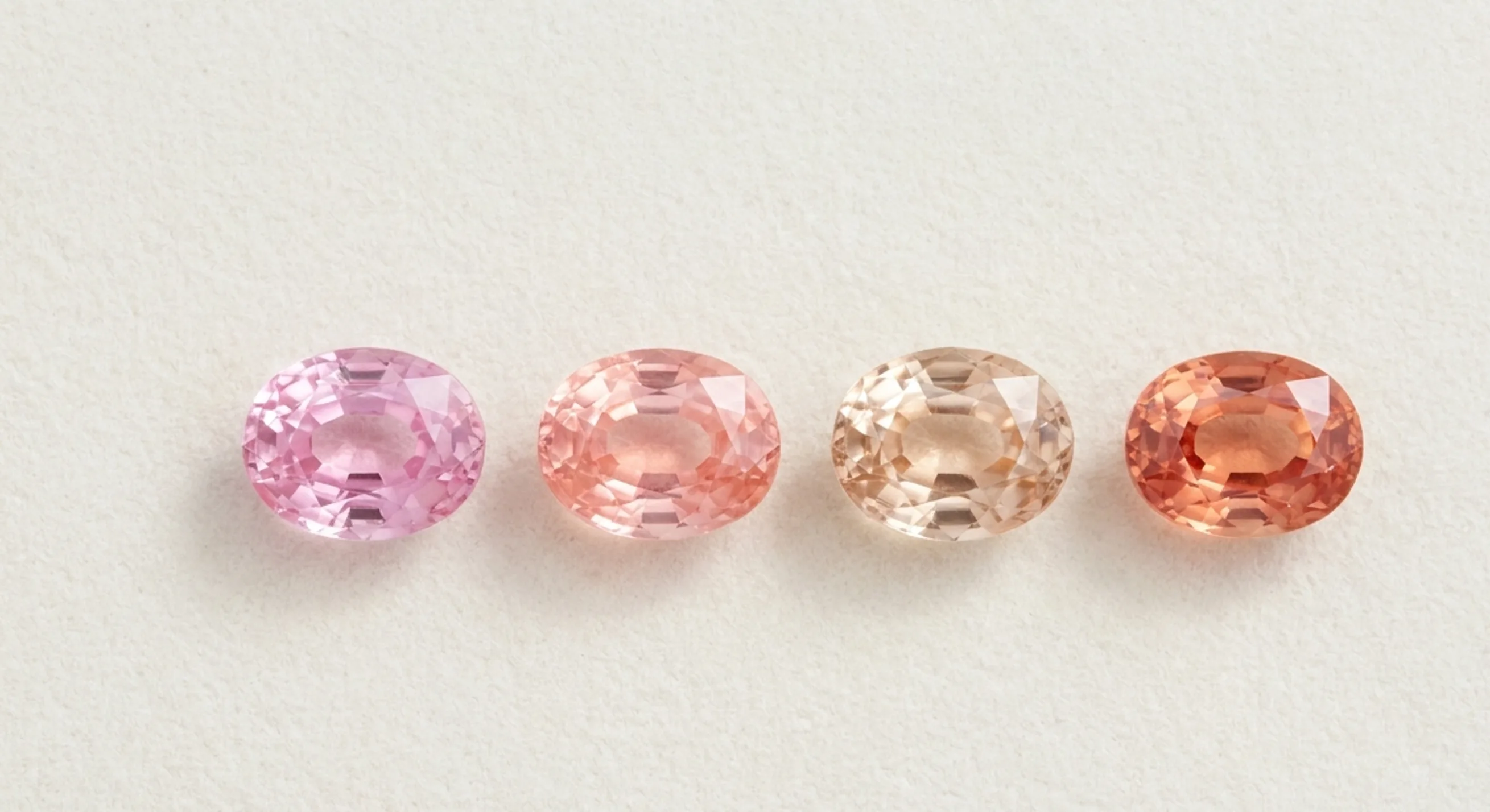
The edge is a judgment call made against fixed rules. Labs leave out stones that are:
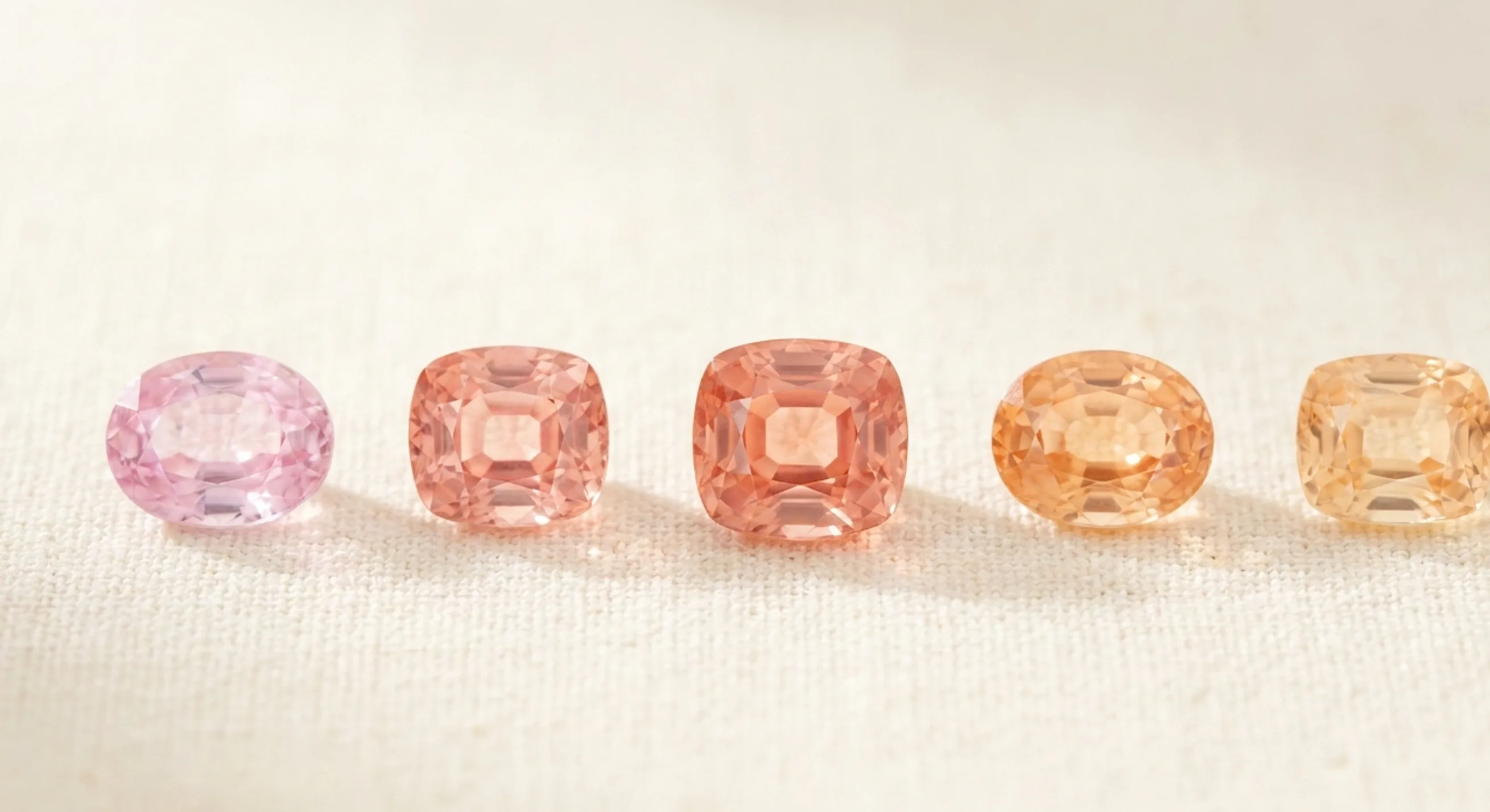
- Too pink. The orange shrinks to a faint warmth instead of an equal partner. That's a pink sapphire, sometimes sold as "near-pad."
- Too orange. Once the pink fades to an undertone, you have an orange or salmon-orange sapphire.
- Too saturated. Strong color pushes the stone out of the pastel band.
- Too dark. A tone deeper than medium kills the glow.
- Brownish. A brown tint muddies the sunset. This is why many Umba (Tanzania) stones fail even though their hue is in the right family.
- Strongly color-zoned. A stone with a pink zone sitting next to an orange zone is usually excluded, even if the two blend well when you look at it face-up.
Then there's peach. Peach sapphire is lighter and softer, often with less pink or a muted, beige-leaning warmth. It's a lovely color in its own right and a smart pick for a ring, which I go into in my guide to peach sapphire engagement rings. But it isn't padparadscha, and the price shows it. Dealer comparisons at 1 ct put fine padparadscha at around US$2,000 to $10,000+ per carat, against roughly $500 to $1,500 per carat for fine peach.
Salmon is the trickiest neighbor. GIA itself uses "salmon" to describe padparadscha, yet when the trade calls a stone salmon, it usually means one that leans orange and runs a little darker. The trade's words are loose here. A lab report isn't.
Does padparadscha color change in different lighting?
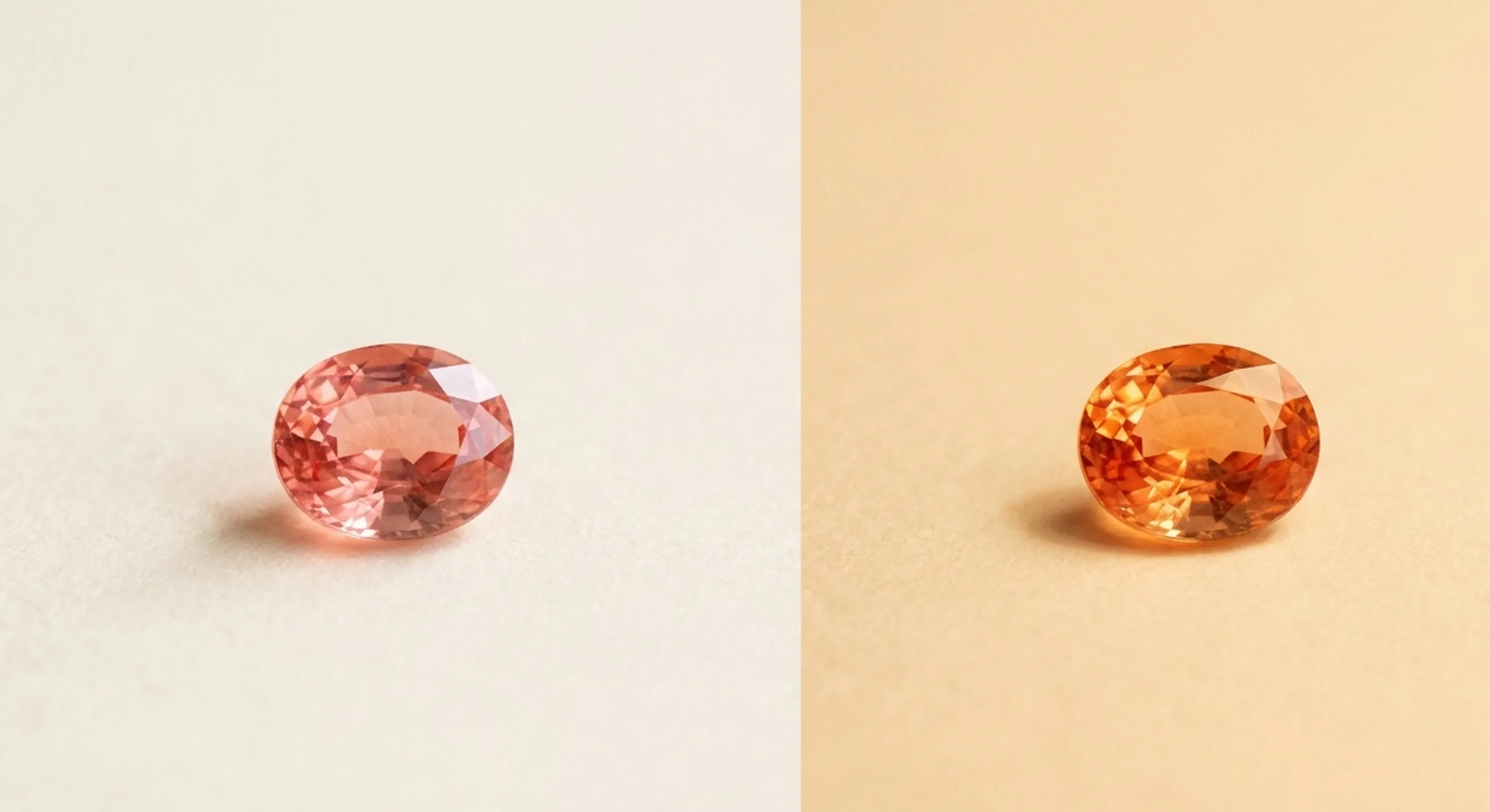
Yes, and more than most sapphires do. That's why the LMHC definition pins down the viewing light so exactly.
A padparadscha's pink and its orange have different causes, so each light source shifts the balance between them. One stone can look pinker under one bulb and more salmon in daylight, and two stones that match in daylight can move in opposite directions indoors. So padparadscha sapphire color is always partly a question of where you're standing. I explain the reasons in why padparadscha looks different in each light.
This matters when you buy from photos. Shot under warm light, a stone can look like a perfect sunset sapphire and then arrive looking pink. Ask for video in daylight as well as indoor light, so you can see how the stone shifts before you buy it. If a stone only looks right under one lamp, you want to know that first.
Do padparadscha sapphires fade?
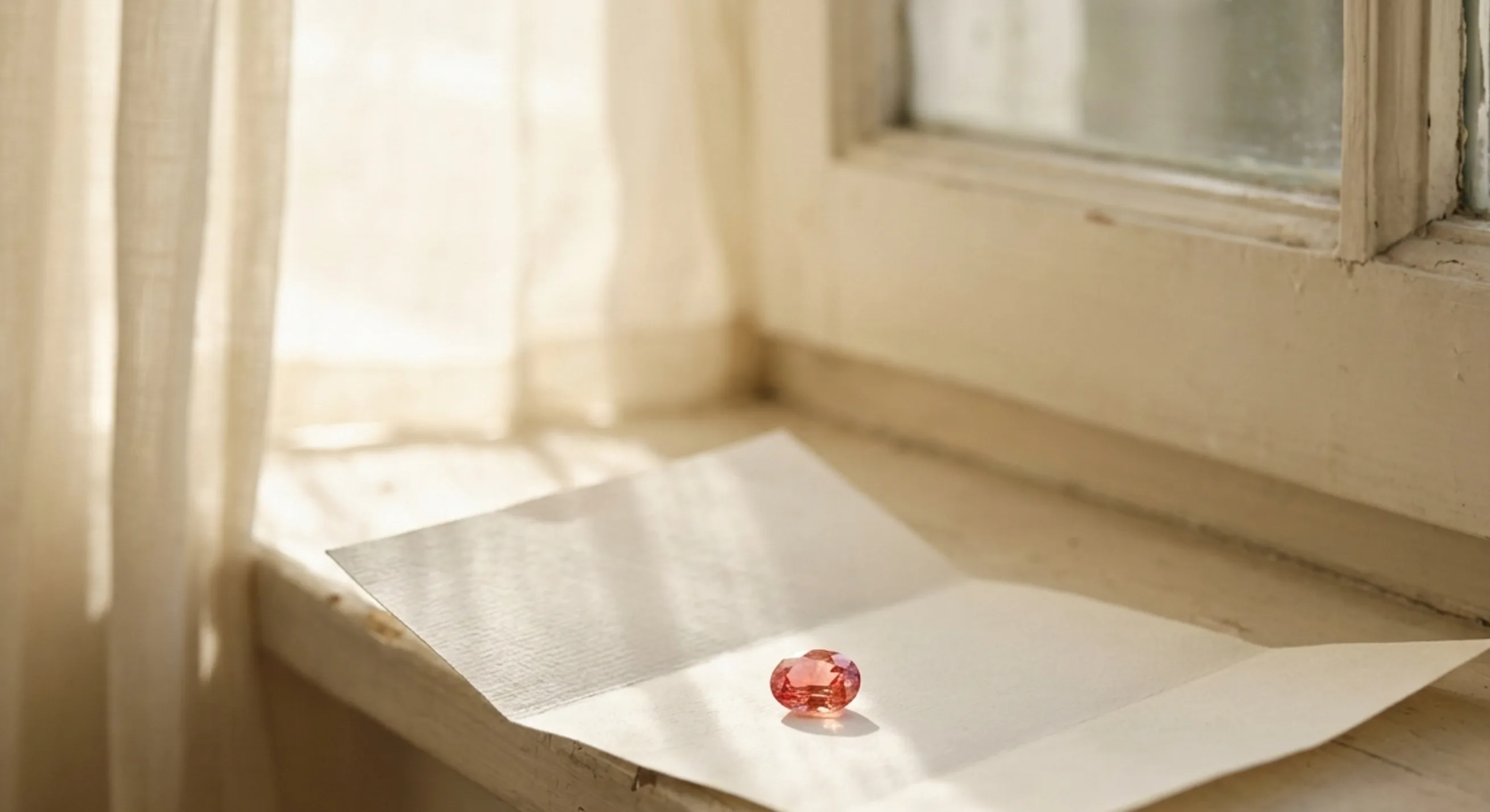
Some do. In these stones the orange comes from an unstable color center, and daylight can bleach it out over days or weeks, leaving a pink sapphire.
SSEF was the first lab to report this problem in print, in February 2018, in a paper by Dr. M. S. Krzemnicki in SSEF Facette 24. It described Madagascar stones that shifted from pinkish orange to pink after a fading test. SSEF's test is simple: measure the color, put the stone under a strong daylight lamp for several hours, then measure again. The result, stable or unstable, goes in the comments on the report. If the faded color falls outside the padparadscha range, the stone can't be called padparadscha.
The reverse trick exists as well. In one SSEF case, a pink sapphire submitted as "padparadscha" changed noticeably after about five minutes of UV "activation." Over a few weeks of daylight it faded back to pink, and SSEF turned it down. Unstable color has been studied in stones from Ambatondrazaka and Ilakaka in Madagascar, and from Sri Lanka. A Journal of Gemmology study of 48 padparadscha-like sapphires sorted them into three groups:
- Group A: no difference after fade testing
- Group B: a slight to moderate shift that stayed within padparadscha
- Group C: a clear shift out of the range, common among Ambatondrazaka stones
The authors concluded that any sapphire with a yellow-to-orange component should have a color-stability test as standard. Since November 2018, the labs that share the harmonised definition have made that test mandatory for stones of padparadscha-like color, so the name on a report from one of them means the color held. For an important stone, look for a report that notes the result.
Are padparadscha sapphires heated or treated?
Many are heated, and that's normal. Under LMHC practice, conventional heating is allowed under the padparadscha name as long as it's disclosed. Low-temperature heating, usually below 1000°C, can move some pink corundum into the range, and heated stones are color-stable. Given the fading problem, that's a real advantage. Unheated stones with stable natural color sit at the top as the premium tier. Heated stones are the established, honest core of the market.
What disqualifies a stone is a different kind of treatment: lattice diffusion (beryllium in particular), glass filling, irradiation, dye or coatings. Beryllium diffusion is done at temperatures above 1800°C. It reached the trade in late 2001 as orange to orangy pink "padparadscha" stones before spreading to yellow, blue and ruby. It adds yellow, orange and brown color, and it can create padparadscha colors from colorless, pink or pale yellow corundum. Dealers estimate that Be-diffused stones sell at a 90 to 98% discount to the natural color they copy.
Beryllium is a light element, and XRF can't detect it. Labs adopted LA-ICP-MS in the early 2000s largely to catch this treatment. It routinely finds beryllium down to about 0.1 ppma. When you read a report, look for "no indications of lattice diffusion treatment." On an unheated stone, also look for "no indications of heating."
How does color affect padparadscha price?
Almost entirely. Padparadscha sapphire color sets value more than cut or clarity does, because the band is so narrow. The trade estimate is that padparadscha makes up under 1% of world sapphire production. These dealer estimates are per carat at around 1 ct, and you should read them as ranges, not fixed prices:
- Near-pad, no GIA report: about US$800 to $2,500
- GIA-reported, good color: about $3,000 to $6,000
- Exceptional Ceylon with GIA report: about $12,000 to $20,000+
Size raises the price fast. Fine stones over 3 ct often run $15,000 to $20,000+ per carat, and above 5 ct, $25,000 to $50,000+. At 3 ct, one dealer example puts heated stones at up to $10,000 per carat and comparable unheated stones at up to $20,000. At auction, the 24.58 ct Du Pont padparadscha sold at Christie's in 2020 for US$930,000, about $37,850 per carat.
How to read the glow
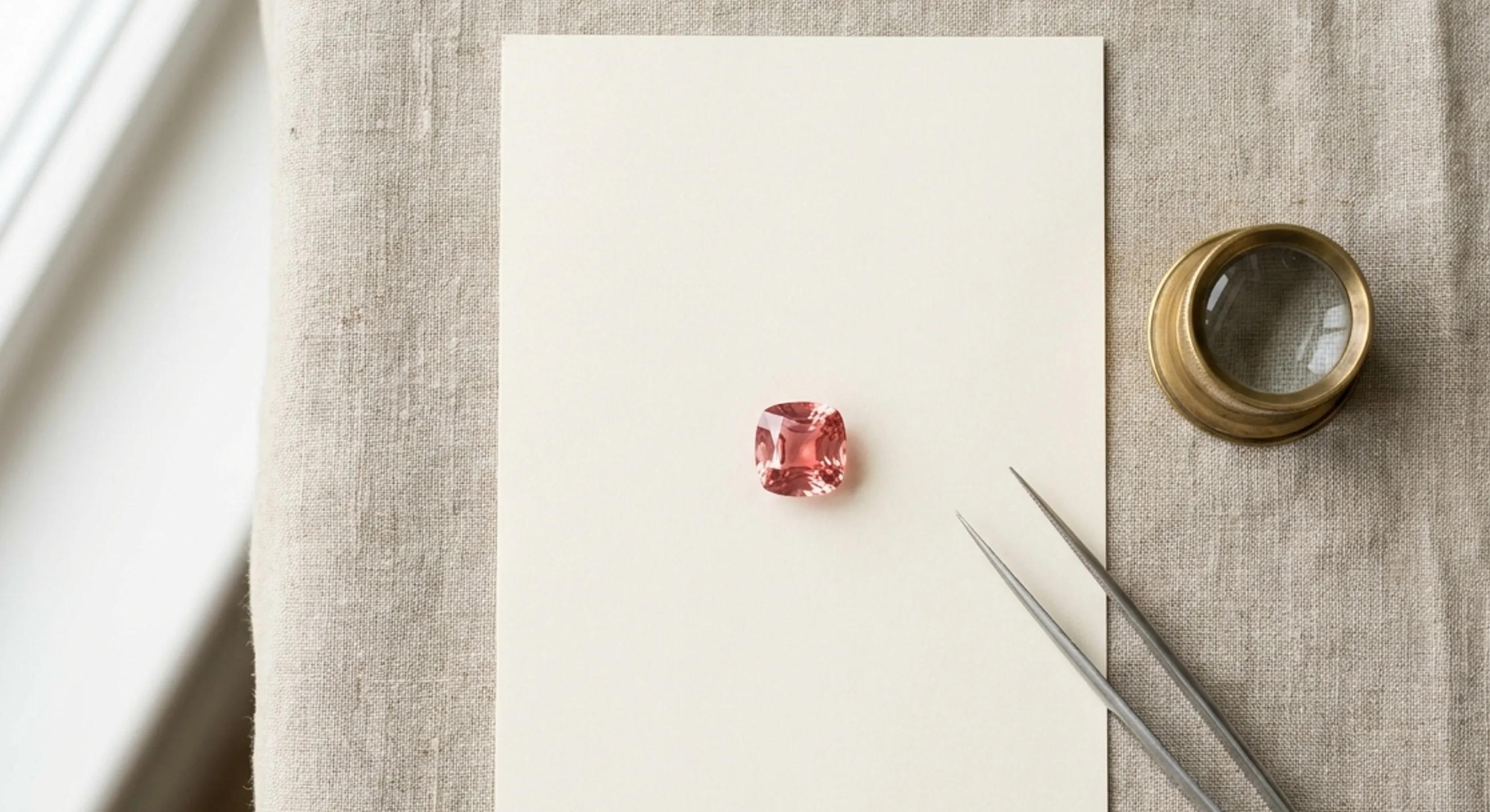
Check every stone the same way. Is the pink-orange balance even? Is the tone light to medium, the saturation soft, with no brown and no obvious zoning? Did the color hold in the lab's stability test? And does the lab report confirm no diffusion? A stone that passes all of that has earned the name.
If you'd like help finding one, tell me what you're looking for through a loose stone custom order, or browse the Crestonne collections, where every stone has its own video and lab report.
Common questions
Frequently Asked Questions
What color is a padparadscha sapphire?
A subtle pinkish orange to orangey pink, light to medium in tone and low to medium in saturation, judged in standard daylight. Neither pink nor orange should take over. That balance is what people call the lotus or sunset glow.
Does a padparadscha have to come from Sri Lanka?
No. Under the harmonised LMHC definition adopted in 2018 by seven labs, including GIA, SSEF and Gübelin, padparadscha can be corundum from any origin. Sri Lanka supplies the historical reference stones, and GIA reads the range narrowly around those classic Ceylon colors.
Can a padparadscha sapphire lose its color?
Some padparadscha-like sapphires have unstable color that fades toward pink after exposure to light. SSEF tests for this by measuring color before and after several hours under a strong daylight lamp. A stone whose faded color falls outside the range is refused the padparadscha name. Heated stones are color-stable.
Can a heated sapphire be called padparadscha?
Yes. Conventional heating is accepted under the padparadscha name as long as it's disclosed, and heated stones form the established core of the market. Unheated stones with stable color are the premium tier. Beryllium diffusion, glass filling, irradiation, dye or coatings disqualify a stone.
What is the difference between padparadscha and peach sapphire?
Peach sapphire is lighter and softer, often with less pink or a muted, beige-leaning warmth, so it falls outside the padparadscha range. Dealer comparisons at 1 ct put fine padparadscha at roughly US$2,000 to $10,000+ per carat, against about $500 to $1,500 for fine peach.