Buying Guides
Peach Sapphire Engagement Rings: A Buyer's Guide
Peach Ceylon sapphire is the soft, warm hue quietly taking over romantic engagement rings. Here is how to read tone, undertone, and value before you commission one.
7 min read
By Naseef AR
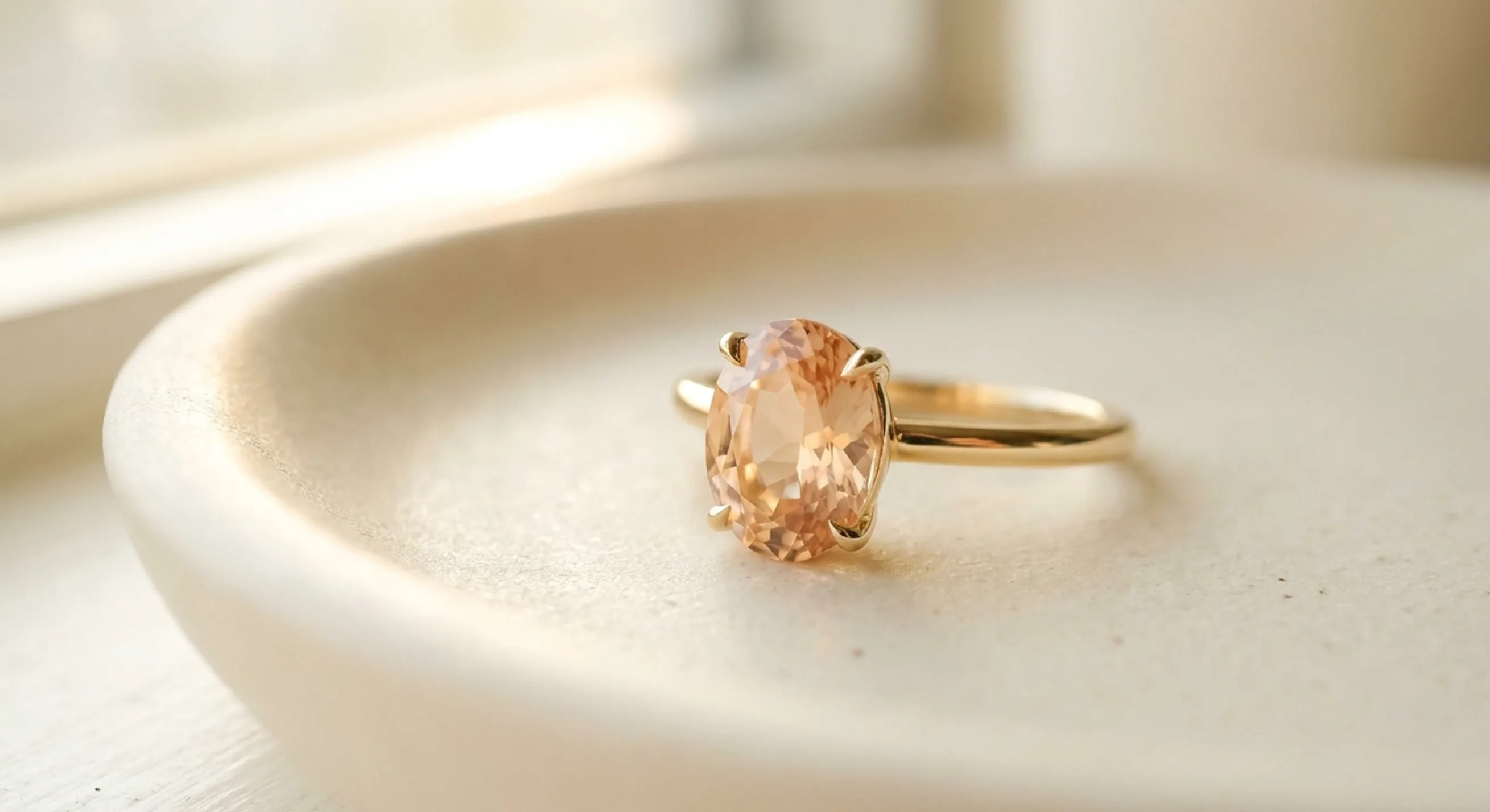
A peach sapphire engagement ring works when the stone reads as a soft, warm blush. Not a muddy orange. Not a flat pink. That balance is the whole game. Peach sits in the tonal band between pink sapphire and padparadscha, carrying a gentle pink-orange blend that looks understated in low light and glows in daylight. In Ceylon (Sri Lankan) material, corundum at Mohs 9 gives you the daily-wear durability an engagement ring demands. The best results almost always start with the loose stone, then build the ring around it, because peach has to be seen in person to be judged.
What is a peach sapphire?
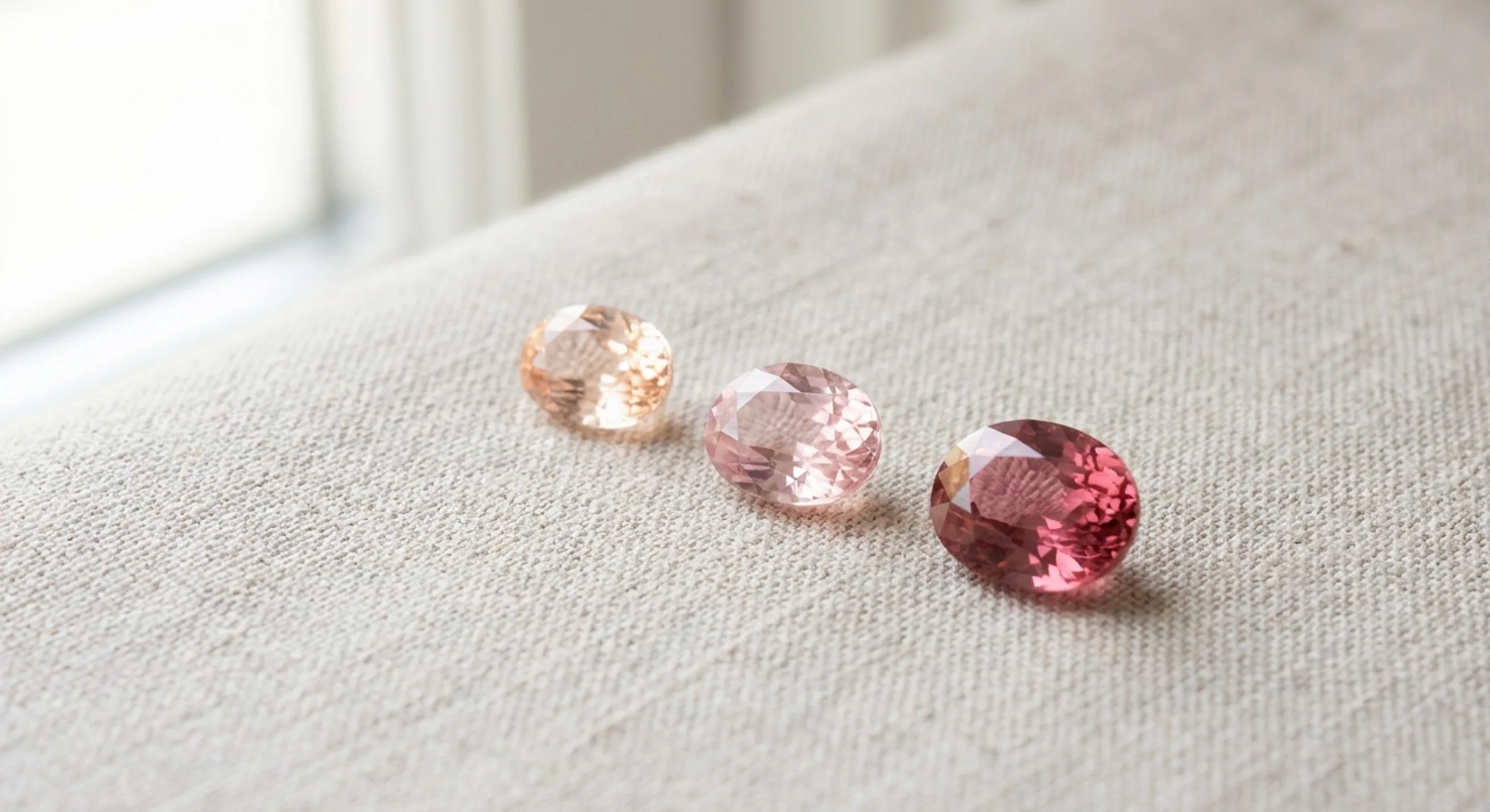
Peach sapphire is corundum, the same mineral family as ruby and blue sapphire, colored by trace elements that produce a warm pink-orange tone. Think of it as the calmer neighbor of two more famous colors. On one side sits pink sapphire, cooler and more saturated. On the other sits padparadscha, the rare and highly prized salmon-to-sunset hue that commands premium pricing. Peach occupies the softer middle, lower in saturation and lighter in tone, which is exactly why it appeals to buyers who want color without drama.
The Ceylon stones Crestonne represents tend to show a clean, even peach with a subtle glow rather than a strong single-note color. That evenness carries more weight in this hue than in almost any other, because a lopsided or patchy peach reads as a mistake rather than a choice.
Peach vs pink vs padparadscha: where does peach sit?
The line between these three comes down to tone and undertone, and it trips up most buyers. If you want to understand the full spectrum, the peach-to-pink tonal range is worth reading before you shop, because peach is really a point on a continuum, not a fixed shade.
A quick way to place a stone:
- Pink sapphire leans cool, with more saturation and a clear pink dominance.
- Peach sapphire leans warm, lighter in tone, with pink and orange sharing the stage more or less evenly.
- Padparadscha pushes further into orange with a distinctive salmon glow, sits in a strictly defined color window, and carries a name premium recognized by labs like GIA, SSEF, and Gubelin.
Padparadscha is a protected trade term with a narrow definition, so plenty of warm-pink stones that just miss that window get sold as peach. That is not a downgrade. A well-cut peach stone at a fraction of padparadscha pricing is one of the smartest values in colored stones right now.
How do tone and undertone affect price and daylight appearance?
Two peach sapphires of the same carat weight can differ substantially in price, and the reasons are not always obvious at a glance.
Tone refers to how light or dark the stone is. Peach lives in the lighter half of the range. Go too light and the color washes out to near-colorless in dim rooms. Go too dark and it starts drifting toward brown or a dull orange. The sweet spot is a medium-light tone that holds its blush indoors and comes alive outdoors.
Undertone is the direction the color leans. A pink-dominant peach photographs romantic and cool. An orange-dominant peach reads warmer and more golden. Neither is better, but they suit different skin tones and metal choices, and that call is easier to make with the loose stone in hand.
Daylight behavior is the part people underestimate. Peach shifts with the light source. Under warm indoor bulbs it can look deeper and more orange. In daylight it lifts and softens. Some stones even show a faint color shift toward pink or violet under different lighting. Ask to see any peach sapphire in both daylight and indoor light before committing, because the version you fall in love with in a showroom may not be the version you wear to work.
On price, expect peach sapphire to sit below padparadscha and to move with the usual levers: color quality, clarity, cut precision, and carat weight. Fine unheated peach stones in larger sizes climb quickly and can run well into the thousands per carat, while smaller or lighter stones remain accessible. Reliable published figures for this specific hue are thin, so treat any precise number you see online with caution and judge the individual stone instead.
Are peach sapphires treated or unheated?
Heat treatment is the legitimate industry standard for sapphire, including peach. It is a stable, permanent process that has been used for generations to bring out and even a stone's color, and the vast majority of sapphires on the market are heated. A heated peach sapphire is a completely sound choice for an engagement ring, and it is what makes beautiful color available at reasonable prices.
Unheated peach sapphire is the premium tier. When a stone shows fine natural color with no thermal enhancement and carries lab documentation confirming "no indications of heating," it commands a meaningful premium and is prized by collectors. Either way, the number that matters is honest disclosure. Every treatment status should be stated plainly and, for significant stones, backed by a reputable lab report.
Why commission a custom peach sapphire engagement ring?
Peach is the hue that most rewards a custom approach, for one simple reason: you cannot standardize it. No two peach sapphires read the same, so buying a finished ring off a shelf means accepting whatever stone happened to be set. Starting from a loose stone flips that. You choose the exact tone and undertone, see it in multiple lighting conditions, then design the setting to flatter it.
Metal choice does real work here. Rose gold amplifies the warm blush and pushes a stone toward its pink-orange richness. Yellow gold deepens the golden side. Platinum and white gold keep things cool and let the peach speak for itself. The right pairing depends entirely on the individual stone, which is another argument for choosing the gem first.
Cut and shape matter just as much. Oval, cushion, and elongated shapes tend to carry peach beautifully and make the most of its glow. If you are weighing shapes, flattering engagement ring cuts breaks down which silhouettes suit colored stones and why. A skilled cutter can also position the color so the stone shows its best face-up appearance once set, minimizing any windowing or dark zones.
This is where a commission earns its keep. You are not picking from a rack. You are matching a specific peach sapphire to the metal, cut, and setting that make it sing, with treatment status disclosed up front and documentation where it counts.
Buying online with confidence
Color-critical stones are hard to photograph, and peach is one of the hardest. Warm studio lighting can push a modest stone to look richer than it is, and screen calibration does the rest. It is a known problem across the trade. Crestonne addresses it by describing tone and undertone honestly, showing stones in consistent lighting, and disclosing treatment plainly on every listing, so the stone that arrives is the stone you chose. When color decisions carry this much weight, that transparency is the whole point.
If a soft, warm, quietly romantic stone is the goal, a peach sapphire engagement ring is one of the most rewarding directions in colored stones today. Start a commission around a loose Ceylon peach sapphire at /custom-order?path=ring, and build the ring around the exact stone that speaks to you.
Common questions
Frequently Asked Questions
Are peach sapphires durable enough for an engagement ring?
Yes. Peach sapphire is corundum at Mohs 9, second only to diamond in hardness. That makes it well suited to daily wear, though as with any ring a protective setting and periodic checks on the setting help keep the stone secure over years of use.
Is a peach sapphire the same as a padparadscha?
No. Padparadscha is a protected trade term for a specific salmon-to-sunset pink-orange window recognized by labs like GIA, SSEF, and Gubelin, and it carries a significant premium. Peach sits in the softer, lighter band nearby. Many warm-pink stones that just miss the padparadscha definition are sold as peach, which makes them a strong value.
Should I choose a heated or unheated peach sapphire?
Heat treatment is the industry standard and produces beautiful, stable color at accessible prices, so a heated peach sapphire is a sound choice. Unheated stones with natural color and lab documentation are the premium tier and command higher prices. Either is fine as long as the treatment status is disclosed honestly.
Which metal suits a peach sapphire best?
It depends on the stone's undertone. Rose gold amplifies the warm pink-orange blush, yellow gold deepens the golden side, and platinum or white gold keep things cool so the peach reads on its own. Choosing the loose stone first lets you match the metal to that specific hue.
Why does peach sapphire look different indoors and outdoors?
Peach is a light-sensitive hue. Warm indoor bulbs can make it look deeper and more orange, while daylight lifts and softens it. Some stones even show a faint shift toward pink or violet. Always view a peach sapphire in both daylight and indoor light before committing.