Specialty Stones
Pink Sapphire: Ceylon Hues, Value & Buying Guide
A buyer's map of pink sapphire from soft peach to hot pink, with where the padparadscha line falls and what actually moves the price.
8 min read
By Naseef AR
A pink sapphire is corundum coloured by trace chromium, the same element that turns corundum red into ruby. Ceylon (Sri Lankan) stones cover a wide band, from pale baby pink through vivid "hot" pink into pink-red. They sit at Mohs 9, so durability is never the question. Value is. What you pay for a pink sapphire gemstone is driven almost entirely by colour: hue, saturation and tone, in that order. Get those three straight and you can shop this stone with confidence, whether you want a soft peach solitaire or something that reads pink across the room.
What are the different pink sapphire colors?
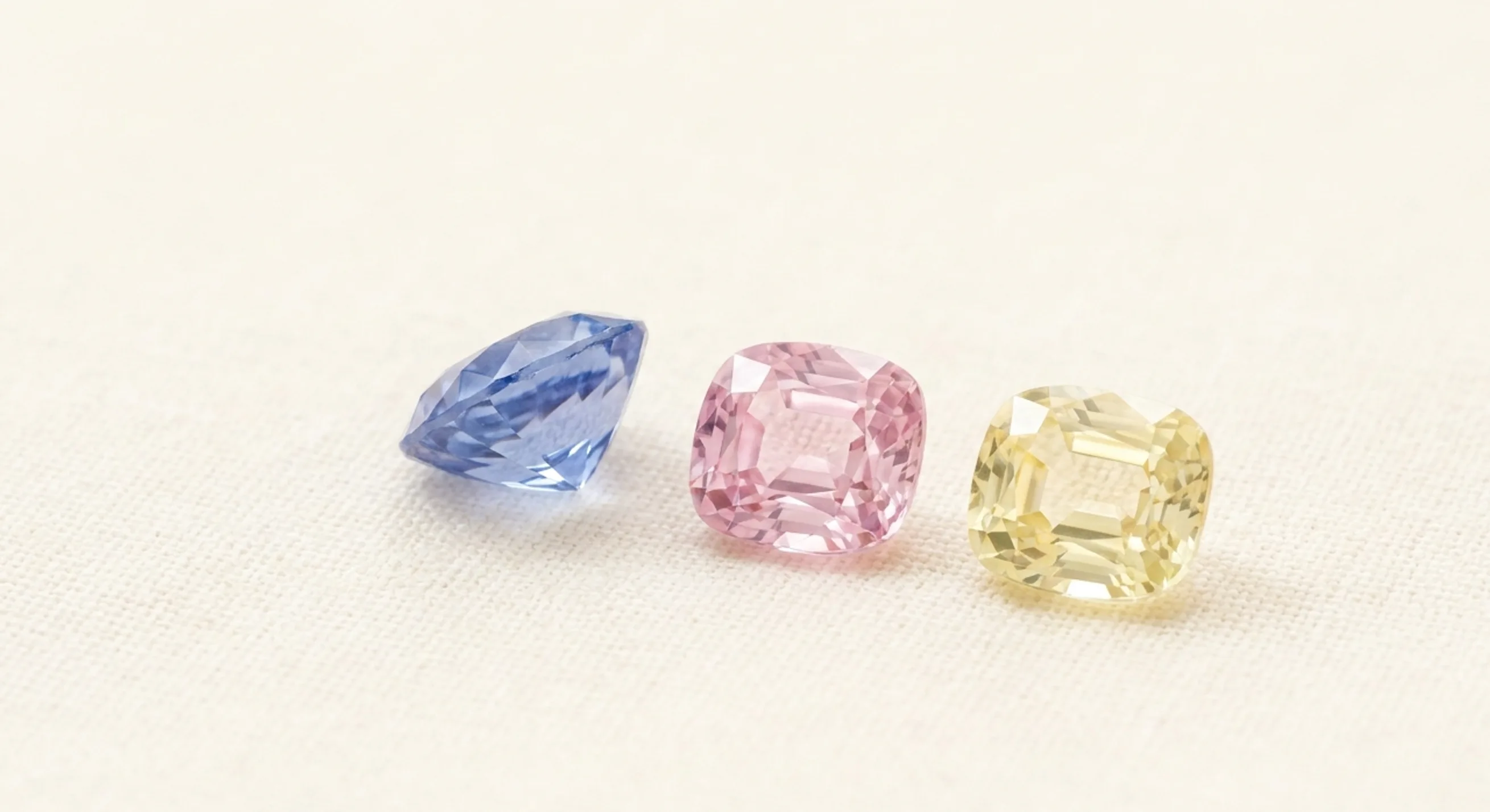
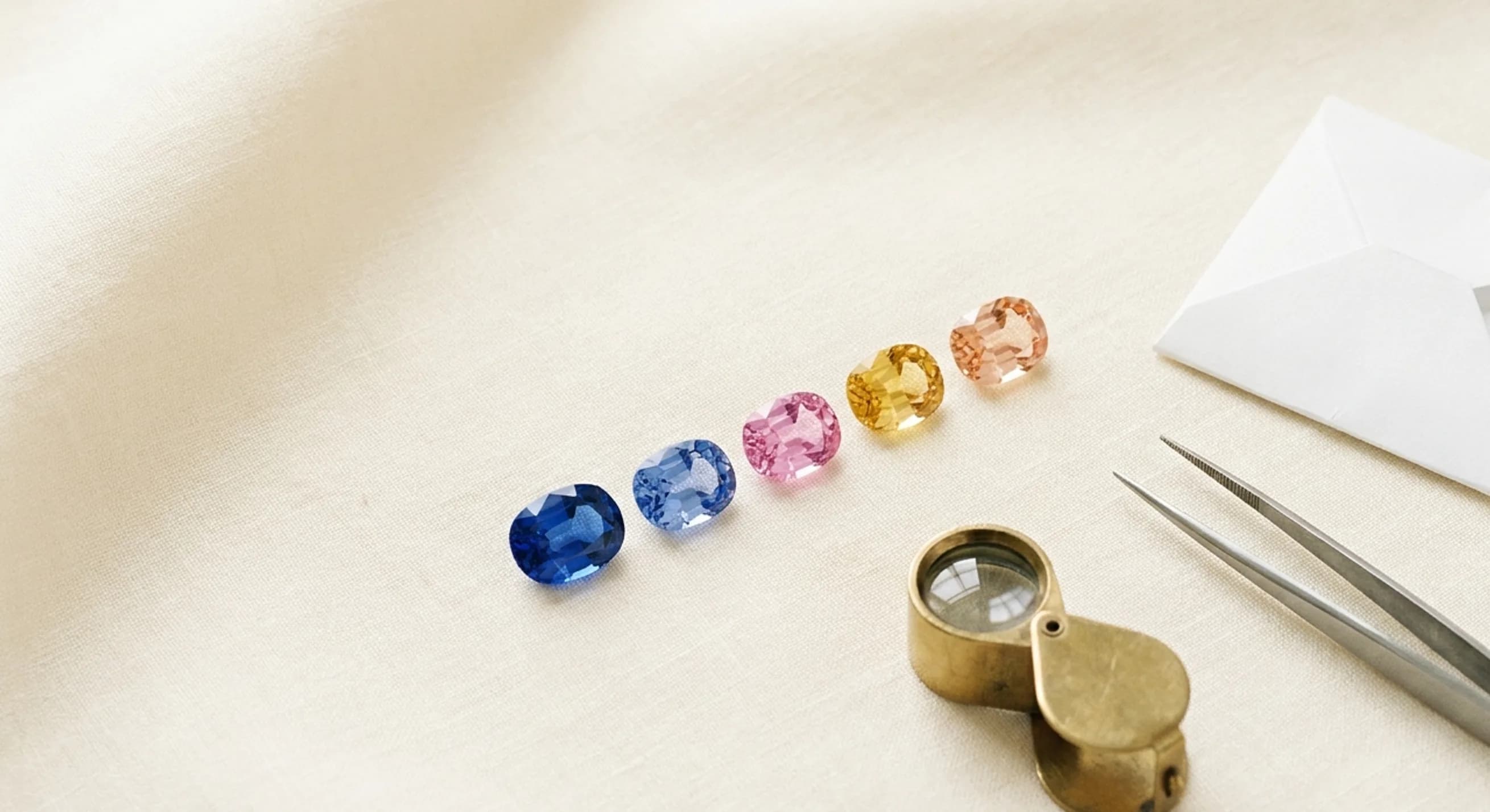
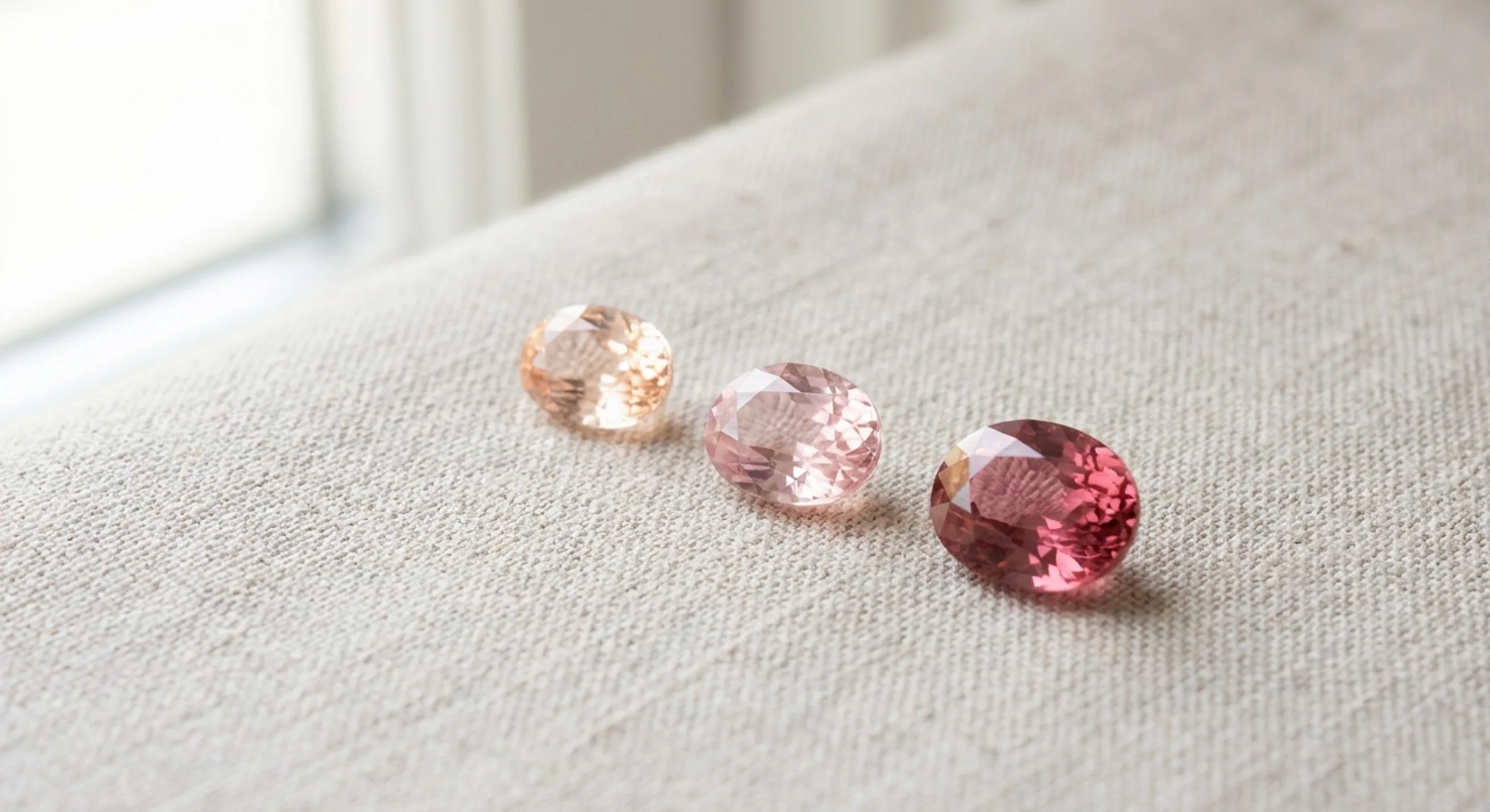
Pink sapphire colors run along two axes at once: how pink versus how orange or purple the hue leans, and how saturated the colour sits. On the pink side you get everything from a whisper of pink through medium "bubblegum" tones into intense hot pink. Nudge the hue toward orange and you move into peach and salmon territory. Push it far enough into a balanced pink-orange and you approach the rarer padparadscha pink-orange, which is a separate, more valuable category with its own naming rules.
Undertone is the detail most buyers miss. Two stones can both be "pink" and read completely differently, one cool with a purple lean, one warm with a peach lean. Sri Lankan material tends to run cleaner and slightly cooler than pink sapphire from Madagascar, which is part of why Ceylon origin still carries a premium in the trade.
Saturation is what separates a pretty stone from an expensive one. A pale pink with low saturation can be lovely and gentle on the eye, but it will always sit below a well-saturated hot pink of the same size and clarity. Tone matters too: too light and the colour washes out under bright light, too dark and it muddies. The sweet spot most collectors chase is a medium tone with strong, even saturation and no grey masking the colour.
What is a peach sapphire?
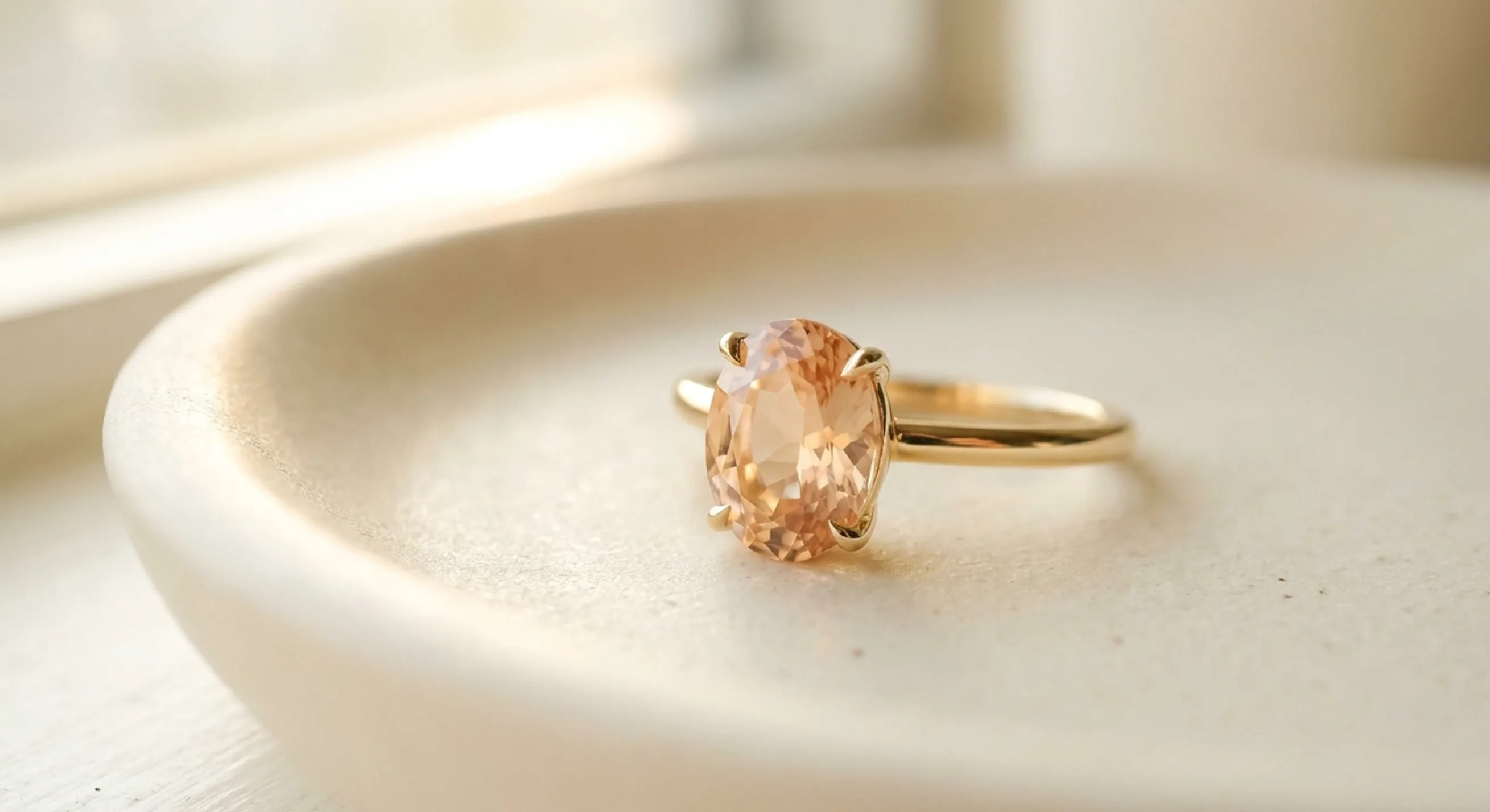
A peach sapphire is a pink sapphire whose hue has shifted warm, toward orange, without crossing into full padparadscha. Think soft apricot, salmon and blush tones. The colour comes from a blend of the chromium that gives pink and the iron and colour centres that push toward orange. The result is a muted, romantic warmth that photographs beautifully and flatters a range of skin tones.
Peach sits in a genuinely useful place for buyers. It reads softer than a saturated hot pink and less formal than a classic blue sapphire, which is exactly why the peach sapphire engagement ring has become one of the most requested pieces the Crestonne team fields. Buyers want the durability and heritage of Ceylon corundum without the expectation that comes with a padparadscha price tag.
One honest note on peach: the line between a warm peach sapphire and a true padparadscha is where a lot of loose marketing happens across the market. Padparadscha is a specific, narrow window of balanced pink and orange, and reputable labs like the GIA, SSEF and Gubelin are cautious about awarding the name. Crestonne keeps the two categories clearly separate, so a peach sapphire is sold and priced as a peach sapphire, and a padparadscha is documented as one. You are never paying padparadscha money for a peach hue by accident.
How much is a pink sapphire worth?
Pink sapphire value is a colour story before it is anything else. Because reliable, current per-carat figures vary widely by grade, treat the following as tiers rather than fixed prices.
At the entry level you have pale, lightly saturated pinks and small sizes. These are accessible and make a lot of sense for melee, accent stones and delicate pink sapphire jewelry. Move up into medium tones with clean saturation and eye-clean clarity, and the price climbs meaningfully as size increases, because good colour in larger stones gets rare fast.
The top of the market is vivid, evenly saturated hot pink with strong clarity, in Ceylon origin, unheated. That combination commands a real premium, often several thousand per carat once you get into larger, cleaner stones. A few factors move the number:
- Hue and saturation. Vivid, well-balanced colour outperforms pale or over-dark stones of the same weight every time.
- Origin. Documented Sri Lankan origin carries a premium over Madagascar and other sources.
- Clarity. Eye-clean is the working standard; visible inclusions pull value down.
- Cut. A well-cut stone returns colour evenly. A poor cut leaves windows and dead zones that flatten the hue.
- Treatment. More on this below, because it is the single most misunderstood lever on price.
Are pink sapphires heated?
Most pink sapphires on the market are heat treated, and that is completely normal. Heat treatment is a stable, permanent, industry-standard process that has been used for generations to improve colour and clarity. A heated pink sapphire is a real, natural sapphire. It is not a lesser stone, and it lets buyers get excellent colour at accessible prices. The vast majority of fine pink sapphire jewelry in the world is set with heated stones.
Unheated pink sapphire is simply the premium tier. When a stone reaches strong, even colour with no thermal enhancement at all, and a respected lab confirms "no indications of heating," it earns a premium because that combination is uncommon. Crestonne represents both. The distinction is always documented, never blurred, so you know exactly which tier you are buying and why it is priced the way it is.
The practical takeaway: decide your priority first. If you want maximum colour for your budget, a heated stone is the smart, honest choice. If you specifically want the rarity of natural, untreated colour, expect to pay for it and to see lab confirmation backing it up.
How to buy a pink sapphire online
Buying colour online comes with one real risk, which is that screens and lighting lie. A stone shot under warm studio light can look a full step more saturated than it does on your hand. This is where a lot of buyers get burned across the wider market. Crestonne's answer is to photograph and film stones under consistent, neutral lighting and to describe hue, tone and saturation in plain language rather than flattering adjectives, so what arrives matches what you approved.
A few things worth doing before you commit:
- Ask for the exact hue and undertone. "Pink" is not enough. Is it cool and purplish or warm and peachy? Where does it sit against the padparadscha line?
- Confirm treatment in writing. Heated or unheated should be stated plainly, ideally with a lab report for finer stones.
- Check the origin claim. Ceylon origin should be documented, not implied.
- Look at the stone in more than one light. Daylight, indoor and shade tell you whether the colour holds up or shifts grey.
- Read the cut, not just the carat. A heavier stone with a poor cut can look smaller and duller than a lighter, well-cut one.
If you are torn between colours entirely, it is worth comparing pink against a warm yellow Ceylon sapphire before deciding, since the two suit very different settings and skin tones.
Pink sapphire versus ruby: where is the line?
Since both are chromium-coloured corundum, buyers reasonably ask where pink stops and red begins. In practice the trade draws the line at saturation and darkness of the red component. A vivid pinkish-red stone will be graded and priced as either a pink sapphire or a ruby depending on how far the colour crosses into true red, and that call meaningfully affects price. Labs make this determination, and it is another reason a reputable seller leans on lab documentation rather than in-house opinion for borderline stones.
For most buyers this only matters at the top of the pink range. The soft peach and medium pink tones most people are shopping for sit comfortably and unambiguously as pink sapphire.
Choosing pink sapphire for jewelry
Pink sapphire is one of the most versatile coloured stones for jewelry because it works in warm and cool metal alike. Cool, purplish pinks tend to sit beautifully in white gold and platinum. Warm peach and salmon tones come alive in yellow and rose gold, which is exactly why so many peach sapphire engagement ring designs pair the stone with rose gold. At Mohs 9, a pink sapphire handles daily wear far better than softer coloured stones, so it holds up as an everyday ring, not just an occasion piece.
For a solitaire, spend on colour and cut before size. A smaller stone with vivid, even saturation will outshine a larger, paler one, and it will hold its value better. For pink sapphire jewelry with accent stones, matched melee in a consistent tone matters more than any single figure on a report.
Whatever hue you land on, from soft blush peach to hot pink, the fundamentals stay the same: buy the colour first, confirm the treatment and origin in writing, and judge the cut on how evenly it returns that colour. Do that and you will own a stone that looks as good in ten years as it does the day it arrives.
If you have a specific hue in mind, Crestonne can source a loose pink sapphire to your exact colour and treatment preference through our custom sourcing service, or you can browse what is currently available in the collections.
Common questions
Frequently Asked Questions
Are pink sapphires heated?
Most are, and that is the industry norm. Heat treatment is stable, permanent and produces genuine natural sapphires at accessible prices. Unheated stones with strong natural colour are the premium tier and command a premium when a respected lab confirms no heating.
What is the difference between a peach sapphire and a padparadscha?
A peach sapphire is a warm, orange-leaning pink. A padparadscha is a specific, narrow window of balanced pink and orange that labs like GIA, SSEF and Gubelin are cautious about naming. Padparadscha sits in its own, more valuable category, and Crestonne keeps the two clearly separate in pricing and documentation.
What pink sapphire color is most valuable?
Vivid, evenly saturated hot pink in a medium tone, with eye-clean clarity and documented Ceylon origin, sits at the top. Pale or over-dark stones fall below it, and unheated examples of fine colour carry an added premium.
Are pink sapphires good for engagement rings?
Yes. At Mohs 9 they handle daily wear well. Peach and blush tones suit rose and yellow gold, while cooler pinks pair with platinum and white gold, making them a durable, versatile choice.
How can I tell a pink sapphire's true color when buying online?
Lighting distorts colour on screens. Ask for the exact hue and undertone in plain terms, request images under neutral light and in more than one lighting condition, and get treatment and origin confirmed in writing before you commit.