Understanding
Violetish Blue vs Royal Blue Sapphire: The Color Difference
Royal blue and violetish blue sapphires both sit in the top value band. The difference is how much violet you can see, how the stone behaves under warm light, and whether the report carries the royal blue trade term.
9 min read
By Naseef AR
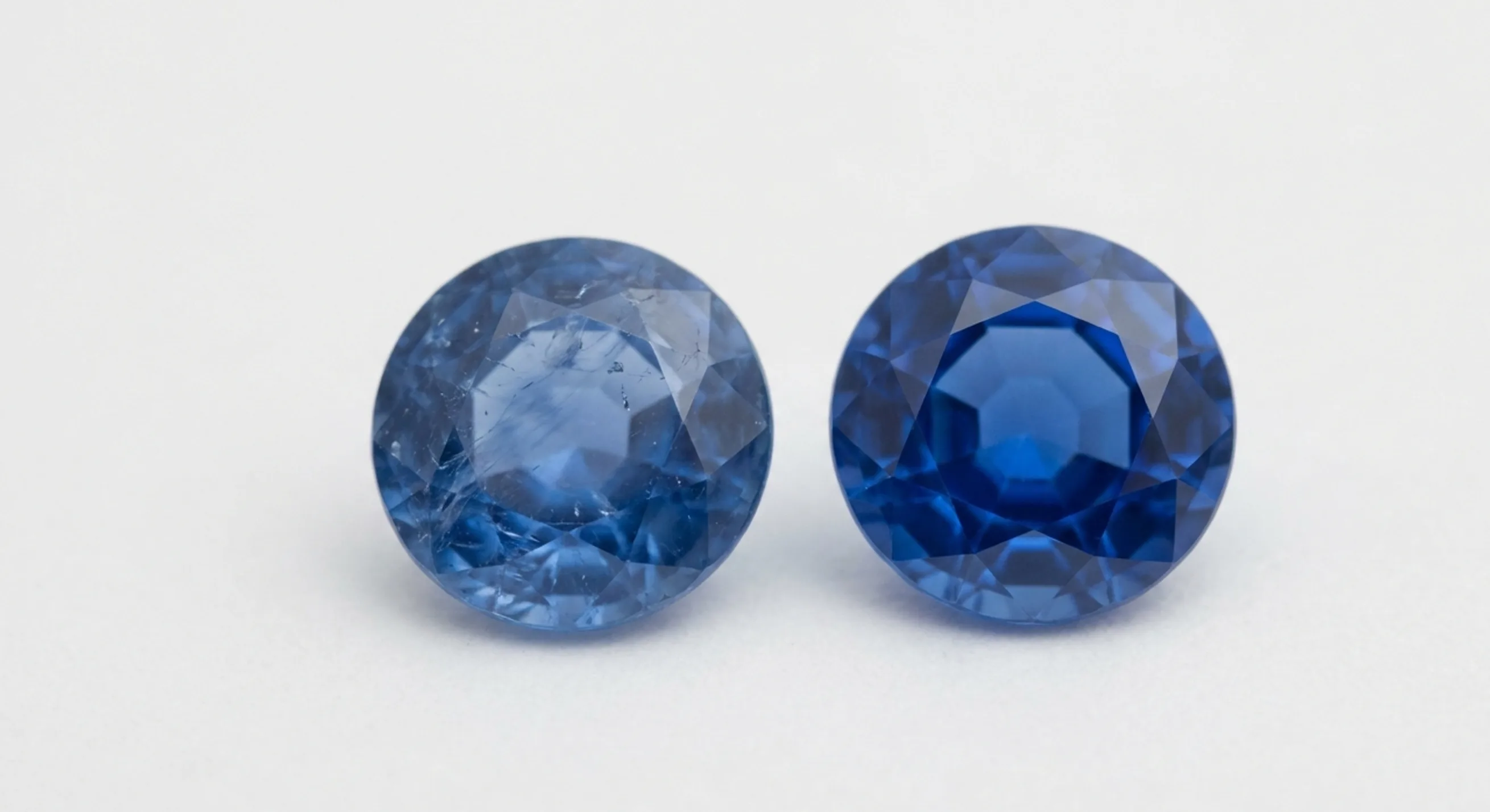
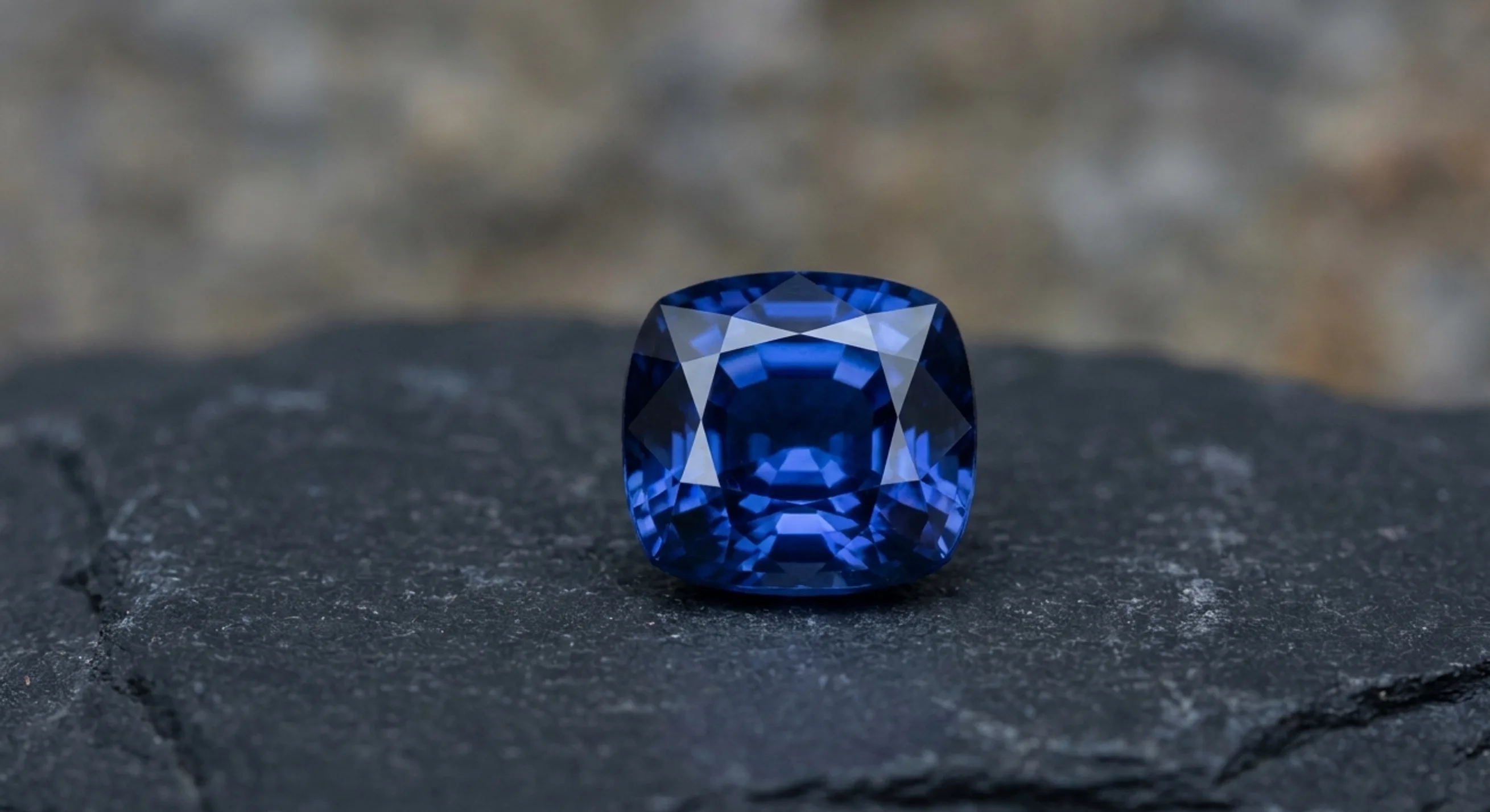
Here is the short answer on royal blue vs violet blue sapphire. Royal blue is a pure, strongly saturated blue in a medium to medium-dark tone, with no more than a very slight purplish tint. Violetish blue is still mostly blue, but the violet shows clearly enough that a lab writes it into the color description. GIA counts both in its top-value range. The practical differences are that royal blue runs deeper and more saturated, and that only a royal blue stone can carry the "royal blue" trade term on a lab report, which commands a premium. Below is how I tell the two apart, and how I would choose between them.
What is the difference between royal blue and violetish blue sapphire?
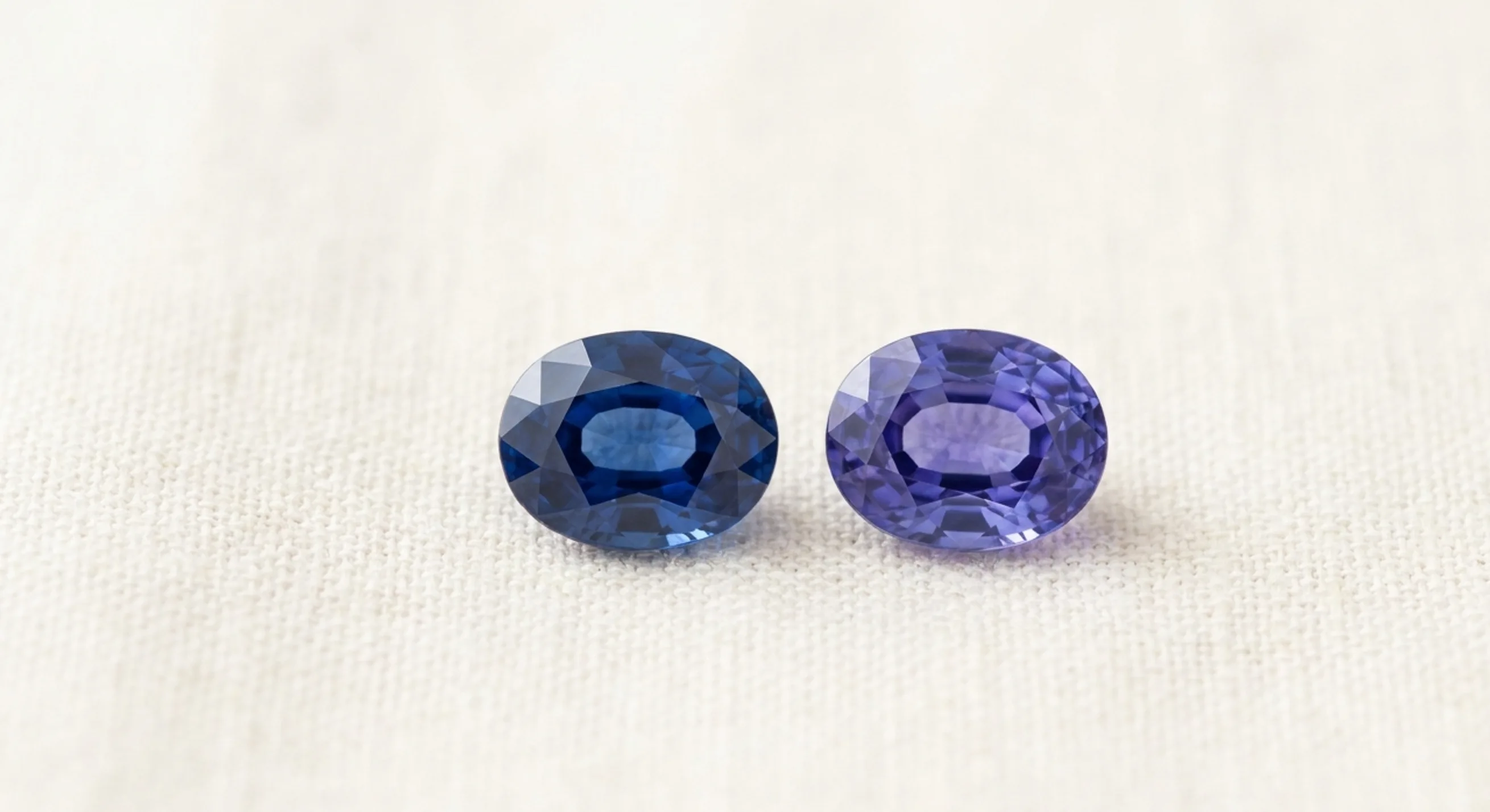
The difference starts with hue. Sapphire color names follow a fixed convention: the modifier comes first and the dominant color second. "Violetish blue" or "violet-blue" means a blue stone with violet as the secondary component. It is not a violet stone, and it is certainly not a purple one.
Royal blue is defined more tightly. SSEF grades it against a masterset of natural sapphires and accepts pure blue or a very slight purplish tint. It rules out any extra greenish, greyish or purple component. Bellerophon Gemlab's definition reads almost the same: pure blue to very slightly violetish blue.
So the line between the two is not "violet or no violet". It is a question of how much. A whisper of violet can still pass as royal blue. Once the violet reads plainly as a second color, the stone has moved into violetish blue territory.
Violet secondary tones are common in Ceylon material, so a lot of fine Sri Lankan stones sit right on that boundary. If you want to know why the violet appears in the first place, my piece on violetish blue sapphire covers the origin and rarity side.
Do royal blue and violetish blue differ in tone and saturation?
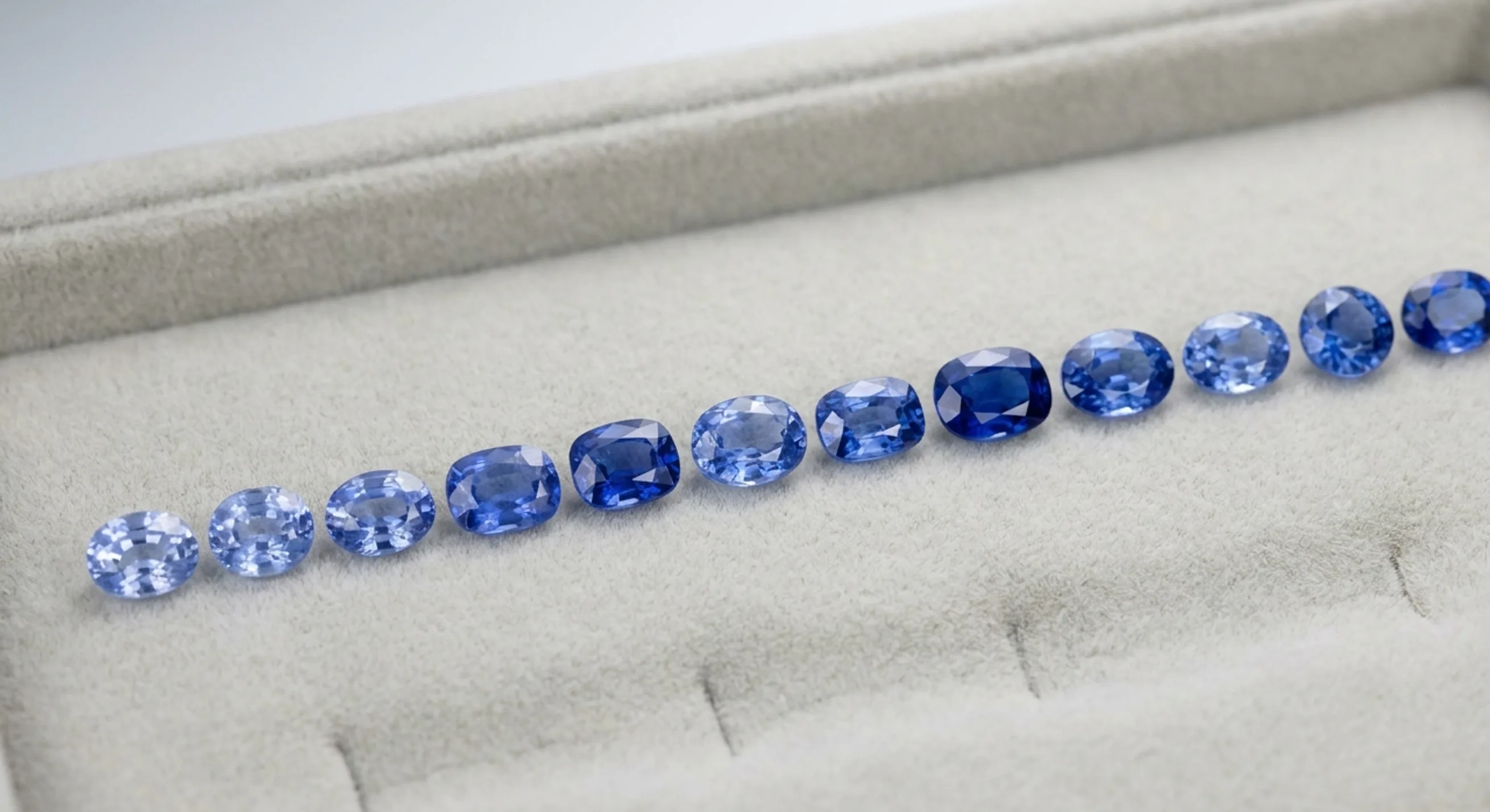
Hue is only one part of any sapphire color comparison. Tone (how light or dark the stone is) and saturation (how intense the color is) matter just as much. On these two points the grades overlap a great deal, but royal blue sits at the deeper end.
GIA places the most valued blue sapphires in a clear band:
- Hue: blue to violetish blue
- Tone: medium to medium-dark
- Saturation: strong to vivid
Violetish blue sits inside that band, not outside it. GIA does not penalise the violet. What pulls value down is a grey veil, a tone that is too light, or a tone so dark the stone turns inky.
Royal blue is the deeper, more saturated end of that band. The lab definitions add even color, vivid internal reflections, and no significant windowing (washed-out patches you can see through) or extinction (dark dead zones). A well-cut violetish blue usually looks brighter and livelier, while a royal blue looks richer and heavier. Hue position and depth of color are what separate them.
My priority order when grading either one: saturation first, tone second, hue third. A vivid violetish blue beats a pure blue that is slightly greyish or overdark, every time.
How do violetish blue and royal blue sapphires look in different light?
This is where the two separate most clearly, and it is something you can check for yourself.
Daylight is rich in blue wavelengths. Incandescent bulbs and warm LEDs lean toward red and yellow, which brings out any red-transmitting component in the stone. A violetish blue already carries a little red in its violet, so it has more to bring out. Under warm light it can shift a little further toward violet, though how far varies from stone to stone, and some barely move. A royal blue, with little or no violet in it, holds its blue more steadily indoors, though it can darken.
Buyers often mix up three different effects:
- Color variation: the color shifts within one family, for example violetish blue in daylight and more purplish blue under a warm bulb. This is normal and earns no premium.
- Color change: the stone moves from one named color to another. A true color-change sapphire is blue to violet in daylight-equivalent light and violetish purple to strongly reddish purple under incandescent light. GIA notes this on reports, and it carries a premium.
- Pleochroism: the color changes with viewing direction through the crystal, not with the light source. Cutters orient the rough to put the best color face-up.
A small warm shift is part of the character of many Ceylon blues, and plenty of buyers love it. Others want the blue to stay blue across a dinner table. Know which camp you are in before you buy, because this is the one difference you will notice every day. If a stone reads plainly purple under a warm bulb, though, it is no longer a violetish blue. It is competing with purple sapphire, and it should be priced that way.
To test it, look at the stone in daylight-equivalent light (a north-facing window or a 5000 to 6500K LED), then under a warm 2700K bulb. With online buying you cannot hold the stone, which is why every stone Crestonne lists comes with its own video, so you judge the actual gem and not a single still image.
How do labs name royal blue and violetish blue on a report?
On a standard report, the color line follows the modifier-plus-hue convention. A GIA report on an unheated Ceylon stone can read "richly saturated, slightly violetish blue". "Slightly violetish blue" is a strong description. It tells you the stone sits very close to pure blue.
"Royal blue" is a trade term some labs add on top of the color description, and they disagree on which stones qualify:
- SSEF and Gübelin (harmonised standard, November 2015): untreated stones only, so heating disqualifies a stone. The stone also needs fine clarity with no eye-visible or dark inclusions, even color and vivid internal reflections, judged against masterstones. The labs brought in the standard because the earlier loose use of these terms had been inflationary and often ambiguous.
- GRS: uses wording such as "vivid blue (GRS type 'royal blue')" or "intense to vivid blue (GRS type 'royal blue')". GRS has given the term to heated stones as well as unheated ones, including Sri Lankan sapphires.
- Bellerophon: allows no treatment or traditional heating only.
So "royal blue" on one lab's report does not mean the same thing on another's. Always read the lab name and the treatment line together. A violetish blue stone rarely gets a trade name at all. Its report simply describes the color, and that description is what you are buying.
A word on heat. Heat treatment is the industry norm, and an estimated 90 to 95 percent of sapphires on the market have been heated. A heated stone with a GRS royal blue designation is a legitimate, fine sapphire. Unheated is the premium tier, and only unheated stones can earn the SSEF or Gübelin royal blue term. My royal blue Ceylon sapphire guide goes deeper on that grade alone.
Royal blue vs violet blue sapphire: which costs more?
No reliable data prices violetish blue separately from royal blue per carat, and GIA puts both in its top band. What can be said with confidence:
- The royal blue term carries a premium. A stone that plainly reads violetish blue misses that term. That does not make it cheap. It means the stone is priced on its own color quality rather than on a label.
- Color quality moves price more than hue position. Take two 6.5 mm cushion blue sapphires: a lighter blue at $2,700 and a royal blue at $7,000, close to three times as much for the same size. Stones that go too dark fall back in price.
- Treatment matters as much as color. Unheated Ceylon sapphire generally runs about 2 to 5 times the price of an equivalent heated stone.
Crestonne's per-carat guide for Ceylon sapphire:
| Size | Fine heated | Fine unheated | Exceptional unheated |
|---|---|---|---|
| Under 1 ct | $800–2,000 | $2,000–4,500 | $4,500–8,000 |
| 1–3 ct | $3,000–8,000 | $7,000–18,000 | $10,000–20,000 |
| 3–5 ct | $4,000–8,000 | $8,000–18,000 | $18,000–35,000 |
Most certified 1 to 3 ct Ceylon stones fall between $1,500 and $6,000 per carat. A well-saturated violetish blue sits comfortably in the fine bands. A certified unheated royal blue with the SSEF or Gübelin term pushes toward the top of the table.
When price is the deciding factor, my view is simple. A vivid violetish blue is often the better buy, because you pay for color rather than for a term on paper.
How can you tell which one you are looking at?
Answering the royal blue vs violet blue sapphire question for a real stone takes five checks:
- Daylight, white background. If you can name a second color without straining, the stone is violetish blue.
- Warm light. A clear move toward purple points to a violet component.
- Report color line. "Blue", "slightly violetish blue" and "violetish blue" are three different positions on the scale.
- Trade term and lab. If "royal blue" appears, note which lab issued it.
- Treatment line. Check it against that lab's rules for the term.
A color name in a listing title is the seller's own description. The report is what defines the stone. That is why every stone Crestonne lists comes with a lab report and a written treatment statement as well as its video, so the color and treatment claims can be checked against each other.
Which should you choose: royal blue or violetish blue?
Choose royal blue if you want a blue that stays blue in every light, you want the trade designation on the report, and your budget covers the premium, especially for an unheated stone graded by SSEF or Gübelin.
Choose violetish blue if you like a brighter, livelier blue, you enjoy a little extra violet glow indoors, and you would rather put your budget into saturation and size than into a term.
Either way, the real dividing line is not royal blue vs violet blue sapphire. It is vivid against greyish, and lively against overdark. Get saturation and tone right, and either hue will be a fine stone.
If you already know which side you fall on, tell me through the custom-order form and I will look for a loose stone to match. If you would rather compare first, browse the collections.
Common questions
Frequently Asked Questions
Is violetish blue sapphire worth less than royal blue?
Not on hue alone. GIA counts violetish blue in its top-value range alongside blue, as long as tone is medium to medium-dark and saturation is strong to vivid. What a clearly violetish stone misses is the royal blue trade term and the premium attached to it. Saturation, tone and treatment status move the price more than the violet does.
Can a heated sapphire be called royal blue?
It depends on the lab. SSEF and Gübelin keep the royal blue term for untreated stones only. GRS has given its 'GRS type royal blue' wording to heated stones as well as unheated ones. Bellerophon allows no treatment or traditional heating. Always read the treatment line next to the color term.
Why does my blue sapphire look purple indoors?
Warm indoor light is weighted toward red and yellow, which brings out any violet or red component in the stone. A violetish blue sapphire can pick up a little more violet under warm bulbs, though how far varies from stone to stone. A small shift is color variation and is normal. A full shift from blue to purple is a color change, which GIA notes on reports.
What does 'slightly violetish blue' mean on a GIA report?
It means the stone is mainly blue with a faint violet secondary component, very close to pure blue. Sapphire color names put the modifier first and the dominant color second, so 'slightly violetish blue' sits between pure blue and violetish blue.