Specialty Stones
Royal Blue Sapphire: Ceylon's Deepest Blue Grade
Royal blue is the deep, saturated end of the Ceylon blue spectrum. This guide defines the grade, explains the tone and saturation that drive its premium, and shows how Crestonne separates true royal blue from over-dark stones.
5 min read
By Naseef AR
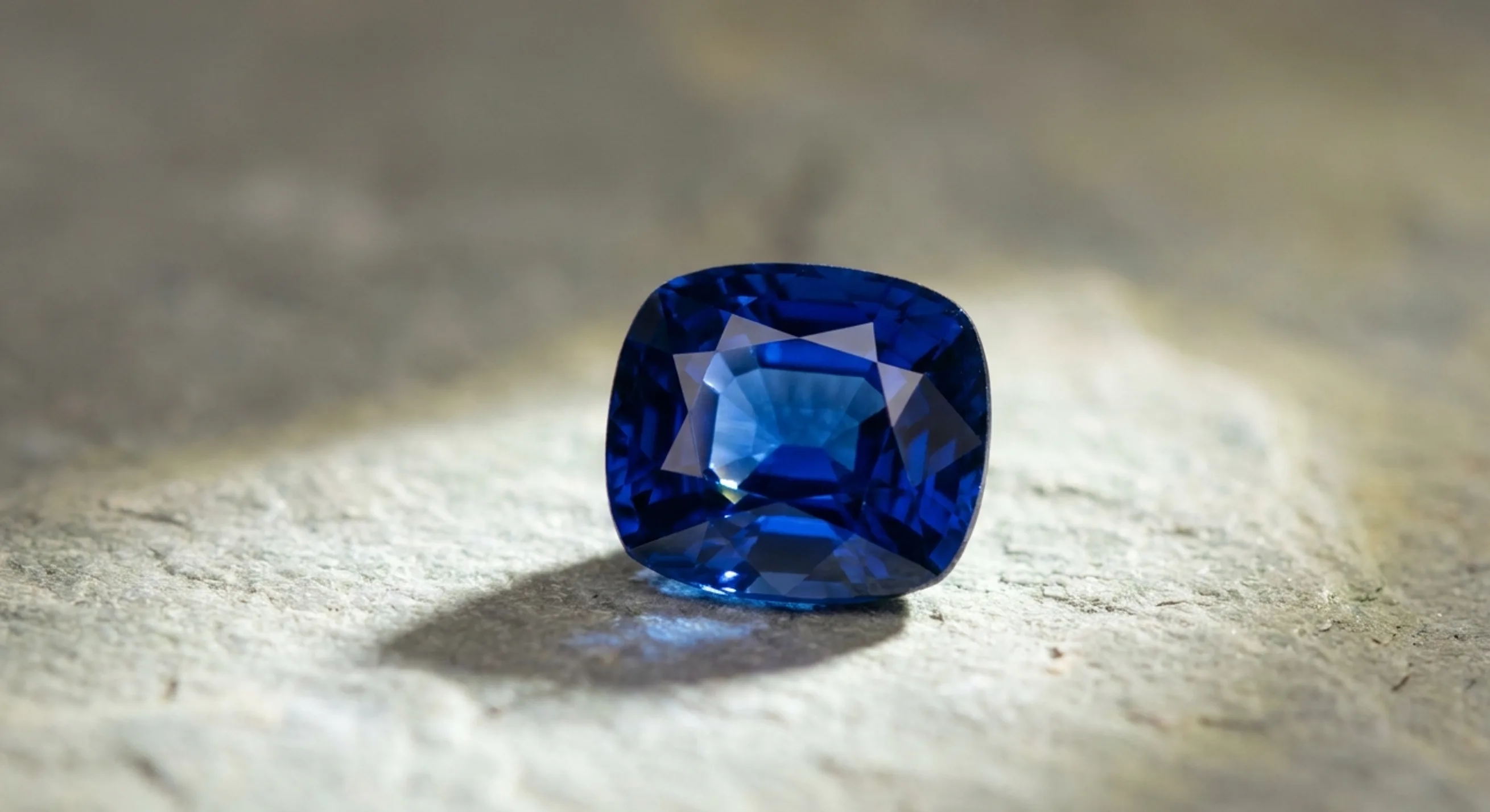
Royal blue is the deepest, most saturated blue Ceylon produces. Picture a rich, velvety blue that reads as pure color, with no washout and no black creeping in. It sits at the far end of the spectrum from the lighter, airier cornflower hue, and the trade grades the two as distinct tiers rather than points on one sliding scale. Two things make a stone royal blue: medium-dark tone and high saturation. Get either wrong and the grade slips. Too dark and it turns inky. Too weak and it drifts toward ordinary. The best examples hold vivid color under daylight and under lamp alike.
What makes a sapphire royal blue?
Sapphire color comes down to three properties: hue, tone, and saturation. Royal blue is a precise meeting point of all three. The hue runs from a slightly violetish blue to pure blue. The tone is medium to medium-dark, deep enough to feel rich without going opaque. The saturation is high, so the blue stays intense and vivid rather than grayed out.
The distinction that matters most is depth versus darkness. A true royal blue ceylon sapphire stays vivid because its saturation carries the tone. An over-dark stone looks black in shadow and only wakes up when light hits it directly. Crestonne rejects stones that go inky under indoor light. A sapphire that only performs in a spotlight is a poor stone to live with. Royal blue should read blue on a hand, at a desk, and across a room.
Royal blue vs cornflower blue: what is the difference?
Cornflower and royal blue are the two headline Ceylon grades, and they answer different tastes. Cornflower is lighter in tone with a soft, slightly hazy brightness, named for the wildflower. Royal blue is darker and more concentrated in saturation. Neither wins in the absolute. They are different aesthetics, and both command comparable premiums when the color is clean.
For readers weighing the lighter option, the cornflower blue grade covers that hue in detail. In practice the choice comes down to how a stone reads in person. Cornflower flatters cooler skin tones and stays bright in most lighting. Royal blue holds its intensity in low light and photographs with more drama. Both belong to the same Ceylon lineage, cut from material out of Ratnapura, Elahera, and the Balangoda belt.
Why does royal blue command a premium?
Price in blue sapphire tracks color first, then clarity, cut, and origin. Royal blue commands a premium because the tone-and-saturation window is narrow, and clean material inside that window is uncommon. Slide out of the window and value drops sharply.
Two forces drive the top of the market. One is saturation without darkness, a combination that is genuinely rare in nature. The other is origin: Ceylon royal blue with a reputable lab report carries more weight than unattributed material. Fine royal blue often trades at several thousand per carat and climbs steeply for larger, cleaner stones, while lower grades sit well below that. There is no single published price for the grade, so treat any quoted figure as a range that moves with size and clarity, not a fixed number.
Heated and unheated royal blue
Most ceylon blue sapphire on the market is heat treated, and that is the legitimate industry norm. Controlled heating improves color and clarity and has been standard practice for decades. A well-heated royal blue is a genuine, natural sapphire and a sound buy. The heated stones Crestonne represents are disclosed as heated, priced accordingly, and chosen for stable, even color.
Unheated royal blue is the premium tier. When a stone reaches full royal blue saturation with no thermal enhancement, it is scarce, and the finest examples carry reports from labs such as GIA, SSEF, or Gubelin confirming no heat. That certification is what separates a real unheated claim from an optimistic one. The gap in value between heated and unheated widens as size and color climb.
The risk to watch is over-treatment. Aggressive or undisclosed processes can push a mediocre stone toward a royal look that will not hold up under lab scrutiny. Some online listings also lean on saturated photography that oversells the color. Crestonne works the other way. Every stone is inspected in hand under neutral and warm light, photographed to match what arrives, and submitted to independent labs when a stone warrants a report. Buyers see the actual color, not a rendered one.
How Crestonne selects true royal blue
Selection starts at the source. Crestonne's buyers assess rough and cut stones directly in the Ratnapura and Elahera markets and with Colombo dealers, grading tone and saturation by eye against known references before anything is bought. Two failure modes come up again and again: stones that photograph as royal blue but sit too dark in the hand, and stones over-treated to fake the grade. Both are set aside.
A stone that clears in-hand inspection then goes to lab submission where its value justifies it, for origin and treatment confirmation. Sapphire is a Mohs 9 stone, hard and durable enough for daily wear, so the grade you buy is the grade you keep for a lifetime. For the broader picture on color, clarity, and certification across the whole category, the complete blue sapphire guide sets royal blue in context alongside every other grade.
Looking for a specific royal blue tone or size? Crestonne can source and certify a loose stone to your spec through a custom order, or you can browse what is currently available in the collections.
Common questions
Frequently Asked Questions
What is a royal blue sapphire?
It is Ceylon's deepest, most saturated blue grade: a medium to medium-dark tone paired with high saturation, giving a rich velvety blue that stays vivid without turning black. It is graded as a distinct tier from the lighter cornflower hue.
Is royal blue better than cornflower blue?
Neither is objectively better. Royal blue is darker and more concentrated; cornflower is lighter and softer. Clean examples of both command comparable premiums. The choice is aesthetic and comes down to how each reads in your lighting and on your skin.
Are royal blue sapphires heated?
Most are, and controlled heat treatment is the legitimate industry standard. Heated royal blue is a genuine natural sapphire and a sound buy when disclosed. Unheated royal blue is the premium tier and, at the fine end, is confirmed by labs such as GIA, SSEF, or Gubelin.
How much does a royal blue sapphire cost?
Price tracks color first, then clarity, cut, and origin. Fine Ceylon royal blue often trades at several thousand per carat and climbs steeply with larger, cleaner stones. Treat any quote as a range that moves with size and quality rather than a fixed figure.
How can I tell a true royal blue from an over-dark stone?
A true royal blue stays vivid in ordinary indoor light because saturation carries the tone. An over-dark stone reads inky or black in shadow and only shows color under a direct spotlight. Inspecting a stone in hand under neutral and warm light reveals the difference.