Buying Guides
Cornflower Ceylon Sapphire Rings: The Ideal Blue
Cornflower blue is the most coveted Ceylon sapphire hue. Here's how to recognise the real thing versus marketing language, and what it means set in a ring.
Published Updated 8 min read
By Naseef AR
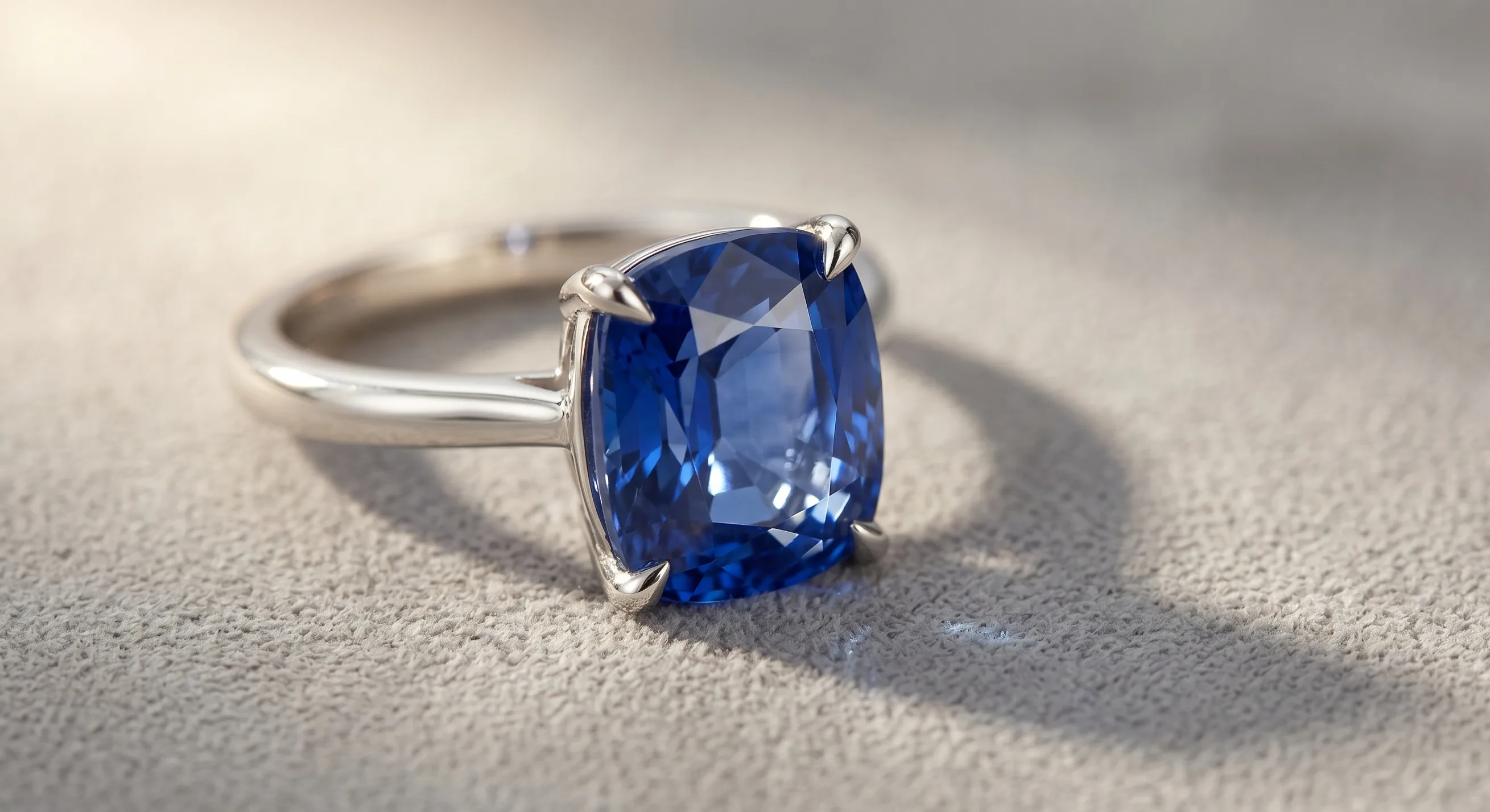
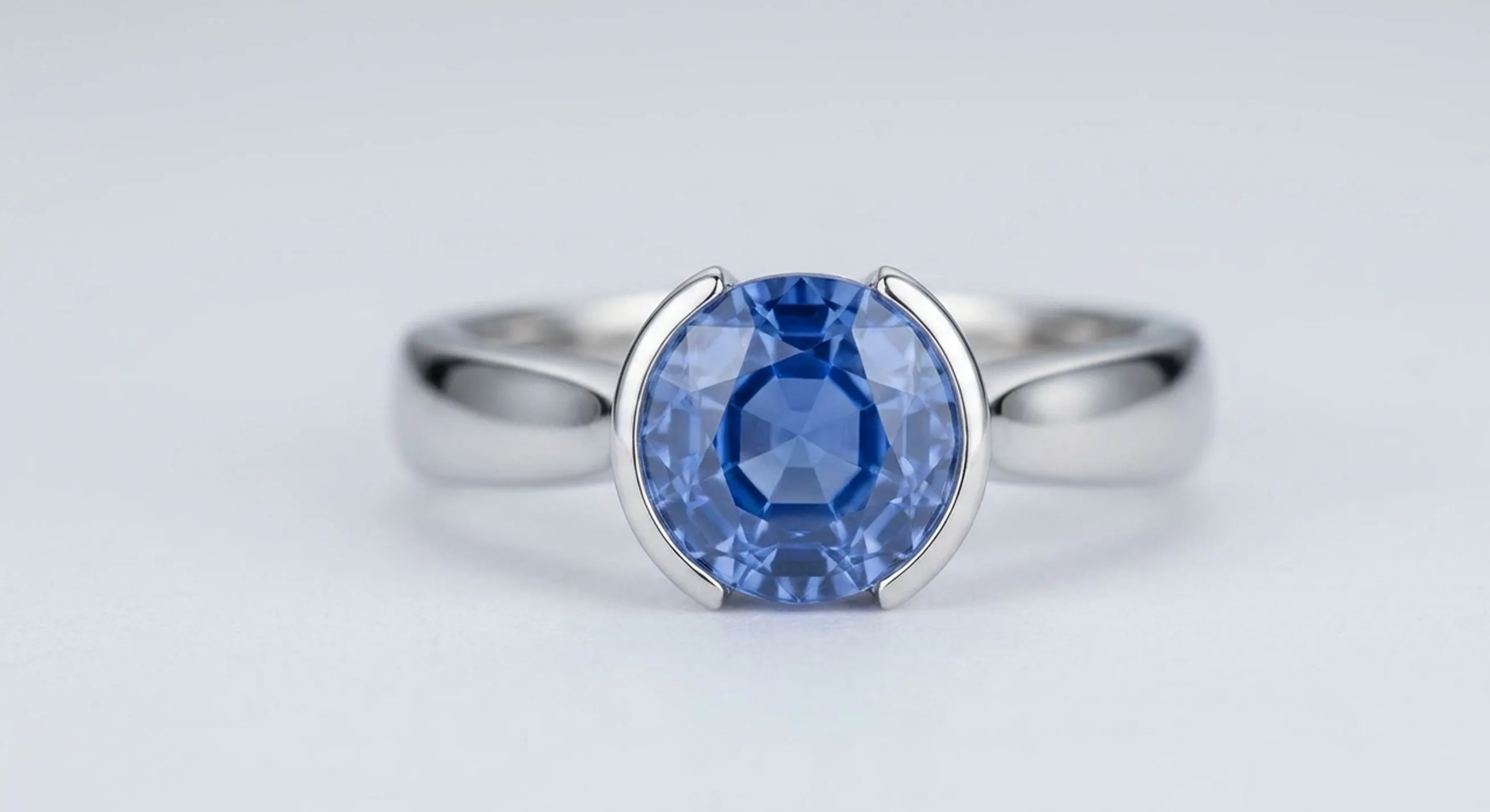
Cornflower Ceylon sapphire rings sit at the top of the blue sapphire world for one reason: the colour. A true cornflower blue Ceylon sapphire reads as a medium, slightly soft blue with a faint violet undertone, bright rather than inky, and lit from within rather than darkened at the centre. It is not navy, not electric, not greyed out. In a ring, that translates to a stone that holds its colour across daylight, shade, and lamplight instead of going black in low light. The hue is rare, which is why it commands a premium over standard blue, and why the term gets stretched far past what it should mean.
What does cornflower blue mean in a Ceylon sapphire?
Cornflower describes a specific position in the colour space: medium tone, vivid but gentle saturation, and a primary blue with just enough violet to keep it from looking cold. Gemmologists talk in three axes. Hue is the actual colour. Tone is how light or dark it is. Saturation is how pure and intense the colour reads versus how greyed it appears. A cornflower blue Ceylon sapphire lands at medium tone and high saturation without tipping into the dark, oversaturated "royal" blue that some Burmese material shows.
The trap is that "cornflower" has become a marketing word. Plenty of listings use it for anything in the blue family, including stones that are too dark, too grey, or too steely to deserve it. When the term appears, the stone should be checked in two or three lighting conditions. Real cornflower stays open and luminous in shade. Imitators close up and go flat. If a seller will not show video under mixed light, the label is a claim, not a fact.
At Crestonne, stones are graded against loose reference sapphires kept precisely for this, rather than against a single ideal photo. A cornflower blue Ceylon sapphire only earns the description if it holds up next to the references in hand.
Why does Sri Lanka produce cornflower sapphires?
Geology. The gem gravels around Ratnapura and Elahera carry corundum with low iron and the right trace chemistry to produce bright, medium-toned blues instead of dark, iron-heavy ones. High iron pushes blue sapphire toward inky and grey. Sri Lankan material tends to run cleaner and lighter, which is exactly the window cornflower lives in. That is also why Ceylon stones often show better life under low light than darker origins.
Origin matters here in a way it does not for most coloured stones, and it is worth understanding how the famous blues differ before buying. Crestonne's breakdown of Ceylon vs Kashmir blue covers where cornflower sits between the velvety Kashmir look and the deeper Burmese royal blue. The short version: Kashmir is the legend and effectively unobtainable in fine sizes, Burmese leans richer and darker, and Ceylon is where that bright, slightly soft cornflower turns up most reliably and at a price that exists in the real world.
How do you recognise a true cornflower stone?
Five things separate the real grade from the label.
Tone. Hold it against white. It should read medium, not dark. If the centre looks black-blue under a desk lamp, it is not cornflower.
Saturation with softness. The colour should be vivid but gentle. Electric, neon blue is a different grade. Greyed, dusty blue is below grade.
Even colour across the face. Strong colour zoning, where part of the stone is pale and part is concentrated, drags the cornflower description down. Good cutters orient the rough to spread the colour evenly.
Behaviour in low light. This is the real test. A genuine cornflower blue Ceylon sapphire keeps glowing in shade and indoor light. Darker stones die.
A credible lab report. For anything significant, a report from a respected lab matters. Stones at the upper end go to GIA, SSEF, or Gubelin, who confirm Sri Lankan origin and state the treatment. That paper is what protects the colour claim and the value.
Naseef learned to trust the shade test the slow way. Years ago in Ratnapura, a dealer showed him a parcel under a bare bulb and every stone looked superb. He bought two that looked nearly identical. Outside, in the open shade of the market street, one stayed luminous and the other sank into a dull, greyish blue. Same parcel, same bulb, completely different stones once the lighting was honest. Now Crestonne never closes on a blue sapphire under a single light source, and shoots its ring stones the same way so buyers see what he would see.
Heated or unheated: which should you buy?
Heat treatment is the legitimate, near-universal industry norm for sapphire. The vast majority of blue sapphires on the market, including beautiful cornflower stones, have been heated to improve clarity and colour. There is nothing dishonest or inferior about a properly disclosed heated stone. It is how most of the world's sapphire reaches the standard buyers expect, and a heated cornflower Ceylon sapphire can be a stunning, sensible ring.
Unheated is the premium tier. An unheated stone that arrived at fine cornflower colour straight from the ground is genuinely rare, and the lab reports that confirm "no indications of heating" carry a real premium, often several thousand per carat more in the finest grades. The choice is about budget and priorities, not quality versus junk. Crestonne discloses treatment on every stone, every time. Buyers who want unheated are told what it costs and why. If a heated cornflower gives the colour they love within budget, that is a smart buy.
What about cornflower Ceylon sapphire engagement rings?
For an engagement ring, cornflower is close to ideal. Sapphire is a 9 on the Mohs scale, second only to diamond, so it stands up to daily wear better than softer coloured stones. The medium tone means the colour stays visible across all the lighting a real life runs through, from morning daylight to a dim restaurant. That everyday luminosity is the whole point of choosing cornflower over a darker blue for a piece worn constantly.
When Crestonne builds ceylon sapphire engagement rings, the setting decision follows the stone. Cornflower looks cleanest in white metals, platinum or white gold, which keep the blue cool and true. Yellow gold warms the stone and can pull it slightly toward a richer read, which some people love. A halo of small diamonds lifts the apparent brightness of a medium-toned stone, useful for anyone leaning toward the lighter end of cornflower. Side stones and accent diamonds are matched to the centre by hand so the blue is never fighting the metal.
If a buyer's taste runs warmer, the same sourcing logic applies to a yellow Ceylon sapphire, which offers the same Sri Lankan brightness in a completely different palette. But for the classic blue engagement ring, cornflower is the colour people picture when they imagine the perfect Ceylon sapphire.
What does a cornflower Ceylon sapphire cost?
Price tracks colour first, then size, clarity, and treatment. A clean, well-cut cornflower blue Ceylon sapphire in a wearable size sits well above standard blue material because the colour is genuinely scarce. Move into larger sizes, eye-clean clarity, and unheated status with a top lab report, and the figure climbs steeply, often into several thousand per carat at the fine end. Heated stones offer the same colour for considerably less and are where most buyers find the best value.
The honest answer is that two cornflower sapphires of the same weight can differ wildly in price because one truly hits the grade and one only borrows the name. That is the gap Crestonne's reference-stone grading exists to close. Buyers are paying for colour that survives the shade test, not for a word in a listing.
How Crestonne sources and matches these stones
Crestonne buys at origin, in Ratnapura, Elahera, and Balangoda, and through trusted Colombo dealers, inspecting rough and cut stones under mixed light before anything reaches the catalogue. Every cornflower listed is graded against physical references, photographed in honest lighting, and disclosed for treatment. For significant stones, submissions go to GIA, SSEF, or Gubelin for origin and treatment confirmation. When a ring is commissioned, the centre stone, side stones, and metal are matched so the colour the buyer fell in love with is the colour on the hand.
For a cornflower Ceylon sapphire matched to a design, start a custom ring order and share the colour and budget. Crestonne sources the stone to the grade, not the label.
Common questions
Frequently Asked Questions
What is cornflower blue in a Ceylon sapphire?
It is a specific colour grade: medium tone, high but gentle saturation, primary blue with a faint violet undertone. It reads bright and luminous rather than dark or inky, and it holds its colour across daylight, shade, and indoor light instead of going black in low light.
Are cornflower Ceylon sapphires heated or unheated?
Most are heated, which is the legitimate, near-universal industry norm and produces beautiful, well-priced stones. Unheated cornflower sapphires that reached fine colour naturally are rare and command a premium, often several thousand per carat more at the top grades. Crestonne discloses treatment on every stone.
Is a cornflower sapphire good for an engagement ring?
Yes. Sapphire is a 9 on the Mohs scale, so it handles daily wear well, and cornflower's medium tone keeps the colour visible in all lighting. White metals like platinum keep the blue cool and true, while a diamond halo can brighten a lighter stone.
How can I tell a real cornflower sapphire from marketing language?
Check the tone (medium, not dark), look for even colour across the face, and test it in shade and indoor light, where a true cornflower keeps glowing. Ask for video under mixed lighting and a report from a respected lab such as GIA, SSEF, or Gubelin for significant stones.
Why does Sri Lanka produce cornflower sapphires?
The gem gravels around Ratnapura and Elahera carry corundum with low iron and the right trace chemistry to produce bright, medium-toned blues. Higher iron content elsewhere pushes blue sapphire toward darker, greyer tones, which is why Ceylon material lands in the cornflower window more reliably.