Buying Guides
Ceylon vs Kashmir vs Burmese Sapphire: Which Is Right?
For most buyers, Ceylon sapphires offer the best combination of color, documentation, ethics, and value. Here is how they compare to Kashmir and Burmese material.
Published Updated 8 min read
By Naseef AR
For most buyers, a Ceylon sapphire is the right choice. It offers the best combination of color quality, documented provenance, ethical sourcing, and value. Kashmir sapphires are the most coveted, but the mines have been inactive since the 1930s, making genuine Kashmir material extremely rare and prohibitively expensive for all but serious collectors. Burmese sapphires produce exceptional royal blue stones, but sourcing from Myanmar raises ethical concerns that many buyers are unwilling to accept. Ceylon sapphires from Sri Lanka give you certified, origin-verified stones with the widest color range of any sapphire source, at prices that make sense for jewelry, engagement rings, and collections alike.
Here is a detailed sapphire origin comparison across the three most important sources.
How Do Ceylon, Kashmir, and Burmese Sapphires Compare at a Glance?
| Ceylon (Sri Lanka) | Kashmir | Burma (Myanmar) | |
|---|---|---|---|
| Signature color | Medium blue with violet hue; also yellow, pink, padparadscha | "Velvety" cornflower blue | Deep royal blue |
| Availability | Actively mined, widely available | Virtually unavailable; mines closed ~1930s | Limited; restricted by sanctions |
| Price range (per ct) | $500 to $15,000+ | $10,000 to $200,000+ | $2,000 to $50,000+ |
| Typical treatment | Heated and unheated available | Unheated (historical) | Often heated |
| Certification | GIA, SSEF, Gübelin readily available | Requires premium lab verification | GIA, Gübelin available |
| Ethical sourcing | Transparent small-scale mining | N/A (historical stones) | Significant concerns (military governance) |
| Best for | Engagement rings, jewelry, collecting | Serious collectors, museums | Collectors willing to navigate ethics |
This table gives you the broad picture. The sections below explain what drives each of these differences.
What Makes Kashmir Sapphires So Expensive?
The Kashmir sapphire price is driven by one fact: there are no new ones. The mines in the Zanskar range of the Himalayas, discovered around 1881, produced intensely for roughly four decades before the deposits were effectively exhausted. By the 1930s, meaningful production had stopped. Every Kashmir sapphire on the market today was mined over ninety years ago.
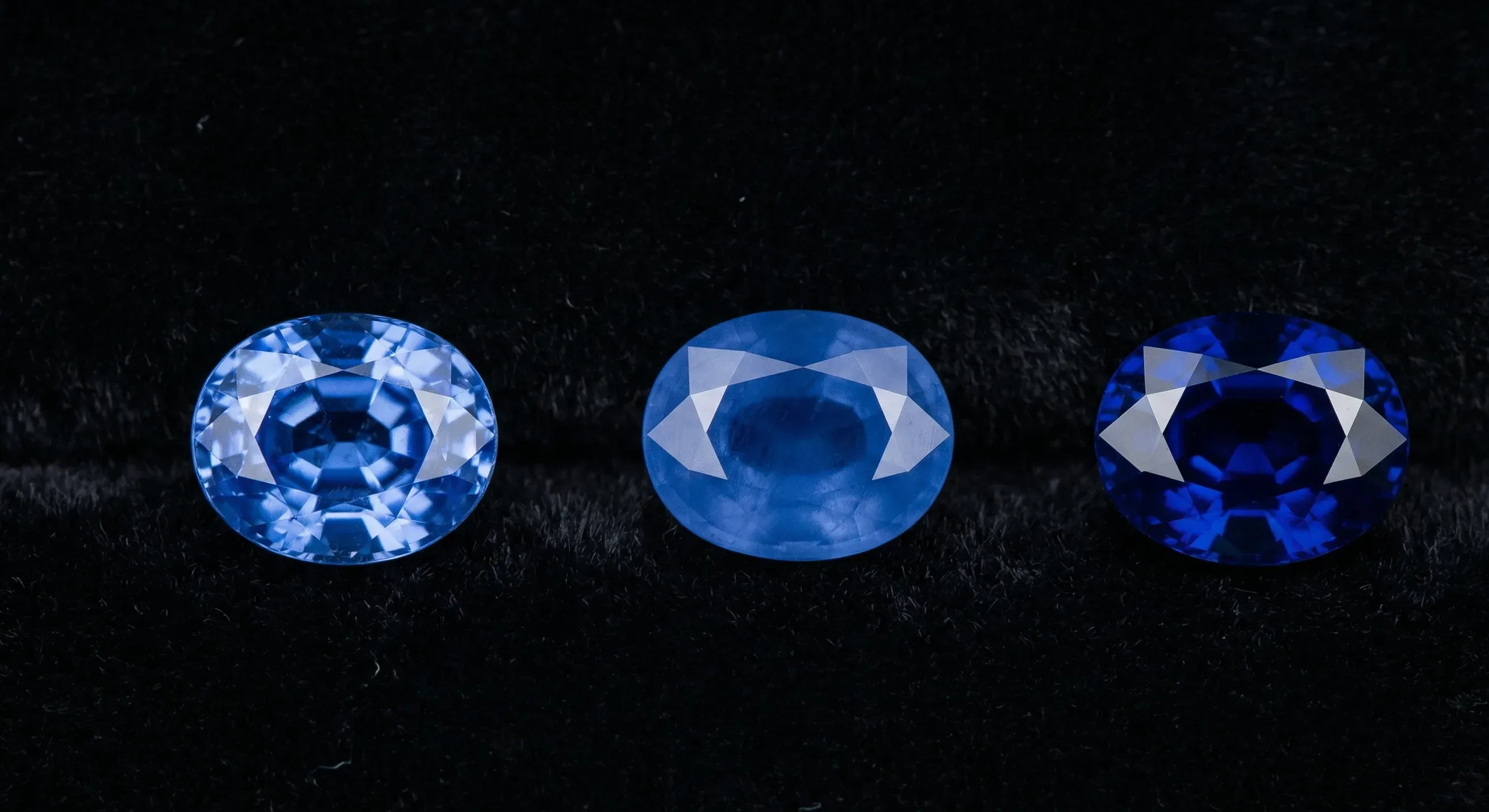
What makes them visually distinctive is a quality gemologists call "velvety." This effect comes from microscopic inclusions of rutile that scatter light within the stone, creating a soft, luminous blue that appears to glow rather than reflect. No other origin consistently replicates this quality, and it is the reason Kashmir sapphires set auction records.
At Christie's and Sotheby's, fine Kashmir sapphires of 5 carats or more routinely sell for $100,000 to $200,000 per carat. Even smaller stones of 2 to 3 carats with good documentation start around $10,000 to $30,000 per carat. These are not retail prices. They are what buyers pay at auction with a buyer's premium on top.
The practical problem for most buyers is not cost alone. It is verification. Because Kashmir sapphires command such premiums, misattribution (intentional or otherwise) is common. A stone sold as "Kashmir" without a report from SSEF or Gübelin confirming that origin should be treated with extreme skepticism. GIA can determine origin, but SSEF and Gübelin are the laboratories whose Kashmir determinations carry the most weight in the trade.
If you are considering a Kashmir sapphire, budget as much for verification as for the stone itself. And if the price seems accessible, it almost certainly is not genuine Kashmir material.
What Are Burmese Sapphire Characteristics?
Burma (now Myanmar) produces sapphires primarily from the Mogok valley, one of the most famous gem-producing regions on earth. The best Burmese sapphires have a deep, saturated royal blue that is distinct from the lighter, more violet-tinged blue of Ceylon material. Where Ceylon sapphires tend to sit in the medium tonal range, fine Burmese stones push into medium-dark territory without losing transparency.
The color is striking. It is also harder to find in sizes above 3 carats without some degree of darkness affecting the stone's life. This is one reason Ceylon material tends to outperform Burmese stones in larger sizes. Ceylon sapphires maintain brightness and transparency at 5 carats and above more consistently.
Burmese sapphire characteristics also include an ethical dimension that buyers should consider. Myanmar has been governed by a military junta for much of its modern history, and the gem trade is closely linked to the military's economic interests. International sanctions have targeted Myanmar's gem sector at various points, and many conscientious buyers choose to avoid Burmese gems entirely. Whether this affects your purchasing decision is personal, but the issue is real and worth understanding.
Pricing for fine Burmese sapphires sits below Kashmir but above most Ceylon material. A well-documented, unheated Burmese sapphire of 3 carats can sell for $10,000 to $30,000 per carat, depending on color and certification.
Why Do Buyers Choose Ceylon Sapphires?
Ceylon sapphires have three advantages that no other origin can match simultaneously: color range, documentation, and accessibility.
Color range. Sri Lanka produces sapphires in virtually every color: the classic cornflower blue, vivid pinks, bright yellows, rare padparadschas, and everything in between. No other single origin offers this breadth. If you want a blue sapphire for an engagement ring and a yellow sapphire for a pendant, both can come from the same source with full provenance documentation.
Documentation. Sri Lanka has a well-established gem certification infrastructure. GIA, SSEF, and Gübelin all routinely certify Sri Lankan stones with geographic origin determinations. The country's gem trade is regulated by the National Gem and Jewellery Authority, and stones are exported with documentation. This means that when you buy a Ceylon sapphire, verifying its authenticity through an independent laboratory is straightforward.
Accessibility. Unlike Kashmir, Sri Lankan mines are actively producing. Unlike Myanmar, Sri Lanka's mining sector is dominated by small-scale, family-operated pits in the Ratnapura and Elahera districts. The supply chain is transparent enough that a company like Crestonne can source directly from miners and cutters, cutting out the intermediaries who add cost without adding value.
The result is that fine Ceylon sapphires, including unheated stones with laboratory confirmation, are available at price points that make them realistic for engagement rings, personal jewelry, and the early stages of a collection. Understanding the current price landscape is worth doing before you start shopping.
Which Sapphire Origin Should You Choose?
The right origin depends on what you are buying for.
For an engagement ring or fine jewelry: Ceylon. The combination of beauty, durability (Mohs 9), certified provenance, and reasonable pricing makes it the strongest choice for a stone you will wear daily. You can find well-documented, GIA-certified Ceylon sapphires in the 1 to 3 carat range at prices that leave room in the budget for a quality setting. Explore the Crestonne collection for stones with full certification.
For serious collecting or investment: If your budget allows and you can verify the stone through SSEF or Gübelin, a Kashmir sapphire is the ultimate collector's gem. But for most collectors, a fine unheated Ceylon sapphire of exceptional color offers better value with similar long-term appreciation potential. The unheated designation, confirmed by a laboratory, matters enormously here.
For a statement piece with strong color: A Burmese sapphire delivers the deepest royal blue of the three origins. If the ethical considerations do not disqualify it for you, and you can find a well-documented stone, the color is genuinely impressive.
If you are unsure: Start with Ceylon. The availability, documentation, and price range give you the most options, and the quality ceiling is as high as any origin. If you have a specific vision in mind, the Crestonne custom sourcing service can help you find exactly the right stone.
How Do Prices Compare Across All Three Origins?
This is where the differences become concrete. The ranges below reflect current market pricing for eye-clean stones with good color and laboratory certification. Treatment status has a significant impact.
| Origin | Heated (per ct) | Unheated (per ct) | Key price driver |
|---|---|---|---|
| Ceylon | $500 to $5,000 | $2,000 to $15,000+ | Color saturation + size |
| Kashmir | Rarely heated | $10,000 to $200,000+ | Rarity + provenance |
| Burma | $2,000 to $10,000 | $5,000 to $50,000+ | Color depth + size |
For context: a 2-carat, heated Ceylon sapphire with strong blue color and a GIA report might sell for $1,500 to $3,000 total. An equivalent Kashmir sapphire, if you could find one, would start at $20,000 to $60,000 for the stone alone.
This is the reason most informed buyers land on Ceylon. The value proposition is not close.
We learned this firsthand when a client asked us to source a "Kashmir-quality" blue sapphire. After explaining what genuine Kashmir material costs and the difficulty of verification, we presented three unheated Ceylon sapphires in the cornflower blue range. The client chose a 3.2-carat stone from Ratnapura with SSEF certification confirming Sri Lanka origin and no indications of heating. Total cost was under $20,000. A comparable Kashmir stone, if authentic, would have been ten times that price. The client got the color they wanted, the documentation they needed, and a price that reflected the stone's actual market value rather than a speculative premium.
Common questions
Frequently Asked Questions
Is a Kashmir sapphire better than a Ceylon sapphire?
It depends on what you value. Kashmir sapphires have a unique velvety quality that no other origin replicates. But they are virtually unavailable, prohibitively expensive, and require extensive verification. For beauty, documented provenance, and value, a fine Ceylon sapphire is the more practical choice for nearly every buyer.
Can you still buy new Kashmir sapphires?
No. The Kashmir mines have been inactive since the 1930s. Every Kashmir sapphire on the market is a historical stone. New production does not exist. Any seller claiming to offer new Kashmir material is either mistaken or misrepresenting the stone.
Are Burmese sapphires ethical?
Myanmar's gem trade has historically been linked to military interests and human rights concerns. International sanctions have targeted the sector. Some buyers choose to avoid Burmese gems entirely; others purchase pre-sanctions stones or source through channels they believe are independent of military control. Crestonne does not source from Myanmar.
What is the most affordable sapphire origin for fine quality?
Ceylon (Sri Lanka). Fine heated Ceylon sapphires start around $500 per carat for smaller sizes with good color. Unheated stones with origin reports command more, but even at the premium end, Ceylon pricing is a fraction of comparable Kashmir or Burmese material.
Does origin affect a sapphire's durability?
No. All natural sapphires are corundum with a hardness of 9 on the Mohs scale, regardless of geographic origin. A Ceylon sapphire is exactly as durable as a Kashmir or Burmese sapphire. The differences are in color, rarity, documentation, and price.