Understanding
Sapphire and Ruby: The Two Faces of Corundum
Sapphire and ruby are one mineral wearing two colours. Here is how a trace of chromium turns corundum red, and where the line between pink sapphire and ruby actually sits.
7 min read
By Naseef AR
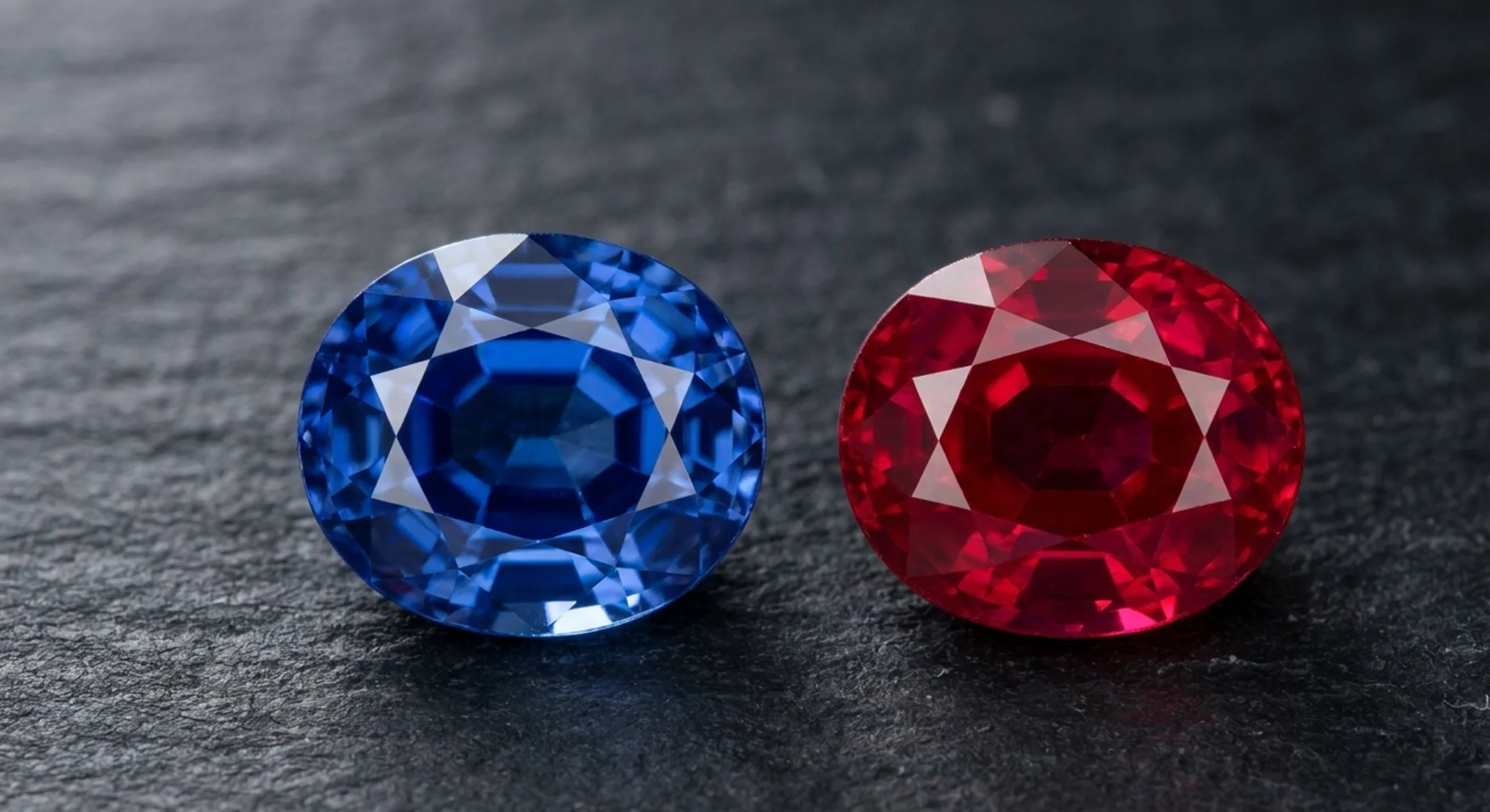
Sapphire and ruby are the same mineral. Both are corundum, crystalline aluminium oxide (Al2O3), and both sit at 9 on the Mohs scale, harder than anything in nature except diamond. What separates them is chemistry measured in fractions of a percent. A trace of chromium turns corundum red, and red corundum is called ruby. Everything else in the species, from cornflower blue to pink to yellow, is sapphire. That single split, red versus not-red, is the whole story, and it explains why the two stones behave like siblings in the trade.
Are sapphire and ruby the same stone?
Same species, not the same stone. Corundum is the mineral. Sapphire and ruby are trade names for two ends of its colour range, and that matters more than it sounds. The crystal structure is identical, so sapphire and ruby share the same hardness, the same refractive behaviour, the same durability under daily wear, and the same response to the treatments used across the industry. A jeweller setting a ruby and a jeweller setting a blue sapphire are working with a stone of the same toughness.
The distinction comes down to which trace elements crept into the crystal as it grew. Pure corundum is colourless, and nature rarely leaves it that way. Iron, titanium, chromium and other elements substitute for aluminium atoms in the lattice, and each combination bends light differently. That is the mechanism behind the sapphire color range, and it is the same mechanism that produces ruby.
What makes a ruby red and a sapphire blue?
Colour in corundum comes from trace elements standing in for aluminium. In ruby, chromium is the agent. It absorbs green and yellow-green light and transmits red, so the more chromium present, the deeper and more vivid the red. That same chromium makes a ruby fluoresce under ultraviolet light, giving fine Burmese and some Ceylon stones their inner glow.
Blue sapphire works differently. Its colour comes primarily from iron and titanium sitting in neighbouring positions in the crystal, an interaction gemologists call intervalence charge transfer. Electrons hop between the iron and titanium atoms, absorbing the yellow-to-red end of the spectrum and leaving blue. Change the recipe and the colour changes with it: iron alone tends toward yellow and green, while chromium with a little iron pushes toward pink and padparadscha.
So a blue sapphire and a ruby are not distant relatives. They are the same crystal, one grown with iron and titanium, the other with chromium. The stones Crestonne represents from Sri Lanka include both, often pulled from the same alluvial gravels around Ratnapura and Elahera, where a single wash can yield blue, pink and red corundum side by side.
Where does pink sapphire end and ruby begin?
Here the neat chemistry gets messy. Chromium produces red, and a little chromium produces pink, but there is no universally agreed point where pink sapphire becomes ruby. The boundary is defined by colour saturation and tone, and different labs and different markets draw the line in different places.
The split is genuinely contested. Some Asian markets apply the ruby label more generously, calling deeply saturated pinks ruby. Several Western labs and the US trade hold a stricter line, reserving ruby for stones with enough tone and saturation to read as unambiguously red. The same rough crystal could be graded pink sapphire in one report and ruby in another, and both graders would be defending a legitimate convention. No numeric threshold settles it.
Crestonne handles that grey zone by being explicit rather than opportunistic. A stone is described by what a reputable lab called it, and by its actual colour, tone and saturation, not by whichever label carries the higher price that week. When a pink sits close to the ruby boundary, the report and the honest colour description travel with it. Buyers should know exactly what they are holding and why it was named the way it was.
Do sapphire and ruby come from the same places?
Often, yes. Sri Lanka has produced both for over two thousand years, and the gem gravels of the island carry the full corundum family. The classic Ceylon sapphire is prized for its brightness and the way it holds colour in low light, a quality rooted in the island's particular geology. That reputation is the subject of Ceylon corundum and its long trade history through Colombo dealers and the markets at Ratnapura and Balangoda.
Ceylon rubies exist too, though they run differently from the deep reds of Mogok in Myanmar. Sri Lankan rubies often show a lighter, more pinkish red with strong life, precisely because they sit near that pink-to-red boundary. For a buyer who wants a ruby with brilliance rather than the darkest possible red, Ceylon material is a serious option, and it comes from the same washing grounds as the blue sapphires it is sorted alongside.
Is heat treatment used on both?
Heat treatment is the industry norm for corundum, and it applies to sapphire and ruby alike. Controlled heating dissolves internal silk, clarifies the stone and can improve or stabilise colour. The great majority of sapphires and rubies on the world market are heated, and a heated Ceylon sapphire with fine colour is a legitimate, beautiful stone that most buyers will happily wear for a lifetime.
Unheated corundum sits at the premium tier. When a stone reaches gem colour with no thermal help at all, and a lab such as GIA, SSEF or Gubelin confirms no evidence of heat, it commands a premium precisely because it is rarer. The same logic runs through both sapphire and ruby: heated is the accessible norm, unheated is the connoisseur's grade. Crestonne submits stones to recognised labs so the treatment status is documented rather than assumed, and buyers can choose the tier that suits them.
How do sapphire and ruby combine in one piece?
Sharing hardness and durability, sapphire and ruby set together with no compatibility problem. That is why the classic multi-stone combinations have survived for centuries. A sapphire emerald and ruby ring brings the three cardinal coloured gems into one setting: blue, green and red in deliberate contrast. It reads as a statement of the coloured-stone tradition itself.
One practical note is worth making. Sapphire and ruby are both corundum at Mohs 9, but emerald is beryl and considerably softer, closer to 7.5 and often included and brittle. In a sapphire, emerald and ruby ring, the emerald is the vulnerable member and should be protected by the setting design, with the harder corundum taking the exposed positions. A jeweller who understands the materials will build the piece accordingly. It is exactly the kind of consideration Crestonne works through when a client commissions a multi-stone design.
Choosing between them
The choice between a sapphire and a ruby is rarely about quality, since they are the same mineral graded on the same terms of colour, clarity, cut and origin. It comes down to colour preference and, honestly, budget, because fine ruby in larger sizes is rarer than fine blue sapphire and priced accordingly. Both reward the same buying discipline: look at the actual stone in daylight, read the lab report, understand the treatment status, and buy the colour you love rather than the label alone.
Whether the goal is a single blue sapphire, a Ceylon ruby or a full sapphire, emerald and ruby ring, the starting point is a stone you can trust the description of. Browse the loose stone collection to build a piece around a single corundum, or explore the wider Crestonne collections to see how sapphire and ruby sit within the family they have always belonged to.
Common questions
Frequently Asked Questions
Is a ruby just a red sapphire?
Mineralogically, yes. Ruby and sapphire are both corundum. Red corundum is called ruby because of trace chromium; every other colour of gem corundum is called sapphire. They are the same species split only by colour.
Why is ruby red and sapphire blue?
Ruby's red comes from chromium substituting for aluminium in the crystal. Blue sapphire's colour comes primarily from iron and titanium interacting in the lattice. Different trace elements, same mineral.
When is a pink stone a ruby and not a pink sapphire?
There is no universal threshold. The line is drawn by colour saturation and tone, and labs and markets disagree, with some Asian markets applying ruby more generously than several Western labs. A reputable lab report is the best guide.
Are sapphire and ruby equally durable in a ring?
Yes. Both are corundum at Mohs 9, harder than anything in nature except diamond. In a mixed piece like a sapphire, emerald and ruby ring, the emerald is the softer, more vulnerable stone and should be protected by the setting.
Are most rubies and sapphires heated?
Yes. Heat treatment is the industry norm for both and produces beautiful, legitimate stones. Unheated corundum confirmed by a lab such as GIA, SSEF or Gubelin sits at the premium tier because it is rarer.