Understanding
10 Naturally Colorless Gemstones and What Makes Each Unique
Ten naturally clear gemstones compared, from diamond to rock crystal. Each gets the one property that makes it unique, a practical identification tell, and whether its lack of color is natural or the result of treatment.
13 min read
By Naseef AR
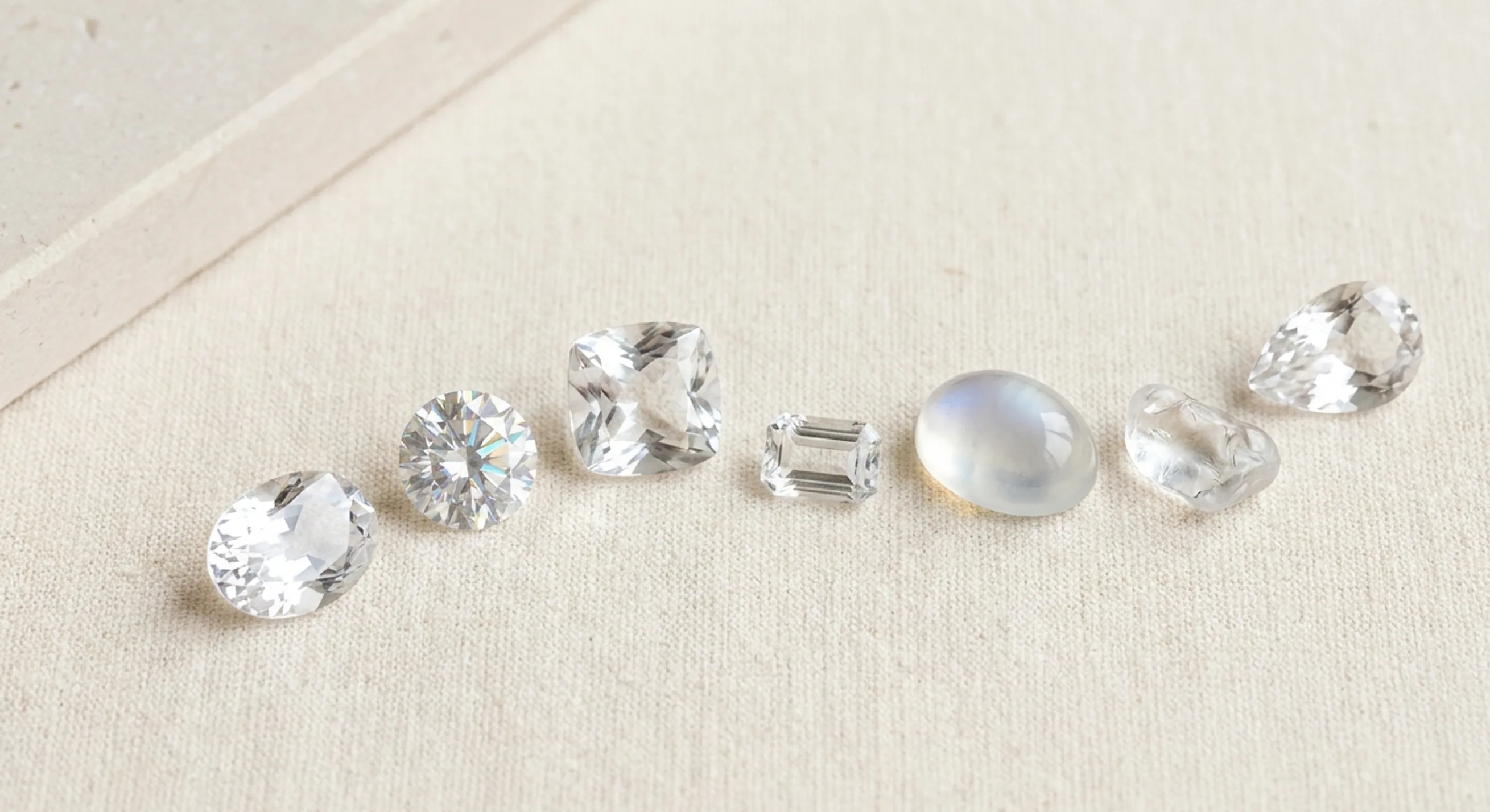
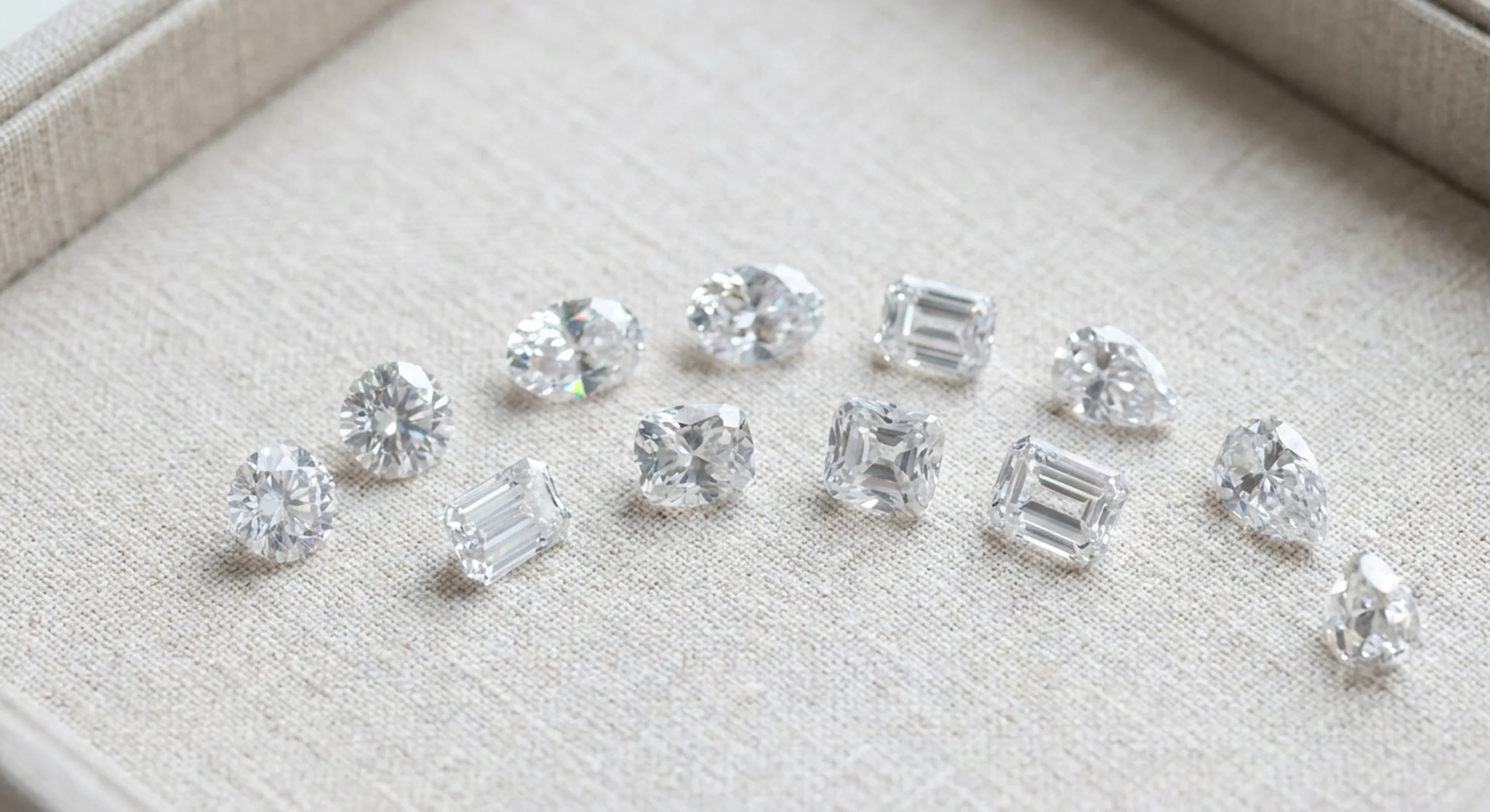
There are ten clear gemstones worth knowing: diamond, white sapphire, colorless zircon, colorless spinel, white topaz, goshenite, danburite, phenakite, scapolite and rock crystal. At arm's length they can look the same. Under a loupe and on a refractometer they are completely different materials. Diamond has the most fire and the greatest hardness. Zircon comes closest to diamond's brilliance and doubles every facet edge. White sapphire is the hard-wearing alternative. Natural colorless spinel is the true rarity. The rest earn their place through clarity, price or appeal to collectors.
Below I rank all ten. For each one I give the property that makes it unique, a practical identification tell, and whether its lack of color is natural or the result of treatment. Five of them (white sapphire, zircon, spinel, topaz and scapolite) are found in Sri Lanka's gem gravels. If you want a wider survey of natural colorless stones, including the milky and opaque white gems, my natural white and colorless gemstones field guide covers that ground. This piece does a different job: it compares ten clear gemstones on the optical tests that tell them apart.
What makes clear gemstones different from each other?
Take color away and five things are left to separate one stone from another. These are the properties to check first.
Refractive index (RI) controls brilliance, which is the white light a stone sends back to your eye. The higher the number, the brighter a well-cut stone looks. Diamond sits at 2.418. Most colorless gems sit far below it.
Dispersion is how strongly a stone splits white light into flashes of spectral color, which the trade calls fire. Diamond's dispersion is 0.044. Anything near that looks lively. Anything well below it looks crisp and icy.
Birefringence, or double refraction, splits light into two rays. When it is strong enough, you see the back facets doubled through the table. It is one of the most useful identification tells in clear gemstones because visible doubling rules diamond out straight away.
Hardness and toughness decide whether a stone survives being worn in a ring every day. A colorless gem shows every scratch and worn facet edge, so durability matters more here than it does with dark stones.
Rarity is the last factor. Some colorless minerals are common. Others, like natural colorless spinel, almost never grow without a trace of some element that tints them.
The 10 naturally clear gemstones, ranked
I've ranked these the way I weigh them as jewelry stones: optical performance, durability in wear, and how realistic it is to buy a natural, well-cut example. Diamond is the benchmark, and everything else is measured against it.
1. Diamond: the benchmark for fire and hardness
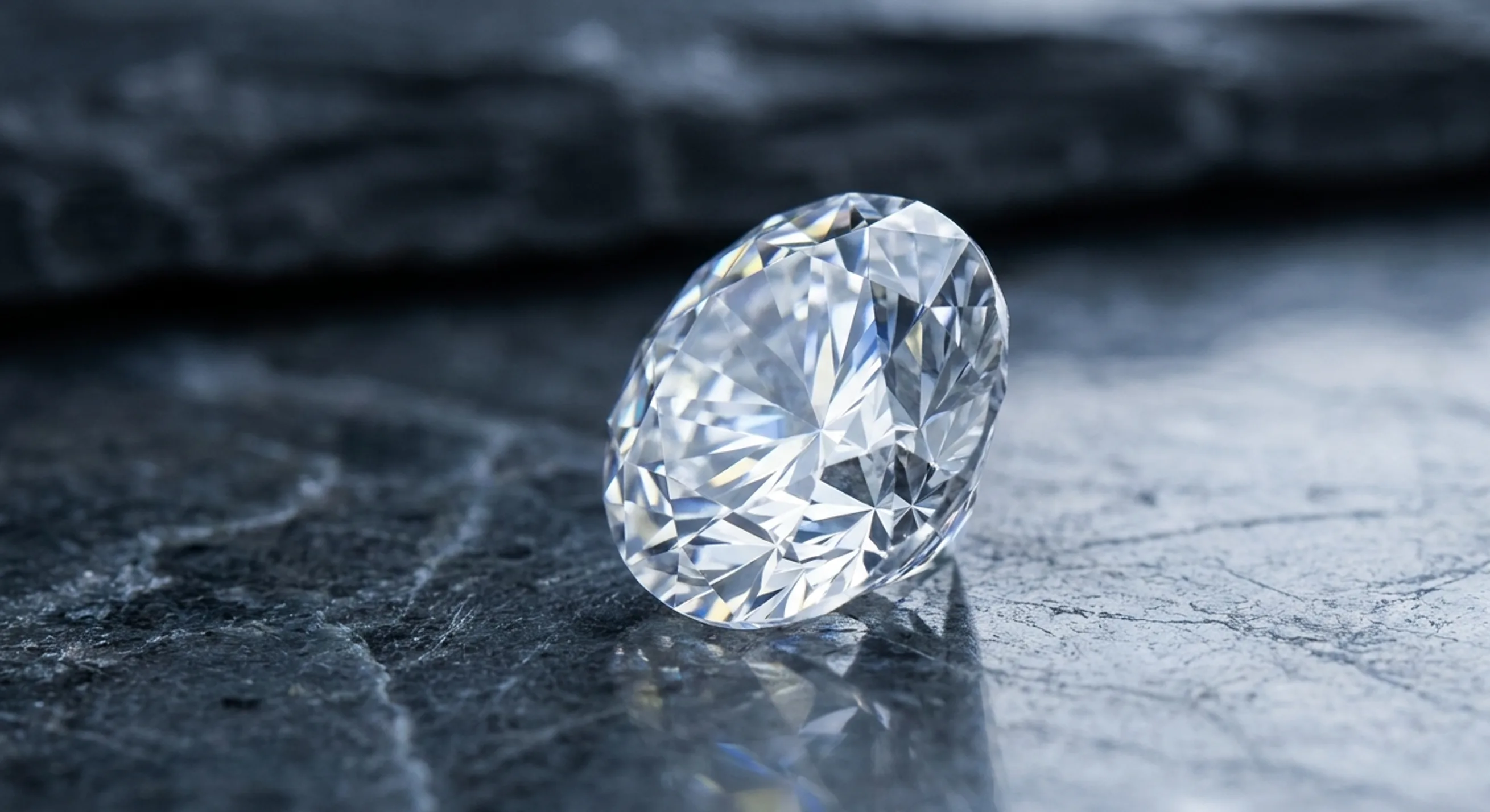
What sets diamond apart is the combination. No other natural stone on this list has an RI of 2.418, dispersion of 0.044 and Mohs 10 hardness all in one material. Diamond is also isotropic, meaning singly refractive, so its facets never look doubled at any magnification.
Identification tell: no facet doubling, and strong fire that stays balanced against brilliance. Its most common imitation, cubic zirconia, has a lower RI (2.171 to 2.177) but higher dispersion (0.059 to 0.065). It therefore throws more rainbow color and less white light. Cubic zirconia is also about 1.7 times as dense as diamond, so a CZ of the same size feels noticeably heavier.
Natural or treated: colorless diamonds form naturally. Some diamonds are treated to improve their color, though, which is why a grading report matters at any serious price.
2. White sapphire: hardness for daily wear
White sapphire is corundum without the iron and titanium that turn sapphire blue. Its strength is durability. Corundum is second only to diamond in hardness among natural gems, and it is tough enough to take daily knocks. That makes it the most practical diamond alternative for an engagement ring or a band you never take off.
Its RI of 1.762 to 1.770 is well below diamond's, and its fire is modest. A well-cut white sapphire looks bright and icy rather than full of rainbow flashes, and plenty of people prefer that. Cut matters a great deal here: a shallow pavilion leaves a white sapphire looking glassy.
Identification tell: a refractometer reading between 1.762 and 1.770, with birefringence of 0.008 to 0.010. That is too weak to show facet doubling to the naked eye. Under magnification, natural sapphire often shows fine silk or crystal inclusions. Silk broken into dotted specks is a classic sign of heat.
Natural or treated: heat is the industry norm. An estimated 90 to 95% of sapphires on the market have been heated, and with white sapphire the aim is usually to clear a faint yellow or blue tint. It is a stable, accepted treatment. Unheated white sapphire is the premium tier. As across the sapphire market, unheated stones sell for roughly two to five times the price of comparable heated ones. Worldwide, natural white sapphire ranges from about US$50 to 1,500 per carat, and fine stones above 2 carats run roughly US$600 to 1,500 per carat. Ceylon material is the most sought after, and Crestonne's white sapphires are bought at source in Sri Lanka.
3. Colorless zircon: the closest natural rival to diamond's brilliance
Zircon is the most underrated stone on this list. Its RI runs from about 1.925 to 2.015 and its dispersion is 0.039, close to diamond's 0.044. No other natural gem here comes nearer to diamond's mix of brilliance and fire. Zircon is not cubic zirconia. CZ is a synthetic material with a similar name and nothing else in common.
Identification tell: strong double refraction, up to 0.059. Look through the table toward the pavilion and the back facet edges appear doubled. That alone separates zircon from diamond and from CZ, which are both singly refractive. Zircon's RI is also above the limit of a standard refractometer, which separates it from most other colorless stones.
Natural or treated: most colorless zircon starts as brown crystal and is heated to clear it. This is long-established practice, and Sri Lanka is the historic source of clear zircon, once traded as "Matura diamond", though much commercial white zircon today comes from Cambodia or Myanmar. One caveat: long exposure to strong UV light can turn some heated stones back toward their original brown.
The trade-off is durability. Sources put zircon's hardness anywhere from 6.5 to 7.5, and its toughness is poor, so facet edges chip and wear. I recommend protective settings for rings. Prices are modest, roughly US$15 to 120 per carat depending on size and quality. My guide to colorless Ceylon zircon covers grading and care in more depth.
4. Colorless spinel: the rarity
Spinel is allochromatic, which means pure spinel has no color of its own. The catch is that natural crystals almost never grow without picking up trace elements that tint them. Most stones sold as "white spinel" are synthetic, and natural ones usually show a faint pink when you hold them against a white background. Truly colorless natural spinel is a rare collector's gem. Lab-grown colorless spinel, on the other hand, is plentiful and cheap.
Identification tell: spinel is singly refractive, with no birefringence, and its dispersion is 0.020. It looks clean and bright but shows little fire. Because synthetic colorless spinel is so common, a lab report is the only reliable way to confirm a stone is natural.
Natural or treated: most spinel is untreated, which is part of its appeal. An eye-clean untreated colorless spinel of about 1.35 carats can be listed at around US$275 per carat, which is reasonable given how rarely natural material turns up. Sri Lanka's gem gravels produce spinel, and Crestonne's spinels are bought at source there.
5. White topaz: large, clean and affordable
What sets white topaz apart is how easy it is to find in large, clean sizes. Topaz grows big, clean crystals, so eye-clean faceted stones of several carats are easy to buy at accessible prices. That is why it is one of the most common white gems in fashion jewelry.
Identification tell: perfect cleavage, which shows up as flat, mirror-like breaks or cleavage cracks running through the stone. Polished topaz feels slightly slippery, and it shows less brilliance and fire than sapphire.
Natural or treated: colorless topaz comes out of the ground colorless. In fact, it is the starting material for most blue topaz on the market, which is made by treating white topaz. A white topaz is usually topaz in its untreated state. The one thing to watch is cleavage. Topaz is hard enough for rings, but a sharp knock at the wrong angle can split it. Sri Lanka produces white topaz.
6. Goshenite: the purist's beryl
Goshenite is colorless beryl. It is the same species as emerald and aquamarine, just without any coloring element. With an RI of 1.562 to 1.602 it is not a brilliant stone. When well cut, it has a soft, glassy brightness rather than sparkle. Its appeal is purity and clarity, and collectors like it as the plain, uncolored form of a famous species.
Identification tell: an RI in the beryl range and low birefringence of 0.004 to 0.010, too small to make facets look doubled. It shows little fire. Under magnification, growth tubes are a typical beryl feature.
Natural or treated: the lack of color is natural. Beryl grows clear when it contains no significant iron, manganese or chromium.
7. Danburite: tougher than it looks
Danburite is often assumed to be soft, but it isn't. Its hardness is 7 to 7.5 and its cleavage is only poor. In practice that makes it more wearable than topaz, even though the two look similar. Its RI is 1.630 to 1.636, with birefringence of 0.006 to 0.008.
Identification tell: a specific gravity of 2.93 to 3.02, noticeably heavier than quartz at 2.65. If a stone sold as danburite weighs in light on a hydrostatic balance, it is probably quartz.
Natural or treated: danburite is sold natural. Its clarity and lack of color come straight from the crystal.
8. Phenakite: the deceiver
The name comes from the Greek word for "deceiver", because phenakite looks so much like quartz. It is a rare beryllium mineral, often perfectly colorless, with a hardness of 7.5 to 8. Its RI is 1.651 to 1.670, birefringence 0.016 and dispersion 0.015. What makes it unique is that it is both rare and genuinely hard. Few rare collector's stones are this durable.
Identification tell: a specific gravity of around 2.96, against 2.65 for quartz. This matters because plenty of common quartz is still sold as phenakite. Phenakite's higher RI also separates it on a refractometer.
Natural or treated: phenakite is naturally colorless, and there is no reason to treat it.
9. Scapolite: optics that change with chemistry
Scapolite is not one fixed mineral but a series, and its optical properties change with its composition. Its RI runs from 1.540 to 1.579, while birefringence ranges from about 0.006 up to 0.037, an unusually wide spread. A stone at the low end shows no doubling. One at the top end can show visible doubling of the back facets, like a much weaker zircon.
Identification tell: a low RI, combined with birefringence that varies from one stone to the next. If two clear stones give similar RI readings but very different birefringence, scapolite is worth considering.
Natural or treated: colorless scapolite is natural. It is softer than the stones ranked above it, so I recommend it for earrings and pendants rather than rings. Sri Lanka produces scapolite, and it is the most unusual of the five white gems on this list that its gravels yield.
10. Rock crystal: abundant, honest quartz
Rock crystal is colorless quartz and the most common clear gemstone on this list. What makes it unique is size. You can buy it at sizes and clarity levels that would cost a fortune in any other species, which is why it is used for carvings, large faceted pieces and spheres.
Identification tell: a specific gravity of 2.65, among the lowest of the ten, along with low brilliance and little fire. Lab-grown quartz also exists, so very large flawless pieces are worth asking about.
Natural or treated: rock crystal is natural and, as a rule, untreated.
Which clear gemstones are natural and which are heat treated?
Two of the ten are routinely heated to make them colorless: white sapphire and zircon. Both treatments are established, stable and accepted across the trade. Unheated sapphire sits in a premium tier, at roughly 2 to 5 times the price of an equivalent heated stone across the sapphire market. The other eight clear gemstones are generally colorless in their natural state. Colorless diamond, spinel and quartz are also grown in labs, and natural diamond can be color-treated.
Note that "natural" and "untreated" are two different claims. A heated white sapphire is still a natural sapphire. A lab-grown spinel is not natural at all, however clean it is.
What is the best clear gemstone for everyday wear?
For a ring you'll wear every day, my order is diamond, then white sapphire, then spinel. Diamond is the hardest. White sapphire comes close to diamond for durability and costs much less. Natural colorless spinel is durable enough, but it is so rare that most buyers will struggle to find one.
Zircon has the best optics of the alternatives but needs a protective setting. White topaz works if you're careful, because of its cleavage. Danburite and phenakite are harder than most people expect, but they are collector's stones first. Goshenite, at Mohs 7.5 to 8, can go in a ring with a protective setting. Scapolite and rock crystal are better suited to earrings and pendants than to rings.
How can you tell clear gemstones apart?
Color gives nothing away, so identifying clear gemstones comes down to a handful of tests:
- Facet doubling points to zircon, moissanite or a high-birefringence scapolite, and rules out diamond, CZ and spinel.
- A refractometer reading above the scale limit narrows the options to diamond, zircon, moissanite or CZ.
- Specific gravity separates danburite and phenakite from quartz, and CZ from diamond.
- Fire helps at a glance. CZ shows more than diamond, while sapphire, spinel and topaz show much less.
- Treatment and origin can't be judged by eye. That takes a lab.
That last point is where buying online can go wrong. Under bright light, almost any clear stone photographs well. Still photos hide both cut quality and the faint tints that separate one grade from another. That's why every stone Crestonne lists comes with its own video, a written treatment statement and a lab report. With white gems, those three things tell you more than any photograph can.
Which clear gemstones come from Sri Lanka?
Five of the ten are found in Sri Lanka's gem gravels: white sapphire, colorless zircon, colorless spinel, white topaz and scapolite. Ceylon white sapphire and zircon in particular set the standard for clear material. Crestonne lists white sapphires and spinels, each with its own video, a written treatment statement and a lab report.
If you have a specific stone in mind, whether that's an unheated white sapphire, a high-brilliance zircon or a rare natural spinel, tell me what you're looking for through the custom-order form. Or browse what's available now in the collections.
Common questions
Frequently Asked Questions
What are the most popular clear gemstones besides diamond?
Among natural stones, white sapphire and colorless zircon are the best known. White sapphire is valued for durability, since corundum is second only to diamond in hardness among natural gems. Zircon is valued for brilliance and fire, with dispersion of 0.039 against diamond's 0.044. White topaz is also widely used because large, clean stones are affordable.
Is white sapphire heat treated?
Usually, yes. An estimated 90 to 95% of sapphires on the market are heated, and with white sapphire heat is used to clear a faint yellow or blue tint. It is a stable, accepted industry treatment. Unheated white sapphire is the premium tier and sells for roughly two to five times the price of a comparable heated stone.
How do you tell zircon from diamond or cubic zirconia?
Look for doubled facet edges. Zircon is strongly doubly refractive, with birefringence up to 0.059, so its back facets look doubled through the table. Diamond and cubic zirconia are both singly refractive and show no doubling.
Is natural colorless spinel rare?
Yes. Pure spinel has no color, but natural crystals rarely grow without trace elements that tint them, so most natural white spinel shows a faint pink. Truly colorless natural spinel is a collector's gem. Lab-grown colorless spinel is common, so a lab report is essential.
Which clear gemstone is best for an engagement ring?
Diamond is the hardest, and white sapphire is the most practical natural alternative for daily wear. Zircon has better brilliance than white sapphire but is brittle and needs a protective setting. Topaz can work with care because of its perfect cleavage.