Buying Guides
How to Evaluate a Violetish Blue Sapphire Before Buying
A practical grading method for one violetish blue Ceylon sapphire: score colour saturation first, tone second and clarity third, and know where violet stops helping the blue.
11 min read
By Naseef AR
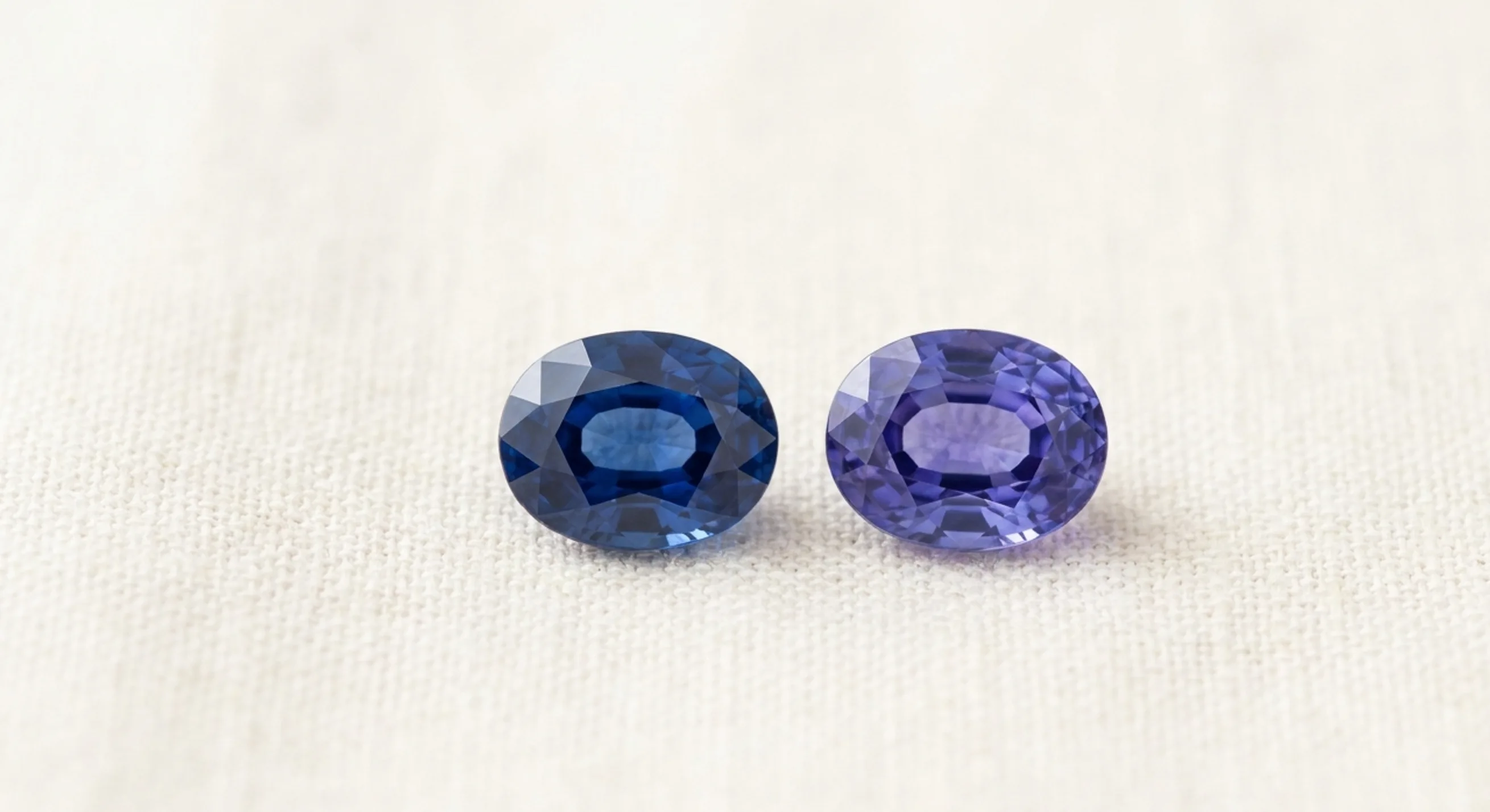
To judge violetish blue sapphire quality, score the stone on three things in this order: colour saturation, then tone, then clarity. A top stone has strong to vivid saturation, a medium to medium-dark tone, and a violet note that brightens the blue without taking it over. Clarity matters, but a little fine silk in a well-coloured Ceylon stone costs you far less than grey in the colour or a tone that goes dark indoors. Below is a checklist to run on photos, videos and certificates before you commit to a loose stone, with what passes, what fails and what each factor does to price.
How do you judge violetish blue sapphire quality?
With sapphire, colour decides most of the value. GIA describes the most valued blues as velvety blue to violetish blue, with a medium to medium-dark tone and strong to vivid saturation. So violetish blue is not a compromise colour. It sits at the top of the blue range alongside pure blue. If you want the background first, I've covered violetish blue sapphire's colour, origin and rarity separately. This piece is the grading method.
I score in a fixed order, and the order matters:
- Hue check (pass or fail). Is it still a blue sapphire with a violet secondary hue, or has it crossed into violet?
- Saturation. How strong and how even is the colour? This is the biggest driver of price between stones of similar size.
- Tone. How light or dark is it? Tone decides whether that saturation actually shows in normal light.
- Clarity. Is it eye-clean, and if not, do the inclusions hurt the colour, the brightness or the durability?
Then I read the lab report to confirm what the video suggests, and only then do I look at price. If you do it the other way round and start with the price, you end up talking yourself into a grey stone because it's cheap.
How much violet is too much in a blue sapphire?
This is the first gate, and it's where most buyers of this colour get unsure. A violet secondary hue is a plus. It often makes the stone look brighter and livelier than a straight blue of the same tone.
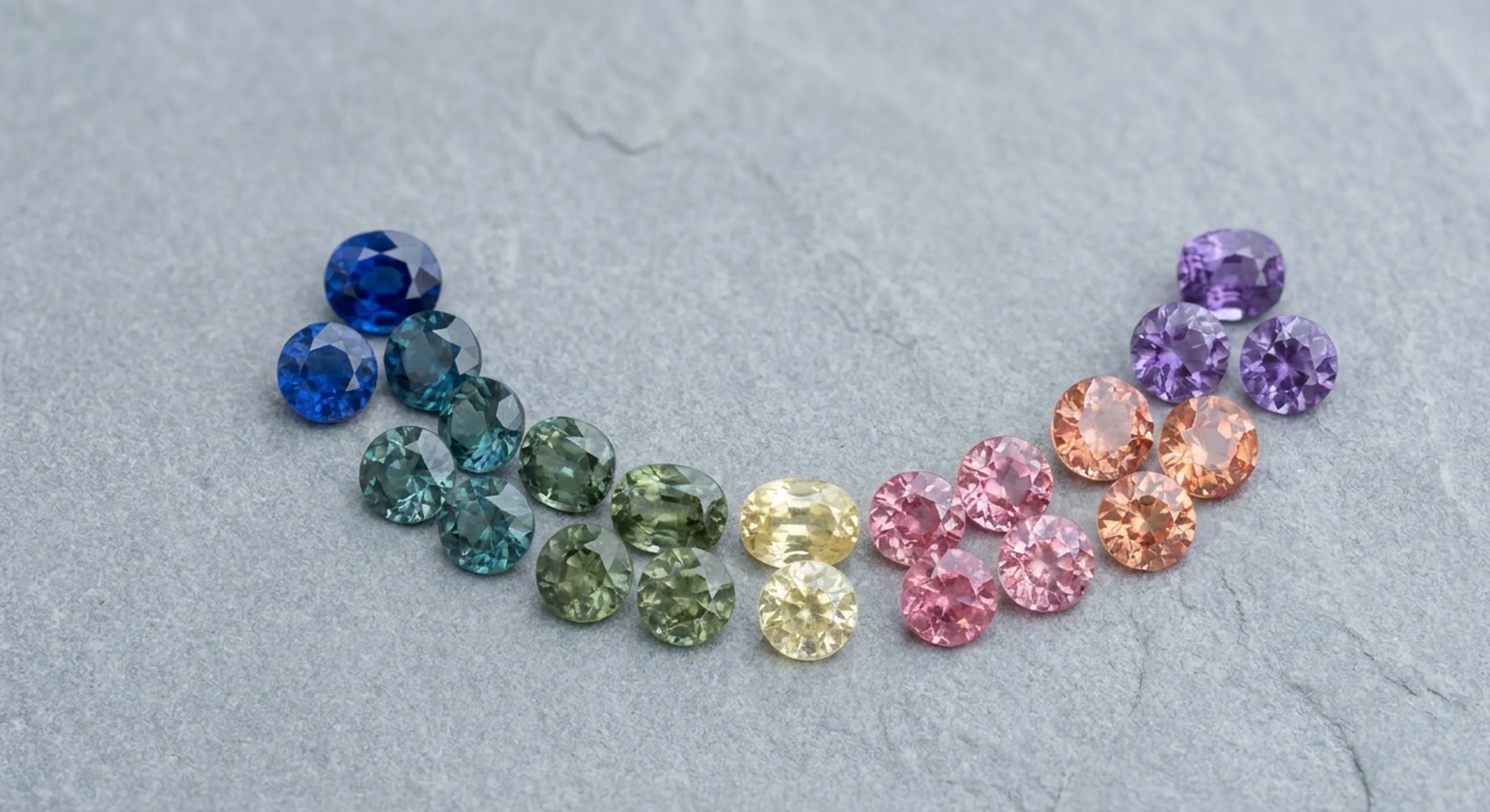
The problem comes when violet stops being the modifier and becomes the main colour. GIA lists violet and purple as their own fancy sapphire colours. Once violet dominates, you're no longer buying a blue sapphire, and the stone is valued on a different basis. No lab publishes a numeric cutoff for where violetish blue ends, so here is my working test:
- Name it in daylight. Watch the video in neutral light. If "blue" is the first word you'd use, it passes. If you hesitate between blue and purple, the violet is already strong.
- Check it in warm light. Violet strengthens under incandescent and warm LED light. A good violetish blue still reads blue there. If it turns plainly purple under warm light, it has gone too far. At that point it is competing with purple sapphire, not top blue.
- Read the colour wording on the report. "Violetish blue" means the lab sees blue as the main hue. "Bluish violet" or "violet" means the order has flipped.
There's also an optical reason for the violet. Blue sapphire is dichroic. It shows violetish blue along the optic axis and greenish blue at right angles to it, which is why cutters orient the table to bring out the better blue. A clean violetish-blue face-up colour often means the stone was oriented well. If the video shows greenish flashes as the stone tilts, the cut is slightly off-axis. That doesn't rule the stone out, but it usually costs some colour. For the side-by-side comparison, see how violetish blue compares with royal blue.
What is the best colour saturation for a blue sapphire?
Saturation is how pure and intense the colour is. US listings and some reports call it color saturation, and the GIA-style system runs it across six levels, from grayish up to vivid. For a violetish blue you want strong to vivid. The rule is that saturation should be as strong as possible without darkening the colour and killing the brightness.
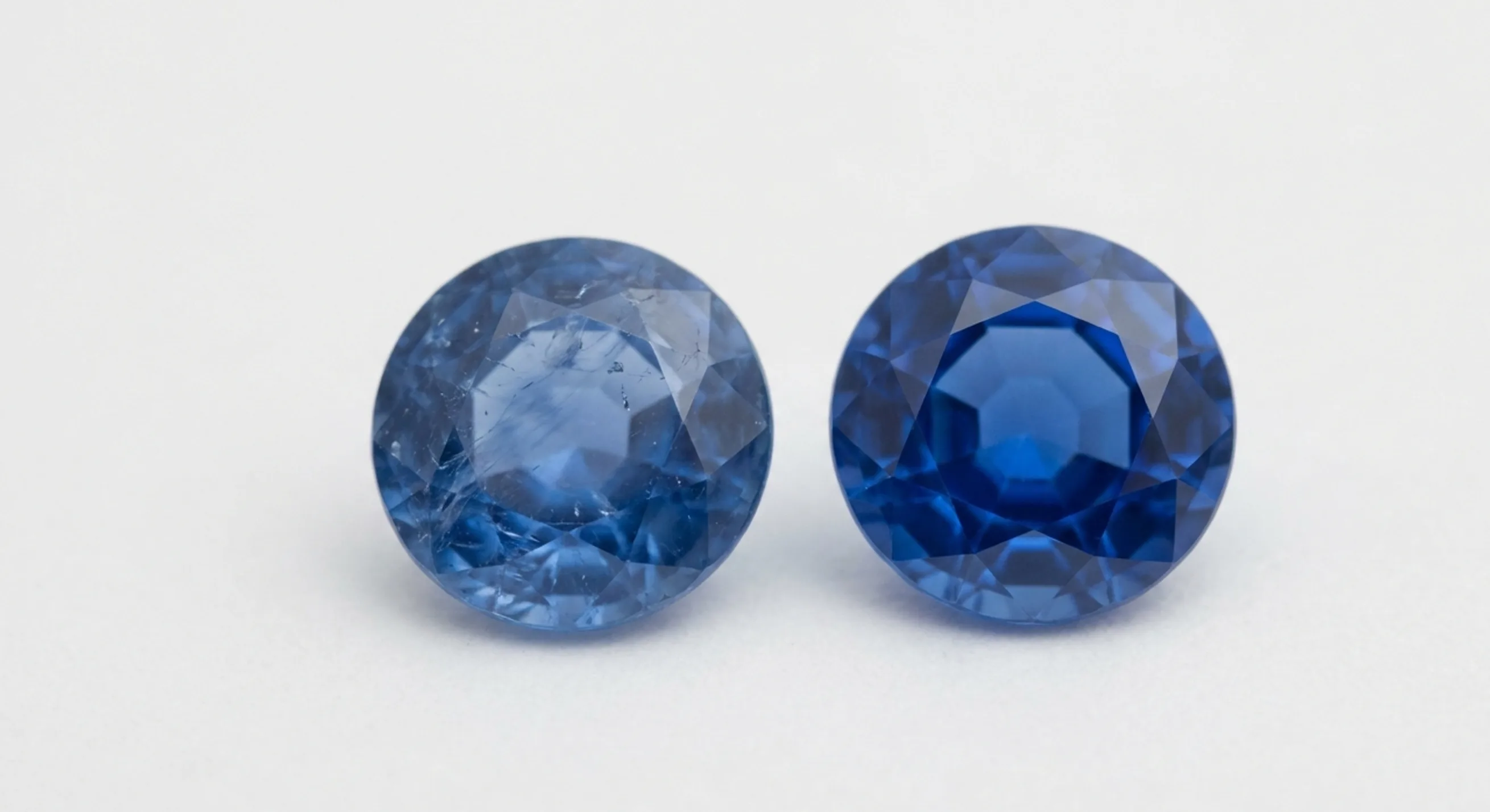
Grey is what drives value down. Less valuable blue sapphires are grayish, too light or too dark, and grey is the hardest of those to spot on a screen. Here's what I look for:
- Steely or slate patches in the face-up colour, especially across the table, rather than a clean blue.
- Colour that looks lively only in direct sun and dull everywhere else.
- Uneven colour. The more intense and uniform the colour, the more the stone is worth. Watch for pale windows in the centre or obvious zoning when the stone rotates.
In dealer stock of the same size bracket, the price spread tracks saturation more closely than size or origin. Two 2 ct Ceylon stones can be priced very differently, and saturation is usually why. When you rank violetish blue sapphire quality across a shortlist, put saturation first and let it carry the most weight.
What tone should a violetish blue sapphire have?
Tone is lightness or darkness, measured on nine levels from very very light to very very dark. GIA's ideal for blue is medium to medium-dark. The textbook top stone is described as violetish blue, tone 6 (medium dark), with vivid saturation.
Ceylon complicates this, in a good way. Typical Sri Lankan blue is violetish blue to blue in a light to medium-light tone, and a lighter Ceylon blue tends to be more brilliant than a darker sapphire. So most Ceylon violetish blues sit a step or two lighter than the textbook ideal and make up for it with sparkle. That brightness is a big part of why people buy Ceylon in the first place.
Here's my judgement on tone for this colour:
- Sweet spot: medium to medium-dark with strong saturation. The blue stays lively and the violet adds richness.
- Too light: below about medium-light, the stone starts to look pastel. That can be pretty, but it is priced as a lighter blue, not a fine one.
- Too dark: stones that are too dark look almost black in dim light. Violet makes this worse, because a dark violetish blue drifts towards inky. Always ask for, or find, footage in low or indoor light.
Given the choice, I would rather own a medium-toned Ceylon stone with strong saturation than a medium-dark one that closes up at dinner. On a spec sheet tone looks like a small detail. It matters a great deal for how the stone actually looks to you day to day.
How clean should a violetish blue sapphire be?
Sapphire is a GIA Type II coloured stone. It usually grows with some inclusions, and minor ones are expected. The standard to aim for is eye-clean, meaning nothing visible to the unaided eye at a normal viewing distance of roughly 15 to 30 cm. That standard is fair for a violetish blue of 1 to 3 ct.
The inclusions you'll see in Sri Lankan sapphire are well documented. The hallmark is long, slender rutile needles, often sparse and evenly spread. Partly healed fractures (fingerprints) and particle clouds also turn up. What I accept and what I pass on:
Acceptable
- Fine, scattered rutile needles you need a loupe to find.
- Light silk that softens the colour and spreads it evenly. The trade prizes this velvety look in Kashmir and some Sri Lankan sapphires, so a little silk can add to the stone.
- Small healed fingerprints near the girdle, away from the table.
Pass
- Fractures that reach the surface, especially near the girdle or a corner. Sapphire is Mohs 9 and tough, but an open break is still a weak point.
- Dark crystals or heavy clouds under the table, where they show in every view.
- Silk dense enough to grey the colour. At that point it's a saturation problem, not just a clarity one.
Silk also tells you something about treatment. Heat can dissolve rutile silk, so long, intact needles are consistent with an unheated stone. Silk broken into dotted specks is a classic sign of heat. Confirm it on the report, never by eye alone.
Price-wise, slightly included sapphires often sell for 30 to 50% less than eye-clean equivalents. That discount is real, but it's smaller than the discount for weak saturation. That's why clarity comes third when I judge violetish blue sapphire quality.
What does a sapphire lab report actually tell you?
A lot of buyers expect a certificate to grade the stone. It doesn't. GIA does not give a quality grade for sapphire or any coloured stone. Its report identifies the stone and states any treatment. There's no colour grade and no clarity grade, so the grading is your job, and the steps above are how you do it.
What to read on any report:
- Identification: natural corundum, sapphire.
- Treatment: whether there's evidence of heating. Both results are legitimate. You just need to know which one you're paying for.
- Origin: if the lab gives an opinion, look for Sri Lanka.
- Colour description: SSEF, for example, describes sapphire colour by hue, modifier and saturation, such as "greenish blue of medium strong saturation". For a violetish blue, you want the wording to name blue as the hue and violet as the modifier, with a strong saturation descriptor.
Trade names are another matter. SSEF and Gübelin give "royal blue" only to untreated sapphires that meet the standard they agreed in 2015, so a heated stone cannot carry their term. GRS uses its own "GRS type royal blue" wording and has given it to heated stones too. These names are lab opinions, and GIA doesn't use them. A violetish blue doesn't need one to be a fine stone.
How do you check a sapphire from photos and video?
Retouched photos and staged lighting are a known problem when buying gemstones online. A single still image can hide grey, windows and dark tone. That's why every stone Crestonne lists comes with its own video, a written treatment statement and a lab report, so you can run this whole checklist on the actual stone you'd receive.
When you watch the video:
- Pause on the face-up view. Decide on the hue: blue with violet, or violet with blue?
- Watch the tilt. Look for greenish flashes (orientation), dark extinction zones (tone too deep or a weak cut) and a see-through centre (windowing).
- Find the low-light moment. If the stone goes near-black, the tone is too dark for everyday wear.
- Look through the table. Note any inclusion you can see at video scale. If it shows there, it'll probably show to the eye.
- Cross-check the report. The treatment statement and the lab's colour wording should match what you saw.
What does a fine violetish blue sapphire cost?
No market data prices violetish blue as its own segment. GIA puts it alongside pure blue at the top, and it trades that way. For 1 to 3 ct Ceylon sapphire, the guide I work to is:
| Grade | Typical price per carat |
|---|---|
| Commercial, heated | US$500 to US$2,500 |
| Fine, heated | US$3,000 to US$8,000 |
| Fine, unheated | US$7,000 to US$18,000 |
| Exceptional, unheated | US$10,000 to US$20,000 |
Unheated stones generally sell for 2 to 5 times the price of heated stones of similar appearance, and the gap widens as size goes up. Size also pushes the per-carat rate itself. A fine 5 ct blue can sell for about five times more per carat than a 1 ct stone of the same quality. Within each band, saturation sets where a stone lands, tone either confirms or caps it, and clarity moves it by the discount noted above.
Is a heated violetish blue sapphire a good buy?
Yes. Most blue sapphires on the market are heated. It's the accepted industry norm, it's permanent, and it's disclosed on the report. Heat is often what brings a Ceylon stone's colour up to the strong saturation this checklist rewards. Unheated stones are the premium tier because they're rarer, not because heated ones are lesser. I score both the same way. The only difference is the price band they sit in.
Putting the checklist to work
Start with hue, then score saturation, tone and clarity in that order. Check the video in more than one light, and let the report confirm what you've seen. If a stone passes all four, you've found good violetish blue sapphire quality, whatever its treatment status.
If you'd like a stone matched to this standard, tell me your preferred hue, tone, size and budget through the custom-order form, or browse what's in stock now in the collections.
Common questions
Frequently Asked Questions
Is violetish blue a lower grade than pure blue sapphire?
No. GIA places violetish blue alongside pure blue among the most valued sapphire colours, provided the tone is medium to medium-dark and the saturation is strong to vivid. It only loses value once violet becomes the main hue and the stone reads as violet or purple.
What tone is best for a violetish blue Ceylon sapphire?
Medium to medium-dark with strong saturation is the sweet spot. Typical Ceylon blues run lighter, from light to medium-light, and gain brilliance in exchange. Stones that are too dark can look almost black in dim light, and violet makes that worse.
Does a GIA report grade a sapphire's colour and clarity?
No. GIA reports identify the stone and state any treatment, but they give no colour or clarity grade for sapphire. You judge saturation, tone and clarity yourself from the stone, its video and the colour wording on the report.
Are inclusions acceptable in a violetish blue sapphire?
Minor ones, yes. Sapphire is a Type II stone, so fine rutile needles or light silk are normal, and light silk can even soften and spread the colour. Avoid surface-reaching fractures, dark crystals under the table and silk heavy enough to grey the colour. Slightly included stones often sell for 30 to 50% less than eye-clean equivalents.