Buying Guides
Blue Sapphire Price: What Drives the Cost (2026)
What a blue sapphire actually costs comes down to five factors that compound each other. This is a realistic breakdown of the ranges and the reasons behind them.
7 min read
By Naseef AR
A blue sapphire price is set by five things working together: origin, treatment, colour grade, carat weight and certification. A commercial-grade stone can sit in the low hundreds per carat, while a fine unheated Ceylon sapphire with strong colour and a respected lab report can reach well into the thousands per carat. The spread is enormous because these factors compound rather than add. A large stone with a mediocre colour is not automatically expensive, and a small stone with exceptional colour and no heat can outprice it several times over.
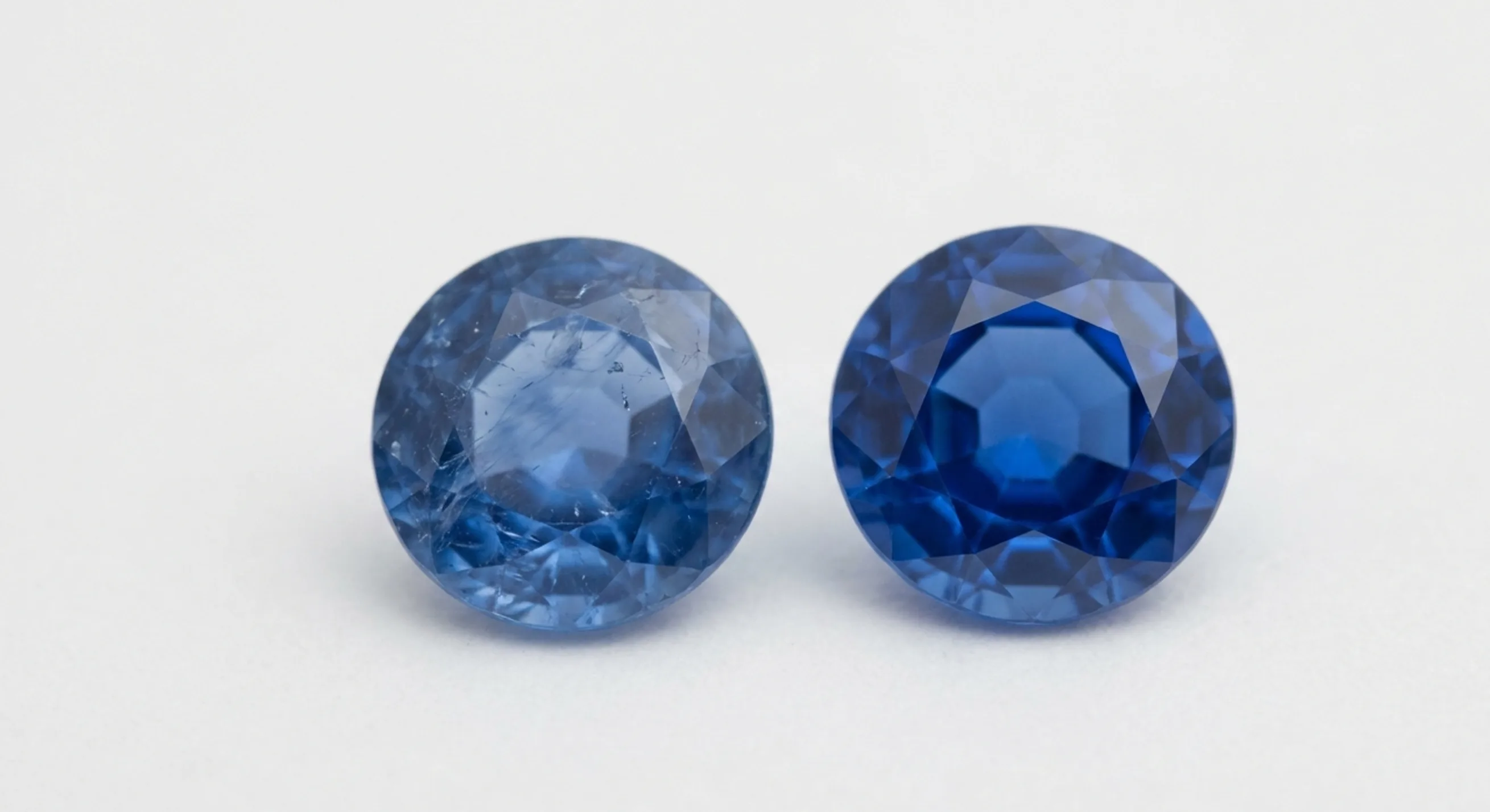
Below is how each factor moves the number, and why two sapphires that look similar in a photo can be priced worlds apart.
What is the price of a blue sapphire?
There is no single answer, and any seller who gives you one flat figure is glossing over the details that matter. The honest way to talk about a blue sapphire price is in ranges tied to quality tiers.
At the entry level, heat-treated commercial stones with visible inclusions and a slightly greyish or overly dark blue trade for modest sums per carat. In the mid tier, cleaner heated stones with a pleasant medium blue command noticeably more. At the top, a natural blue sapphire price for an unheated Ceylon stone with vivid, evenly saturated colour and an independent lab report climbs into the premium bracket, often several thousand per carat and higher for exceptional examples.
For a factor-by-factor look anchored to weight, the companion guide on Ceylon sapphire price per carat breaks down where those per-carat numbers land.
Why are blue sapphires so expensive?
Fine blue sapphires are rare in the combination that matters. Plenty of blue sapphire comes out of the ground. Very little of it has the colour, clarity and lack of treatment that define a top stone. Scarcity of the whole package, not the material itself, is what drives price.
Sapphire is corundum, Mohs 9, second only to diamond in hardness. That durability makes it a genuine heirloom material, and it holds value in a way that softer stones do not. But hardness is not what you pay for. You pay for the intersection of a saturated blue, good transparency, an untreated origin and a report that proves it. Each of those is a filter, and each stone that passes all of them is a small fraction of what miners recover.
How much does origin affect blue sapphire price?
A great deal. Origin is often the single biggest multiplier on a blue sapphire price after treatment.
Ceylon (Sri Lankan) sapphires are prized for their bright, lively blue and excellent transparency, and the stones Crestonne represents come from this tradition. Kashmir sapphires, when they surface at all, sit in a class of their own and trade at figures most buyers never encounter. Burmese stones also command a premium. Material from other sources can be perfectly attractive and considerably more accessible.
Origin is not a vanity label. It is a proxy for a specific look and, historically, for a track record. That is exactly why a credible origin call on a lab report matters so much to the final number.
How does treatment change the price?
Treatment is where the widest price gaps open up, so it is worth understanding clearly.
Heat treatment is the legitimate, long-standing industry norm. The overwhelming majority of blue sapphires on the market have been heated to improve colour and clarity, the process is stable and permanent, and a well-cut heated stone with strong colour is a genuinely beautiful, sound purchase. There is nothing second-rate about a heated sapphire.
Unheated stones are the premium tier simply because they are rarer. A sapphire that reached its colour with no human intervention, and can be certified as such, is scarcer than one that was helped along. That scarcity is what you pay for, and it is why the natural blue sapphire price for an unheated stone runs well above a comparable heated one.
The practical takeaway: never assume a stone's treatment from a photo or a price alone. Ask for a report that states it. For the full picture on how heat versus no heat moves value, see how treatment affects value.
What about colour, clarity and cut?
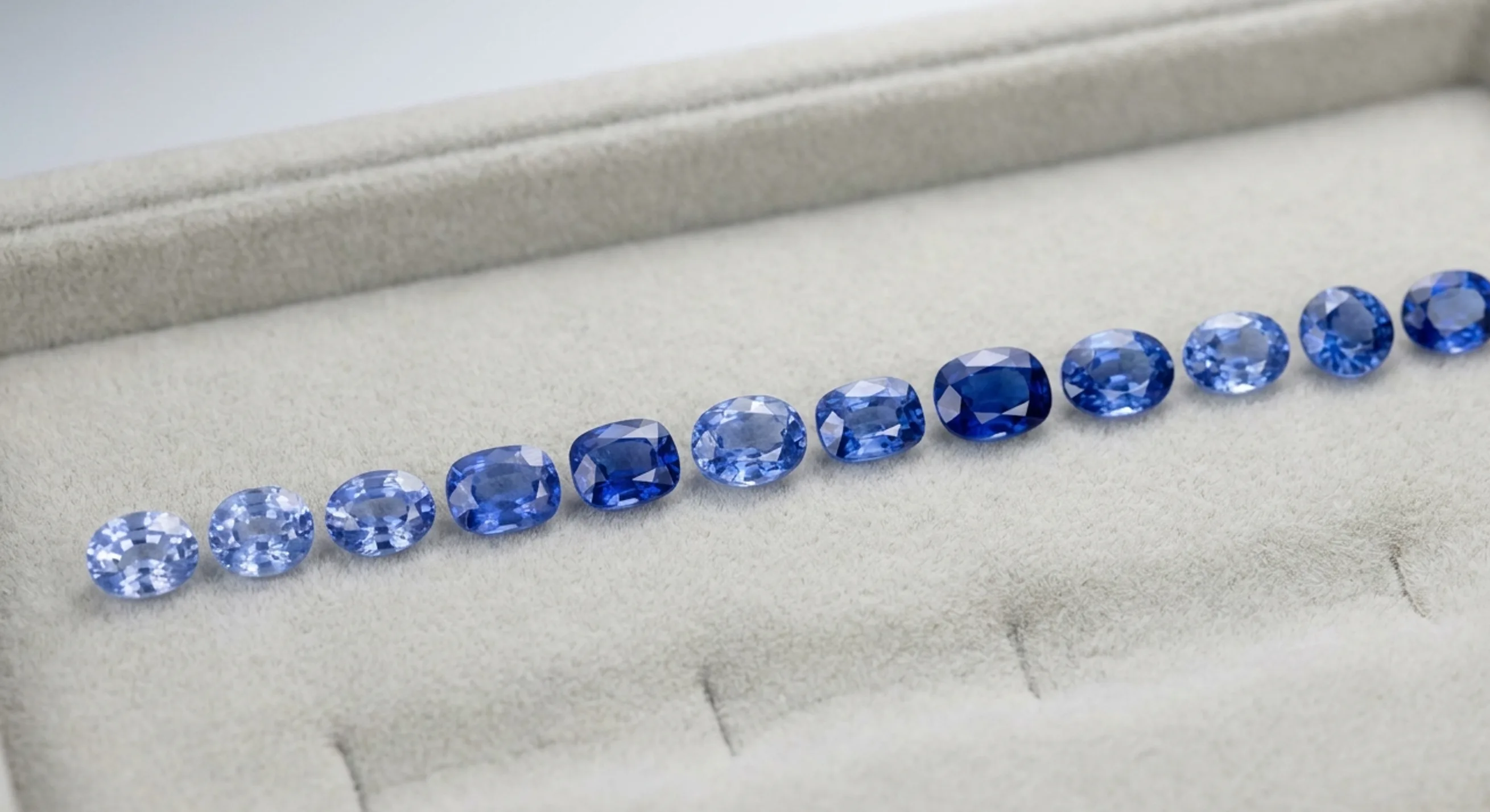
Colour is the largest driver within any given origin and treatment tier. The most valued blue is a vivid, medium to medium-deep saturation that is neither too dark and inky nor too pale and washed out. A stone that is too dark reads black in low light. A stone that is too light lacks presence. The sweet spot in between carries a real premium.
Clarity matters, but sapphire is judged differently from diamond. Some inclusions are expected and acceptable, and a few can even help confirm natural origin. What hurts value is anything that dims transparency or sits obviously in the face-up view. Eye-clean stones with good brilliance are worth more.
Cut ties it together. A well-cut sapphire returns light evenly and shows its colour at its best. A poor cut with a window or off-centre culet leaks light and dulls even good colour, which drags the price down regardless of the rough it came from.
How much does carat weight change the blue sapphire price per carat?
The blue sapphire price per carat rises as size increases, and it does not rise in a straight line. Large stones of high quality are disproportionately rare, so a five-carat fine sapphire is worth far more than five one-carat stones of the same grade. This is the classic price-jump effect at round weight thresholds.
The important nuance is that per-carat price is not a fixed multiplier you can apply to any weight. It is quality-dependent. A large stone with weak colour will not command a large-stone premium, because the premium exists for large stones that are also fine. Weight amplifies quality; it does not replace it.
What role does certification play?
For anything above entry level, a report from an independent lab is not optional if you want to protect what you pay. Reports from laboratories such as GIA, SSEF and Gubelin document treatment status and, where determinable, geographic origin. That report is what turns a verbal claim of "unheated Ceylon" into something backed by a laboratory.
Certification affects price in two ways. It commands a premium in itself, because a documented stone carries less risk. And it protects against overpaying, because it stops a heated stone being sold at unheated numbers, or a common origin being sold as Ceylon. A blue sapphire price without a supporting report from a recognised lab should always be treated with more caution.
This is where the online question comes up. Photographs can flatter a stone's colour, and lighting can hide problems. Crestonne's answer is to pair every significant stone with its independent lab documentation and to represent colour honestly rather than at its most flattering, so what arrives matches what was shown.
Putting it together: reading a real price
When you see a blue sapphire price, work backwards through the factors. Is it heated or unheated? What origin, and is that origin certified or merely stated? Where does the colour sit on the too-dark to too-pale scale? Is it eye-clean and well cut? And how does the weight interact with that quality?
A modest number almost always means a heated commercial stone, which can be a smart, attractive buy. A high number should be supported by some combination of unheated status, strong colour, respected origin and an independent report. When the price and the paperwork line up, you are paying for the stone rather than the story around it.
If you are looking for a specific combination of colour, size and treatment, Crestonne can source to your brief. Start a custom order for a loose stone and we will match a certified Ceylon sapphire to your budget and requirements. You can also browse the current Ceylon sapphire collections to see certified stones available now.
Common questions
Frequently Asked Questions
What is a fair blue sapphire price per carat?
It depends entirely on quality. Heated commercial stones can sit in the low hundreds per carat, while fine unheated Ceylon sapphires with strong colour and a lab report often reach several thousand per carat. There is no single fair figure without knowing treatment, origin, colour and clarity.
Are unheated blue sapphires worth the extra cost?
Unheated stones are the premium tier because they are rarer, so they carry higher prices. Heat treatment is the legitimate industry norm and a well-cut heated sapphire is a beautiful, sound buy. Whether the premium for unheated is worth it depends on your priorities and budget.
Does origin really change a blue sapphire's value?
Yes. Origin is one of the biggest multipliers after treatment. Ceylon, Kashmir and Burmese sapphires command premiums for their look and track record, and a certified origin on a lab report from GIA, SSEF or Gubelin carries more value than an origin that is merely stated.
Why do two blue sapphires that look alike cost so differently?
Photos can hide treatment, origin and true colour. One stone may be unheated Ceylon with a lab report while the other is heated with an undocumented origin. Cut quality and clarity also differ. The price gap reflects factors that are not always visible in an image.
Do I need a certificate before buying a blue sapphire?
For anything above entry level, yes. An independent report from a lab such as GIA, SSEF or Gubelin documents treatment and, where possible, origin. It protects you from overpaying and turns a verbal claim into verified fact.