Understanding
What Is a Pavé Setting? Sparkle, Cost & Care
Pavé packs tiny bead-set diamonds across a band or halo for near-continuous sparkle. Here is how it works, what it costs, and how to care for it.
Published Updated 8 min read
By Naseef AR
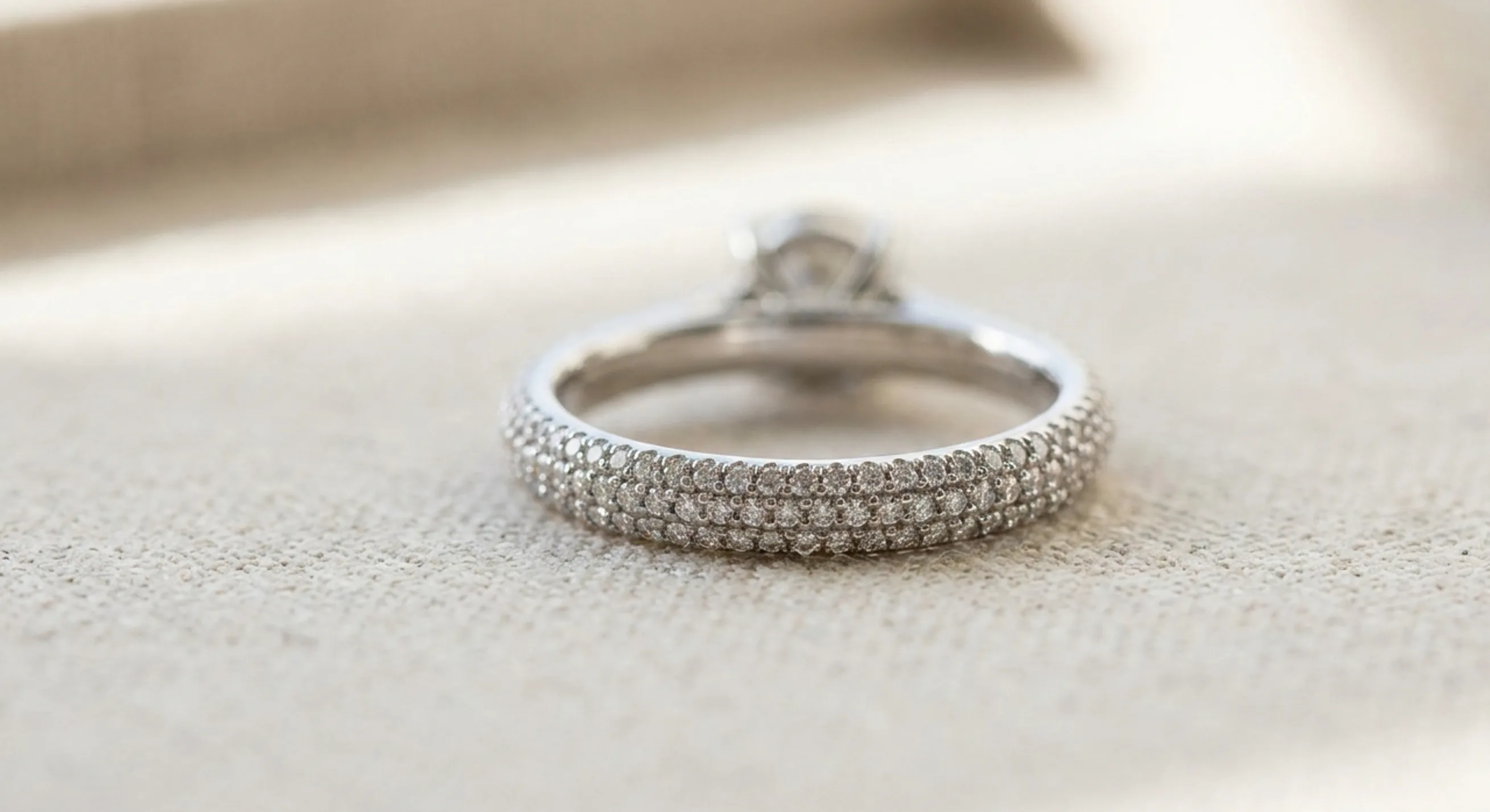
A pavé diamond is not a special cut or a grade. It is a setting method: rows of tiny diamonds, each held by a handful of small metal beads raised from the surface of the ring, packed close enough that the metal nearly disappears. The word comes from the French for "paved," and that is the visual goal. From a normal viewing distance the surface reads as a continuous sheet of sparkle rather than a line of individual stones.
So when someone asks what's a pave diamond, the honest answer is that it is a small accent diamond set in the pavé style, usually a round brilliant somewhere between one and a few points in weight. The technique is what matters. Not the stone.
What is a pavé diamond, exactly?
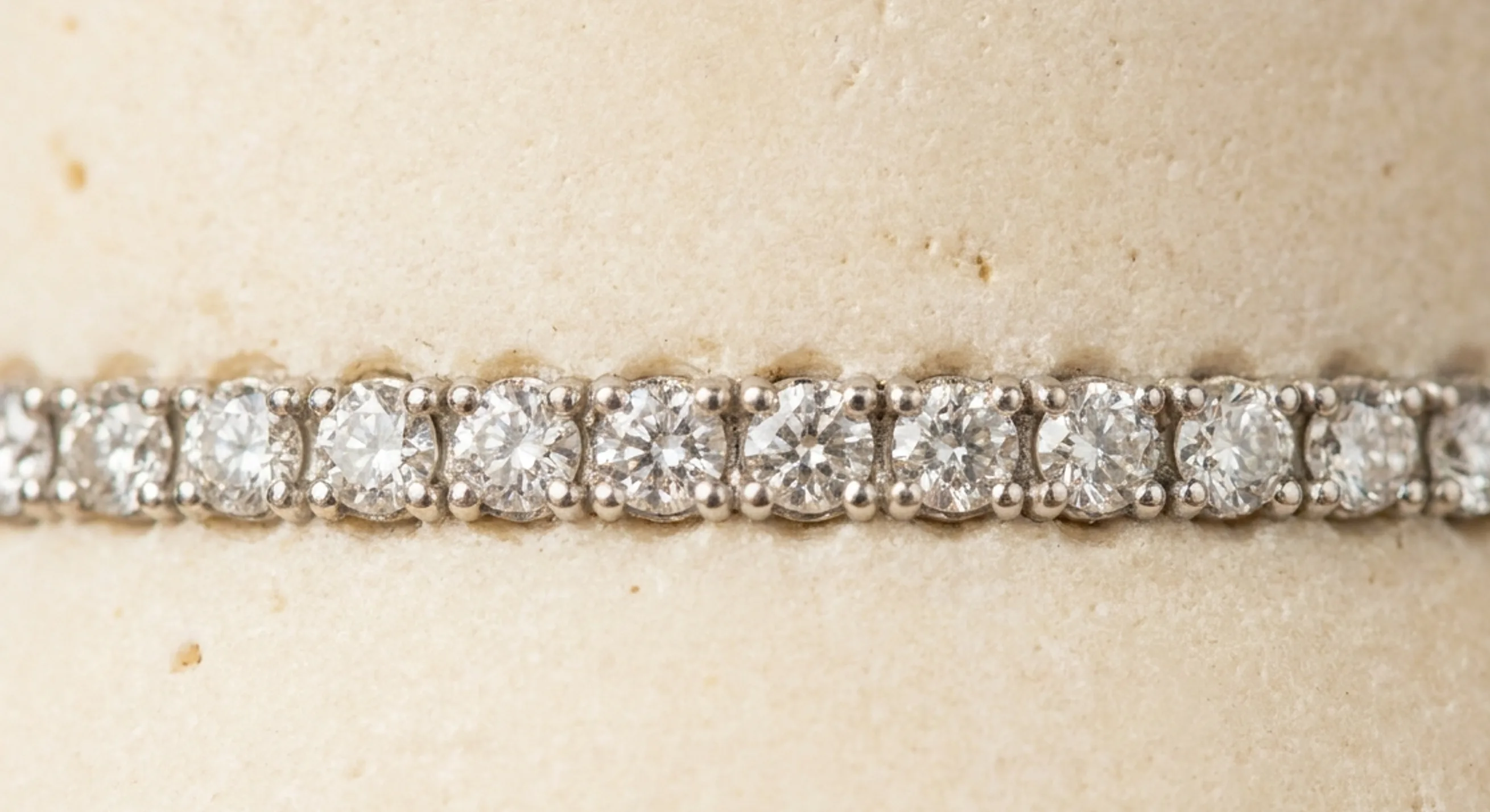
A single pavé stone sits in a shallow seat drilled into the metal. The setter pushes up tiny beads of metal from around the rim to grip the girdle of the diamond. Do this across a whole band and you get dozens of stones locked in by shared beads, sitting almost flush, with only thin threads of metal between them. That is a diamond pave setting.
There is no such thing as a distinct pave diamond cut. The stones are almost always standard round brilliants, because that shape returns the most light at tiny sizes and because round stones are easiest to seat in a uniform row. If a jeweller mentions a "pavé cut," they are describing the setting, not a cutting style.
A few variations are worth knowing:
-
Micro-pavé uses the smallest stones, often under a point each, for a dense, seamless field of light.
-
French pavé cuts tiny V-shaped notches under each stone so more light enters from below, deepening the brilliance.
-
Bead or shared-prong pavé lets neighbouring stones share the same beads, which lets the setter pack more diamonds into less space.
How does a pavé setting create sparkle?
The effect is about quantity and coverage, not size. A single small diamond throws a modest amount of light. Line up thirty of them with barely any metal between, and every angle of the ring catches something. As the hand moves, different stones flash in sequence, which reads to the eye as a shimmering, almost liquid surface.
This is why pavé so often plays a supporting role. It cannot compete with a centre stone for individual fire, but it does something a solitaire band cannot: it brightens the whole ring and pulls the eye toward the centre. That framing job is exactly where pavé earns its place in coloured-stone jewellery.
Pavé around a Ceylon sapphire
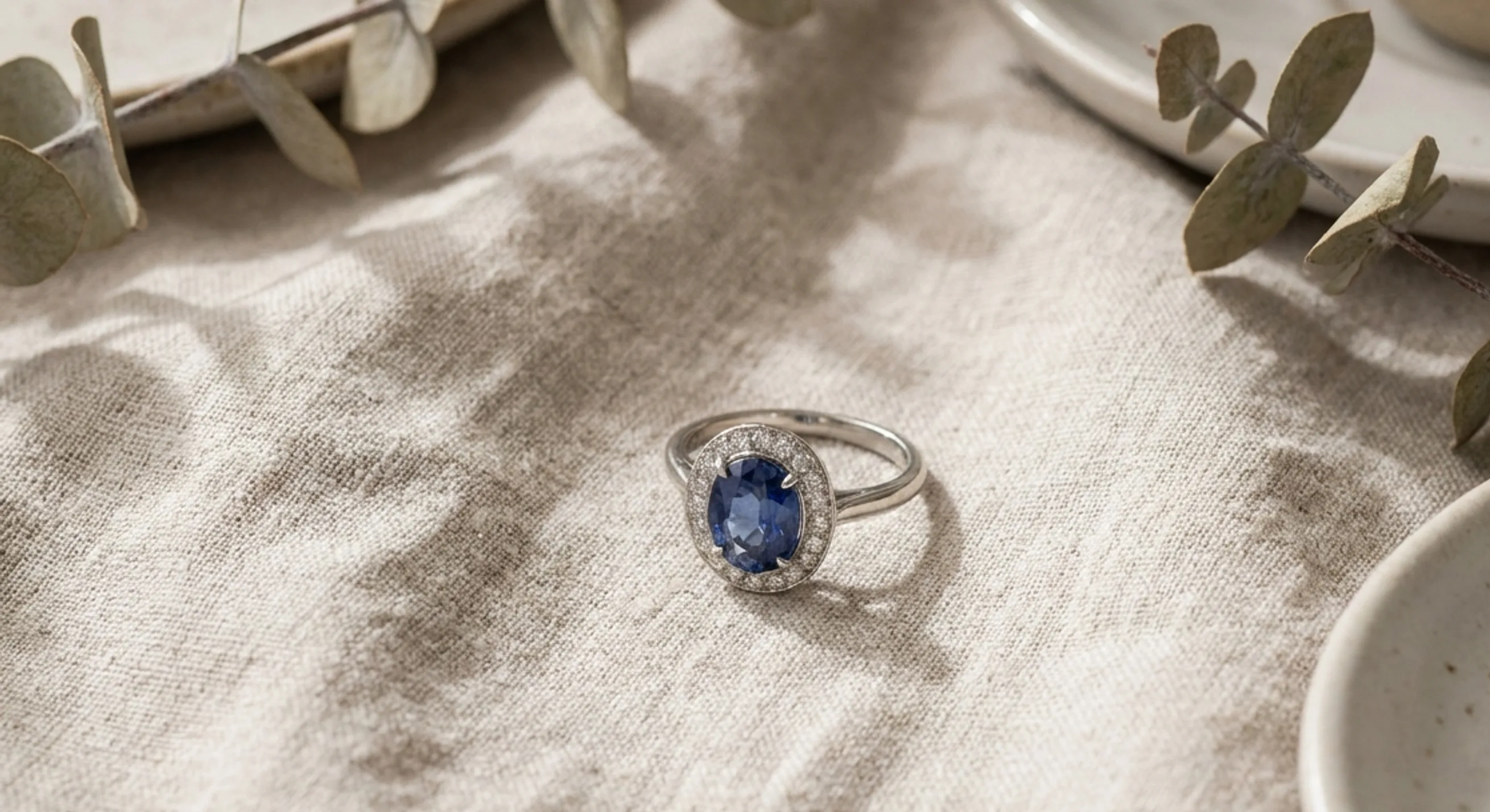
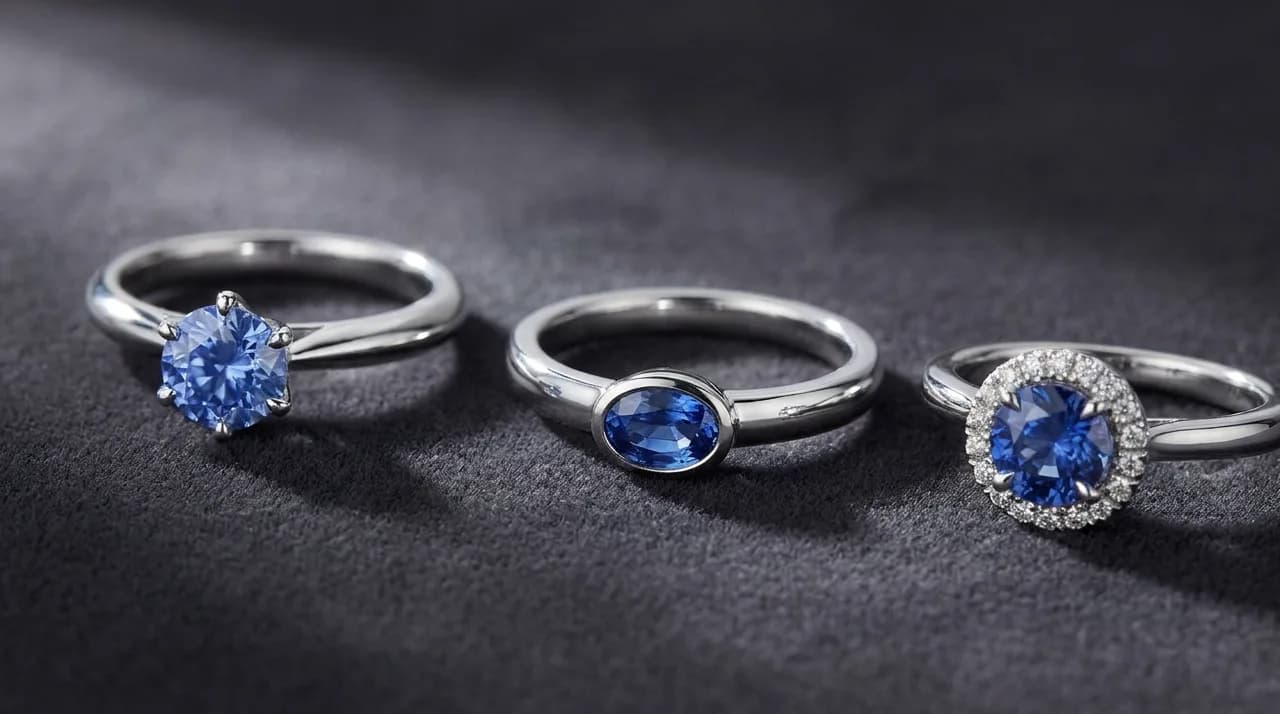
A pavé halo is a ring of these tiny diamonds encircling the centre stone. Around a blue Ceylon sapphire, that white sparkle does two things at once. It makes the sapphire look larger by extending its visual footprint, and the contrast between icy diamond and saturated blue makes the sapphire's colour read as richer than it would alone.
A pavé band works along the shank in a similar way. The line of light draws the eye up toward the centre and gives an otherwise plain metal band some life. For anyone weighing the options, the settings Crestonne represents lean on this contrast deliberately, and the trade-offs are worth reading through in the guide to choosing a sapphire ring setting.
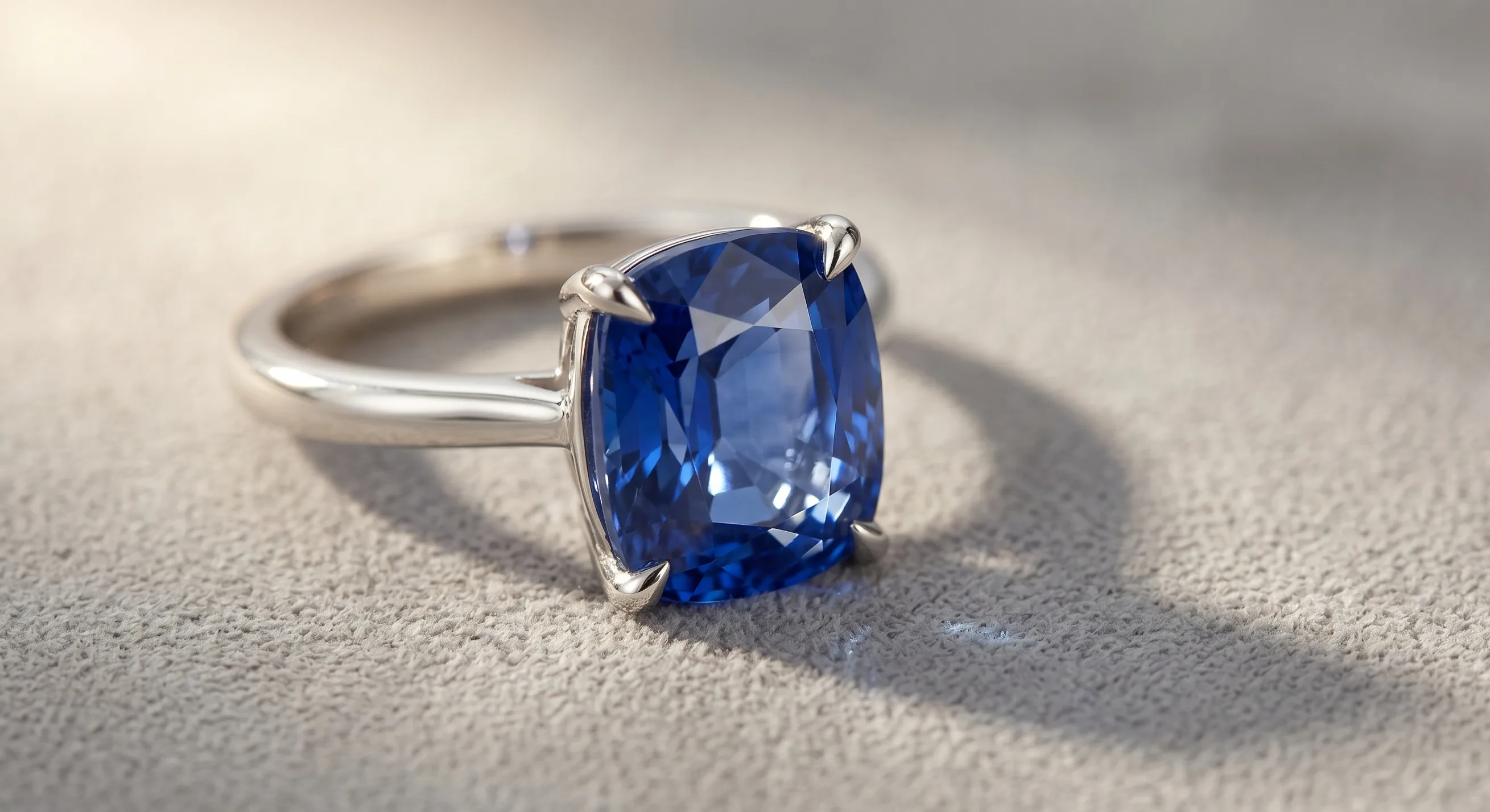
The centre stone still does the heavy lifting. A well-cut Ceylon sapphire sits at Mohs 9 on the hardness scale, second only to diamond at 10, so it holds up to daily wear far better than most coloured stones. The pavé is the frame. It is not there to outshine the sapphire, only to set it off.
What's a pave diamond made to do versus a solitaire?
A solitaire keeps all attention on one stone and one clean band. Pavé spreads interest across the whole piece. Neither is better; they answer different briefs.
Choose pavé when you want maximum surface sparkle, a centre stone that looks as large as possible, and a ring that catches light from every direction. Choose a plain band when you want minimal maintenance and a design that will look identical in twenty years with no fuss.
Most people asking what is a pavé diamond are really deciding between two feelings: busy and brilliant, or clean and quiet. Both are valid. The maintenance difference is the part that gets glossed over, so it is worth being clear.
Is a pavé setting durable?
Pavé is secure enough for everyday wear, but it demands more honesty about upkeep than a solitaire. The tiny beads that hold each stone are small, and over years of knocks against door frames, keyboards and countertops, a bead can wear down or a stone can loosen. Losing a pavé diamond is not common, but it happens, usually to a ring that has gone years without a check-up.
A few practical points:
-
Get the setting checked once a year. A jeweller can spot a lifting bead in seconds and re-tip it before a stone drops.
-
Take it off for rough work. Gardening, gym sessions and heavy lifting are where beads take the worst hits.
-
Expect the odd repair over a lifetime. Replacing a single micro-pavé stone is a minor job, but it is a job. A solitaire simply does not have this failure point.
None of this makes pavé fragile. It makes it a setting that rewards a little attention. The stones Crestonne represents are set to hold, but no bead-set surface is truly maintenance-free.
How do you clean a pavé ring?
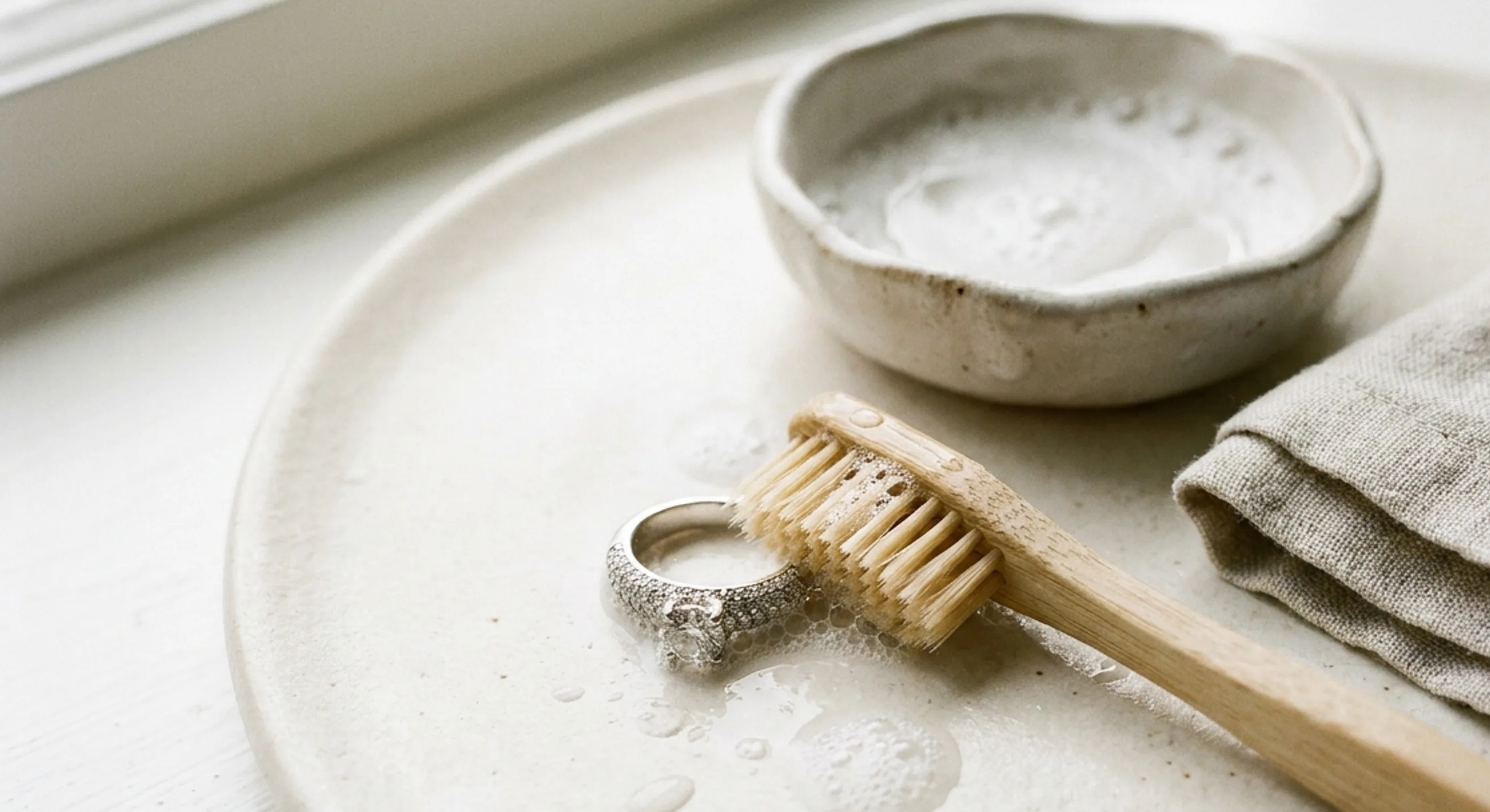
Grime is pavé's real enemy, not breakage. Lotion, soap film and skin oils collect in the thin gaps between stones and under the beads, and once that layer builds up it kills the sparkle far faster than any single scratch. A pavé ring that looks dull is almost always dirty, not damaged.
Cleaning is simple and should be regular. Soak the ring in warm water with a drop of dish soap, then work gently along the rows with a soft toothbrush, paying attention to the underside where buildup hides. Rinse and pat dry with a lint-free cloth. Avoid ultrasonic cleaners on any piece with a large number of tiny stones unless a jeweller has confirmed the setting is sound, since vibration can shake a loose bead free. The full routine, including what to keep away from a sapphire centre, is in the walkthrough on keeping small stones clean.
Do this every few weeks and the ring stays bright. Skip it for a year and even the best pavé looks flat.
How much does a pavé setting cost?
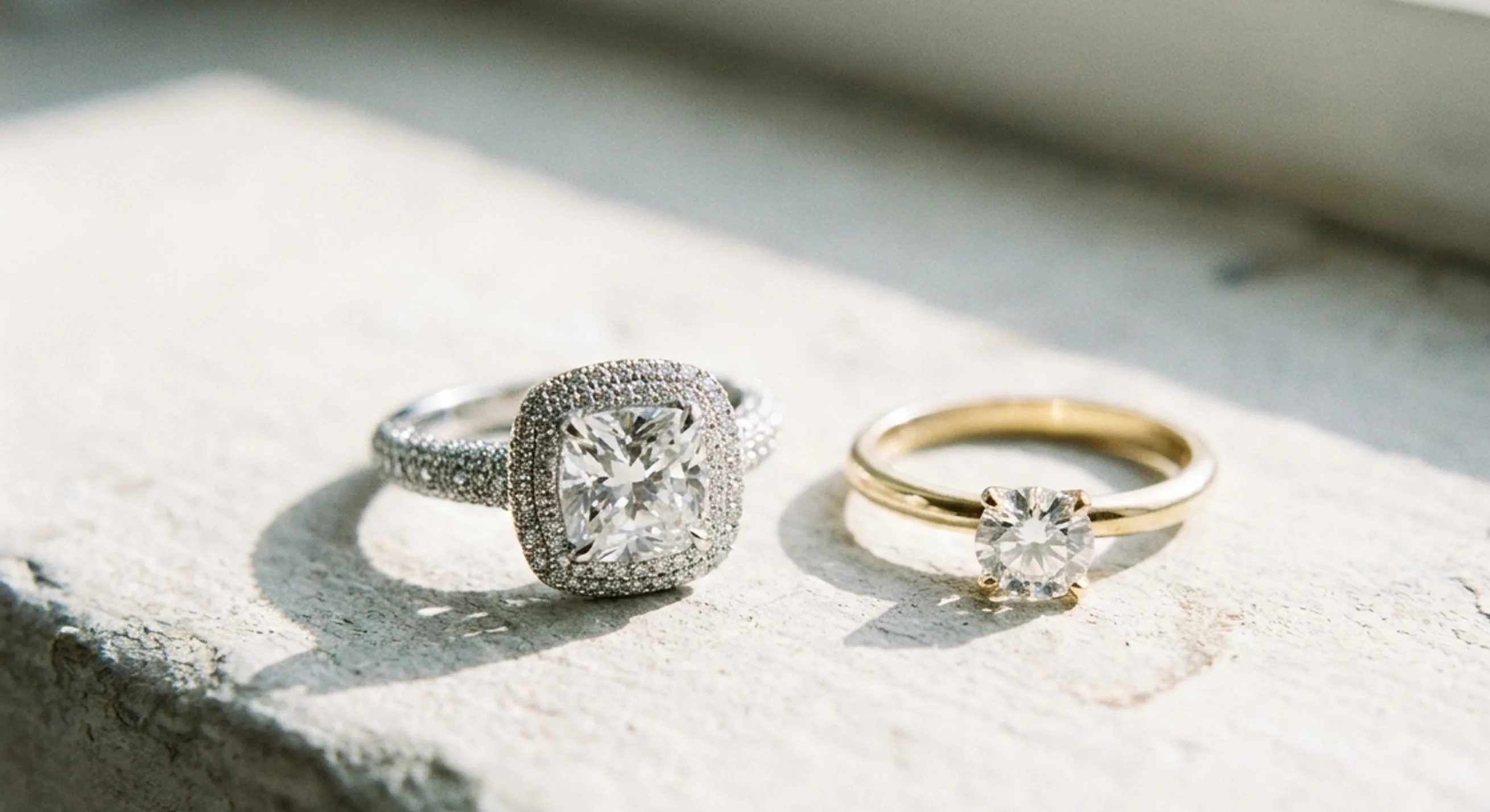
Pavé adds cost in two ways: the diamonds themselves and the labour to set them. A micro-pavé band or halo can hold anywhere from a dozen to well over a hundred tiny stones, and each one has to be seated and bead-set by hand. That hand work is where a meaningful share of the price sits.
Reliable per-carat figures for melee diamonds swing widely with size and quality, so it is more useful to think in relative terms. A pavé setting will generally cost more than a plain metal band of the same metal and weight, and a dense micro-pavé halo will cost more than a simple shared-prong band because it carries more stones and more setting hours. For most coloured-stone rings the centre sapphire still represents the larger part of the total, with the pavé adding a smaller but real premium on top.
The sensible way to budget is to decide on the centre stone first, then treat the pavé as the framing choice that follows. That keeps the money where the ring's character actually lives.
A note on heated versus unheated centres
Since pavé is usually built around a coloured centre, one point on the sapphire itself. Heat treatment is the long-standing industry norm for Ceylon sapphires and produces gorgeous, stable, honest stones that make up the vast majority of fine sapphires in the market. Unheated stones, confirmed by a lab such as GIA, SSEF or Gübelin, sit at the premium tier because they are rarer, not because heated stones are lacking. A pavé halo flatters both equally. The choice of centre is about budget and rarity, and the setting question is separate from it.
The short version
A pavé diamond is a tiny accent stone bead-set in a paved row to create broad, continuous sparkle. It is a setting technique, not a grade or a cut, and there is no distinct pave diamond cut behind the term. It frames a centre stone beautifully, makes it look larger, and brightens the whole ring. In return it asks for annual checks and regular cleaning between the stones. Understood on those terms, a diamond pave setting is one of the most flattering ways to present a Ceylon sapphire.
Ready to frame a Ceylon centre in pavé? Start a bespoke pavé sapphire ring with our team.
Common questions
Frequently Asked Questions
Is a pavé diamond a special type of cut?
No. Pavé refers to how the diamonds are set, not how they are cut. The tiny stones are almost always standard round brilliants because that shape returns the most light at small sizes. There is no separate pave diamond cut.
Do pavé settings lose stones easily?
Not usually, but it is possible. The small metal beads holding each stone can wear down over years of daily knocks. An annual check-up lets a jeweller re-tip any lifting bead before a stone drops, which keeps the risk low.
How do I keep a pavé ring sparkling?
Grime between the stones dulls pavé faster than any scratch. Soak in warm soapy water, brush gently along the rows with a soft toothbrush, rinse and pat dry every few weeks. Be cautious with ultrasonic cleaners unless a jeweller confirms the setting is sound.
Does pavé make a sapphire look bigger?
Yes, A pavé halo extends the visual footprint of the centre stone and the contrast between white diamonds and blue sapphire makes the colour read as richer, so the sapphire appears larger and more saturated than it would set alone.
Is a pavé setting more expensive than a plain band?
Generally yes. Pavé adds both the cost of the many small diamonds and the hand labour to bead-set each one. A dense micro-pavé halo costs more than a simple band, though on a coloured-stone ring the centre sapphire usually remains the larger part of the total.