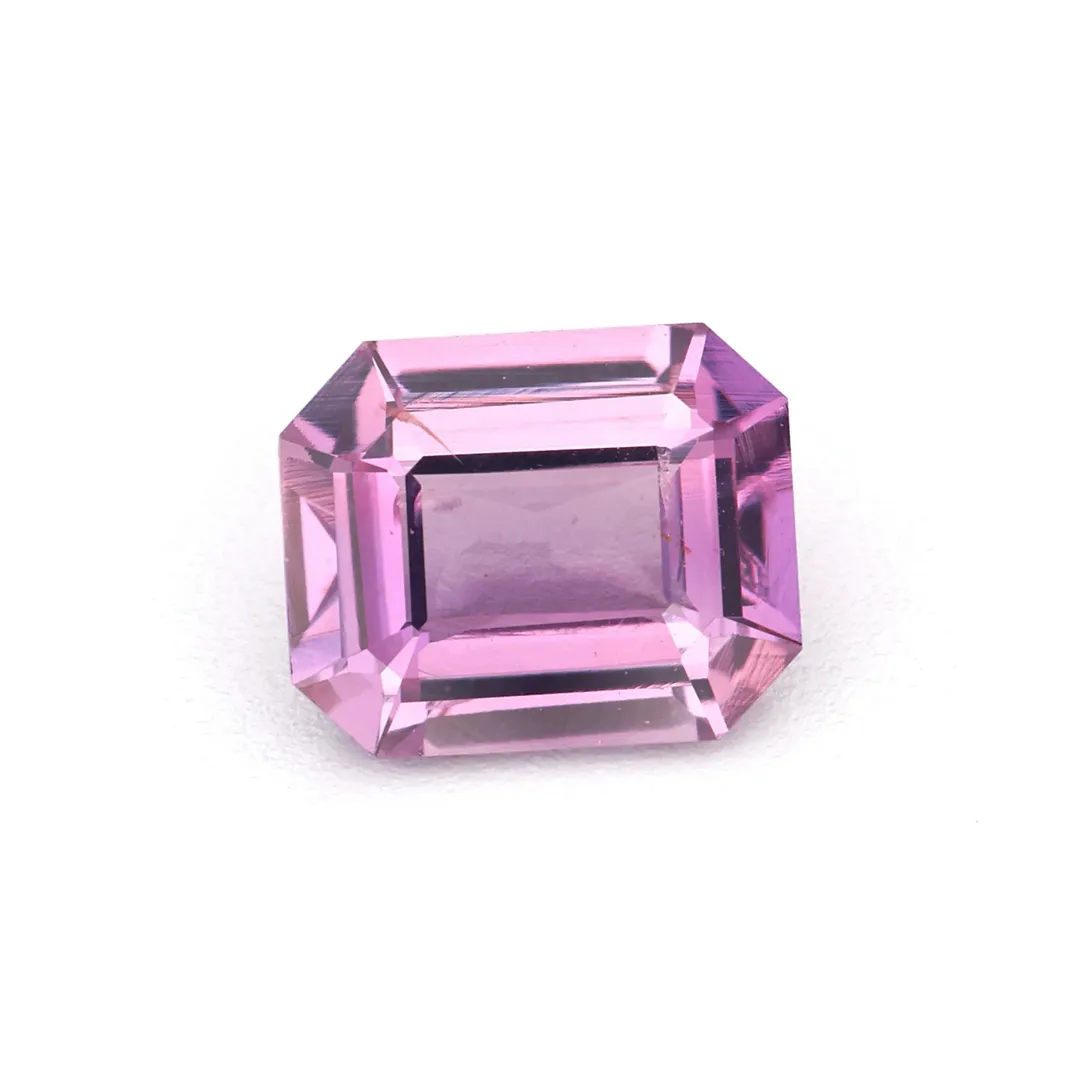
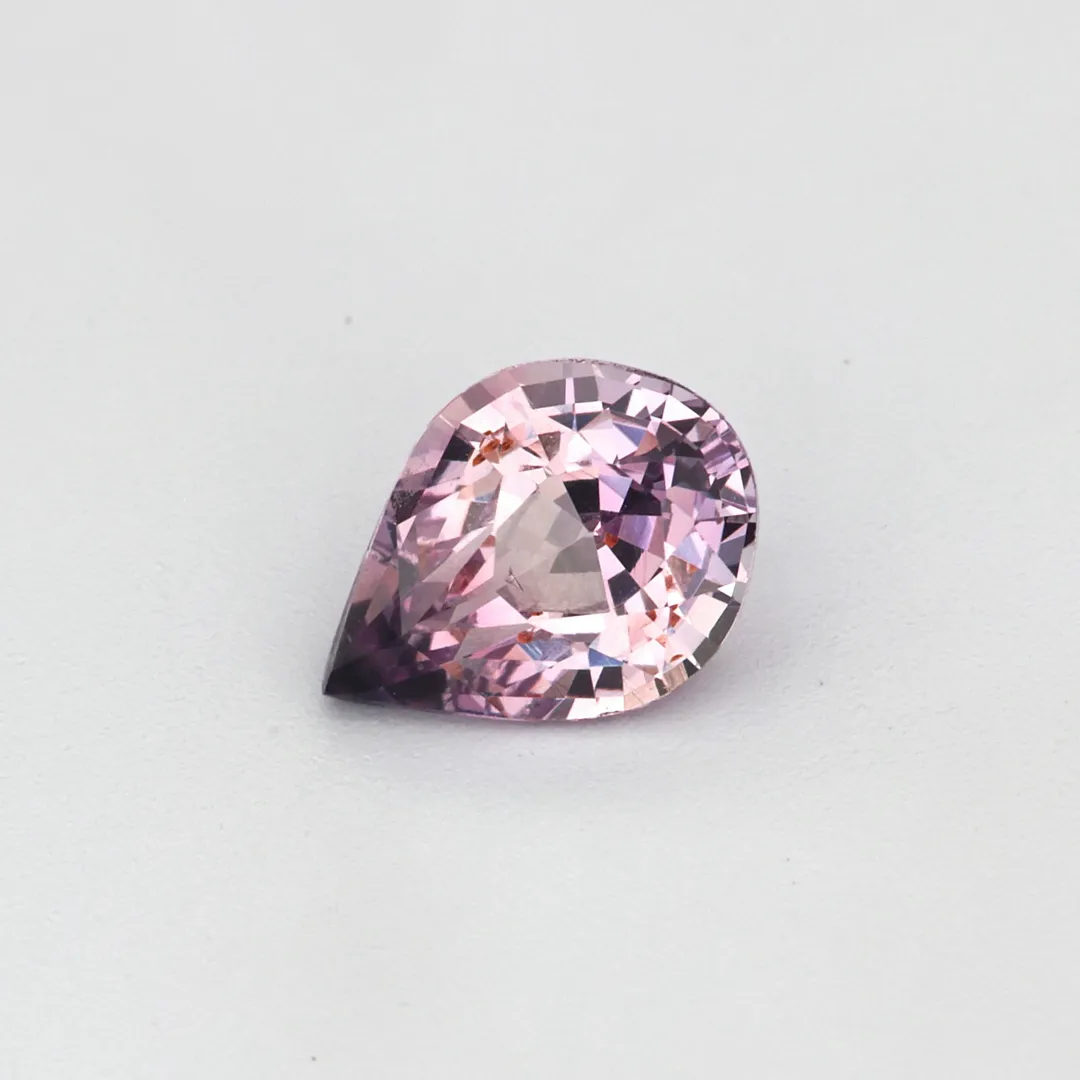
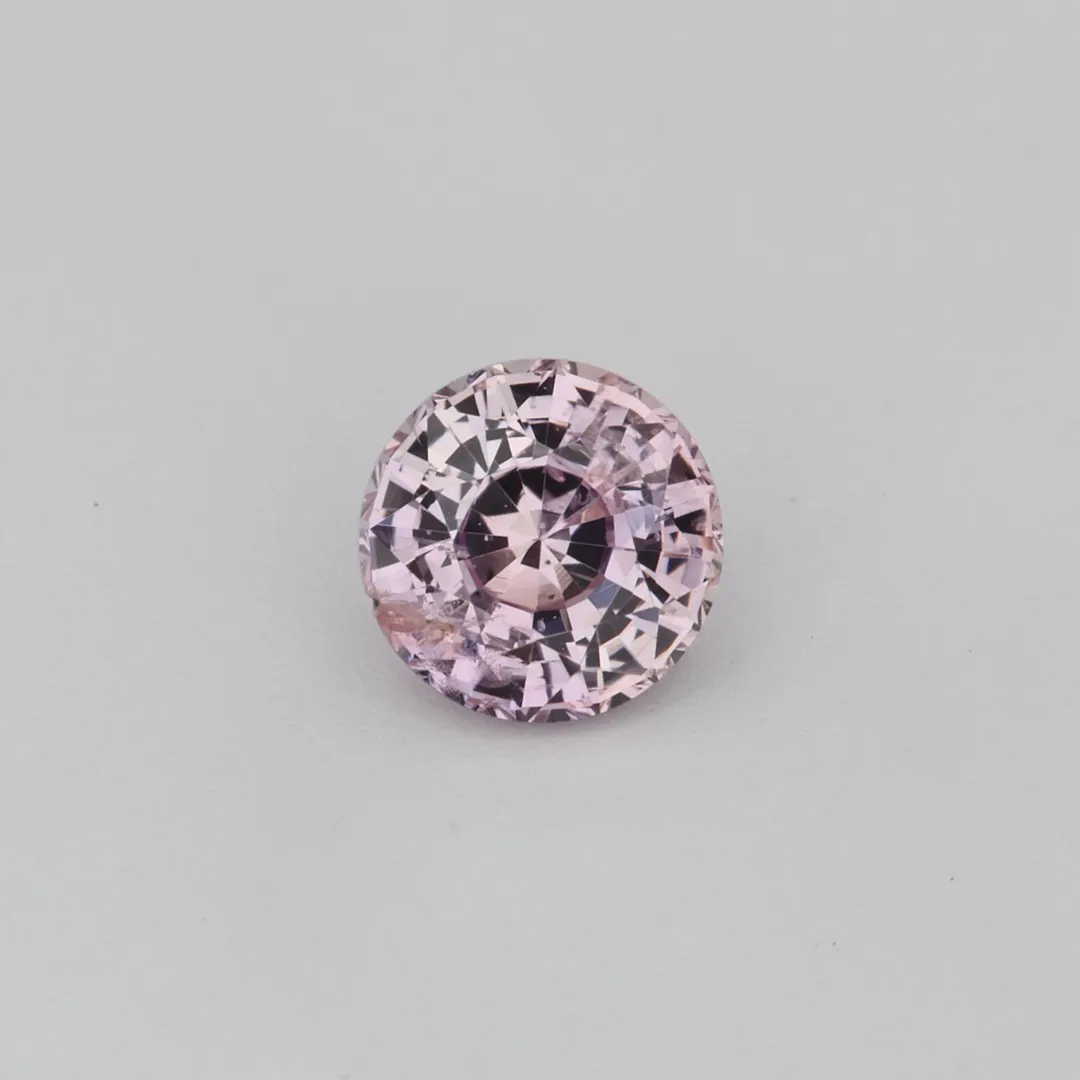
The rough vivid purplish pink pink sapphire as bought
We bought this stone as rough in Sri Lanka, a 1.535 ct piece that looked nothing like the gem on this page. Rough pink sapphire is hard to read. You judge the colour through a small polished window, or by eye in daylight, and you accept that the stone has its own opinion about what it will become. What drew us to this one was the purplish pink coming through the surface.
The vivid purplish pink pink sapphire after preforming
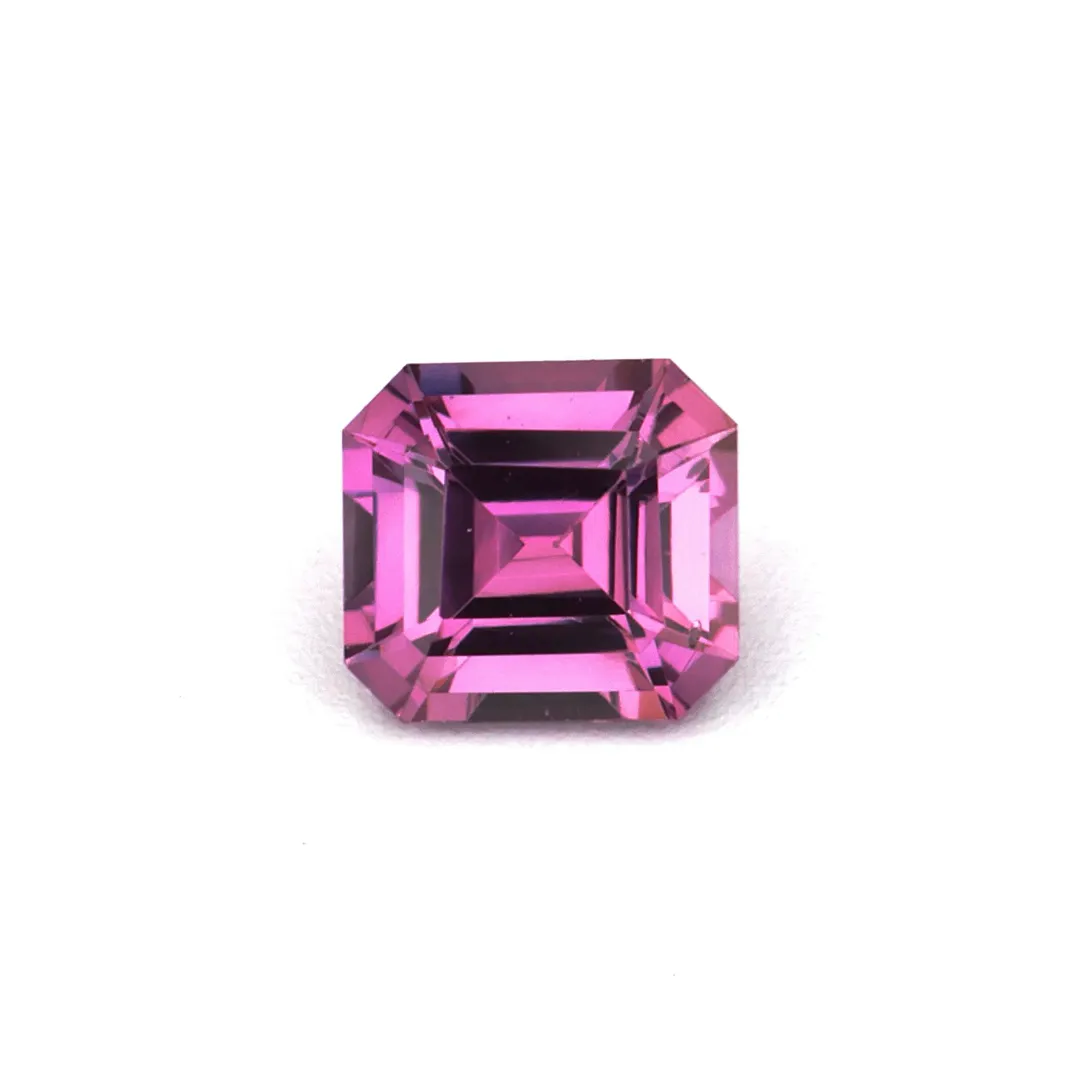
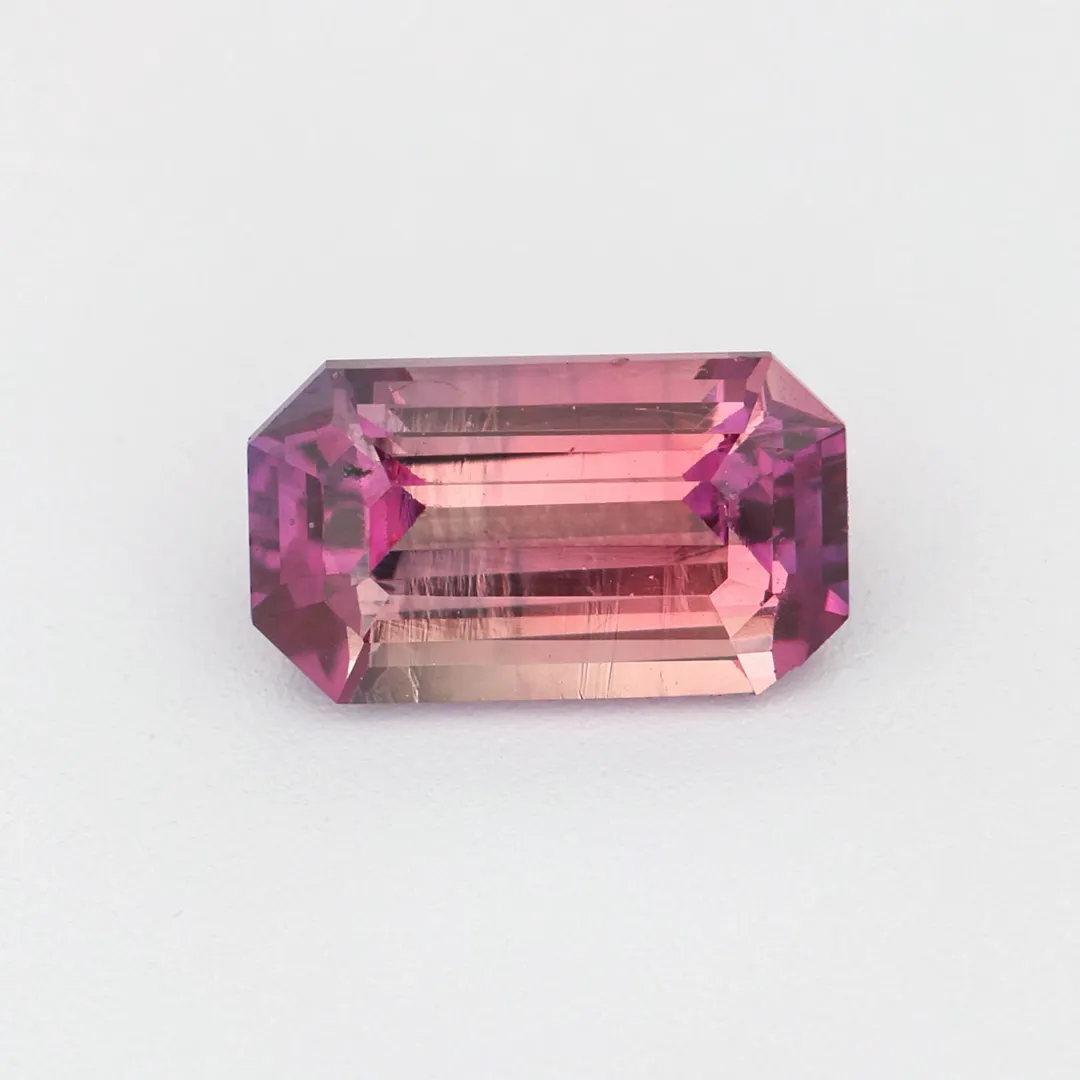
Preforming happened at our own bench. It took the rough from 1.535 ct down to 0.875 ct, so 0.66 ct came off before a single facet was cut. That is the honest arithmetic of buying rough: you pay for weight you will never see in the finished stone. A lapidary we work with then cut and polished it into the emerald cut you see here, 5.02 x 4.1 x 2.27 mm.
The finished stone weighs 0.48 ct, just under a third of the rough we started with. In return it is vivid purplish pink, eye clean, and unheated. Heat treatment is the normal practice for sapphire and we have no quarrel with heated stones, but unheated is the premium tier. Strong colour, clean to the eye and no heat, all in one stone, is a less common combination, and the cut grade of Very Good tells you the cutting did the colour justice.
It is a small stone, and we would rather say so plainly. The TGL report on the certificate section of this page confirms what we saw at the bench: a natural Ceylon sapphire, unheated. We kept the photographs of the rough and the preformed stone so you can see exactly where it started.
The body colour is a vivid, saturated pink with a purple undertone, which is why it is called purplish pink rather than plain pink. Because the stone is unheated, that colour is exactly what formed in the ground and has not been adjusted. It is also eye clean, so nothing interrupts the colour when you look at it face up.
How does the emerald cut change the way this colour shows?
An emerald cut uses long, flat step facets, so the colour appears in broad, even planes instead of the scattered flashes of a brilliant cut. At 5.02 x 4.1 mm, this gives a calm, glassy look that lets the saturation of the pink speak for itself. It is a quieter way to wear a vivid colour, and it suits a stone this clean.
Why is an unheated pink sapphire like this considered uncommon?
Most sapphires on the market are heated, which is a legitimate and widely accepted practice. A stone that reaches vivid colour and a clean face without any heating is far harder to find, which is why unheated is regarded as the premium tier. This one is unheated, and it comes with a certificate.
How does it compare with a heated pink sapphire of similar size?
A heated stone can be beautiful, and heating is the industry norm, so this is not a question of good against bad. The difference is that here the colour and clarity are entirely natural, and that rarity is what sets an unheated stone apart. At 0.48ct it is a modest size, so its appeal comes from the quality of its colour and its natural origin.
How did this stone come to Crestonne, and what became of the rough?
We bought it as rough in Sri Lanka, where it weighed 1.535 ct. We preformed it at our own bench, then sent it to a specialist lapidary in Sri Lanka for cutting and polishing. The finished emerald cut weighs 0.48 ct, a small fraction of the rough, which is typical when a stone is cut to keep its colour and clean face.
Shipping and returns
Worldwide shipping
Free standard shipping worldwide. Every stone leaves Sri Lanka fully insured, with a tracking number, and normally arrives within 7 to 10 business days. Customs duties and import taxes, where they apply, are the buyer's responsibility.
Changed your mind? Tell us within 14 days of receiving the stone, and we send you the return paperwork. Send it back unset, unaltered and undamaged, with everything that came with it, fully insured and tracked at your cost. We refund the full price you paid, with no fees. If anything is unclear, just ask.