Ethics & Sourcing
Small-Scale Gem Mining in Sri Lanka: Community Impact
Small-scale gem mining sustains entire villages in Sri Lanka through a profit-sharing model that splits the value of a found stone across landowner, financier, and digger. Here is its real community impact, told honestly.
Published Updated 9 min read
By Naseef AR
Small-scale gem mining in Sri Lanka is an artisanal, low-mechanization industry that directly and indirectly supports several hundred thousand people across the Ratnapura, Elahera, and Balangoda districts. Unlike industrial mining, it runs on small licensed teams, hand tools, and a centuries-old profit-sharing model that splits the value of a found stone across the landowner, the financier, and the laborers who dig. Its community impact is real: it funds village schools, sustains an entire chain of local trades from cutting to brokering, and keeps gem wealth inside Sri Lankan communities instead of exporting it to foreign mining corporations. It is also uneven, seasonal, and dependent on luck. This is the honest version of how it works.
What Is Small-Scale Gem Mining in Sri Lanka?
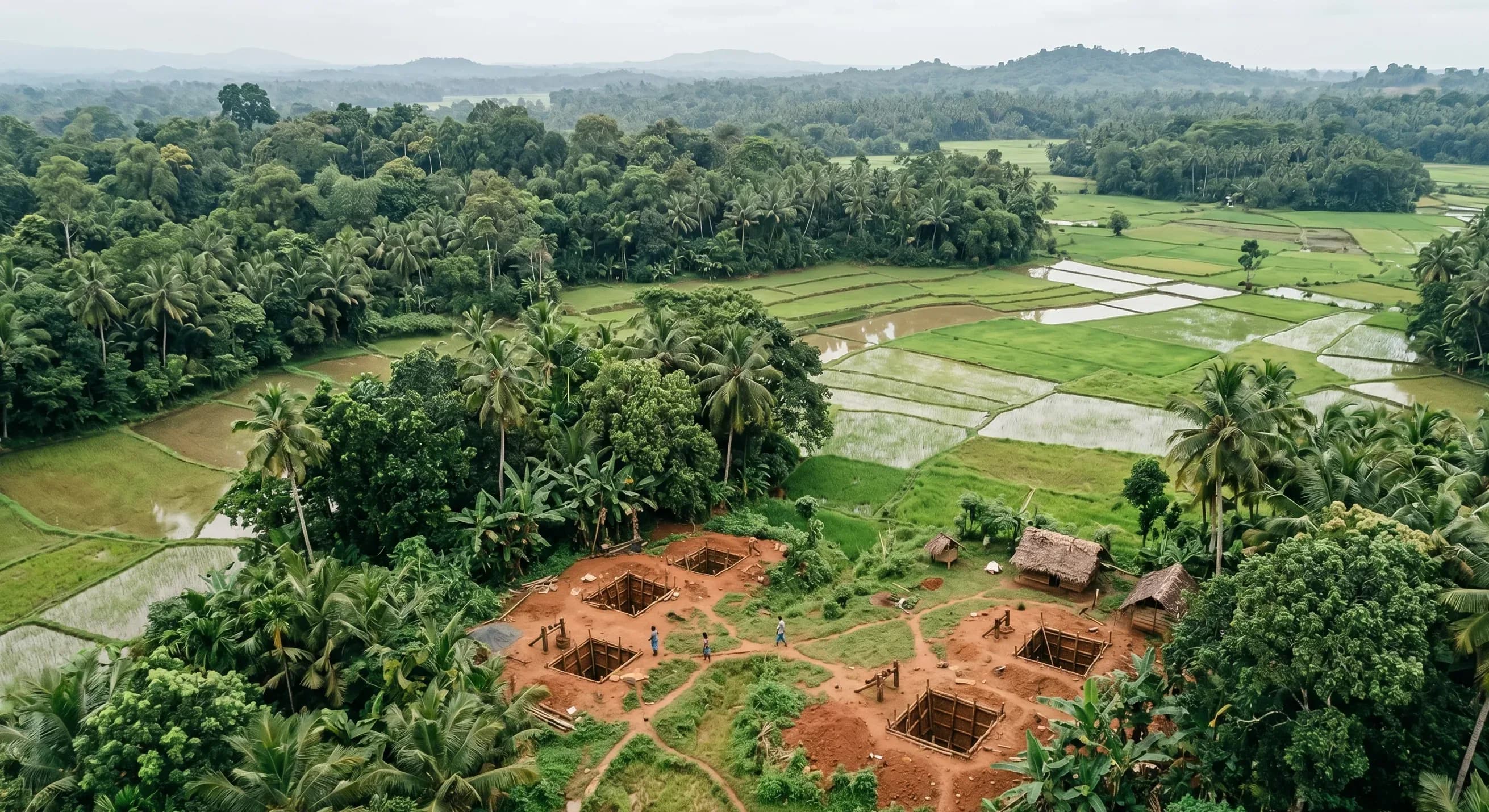
Small-scale gem mining is the artisanal extraction of rough gemstones by hand, in teams small enough to know each other by name. It is the dominant model in Sri Lanka: the large majority of the island's sapphires, rubies, spinels, and other stones come out of the ground this way, not from mechanized open pits. There is no single corporate mine producing Ceylon sapphire. There are thousands of small operations, each working a shaft a few meters wide.
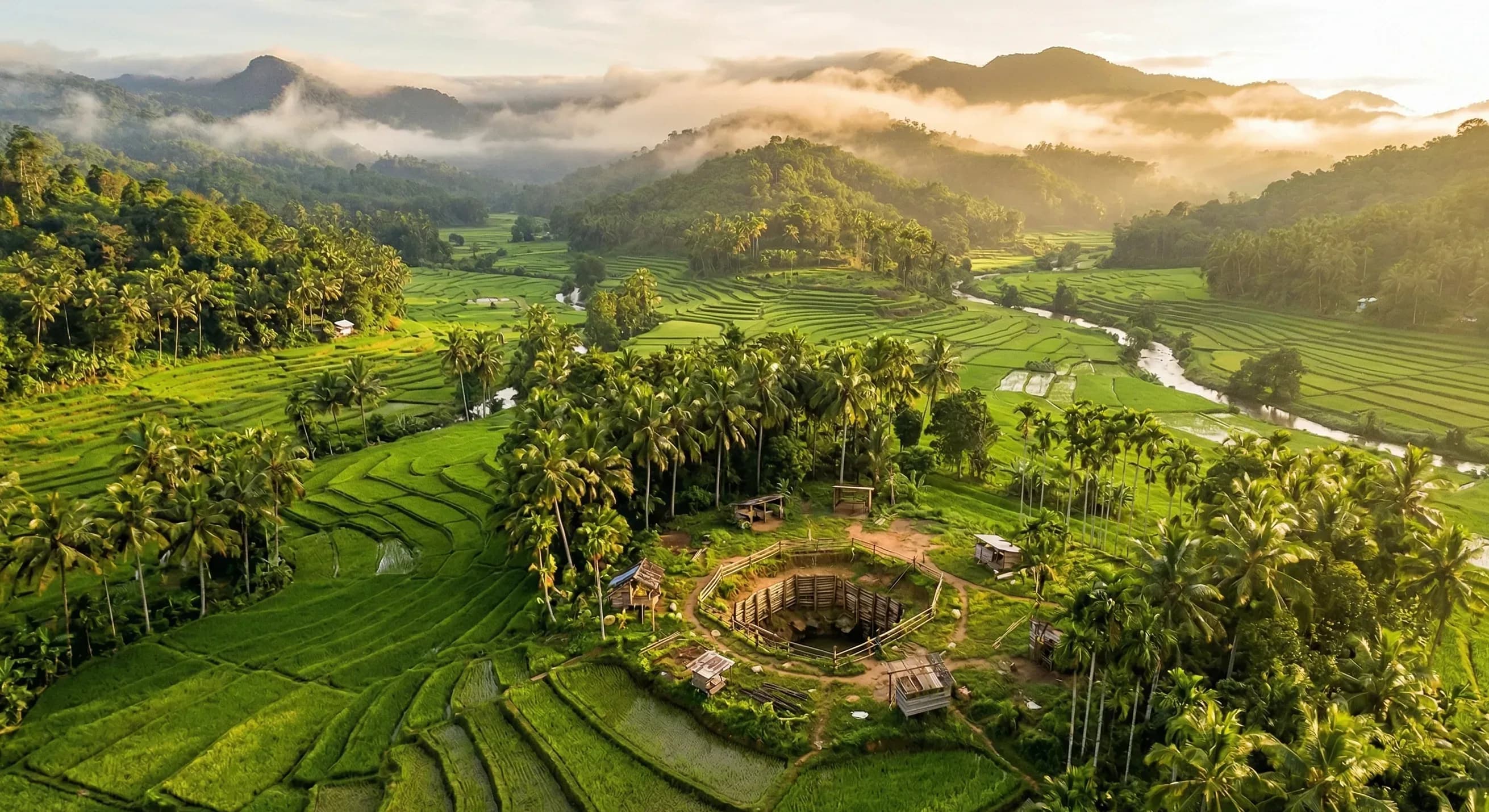
A typical operation is a licensed pit run by 5 to 15 people. They sink a shallow vertical shaft, usually 5 to 15 meters deep, into a gem-bearing gravel layer the locals call illam. They haul the gravel up in baskets, wash it in river water, and sort the heavy concentrate by eye. No blasting, no heavy machinery, no chemicals. We covered the mechanics of that process in detail in how Sri Lankan gems are mined; this post is about the people and the money rather than the digging.
Every pit operates under a license from the National Gem and Jewellery Authority (NGJA), which specifies location and depth and requires the land to be backfilled when mining ends. That regulatory layer is unusual. Sri Lanka has one of the strongest legal frameworks for artisanal mining anywhere in the world, and it is a large part of why small-scale gem mining here is genuinely different from the informal, unregulated digging you find in some other gem-producing countries.
How Are Gem Miners Paid? The Share System
This is the part outsiders almost always get wrong. Most small-scale operations do not pay a flat wage and keep the profit for an owner. They run on a share system, which locals sometimes call panguwa, the Sinhalese word for a share.
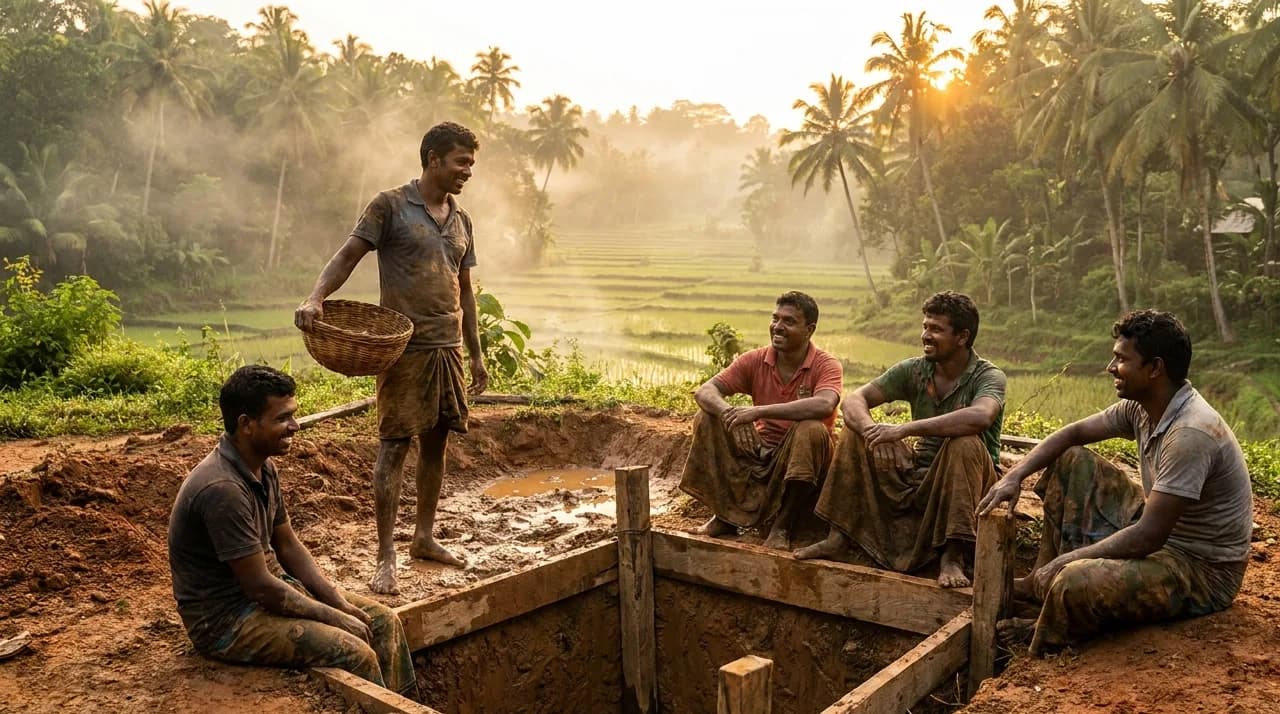
Three roles each hold a stake. The landowner leases the mining rights to the team and takes a share for the land. The financier (often called the mudalali) puts up the working capital: the timber, the water pumps, the food, and the daily wages during the dig, which can run for weeks or months before anything is found. And the laborers, the people actually underground and at the wash, provide the work and hold the largest collective share of the find.
When a stone sells, the costs are recovered first, and then the proceeds are divided according to the agreed shares. During the dig, laborers receive a modest daily wage advance plus meals, so they are not working for nothing while waiting on luck. The real upside arrives when a good stone comes out of the gravel, because everyone on the team participates in that sale. A clean 4-carat sapphire rough that sells for the equivalent of several hundred dollars is split across the crew, and on a productive find it can mean a month's income in a single afternoon.
This structure matters for one big reason: it spreads both the risk and the reward. A dry month, and there are many, is a shared loss rather than a layoff. A good find lifts the whole team. The social dynamics are closer to a fishing cooperative than to an industrial payroll.
What Is the Community Impact of Gem Mining?
Walk through a village near Pelmadulla or Ratnapura and you can see the industry in the streetscape. Gem mining is not a job that exists in isolation. Around every cluster of pits sits an interlocking local economy: cutters and polishers, brokers who carry stones between dealers, the tea shops and food vendors who feed the crews, the timber merchants and pump mechanics who supply the pits, and the dealers who turn rough into export-grade goods.
A single stone can be mined by one family, cut by a neighbor, brokered by a cousin, and certified through a dealer the miner has known for twenty years. The money moves between households in the same district rather than leaving for a corporate headquarters in another country. That is the core of what makes these ethical mining communities work: the value of the gem largely stays where the gem was found.
The downstream effects are tangible. Gem income pays school fees, builds and improves houses, and funds the small businesses that support the trade. Because the knowledge is multi-generational, a productive gem district tends to keep its young people rather than losing them to the cities. The craft of reading wet gravel for a flash of corundum is learned in childhood, and it has economic value that keeps families rooted to the land.
This is the human story behind the supply chain we traced stone-by-stone in one sapphire's journey through Crestonne. Every handoff in that chain is also a household that earned something. When the chain is short and the prices are transparent, more of that value lands with the people at the bottom of it.
Are Gem Miners Paid Fairly?
This is where honesty matters more than marketing, and where the question of fair wages in the gem industry gets complicated.
The share system is structurally fairer than a flat wage, because laborers participate in the upside instead of watching an owner pocket it. Compared with the alternatives available to a rural worker in the same district, agricultural day labor or migration to a garment factory, a place on a gem-mining team can pay better and keeps the worker at home with their family. In a good year, on a productive pit, the income is genuinely good.
But the model strains in real ways. The financier who fronts the capital carries the risk through dry months, and in return takes a meaningful share and, sometimes, the strongest bargaining position when a stone sells. Income is volatile: a crew can dig for two months and find nothing, and the daily wage advance during that stretch is modest. And the further a stone travels up the chain of dealers, the smaller the slice that the original diggers received looks in hindsight against the final retail price.
So the fair answer is: the system is fairer than most artisanal mining worldwide, it is backed by real labor and child-protection law under the NGJA, and it keeps wealth local, but it is not a guaranteed living wage. Fairness here is less about a fixed number and more about two things: whether the share split is honest, and whether the buyers at the top of the chain pay prices that let the bottom of the chain earn. We unpacked the broader definition in what "ethically sourced" actually means for Sri Lankan sapphires, and the wage question is the part of that story that gets glossed over most often.
What Risks Do Small-Scale Gem Miners Face?
A complete picture has to name the downsides, because pretending they do not exist is its own form of dishonesty.
The physical risks are real even though the pits are shallow. Wet-ground shafts can collapse if the timber bracing is inadequate, flooding is a constant battle in Ratnapura's lowland climate, and the work is hours of hard labor in humid, cramped conditions. Licensing and bracing requirements reduce the danger but do not remove it.
The financial risks are just as real. The share model spreads the pain of a dry spell, but it does not erase it, and a laborer with no other income can fall into debt to the financier across a long unproductive stretch. A productive pit is a good livelihood; an unlucky one is months of work for very little. That volatility is the single hardest fact about the industry, and it is why steady, repeat buyers who keep purchasing through the quiet months matter so much to a mining community's stability.
How Crestonne Works With These Communities
We do not own a mine, and we do not claim to. What we do is buy consistently and transparently from one aggregator family near Pelmadulla, just south of Ratnapura, whom we have worked with since 2022.
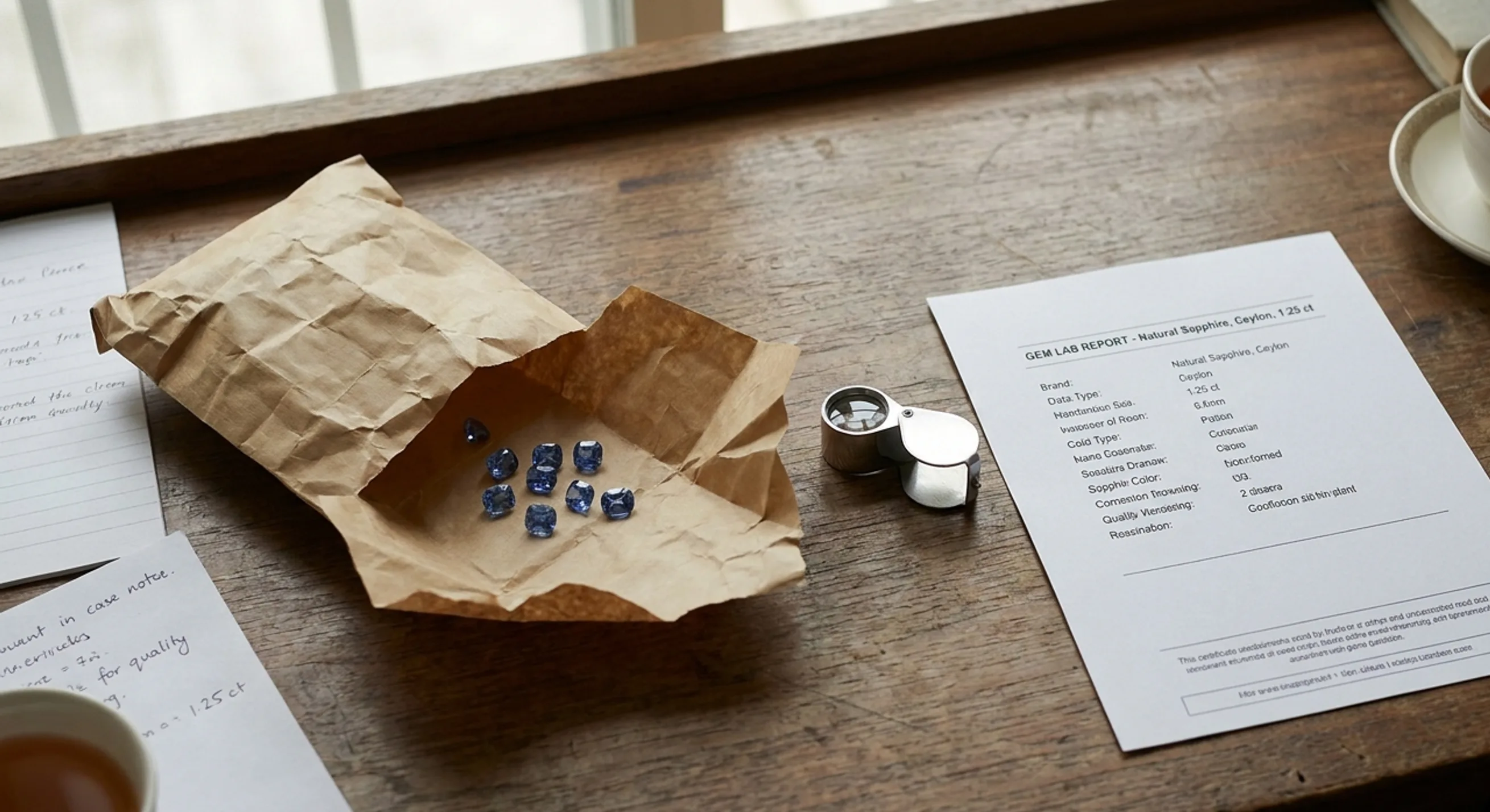
On one visit during a slow stretch in the monsoon, I watched a small payout happen at the pit edge. A crew had brought up a single clean blue rough after a flat couple of weeks. The financier counted out the recovered costs first, then the shares: the landowner's portion, his own, and the larger collective slice for the four men who had been underground. It was not a fortune. But it was distributed in front of everyone, by an agreed formula, with no one's cut hidden. That transparency, repeated find after find, is what a functioning share system actually looks like.
Our part is simple. We pay a fair price for the rough rather than grinding the aggregator to the floor, we keep buying through the dry months when other dealers go quiet, and we document where each stone came from. Buying steadily is not charity; it is what gives a mining community a predictable customer, which in a luck-based industry is worth more than a one-time high price. The longer version of why we built the business this way is in the Crestonne story.
The Bottom Line for Buyers
Small-scale gem mining in Sri Lanka is one of the more defensible ways a gemstone comes out of the earth: low environmental impact, strong regulation, and a profit-sharing model that keeps wealth in the villages that do the work. It is not perfect. Income is volatile, the financier holds leverage, and "fair" is a moving target. But a Ceylon sapphire bought through a short, transparent chain is one of the few luxury purchases where you can actually point to the community that benefited.
The most useful thing a buyer can do is reward that transparency. Browse our current collection of certified stones sourced this way, or if you want something specific in color, carat, or cut, tell us what you are looking for through our custom sourcing service and we will go back into the Ratnapura network with your brief in hand. Either way, you are buying from a chain that keeps more of the value where the stone was found.
Common questions
Frequently Asked Questions
How many people does gem mining employ in Sri Lanka?
The gem and jewellery sector directly and indirectly supports several hundred thousand people in Sri Lanka, with figures commonly cited around 600,000 when you count miners, cutters, polishers, brokers, dealers, and the support trades around them. The overwhelming majority of those jobs sit in small-scale artisanal operations near Ratnapura, Elahera, and Balangoda, not in large industrial mines. For most of these families, gem work has been the household trade for several generations.
How are gem miners paid in Sri Lanka?
Most small-scale operations run on a profit-sharing model rather than a flat wage. The landowner who leases the mining rights, the financier who funds the dig, and the laborers who do the physical work each hold an agreed share. During the dig itself, laborers typically receive a daily wage advance plus food, and when a stone sells, the proceeds are split by those shares after costs are recovered. The base pay is modest, but the share of a good find is where the real money is.
Is small-scale gem mining in Sri Lanka safe?
It is safer than most artisanal mining worldwide because the pits are shallow (5 to 15 meters) and use no explosives or toxic chemicals, but it is not without risk. The main hazards are pit-wall collapse in wet ground, flooding, and the physical toll of long hours in cramped, humid shafts. Licensed operations under the National Gem and Jewellery Authority must use timber bracing and pumps, which reduces but does not eliminate the danger.
Does small-scale gem mining harm the environment in Sri Lanka?
Its footprint is among the lightest of any mineral extraction. No mercury, cyanide, or acid is used; gems are separated from gravel using only water and gravity. Pits are shallow and, by law, must be backfilled when mining ends, so land returns to rice paddy or garden within a season or two. The one real impact is sediment in local waterways from washing, which better operations now manage with settling ponds.
How can buyers support ethical mining communities?
Buy from sellers who can name the specific district, dealer, and cutter behind a stone, and who pay transparent prices rather than squeezing the bottom of the chain. The single most useful thing a buyer does is reward sourcing that keeps more of the stone's value inside the Sri Lankan villages that produced it. A documented chain of custody is the receipt that a community actually benefited, rather than a marketing line.