Ethics & Sourcing
Ethical Gemstone Certifications: Which Ones Matter?
Most ethical gemstone certifications were built for diamonds and large industrial mines, not Sri Lankan sapphires. Here is what each one actually covers, and what to ask a dealer when no scheme fits.
10 min read

By Crestonne Editorial
Updated July 1, 2026
Most ethical gemstone certifications were built for diamonds and large industrial mines, and almost none of them apply meaningfully to Sri Lankan sapphires. The Kimberley Process is diamond-only. Fairmined is mostly gold and silver. The Responsible Jewellery Council certifies companies, not individual stones. There is no equivalent of "Fairtrade coffee" for Ceylon sapphire that you can ask for by name and rely on. What does work for coloured stones is direct traceability: knowing the specific mine, the cutter, the dealer chain, and being able to name them. This guide walks through which ethical gemstone certifications actually exist, what each covers, what each does not cover, and what to ask a dealer when no scheme fits the stone in front of you.

What Does "Ethical Gemstone Certification" Actually Mean?
The phrase is used loosely. In practice it is shorthand for two different things that the trade often blurs together.
The first is gemological certification: a laboratory report from GIA, SSEF, Gübelin, AGL, or a similar institution. These reports certify what the stone is (species, variety), where it was likely mined (country of origin), and whether it has been treated. They do not certify ethics. A GIA report on a Burmese ruby tells you the ruby is Burmese; it says nothing about whether the mine pays its workers fairly. Confusing gemological certification with ethical certification is the single most common mistake buyers make.
The second is supply-chain or sourcing certification: schemes like the Kimberley Process, Fairmined, Fairtrade Gold, the Responsible Jewellery Council, and a small number of newer initiatives such as Moyo Gemstones and the Coloured Gemstones Working Group. These attempt to certify the conditions under which a stone (or a company) was mined, traded, or handled.
This article is about the second category. The first (lab reports) is covered in the guide to reading a GIA sapphire certificate.
Does the Kimberley Process Apply to Sapphires?
No. This is the cleanest answer in the entire field.
The Kimberley Process Certification Scheme was set up in 2003 specifically to prevent "conflict diamonds" (rough diamonds used to finance armed rebellion against legitimate governments) from entering the legitimate diamond trade. It governs the international trade in rough diamond shipments. It does not apply to cut diamonds, to coloured stones, to lab-grown anything, or to finished jewellery.
A "kimberley process sapphire" is therefore not a real category. If a dealer's marketing copy describes a Ceylon sapphire as Kimberley Process certified, they are either using the phrase loosely as a vague signal of ethics, or they have confused the scheme with something else. There is no Kimberley Process for sapphires. Sri Lanka has been politically stable since the end of the civil war in 2009 and has no history of gem revenues funding armed conflict, so even by the spirit of the scheme the issue does not arise.
What this means for buyers: if ethics matters to you, the Kimberley Process tells you nothing about your sapphire. It is irrelevant by design.
Is Fairmined Certification Available for Coloured Stones?
Mostly no, but with caveats worth understanding.
Fairmined is run by the Alliance for Responsible Mining (ARM), a Colombia-based organisation. The scheme was built around small-scale and artisanal gold and silver mining: it certifies organised miners' associations that meet standards on labour rights, environmental practice, organisational legitimacy, and traceability. Certified gold trades at a small premium and is sold through licensed CPOs (Certified Producer Organisations). Fairmined gold is now a genuine, well-established niche.
Coloured stones are much harder. ARM has run pilot programmes for coloured stone certification, including work with Colombian emerald miners and Tanzanian ruby cooperatives, but small-scale gem mines are scattered, informal, and often family-run, which makes auditing them at scale very expensive. There is no active Fairmined Sri Lankan sapphire supply line as of 2026.
That last point matters. If a dealer claims a Ceylon sapphire is Fairmined certified, the right questions are:
- Which Fairmined-licensed CPO handled the stone?
- Which mine, by name?
- Where is the chain-of-custody paperwork from the CPO to the dealer?
If the answers are vague ("we work with ethical mines"), the certification claim is empty. The Fairmined system runs on documented chains of custody, and any genuinely certified stone will have them.
What Is the Responsible Jewellery Council and What Does It Certify?
The Responsible Jewellery Council (RJC) is an international standards body for the jewellery and watch industry. It runs two main certification standards: the Code of Practices (COP) and the Chain of Custody (CoC) standard, which is more recent and more rigorous.
What the RJC actually certifies is companies, not individual stones. An RJC member is a jewellery business (brand, manufacturer, polisher, refiner) audited against the COP on human rights, labour conditions, environmental management, anti-bribery, responsible sourcing due diligence, and disclosure. The membership list reads like a who's who of the corporate jewellery world: Cartier, Tiffany, Pandora, Signet, the major refiners. Membership is genuinely meaningful for these large companies and has pushed industry practice in a positive direction.
What it does not do is certify the ethical status of any specific stone. The RJC's Chain of Custody standard is the closer equivalent to per-stone certification, but it is currently most developed for gold and platinum-group metals and only partially extends into coloured-stone supply chains. Most RJC member jewellers buy coloured stones from dealers who are not themselves audited.
So when a luxury brand advertises that they are "RJC certified," it means the brand has business-level ethical policies and audited internal practices. It does not mean every sapphire in the case has been individually traced to an audited mine.
For a small artisanal sapphire dealer in Beruwala, RJC membership is also genuinely impractical. The annual fees and audit costs are calibrated for companies with multi-million-dollar turnover. This is a real industry problem and one of the reasons that traceability (which scales down) often does more work for ethics in the coloured-stone trade than certification (which scales up).
Are There Any Certifications Specifically for Sri Lankan Sapphires?
Two are worth knowing about, and both have limits.
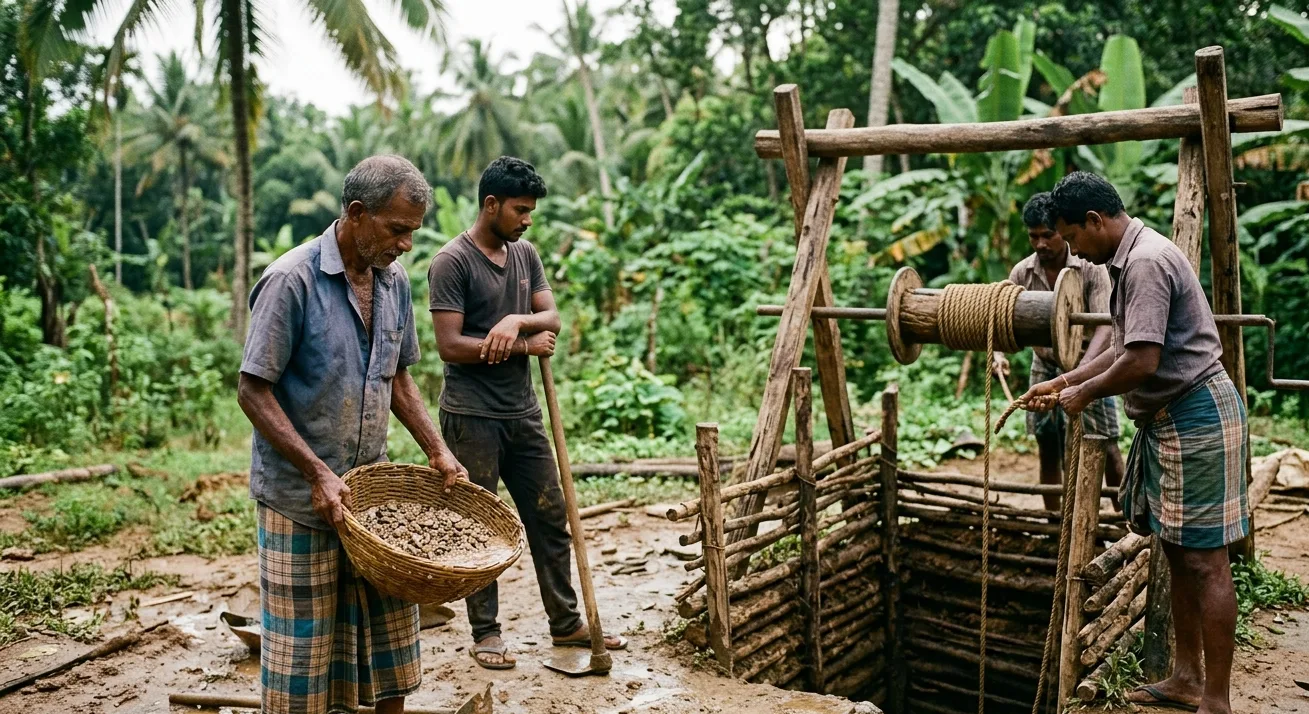
National Gem and Jewellery Authority (NGJA) licensing. Every legal gem mine in Sri Lanka requires an NGJA licence specifying the location, the depth of the pit, and the obligation to backfill the excavation when mining is complete. Every legal gem dealer in Sri Lanka requires an NGJA dealer's licence. This is regulatory, not ethical certification, but it is meaningful: it means the operation is legal, registered, and traceable to a named licence holder, and the country has one of the strongest regulatory frameworks for artisanal gem mining anywhere in the world. For an overview of what this looks like in practice, see how Sri Lankan gems are mined.
Industry-led traceability programmes. Initiatives like the Coloured Gemstones Working Group, Moyo Gemstones (East Africa, not Sri Lanka), and a handful of dealer-led traceability frameworks attempt to document chain of custody from mine to retail. These are useful where they exist, but coverage of Sri Lankan sapphire is patchy. No global programme certifies a meaningful share of Ceylon sapphire flow as of 2026.
What this means for buyers: when someone tells you a Ceylon sapphire is "ethically sourced," ask what specifically that claim rests on. The honest answers are usually some combination of: a named NGJA-licensed mine, a known cutter, a multi-generational dealer relationship, photographs of the rough, lab certification of origin and treatment. These are not formal certifications. They are something better, which is verifiable provenance.
How Can You Verify Ethical Sourcing Without a Formal Certification?
Five questions cut through almost all the marketing language.
1. Where was the stone mined, by name? A real answer names a district (Ratnapura, Elahera, Balangoda, Meetiyagoda) or, for the best traceability, a specific licensed mine. A vague answer ("Sri Lanka") is the floor; "ethically sourced" with no specifics is below the floor.
2. Who cut the stone? Sri Lankan dealers selling to international buyers can usually name the cutter or at least the workshop in Beruwala or Ratnapura. The dynamics of Sri Lankan cutting make this knowable. If the dealer cannot name the cutter, the chain has at least one unverified handoff.
3. How many hands did the stone pass through? Mine, cutter, dealer, exporter, importer, retailer. Each handoff dilutes traceability. Direct mine-to-market or near-direct chains carry more verifiable ethics than long broker chains.
4. Is there a lab report? A GIA or SSEF report does not certify ethics, but it does make falsification harder. A stone with documented Sri Lankan origin from a major laboratory is at least confirmed Sri Lankan, which rules out the more serious ethical concerns associated with conflict-zone material from elsewhere.
5. Will the dealer answer specifics in writing? A dealer who is comfortable putting mine name, cutter name, and date of acquisition into an email or invoice is operating differently from one who can only offer marketing language. The willingness to commit specifics to writing is one of the strongest signals you have.
A Note on the Founder's Side of This
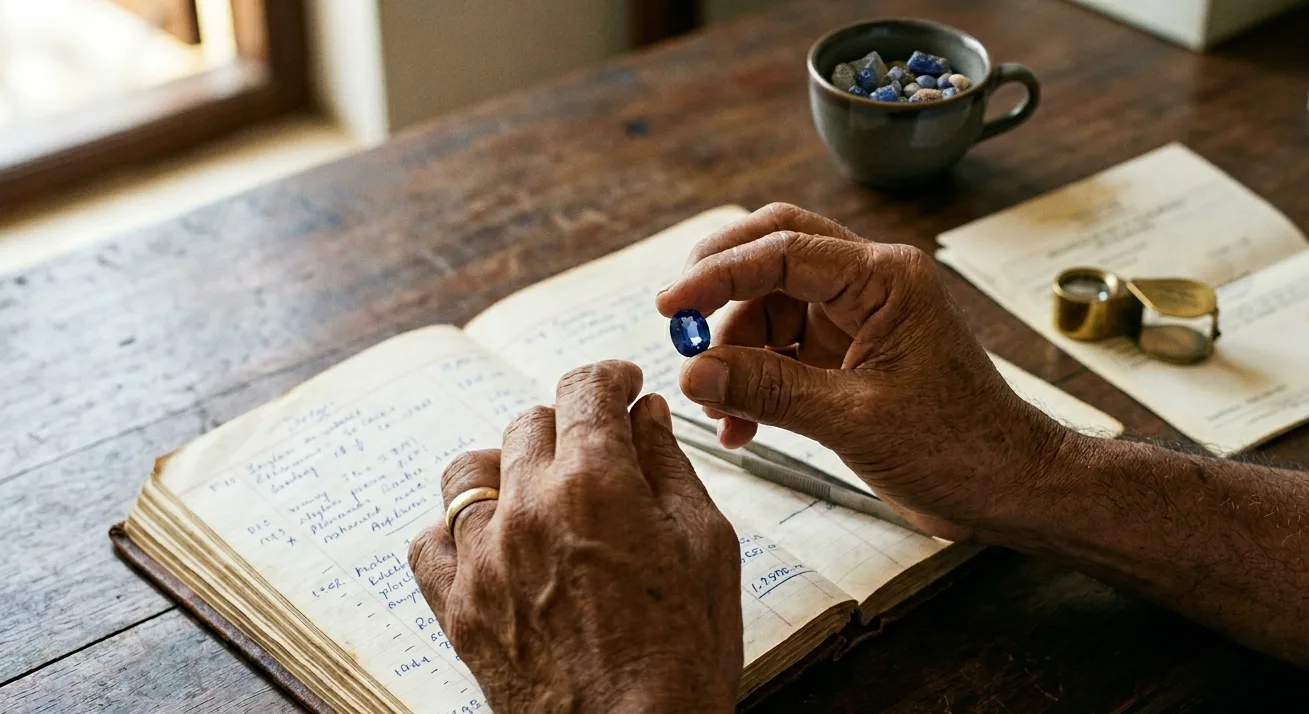
The first time I asked a Ratnapura mine owner about Fairmined certification, he listened politely, then asked me to explain what it covered. When I described the audit fees and the documentation cycle, he laughed, not unkindly, and said his pit produces between 40 and 90 stones a year of any commercial value, and that the cost of being audited would consume two of those stones. He had been mining the same plot for thirty-one years, paid his crew on a fixed share of the proceeds for every stone they pulled, and the pit was on land his grandfather had worked. The miners were his cousins or his cousins' children.
He was not opposed to certification. He simply could not afford it, and the scheme had not been designed for an operation his size.
That conversation is why Crestonne's sourcing model is built on traceability rather than certification logos. We can name the mine. We can name the cutter. We can give you the NGJA licence number on request. We are happy to put it in writing. None of that is an RJC stamp. We think it is more useful.
What This Means When You Are Buying
If you are choosing between a certified-ethical sapphire and a traceably-sourced sapphire from the same country, the second is usually closer to what you actually want. Certifications are valuable signals when they fit the supply chain they were built for. For Sri Lankan sapphire, very few of them do.
The right approach is to:
- Ask for lab certification of identity, origin, and treatment (this is non-negotiable on any meaningful purchase).
- Ask for traceability: mine, cutter, dealer chain, by name.
- Treat any further certification claim as a bonus, and ask for the documents behind it.
If you want a sapphire sourced this way, tell us what you are looking for and we will source it directly from a named mine in Ratnapura, send you the rough photographs, the cutter's name, and a major-laboratory report. None of that is a certification scheme. It is the chain of evidence the scheme was supposed to provide.
Common questions
Frequently Asked Questions
Is the Kimberley Process the same as ethical certification for sapphires?
No. The Kimberley Process is a diamond-specific scheme designed to keep conflict diamonds out of the rough trade. It does not apply to sapphires, rubies, or any coloured stone. A dealer who tells you their Ceylon sapphires are 'Kimberley Process certified' is either confused or being misleading. Sri Lanka has no civil-conflict gemstone problem, and the process has no mechanism for non-diamond rough.
Can I get a Fairmined certified Ceylon sapphire?
Almost certainly not. Fairmined certification is structured around small-scale gold and silver miners in Latin America and a small number of African operations. It has piloted coloured-stone programmes but very few certified coloured stones reach the market, and Sri Lankan sapphire is not currently part of any active Fairmined supply line. If a dealer claims a sapphire is Fairmined, ask which mine, which year, and which Fairmined-licensed CPO handled it. The paperwork should exist or the claim is empty.
Does GIA or another lab certify ethical sourcing?
No. GIA, SSEF, Gübelin, and AGL are gemological laboratories. They certify identity, origin, and treatment. They do not audit the labour conditions or environmental practices of the mines a stone came from, and they do not claim to. A GIA report saying 'Sri Lanka, no indications of heating' tells you the stone's species, country, and treatment, not whether it was mined ethically.
Are Responsible Jewellery Council member companies guaranteed ethical?
Not guaranteed. RJC certification audits a company's business practices, supply-chain due diligence, and human rights policies against the RJC Code of Practices. It is meaningful for established mid-to-large jewellery brands, and it does push standards up across the industry. But it certifies the company, not individual stones, and it does not extend deep into the artisanal mining communities where most coloured stones originate. An RJC member buying from an unverified dealer is still selling an unverified stone.
What is the difference between traceability and certification?
Certification is a third-party stamp confirming a stone or company meets a defined standard. Traceability is the chain of custody: knowing the specific mine, cutter, and dealers a stone passed through, by name. For Sri Lankan sapphires the second is almost always more meaningful. A stone whose miner, cutter, and dealer can be named and contacted is more verifiably ethical than one carrying a generic certification logo from a scheme that was not built for coloured stones.