Specialty Stones
Sri Lankan Tourmaline: An Underrated Collector's Gem
Sri Lankan tourmaline runs across olive green, honey brown, golden yellow, and rare chrome and rubellite material, all at 70 to 90 percent below Ceylon sapphire pricing. Here is what is actually worth collecting from Ratnapura's pegmatite gravels.
Published Updated 10 min read
By Naseef AR
Sri Lankan tourmaline is one of the most overlooked gemstones to come out of Ratnapura. The country produces tourmaline across a wide colour range, primarily green, yellow-green, olive, brown, and yellow, with rarer pink, red, and chrome varieties, at prices that sit well below comparable Brazilian or Mozambican material. Mohs hardness 7 to 7.5 makes it durable enough for daily wear in earrings, pendants, and most ring styles. For a collector who wants a clean, certified gem with a transparent supply chain at a fraction of the cost of Ceylon sapphire, Sri Lankan tourmaline is the most rewarding entry point in the Ceylon family.
This guide covers what Ceylon tourmaline actually is, the full colour spectrum, what these stones are worth in 2026, how they compare to tourmaline from Brazil, Mozambique, and Afghanistan, and which varieties are worth seeking out.
What Is Sri Lankan Tourmaline?
Tourmaline is a complex boron silicate mineral group, with the gem-quality varieties almost exclusively elbaite (lithium-bearing) and dravite (magnesium-bearing). Sri Lanka produces both: elbaite for the pink, red, green, and multicolor stones, dravite for the warmer brown, honey, and yellow shades. Crystals form in pegmatite environments and are then weathered out into the same alluvial gem gravel that produces sapphire, spinel, chrysoberyl, and the rest of the Ceylon family. The major working sources are around Elahera, Okkampitiya, and the broader Ratnapura district.
Identifying features in the rough are characteristic and easy to remember: elongated prismatic crystals with a distinctive triangular or rounded-triangular cross-section, and strong vertical striations running along the length. Strong pleochroism (colour shift when viewed from different angles) is a useful indicator on cut stones too. Tourmaline will visibly change in saturation and sometimes in colour as you rotate it under a single light source.
Historically Sri Lankan tourmaline was misidentified for decades. Yellow-green Sri Lankan tourmaline was widely sold as "Ceylon peridot" through the 19th and early 20th centuries; the actual mineral is tourmaline, not peridot, and the misnomer still surfaces in older Edwardian and Art Deco jewellery. Any "Ceylon peridot" from before about 1950 is almost always tourmaline.
What Colours Does Ceylon Tourmaline Come In?
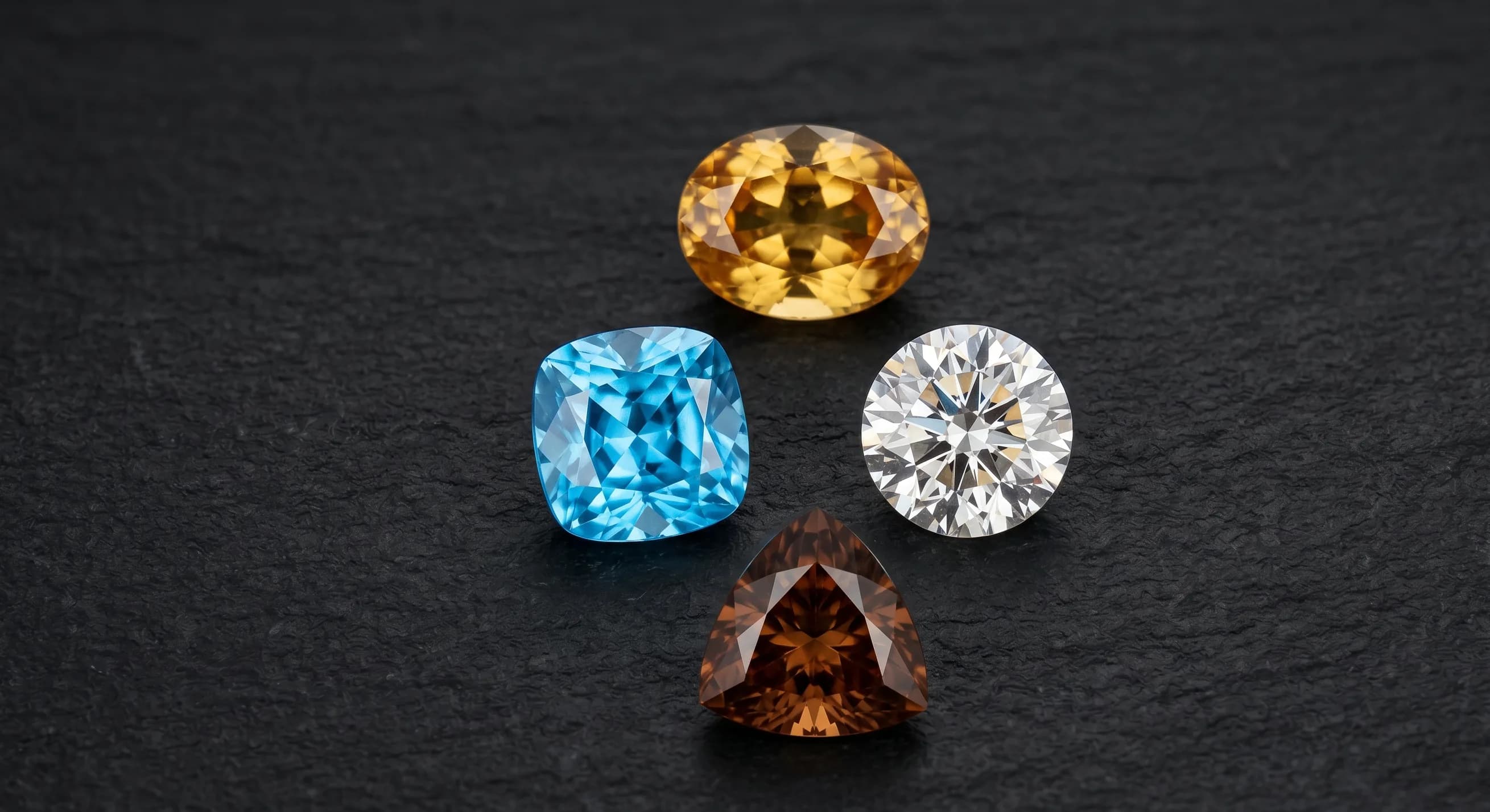
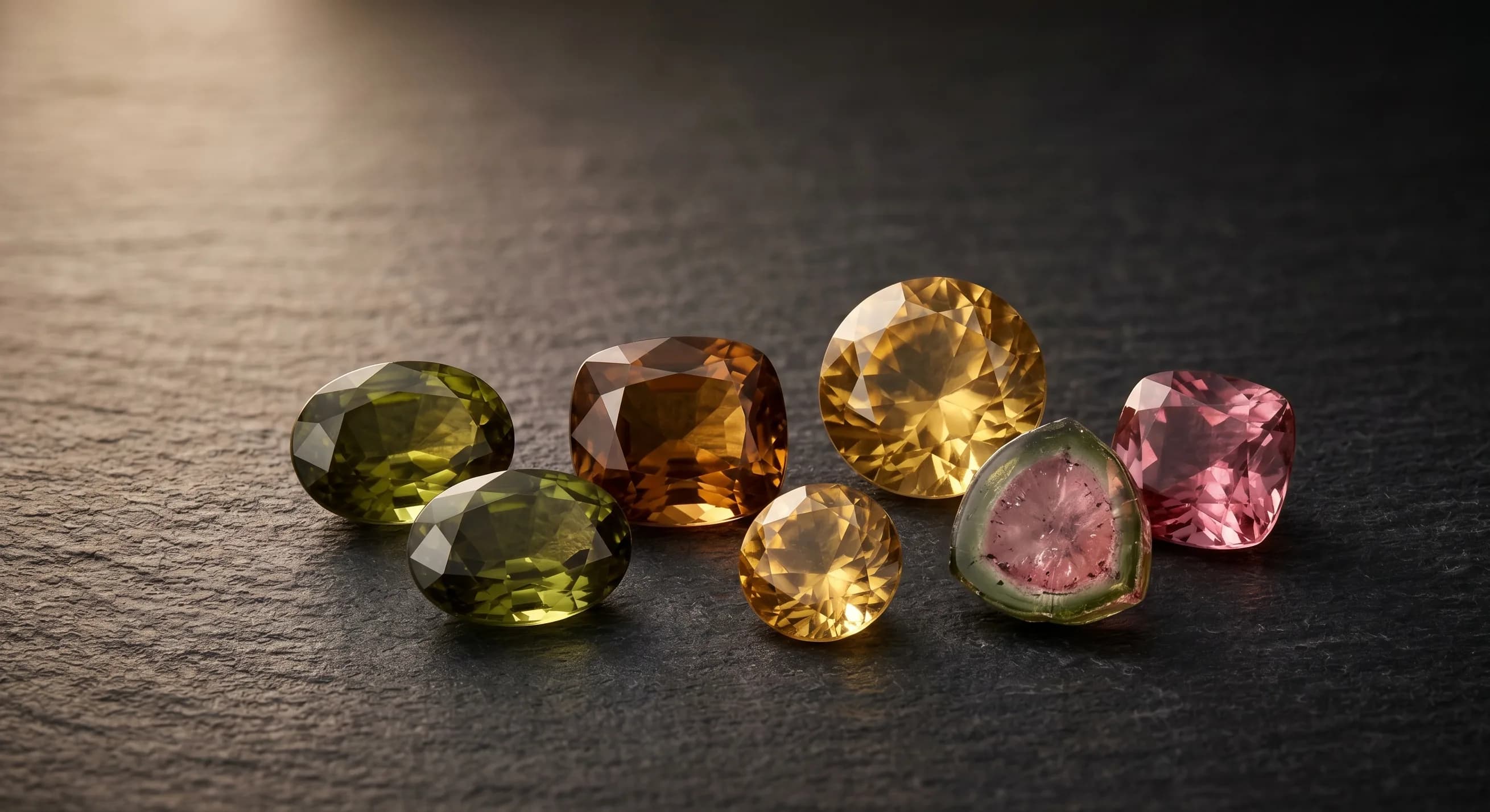
The Ceylon tourmaline colours form a broad but unevenly distributed spectrum. The colours most commonly found in commercial quantities, in rough descending order of availability:
-
Yellow-green to olive green. The dominant Sri Lankan colour. Ranges from a warm golden olive to a cleaner spring green. Forms the basis of the historical "Ceylon peridot" trade.
-
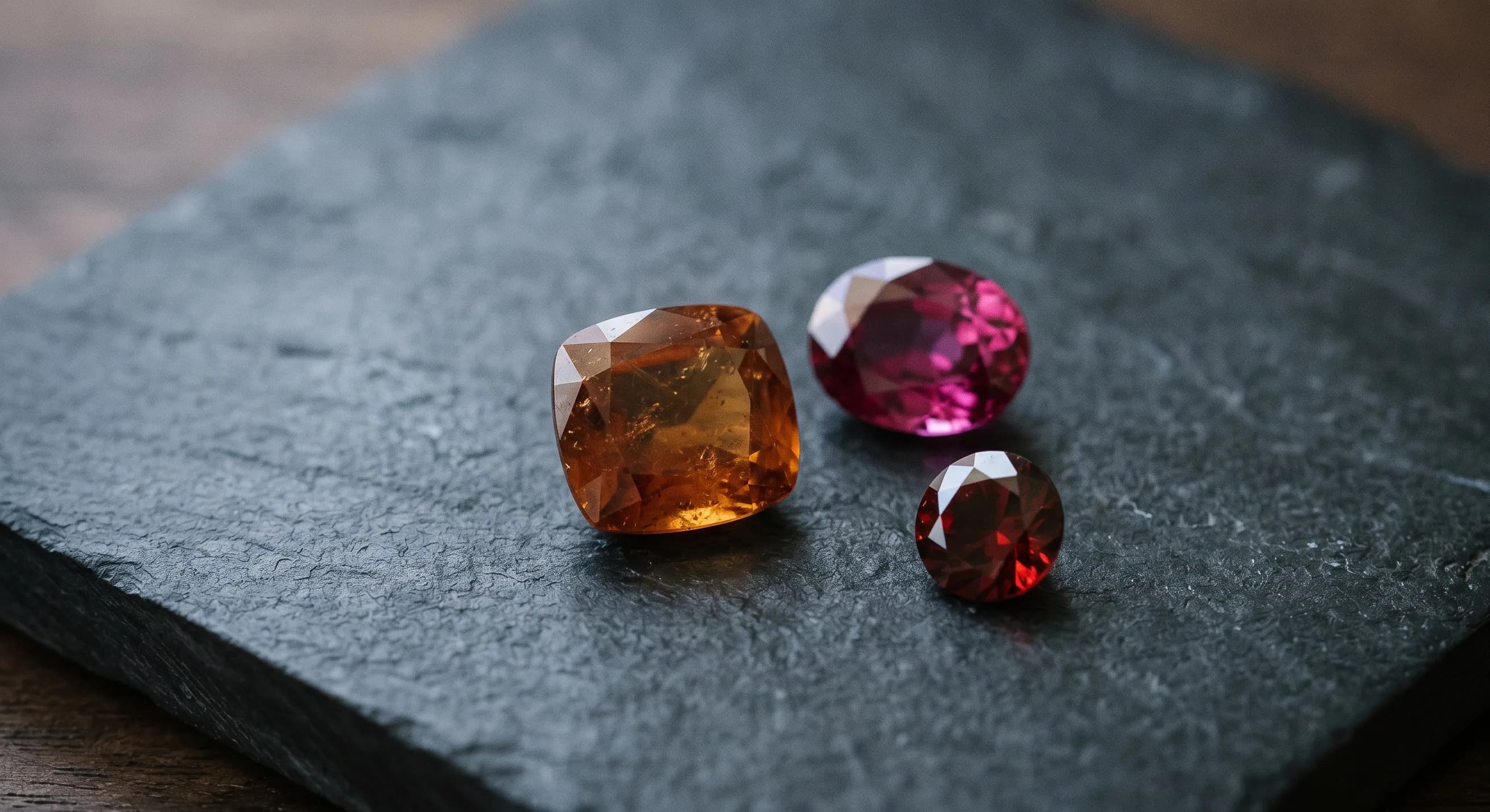
Brown to honey. Dravite-rich material. Warm, cinnamon-toned, often with strong saturation. Underappreciated in Western markets, well-loved in Indian and Sri Lankan domestic jewellery.
-
Pure golden yellow. Saturated yellow tourmaline, sometimes confused with yellow sapphire face-up but distinguishable by pleochroism and refractive index.
-
Vivid emerald green (chrome tourmaline). Rare. Coloured by chromium and vanadium rather than iron, producing a saturated true green that resembles tsavorite garnet or fine emerald. Most chrome tourmaline on the market is Tanzanian, but Sri Lankan chrome tourmaline does exist and is highly collectible.
-
Pink to red (rubellite). Less common in Sri Lankan production than in Brazil or Mozambique but present. Tends toward warmer pink-red rather than the cool magenta of fine Brazilian rubellite.
-
Multicolor / bi-colour / watermelon. Crystals that pass through compositional zones during growth and end up with two or three discrete colours in a single stone. Sri Lankan multicolor tourmaline is rare and prized.
-
Blue (indicolite). Genuinely rare from Sri Lanka. Most blue tourmaline reaching the market is from Brazil or Afghanistan.
For most buyers the practical universe is the green, yellow-green, brown, and yellow range. These are the colours that come out of Sri Lankan pegmatites in workable carat weights and at reasonable prices. Pink, red, blue, and chrome material exists but is rare enough that it usually requires a custom search.
How Much Is Sri Lankan Tourmaline Worth?
Sri Lankan tourmaline value sits well below Ceylon sapphire and below the better-known Brazilian and African tourmaline supply. Indicative 2026 dealer-to-end-buyer prices:
| Colour / variety | 1 to 3 ct | 3 to 5 ct | 5 ct + |
|---|---|---|---|
| Yellow-green / olive | USD 60–150/ct | USD 100–250/ct | USD 200–400/ct |
| Brown / honey dravite | USD 40–100/ct | USD 80–180/ct | USD 150–300/ct |
| Pure golden yellow | USD 100–250/ct | USD 200–400/ct | USD 350–700/ct |
| Chrome / vivid emerald green | USD 400–1,200/ct | USD 800–2,500/ct | USD 2,000–5,000/ct |
| Rubellite (pink-red) | USD 200–600/ct | USD 400–1,000/ct | USD 800–2,000/ct |
| Multicolor / bi-colour | USD 150–400/ct | USD 300–700/ct | USD 600–1,500/ct |
These figures assume eye-clean, well-cut, untreated stones with full disclosure. They run 70 to 90 percent below comparable Ceylon sapphire pricing at the same carat weights, which is the entire reason Sri Lankan tourmaline is one of the best collector entry points in the Ceylon family. For context on how Ceylon sapphire itself trades today, the Ceylon sapphire price per carat guide covers the corundum benchmark.
Three things move tourmaline value disproportionately:
Saturation. A vivid, clean green is worth multiples of a dull olive green at the same weight. Tourmaline is a stone where colour does almost all the work; mediocre saturation will not appreciate.
Pleochroism management. Cutters orient the rough so the strongest face-up colour appears through the table. Poorly cut tourmaline reads dramatically different across the stone and loses substantial value even if the rough was good.
Carat weight thresholds. Tourmaline rough yields well, so large stones are more available than in the corundum family. The premium per carat does climb above 5 carats, but not as steeply as for Ceylon sapphire.
How Does Sri Lankan Tourmaline Compare to Tourmaline From Other Sources?
The major commercial sources globally are Brazil (Minas Gerais and Paraíba), Mozambique, Nigeria, Afghanistan, and Tanzania. Each has a signature:
-
Brazil dominates fine rubellite, indicolite, and the legendary copper-bearing Paraíba, and continues to set the global price ceiling for those varieties.
-
Mozambique produces large quantities of rubellite, copper-bearing "Paraíba-type" material, and clean greens at competitive prices.
-
Nigeria and Afghanistan are known for pink, red, and bi-colour tourmaline at the collector end.
-
Tanzania is the primary commercial source of chrome tourmaline.
-
Sri Lanka sits a tier below in volume but produces the warmer end of the spectrum (olive, brown, honey, golden yellow) at exceptional value, and supplies a smaller stream of fine pink, red, and chrome material on the side.
The honest takeaway: if you specifically want fine rubellite, Paraíba, or indicolite, you are most often buying Brazilian or Mozambican material. If you want a beautiful, ethically sourced, certified gem in the green-to-yellow-to-brown range, with full provenance back to a named Sri Lankan dealer and at a fraction of the cost of any other source, Sri Lankan tourmaline is exactly the right gem.
This is the same logic that makes Sri Lankan moonstone genuinely irreplaceable in its own colour range, where Ceylon material is the global benchmark for blue-sheen adularescence, as covered in the Sri Lankan moonstone guide. Tourmaline does not enjoy the same dominance, but the price-to-quality ratio is unusually generous.
Is Sri Lankan Tourmaline Treated?
Most Sri Lankan tourmaline reaches the market untreated. Some material is mildly heated to lighten over-dark green or brown, but the practice is far less universal than in the sapphire trade. Irradiation is used elsewhere in the world to deepen pink and red tourmaline; Sri Lankan production rarely needs it.
The buyer protocol is straightforward: ask for treatment disclosure on the invoice, and for stones above 2 carats or above USD 500 total value, ask for a laboratory report from GIA, GRS, or a comparable major lab. Most retail Sri Lankan tourmaline is sold without lab reports because the stone itself is not expensive enough to justify the fee, which is reasonable. But treatment disclosure on the invoice is non-negotiable regardless of price point. This is precisely the kind of provenance gap where photo-only online listings fall short, and one of the things Crestonne builds back in: every stone we source ships with treatment status stated, dealer named, and a representative daylight photograph, not just a studio shot under jeweller lighting.
Who Should Buy Sri Lankan Tourmaline?
Three buyer profiles, in order of how often we see them:
The collector who already owns Ceylon sapphire and wants to round out a Sri Lankan suite without doubling their budget. A 4-carat olive green tourmaline alongside a 2-carat blue Ceylon makes a complete pair for a fraction of the cost of two sapphires.
The cost-conscious bride or groom looking for a coloured-stone engagement ring with provenance. A 2 to 3 carat clean Sri Lankan tourmaline in honey, golden yellow, or olive green, set in 18-karat yellow gold, lands at roughly a third of the cost of a comparable Ceylon sapphire while reading as warm, original, and unmistakably hand-picked.
The gift buyer sourcing a memorable but moderate-budget piece. Sri Lankan tourmaline in a multicolor or bi-colour cut, certified and disclosed, makes a more interesting gift than a similarly priced commercial piece of imported coloured-stone jewellery.
A few months ago I was sorting a parcel with a dealer in Elahera who specialises in the green-brown spectrum. Mixed in with a stack of yellow-green rough were three exceptional honey-toned dravite crystals he was about to send off to a cutter in Beruwala. Two of the three came back as four-plus-carat cushions with the kind of warm, almost amber saturation that does not photograph well but reads beautifully in person. Both went to a single buyer in London who collects warm-toned stones specifically and wanted Sri Lankan provenance. The total invoice was under what a single comparable Ceylon yellow sapphire would have cost. The economics of Sri Lankan tourmaline are not subtle.
For collectors building a phenomenal-stone collection from the same island, the next step often pairs Sri Lankan tourmaline with the chatoyant material discussed in the cat's eye chrysoberyl guide: two underappreciated Ratnapura stones at meaningful collector value.
Where to Buy a Sri Lankan Tourmaline
The honest checklist:
-
Treatment disclosed on the invoice, "heated" or "untreated" stated, not implied.
-
A laboratory report from GIA, GRS, or a comparable major lab for any stone above 2 carats or USD 500 in total value.
-
A daylight photograph of the stone in addition to studio images. Tourmaline, like yellow sapphire, shifts measurably across light sources.
-
Named dealer provenance. "Sri Lankan tourmaline" alone is not enough; the parcel should trace back to a specific Elahera or Ratnapura source.
-
A real return window. Tourmaline benefits from being seen in person before final acceptance, particularly when colour or pleochroism is the point of the stone.
If you want a Sri Lankan tourmaline sourced this way, direct from a named Elahera or Ratnapura dealer, with treatment disclosed and the colour matched to your specification, tell us your specifications (colour, carat range, budget, intended setting) and we will source it for you. You can also see what is currently in the Crestonne collection before deciding whether to commit to a custom search.
Common questions
Frequently Asked Questions
Is Sri Lankan tourmaline real tourmaline?
Yes. Sri Lankan tourmaline is mineralogically identical to tourmaline from Brazil, Mozambique, or Afghanistan. The gem-quality material is almost exclusively elbaite (lithium-bearing) for the pink, red, green, and multicolor varieties, and dravite (magnesium-bearing) for the warmer brown and yellow stones. The country has produced fine tourmaline for centuries, though much of it was historically misidentified and sold as 'Ceylon peridot' under that older trade name.
What is the most common colour of Sri Lankan tourmaline?
Yellow-green to olive green is by a clear margin the most common Sri Lankan tourmaline colour, followed by brown to honey (dravite-rich material) and pure golden yellow. These three colour families form the bulk of Ceylon tourmaline production. Pink, red (rubellite), chrome green, and blue (indicolite) all exist in Sri Lankan material but are significantly rarer and usually require a custom search through a dealer who specialises in fine tourmaline.
Is Sri Lankan tourmaline durable enough for daily wear?
Tourmaline is Mohs hardness 7 to 7.5, which is durable enough for earrings, pendants, occasional-wear rings, and brooches without concern. For a daily-wear engagement ring it is acceptable but not ideal: tourmaline is softer than sapphire (Mohs 9) and benefits from a protective setting such as a bezel or halo to shield the girdle from knocks. Cleaning is straightforward with warm soapy water and a soft brush. Ultrasonic and steam cleaners are best avoided, particularly on stones with visible inclusions.
Why is Sri Lankan tourmaline cheaper than Brazilian tourmaline?
Brazil has historically set the global price benchmark for fine tourmaline because Minas Gerais and Paraíba produce the most commercially significant volume of high-end rubellite, indicolite, and copper-bearing Paraíba material. Sri Lanka produces a smaller volume and is best known for the warmer end of the spectrum (olive, brown, yellow, honey), where global demand and recognition are lower. The result is that comparable Sri Lankan tourmaline trades 30 to 60 percent below Brazilian material, even when the stone itself is of equivalent quality. For a collector, this is one of the most consistent value plays in the coloured-stone market.
Does Sri Lankan tourmaline need a lab certificate?
For stones above roughly 2 carats or above USD 500 total value, a laboratory report from GIA, GRS, or another major lab is worth the fee. The report confirms species identification (important because tourmaline can be confused with peridot, chrysoberyl, or even some garnets) and notes any treatment. For smaller and lower-value tourmaline, full treatment disclosure on the invoice is the practical minimum. Most Sri Lankan tourmaline reaches the market untreated, but always confirm in writing rather than assume.