Specialty Stones
Sri Lankan Garnet: Hessonite, Rhodolite & Almandine
Sri Lankan garnet covers four serious varieties: honey-toned hessonite (gomed), raspberry rhodolite, deep almandine, and warm pyrope-almandine. Here is what Ceylon material is really worth and how to tell it apart from African production.
Published Updated 8 min read
By Naseef AR
Sri Lankan garnet covers four commercially significant varieties: honey-toned hessonite, raspberry-pink rhodolite, deep red almandine, and warm pyrope-almandine. Hessonite is by a clear margin the most important Ceylon garnet, known in the Indian Vedic astrology trade as gomed and prescribed traditionally as the gemstone for Rahu, the lunar node in jyotish. Sri Lankan hessonite has been mined from the alluvial gem gravels around Ratnapura, Embilipitiya, and Elahera for centuries and sets the global benchmark for the variety. The other Sri Lankan garnets are less prominent internationally, but Ceylon material across all varieties is reliably untreated and trades at a fraction of comparable Ceylon sapphire, which makes garnet one of the most accessible entry points to certified Sri Lankan stones.
This guide covers what Sri Lankan garnet actually is, the four main varieties produced by Ceylon mines, how Sri Lankan hessonite differs from East African hessonite, what these stones cost in 2026, and the practical buyer checklist.
What Is Sri Lankan Garnet?
Garnet is not a single mineral. It is a family of silicate minerals that share the same isometric crystal structure but vary in chemical composition, which is what produces the wide colour range. Six species matter in the gem trade: almandine (iron-aluminium, deep red), pyrope (magnesium-aluminium, wine red), spessartine (manganese-aluminium, orange), grossular (calcium-aluminium, including hessonite and tsavorite), andradite (including demantoid), and uvarovite.
Sri Lankan garnet comes almost entirely from the alluvial gem gravels that produce sapphire, spinel, chrysoberyl, and tourmaline. The four commercial Ceylon types are hessonite (a grossular variety), rhodolite (a pyrope-almandine blend), almandine, and pyrope-almandine. Tsavorite and demantoid are East African or Russian, not Sri Lankan. Spessartine from Sri Lanka exists but is rare enough that it usually requires a custom search. The extraction process is identical to the rest of the Ceylon family, which is one reason Sri Lankan garnet shares the same ethical sourcing story as Ceylon sapphire.
The Main Garnet Varieties from Sri Lanka
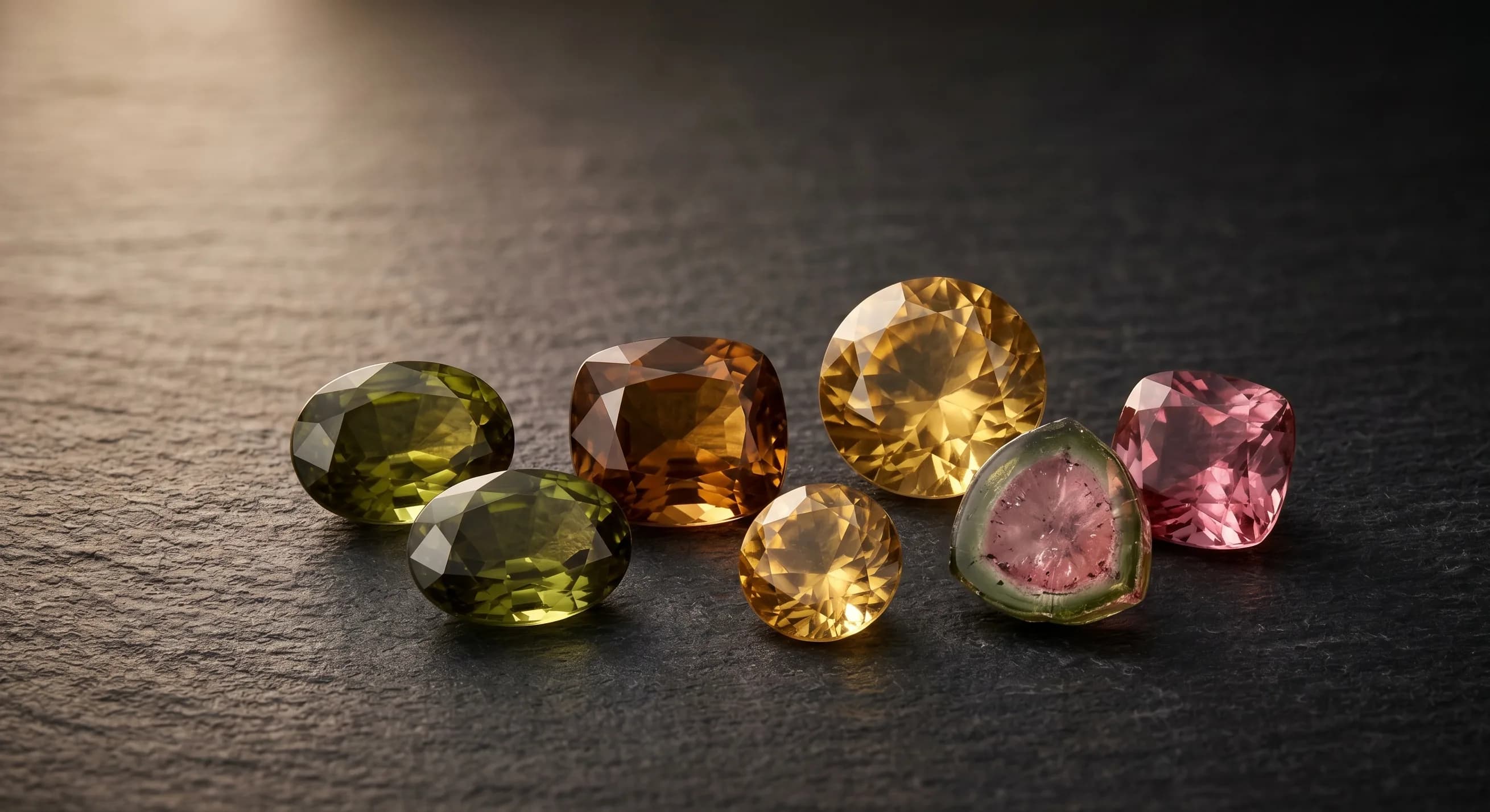
Hessonite garnet is Sri Lanka's signature variety. A calcium-rich grossular with body colour running from clean honey-amber to cinnamon, historically traded as "cinnamon stone." In Vedic astrology it is known as gomed, the gemstone for Rahu, and this single cultural fact drives most of the global demand for Ceylon hessonite. The colour signature buyers look for is a clean honey-amber body without too much brown, paired with the trademark optical effect the trade calls "scotch in water" or "treacle." Tiny crystalline inclusions of apatite, calcite, and zircon produce a slightly hazy, roiled appearance under a single light source. This is not a flaw. It is the species identifier and is expected, even prized, in fine Sri Lankan material.
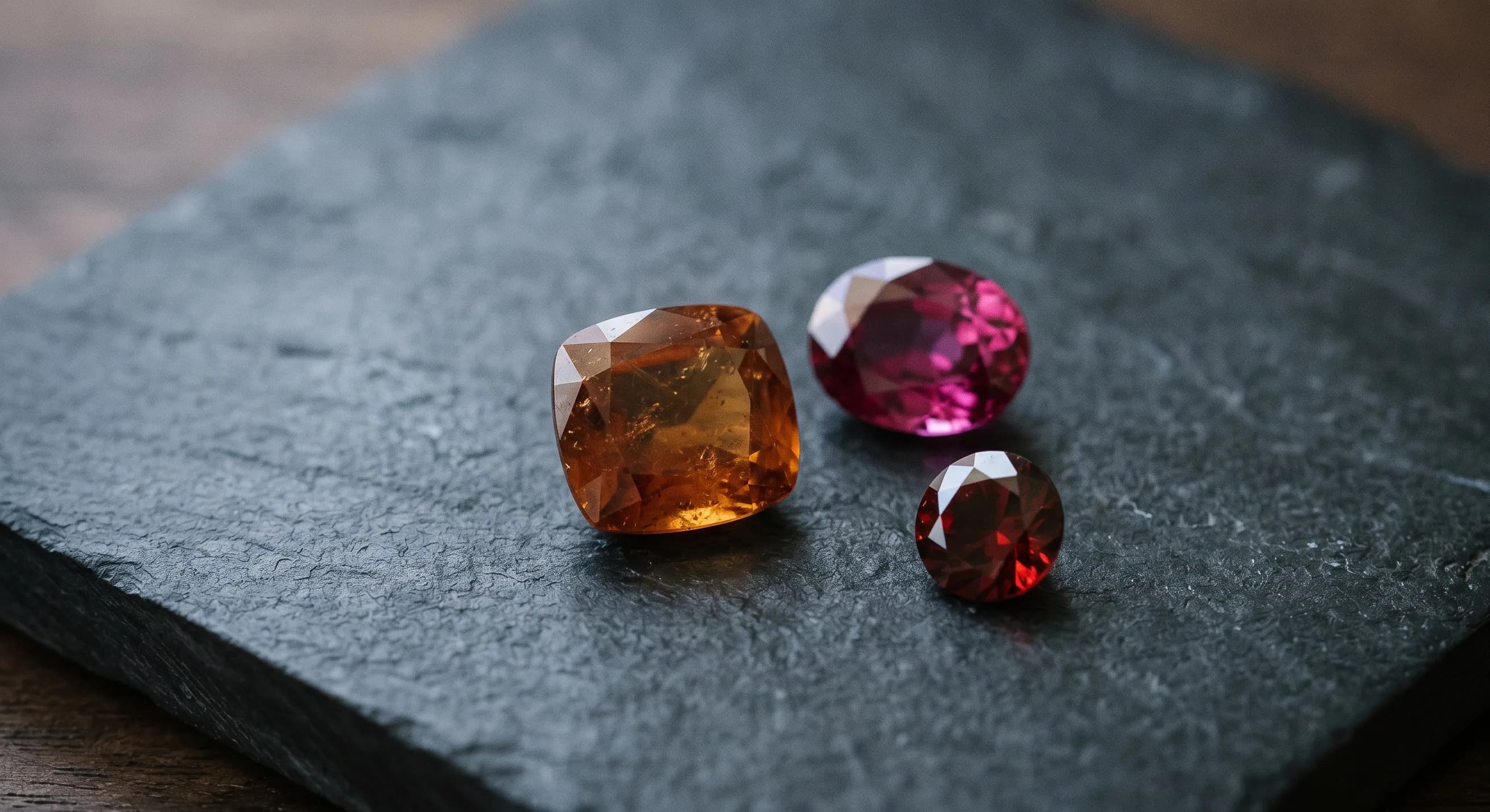
Rhodolite garnet Ceylon material sits second. Rhodolite is the trade name for a pyrope-almandine blend with a raspberry-pink to purplish-red colour. Most commercial rhodolite is Tanzanian or Mozambican, but Sri Lankan deposits do produce it, and Ceylon material tends toward the brighter raspberry end rather than the darker burgundy of African production. Mohs 7 to 7.5, reliably untreated. Sri Lankan rhodolite is sometimes labelled simply "garnet" by smaller dealers, so confirm species on the invoice or, for stones above 2 carats, on a laboratory report.
Almandine and pyrope-almandine are the everyday red garnets. Sri Lankan almandine is clean and well-formed but reads visually similar to almandine from India or Madagascar, and does not command a Ceylon premium. Pyrope-almandine shades lighter and warmer, closer to red wine. Both are budget-friendly material, useful for Victorian-style cluster jewellery, pendants, and occasional-wear rings. The line between pyrope-almandine and rhodolite is gemmological convention rather than a hard cutoff: anything bright enough toward raspberry is sold as rhodolite.
What Makes Sri Lankan Hessonite Different from African Hessonite?
The two practical sources of commercial hessonite today are Sri Lanka and East Africa, principally Tanzania and Madagascar. Sri Lankan hessonite reads honey-amber to cinnamon, slightly hazy from the scotch-in-water inclusions, with warm rather than bright saturation. African hessonite is cleaner, more transparent, and shifted toward a brighter orange or mandarin tone, with less of the roiled inclusion behaviour.
For the gomed buyer specifically, Sri Lankan material is the default and dealers in Colombo, Chennai, and Jaipur price Ceylon hessonite at a 30 to 60 percent premium over comparable African stones because the cultural association is with the honey-toned Sri Lankan look. For a Western jewellery buyer who wants a clean, transparent orange-brown garnet without inclusions, African hessonite is often the easier purchase. Both are legitimate; the Sri Lankan stone is the historical reference.
How Much Does Sri Lankan Garnet Cost in 2026?
Indicative 2026 dealer-to-end-buyer prices for eye-clean, well-cut, untreated Ceylon material:
| Variety | 1 to 3 ct | 3 to 5 ct | 5 ct + |
|---|---|---|---|
| Fine hessonite (clean honey body) | USD 80–200/ct | USD 150–400/ct | USD 300–800/ct |
| Commercial hessonite | USD 30–80/ct | USD 60–150/ct | USD 100–250/ct |
| Rhodolite (raspberry, clean) | USD 80–200/ct | USD 150–400/ct | USD 300–700/ct |
| Almandine | USD 20–60/ct | USD 40–100/ct | USD 80–180/ct |
| Pyrope-almandine | USD 30–80/ct | USD 60–150/ct | USD 120–300/ct |
These figures sit well below comparable Ceylon sapphire pricing, which is why garnet has historically been the entry-level Ceylon stone. For context on how Ceylon sapphire itself trades, the Ceylon sapphire price per carat guide covers the corundum benchmark.
Two notes on hessonite specifically. Vedic astrology buyers will pay a 50 to 100 percent premium above these figures for a stone that meets specific jyotish requirements (inclusion-free of certain types, clean honey colour, no over-brown saturation). And exceptional hessonites over 10 carats with clean honey colour can exceed USD 1,500 per carat, though that market is small and dealer-driven.
Is Sri Lankan Garnet Treated?
No. This is one of garnet's genuine advantages over corundum: there is no commercially viable heat, diffusion, or irradiation treatment that improves garnet colour, so the material reaches the market untreated. Invoice disclosure is usually a simple "no treatment." For stones above 2 carats or above USD 500 in total value, a laboratory report from GIA, GRS, or a comparable major lab is worth the fee, primarily to confirm species identification rather than verify treatment. "Rhodolite" and "almandine" are not interchangeable even though both are red, and the price difference between them is meaningful.
A Note from the Parcel Table
A few weeks ago I was sorting hessonite at a dealer in Pelmadulla, a small town on the Ratnapura road. The parcel was about forty stones, mostly 2 to 5 carats, mixed Sri Lankan and Tanzanian production from a wholesaler who had bought both lots together and never separated them. The Sri Lankan stones identified themselves within seconds under a single overhead lamp: the body colour ran warm honey rather than bright orange, and under a 10x loupe the trademark roiled inclusion pattern was visible in every stone. The Tanzanian material was cleaner and more uniform, but it read flatter, more like a coloured-glass swatch than a stone with depth.
The buyer was a jeweller in Colombo who supplies the Vedic astrology market in southern India. He pulled the Sri Lankan stones into one pile, the Tanzanian into another, and paid roughly double per carat for the Sri Lankan material despite the Tanzanian stones being objectively cleaner. The market signal was unambiguous. For gomed specifically, Sri Lankan provenance is the product. Anyone selling Ceylon hessonite without naming the dealer and confirming origin in writing is selling a different stone, regardless of what the label says.
Hessonite pairs naturally with the warmer Ceylon corundum varieties. The yellow Ceylon sapphire guide covers pukhraj, the Vedic gemstone for Jupiter and the natural companion piece to a gomed setting. For collectors looking further into Ratnapura's underappreciated varieties, the Sri Lankan tourmaline guide covers the honey and olive end of the elbaite-dravite spectrum.
Where to Buy a Sri Lankan Garnet
The honest checklist:
- Species identification on the invoice. "Hessonite," "rhodolite," "almandine," or "pyrope-almandine" stated explicitly. "Garnet" alone is not enough.
- Country of origin stated. Sri Lankan and African hessonite trade at different prices for the same carat weight.
- Treatment status stated. Almost always "no treatment" for garnet, but the line should appear regardless.
- A laboratory report from GIA, GRS, or a comparable major lab for any stone above 2 carats or USD 500 in total value.
- A daylight photograph alongside the studio shot. Hessonite reads measurably warmer in northern daylight than under jeweller-shop tungsten.
- A real return window. Particularly for hessonite, where the inclusion pattern either appeals to a buyer or doesn't.
If you want a Sri Lankan garnet sourced this way, direct from a named Ratnapura or Pelmadulla dealer with species and origin documented, tell us your specifications (variety, colour, carat range, budget) and we will source it for you. You can also see what is currently in the Crestonne collection before deciding whether to commit to a custom search.
Common questions
Frequently Asked Questions
Is hessonite the same as gomed?
Yes. Gomed (sometimes spelled gomedh or gomedha) is the Sanskrit name used in Indian Vedic astrology for hessonite garnet, the gemstone prescribed for Rahu in jyotish remedies. Mineralogically the two terms describe the same stone: a calcium-rich grossular garnet with the characteristic honey-orange to cinnamon-brown body colour. Sri Lankan hessonite, traded as gomed in India and Sri Lanka, sets the benchmark for the variety because of the honey-amber colour saturation and the trademark 'scotch in water' inclusion pattern.
What is the difference between Sri Lankan and African hessonite?
Sri Lankan hessonite is honey-amber to cinnamon, typically with visible roiled or 'treacle' inclusions that the trade refers to as the scotch-in-water effect. African hessonite, mainly from Tanzania and Madagascar, tends to be cleaner, more transparent, and shifted toward a brighter orange or mandarin tone. The Indian astrology market specifically prefers the Sri Lankan honey colour and even welcomes the characteristic inclusions, so Ceylon material commands a meaningful premium for that use case. For Western-style coloured-stone jewellery, the cleaner African material is often easier to set, though Ceylon stones with a clean honey saturation are valued in both markets.
How much does Sri Lankan rhodolite garnet cost?
Clean Ceylon rhodolite in the 1 to 3 carat range typically runs USD 80 to 200 per carat. Larger 3 to 5 carat stones reach USD 150 to 400 per carat, and stones above 5 carats with a bright raspberry saturation sit in the USD 300 to 700 range. These are roughly comparable to Mozambican and Tanzanian rhodolite at the same quality tier, with Sri Lankan stones distinguished by a slightly brighter, more raspberry tone rather than the darker burgundy common in East African material.
Is Sri Lankan garnet ever heated or treated?
No. Garnet from Sri Lanka, like garnet from most sources globally, reaches the market untreated. The trade has no commercially viable heat or irradiation treatment that improves garnet colour, so disclosure on the invoice is usually a simple 'untreated' or 'no treatment.' This is one of the genuine advantages of garnet over corundum: the species is inherently untreated, which makes provenance and authenticity straightforward to verify. Always confirm in writing rather than assume, particularly on stones bought online.
Is Sri Lankan garnet durable enough for daily wear?
Garnet sits at Mohs 7 to 7.5, the same hardness range as tourmaline and quartz. That is durable enough for earrings, pendants, brooches, and occasional-wear rings without concern. For a daily-wear ring, particularly an engagement ring, garnet is acceptable but benefits from a protective setting such as a bezel or halo that shields the girdle from knocks. Clean it with warm soapy water and a soft brush. Avoid ultrasonic and steam cleaners, especially on hessonite, which can have visible inclusions that respond poorly to vibration.